Channels
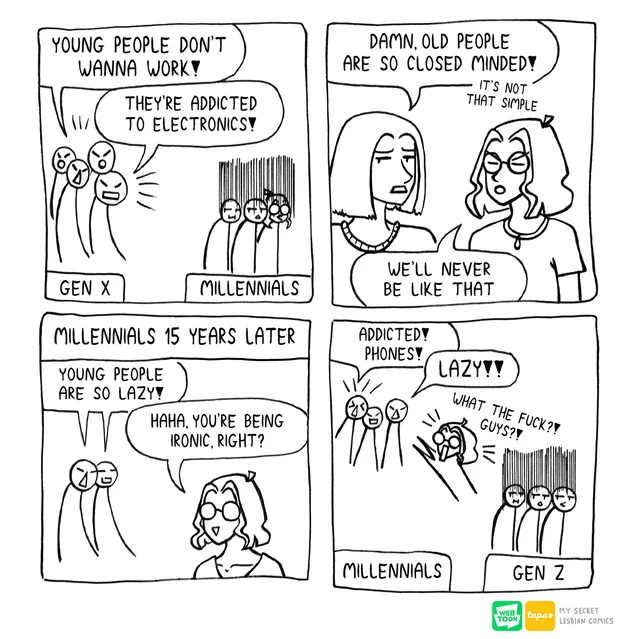
![Daddy Daze - [OC] Work, work, work. daddydazecomic.com – Image](https://infeeo.com/m/617/daddy-daze-oc-work-work-work-daddydazecomic-com-image.webp "Daddy Daze - [OC] Work, work, work. daddydazecomic.com – Image")
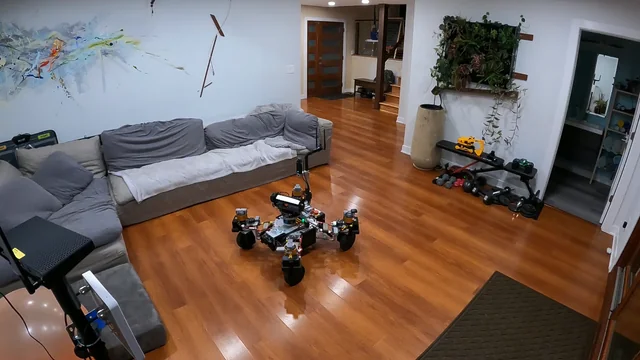
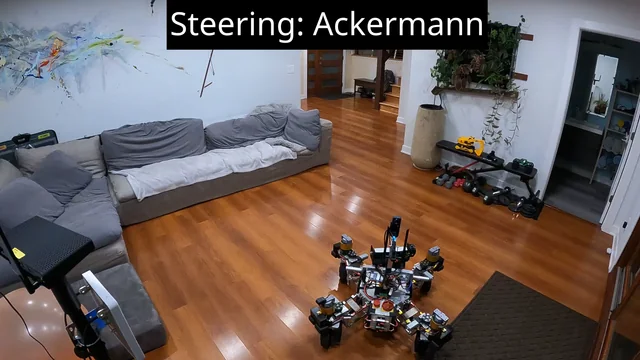
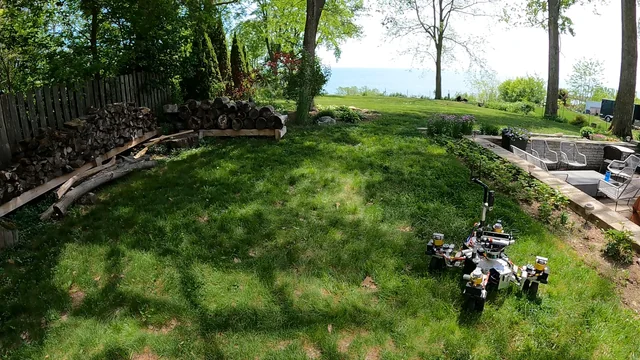
Sorry for the slow pace of the video, but I figured that seeing each visualizer perform the same path makes them more intuitive. All of these visualizers are rendered on a meta quest 3 using OpenXR. submitted by /u/RoboLord66 [link] [Kommentare]
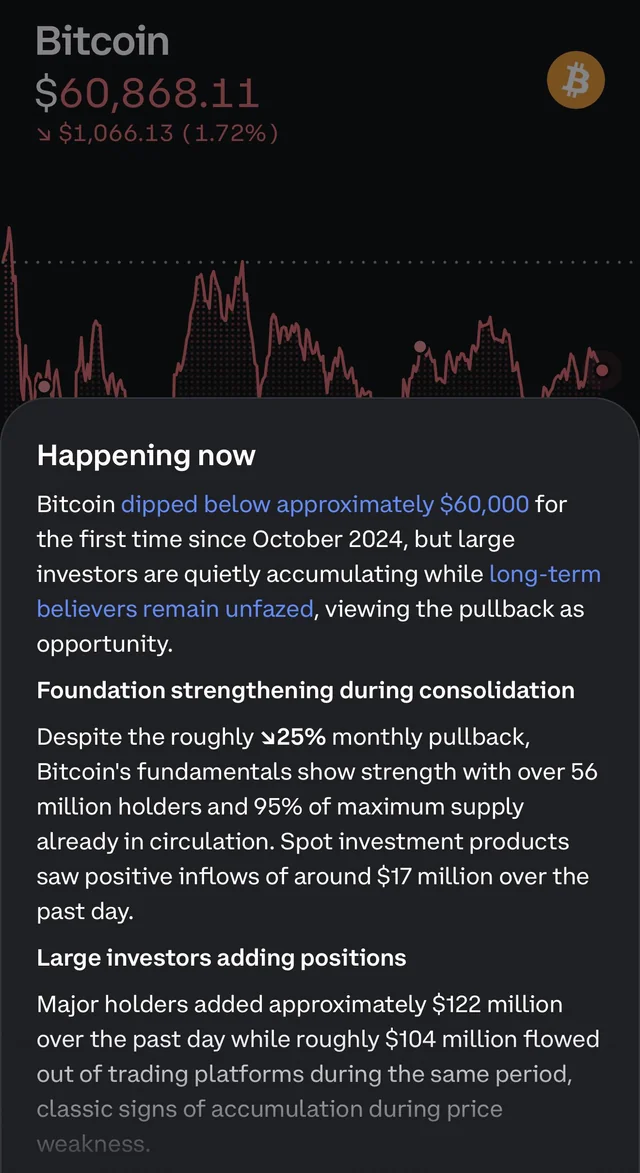
Kinda obvious. But its funny to always open this up and see some version of “yea its gone down a bunch but trust me actually a ton of people are investing right now its going great” submitted by /u/5nGlide [link] [Kommentare]
I am unable to withdraw or trade on binance due to UK regulation. is there any way at all to take my coins out of binance without verification? submitted by /u/ElBritanico [link] [Kommentare]

Everyone is so worried about JPM and Citi recently. Why though? They are expanding on the Ethereum network Straight from the source https://am.jpmorgan.com/us/en/asset-management/institutional/about-us/media/press-releases/jp-morgan-asset-management-launches-second-tokenized-fund-on-ethereum/ submitted by /u/Euro347 [link] [Kommentare]
Sarcasm aside, I’ve been in crypto since 2016 and am blown away with the fact that we never learn anything from history. In every single cycle, no exception, we get to the “crypto is dead” phase when everyone is losing their minds - ESPECIALLY those deep in crypto, which makes no sense. If you’d take literally ten minutes of your time to study previous cycles, you’d see that it always repeats itself. Yes we’re in a bear market, DCA what you can and forget about it for fucks sake. Thank me later. submitted by /u/doctorpoopghost5000 [link] [Kommentare]

Bundle your digital files, set a price, and share one link. Buyers see blurred previews until they pay. Free to start — no monthly fees.

On 3 December 1992, in a Vodafone office west of London, a 22-year-old British software engineer named Neil Papworth sat at a desktop computer terminal, typed “Merry Christmas” using full words rather than the now-conventional abbreviations, and pressed send. The message travelled through the Vodafone cellular network and arrived seconds later on a four-and-a-half-pound Orbitel […]

Welcome to Cambridge Core

James "Weston" Higginbotham went missing one week ago while on a family vacation in Japan.
Multimodal Large Language Models (MLLMs) have made substantial progress in egocentric video understanding, but their ability to reason cooperatively from multiple embodied viewpoints remains largely unexplored. We study this problem through multi-robot cooperative dynamic spatial reasoning, where a model must answer spatial, temporal, visibility, and coordination questions by integrating synchronized egocentric videos from a team of moving robots. To support this setting, we introduce CoopSR, the first benchmark for this task, together with EgoTeam, a multi-robot egocentric QA dataset. EgoTeam contains 114,227 QA pairs spanning 19 question types, four difficulty tiers, and three team sizes in Habitat and iGibson, along with a real-world test set of around 2,326 QAs collected using two quadruped robots. We further propose SP-CoR (Spectral and Physics-Informed Cooperative Reasoner), an MLLM framework for fine-grained cooperative spatial reasoning. SP-CoR combines dynamics-aware multi-robot frame sampling, spectral- and physics-guided view fusion, and physics-aligned prompt distillation, enabling the model to benefit from privileged robot-pose supervision during training while requiring only egocentric videos at test time. Across 22 MLLM baselines, SP-CoR consistently improves cooperative reasoning, outperforming the strongest fine-tuned baseline by +3.87% on Habitat and +7.12% on iGibson. It also shows stronger generalization to unseen team sizes and real-world robot tests. Code can be found at https://github.com/KPeng9510/seeing-together.git.