Channels



Hi all, A real story from my current experience: I'm associated with an internship where the primary work revolves around autonomous UAVs. What has shocked me the most is that almost everyone is so heavily focused on coding agents and AI tools that they're building things without paying enough attention to the fundamentals. This got me thinking: what if we conduct a virtual session on the fundamentals of Computer Vision? This idea comes from my own experience as well. During my first semester, I was terrified of learning from documentation and kept chasing YouTube tutorials instead. Later, I realized that some of the most interesting and valuable concepts are actually explained in the documentation itself. What do you all think about conducting something like this? How many of you would be interested in joining a one-day session? submitted by /u/FishermanResident349 [link] [Kommentare]
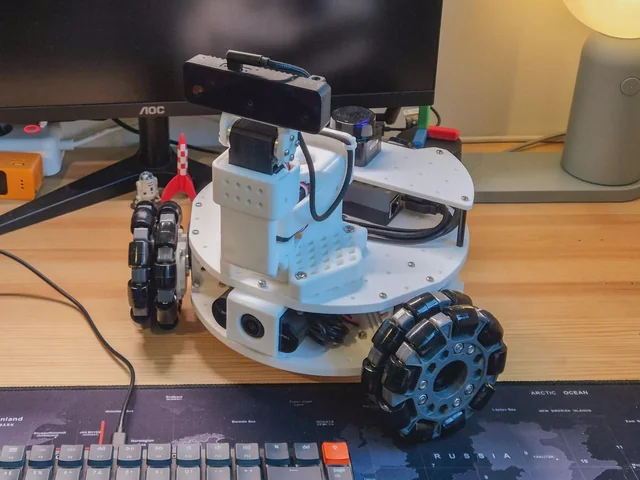
At Foxglove, we collaborated with Aditya Kamath, resulting in another blog post in his ROS 2 LeKiwi series, this time covering the integration of SLAM and Nav2. This blog post should be relevant to anyone wanting to integrate Nav2, even if they don't have a holonomic platform. If you find this kind of content useful, let us know, and we will keep it coming! submitted by /u/arewegoing [link] [Kommentare]

I spent the last few days building a small side project called Coindrips. https://coindrips.github.io/ The idea came from a simple frustration: there are hundreds of crypto reward sites, games, and blockchain-based platforms scattered across the internet, but finding legitimate ones usually means digging through old forum posts, YouTube videos, and random blog lists. So I built a clean directory that organizes them in one place with short explanations, signup guidance, and beginner-friendly instructions. I tried to keep the site minimal, fast, and easy to navigate, especially for people who are new to crypto and don't know where to start. Just a personal project I wanted to build and share with the community. I'd genuinely appreciate feedback on: • Design and usability • Sites I should add or remove • Features that would make discovery easier • Anything that feels confusing or unnecessary Would love to hear what you think. And if you have any other sites to add, feel free to mention them. submitted by /u/Arch7er [link] [Kommentare]




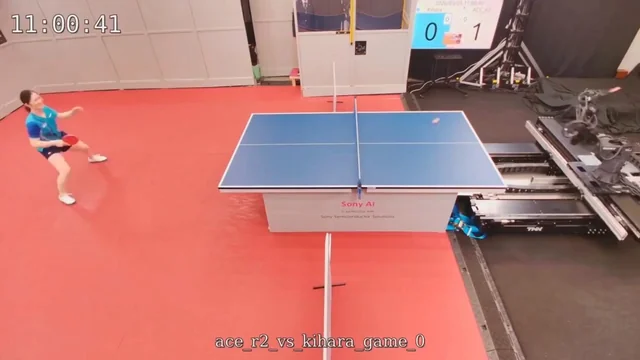
Nature: Outplaying elite table tennis players with an autonomous robot (Published: 22 April 2026): https://www.nature.com/articles/s41586-026-10338-5 YouTube Sony AI: Ace vs. Kihara | Pro Match Highlights | Sony AI Table Tennis Robot: https://www.youtube.com/watch?v=TwkDm2H6ft8 From 链上小财女 on 𝕏: https://x.com/Zoozo2025/status/2064998917394374930 submitted by /u/Nunki08 [link] [Kommentare]


Hey everyone, I am planning out a new open-source infrastructure project and want to get some brutal feedback on the architecture and use-case validity from people running high volume LLM workloads in production. The Problem: Python-based proxies/gateways introduce too much latency overhead for real-time streaming agent steps or fast UI completions. Additionally, centralized semantic caching still suffers from cross-region network latency (e.g., London to us-east-1), and enterprise API costs remain a massive bottleneck for repetitive/predictable user queries (like customer support or structured data extraction). The Proposed Architecture: Instead of a heavy centralized gateway, the goal is to build a lightweight, zero-dependency semantic cache running directly at the CDN Edge using WebAssembly (WASM) compiled from Rust. The flow looks like this: Inbound Prompt: Hits the edge node closest to the user (e.g., Cloudflare Workers / Fastly Compute). Edge Embedding: The Rust/WASM module intercepts the raw text prompt and instantly generates a vector using an edge-native lightweight model (e.g., bge-small-en-v1.5). Similarity Index Check: It performs a fast cosine similarity check against an edge vector database (like Cloudflare Vectorize) to find the nearest semantic neighbor. Cache Hit: If similarity >= threshold (e.g., 0.88), it pulls the full generated response text from an edge KV store and returns it in ~5ms. The main LLM provider is never billed or touched. Cache Miss: It proxies the streaming request to OpenAI/Anthropic/vLLM, streams it back to the client, and asynchronously updates the edge vector index and KV store. Why Rust/WASM? To achieve sub-millisecond execution overhead on the proxy itself, avoid garbage collection pauses, and maintain a tiny memory footprint suitable for edge runtime constraints where traditional databases or Python scripts cannot run. My Questions for the Community: For those running LLMs in production (especially customer support, internal RAG, or autonomous agents), what is your realistic semantic cache hit rate? Is the power law of repetitive queries high enough in your domains to justify this? What are the biggest footguns with semantic caching at the edge? (e.g., Cache invalidation strategies, handling system prompt updates, or drift in embedding models). Would you actually use a drop-in open-source template/CLI that lets you spin this up on your own edge account, or do you prefer centralized API gateways? submitted by /u/Real-Huckleberry-934 [link] [Kommentare]