Trail of Bits just released "trailmix," five new quantum circuits for the hardest step in Shor's algorithm: elliptic-curve point addition. They beat Google's and every prior published circuit on the efficiency frontier, including a new low-qubit record at around 1,066 logical qubits. Link: https://x.com/trailofbits/status/2062980523232805164 The attack comes down to running that point-addition step billions of times, so a cheaper step means a smaller, faster quantum computer can do the job. The curve being optimized, secp256k1, secures Bitcoin, Ethereum, and most coins, so every improvement is another tick toward "Q-Day," the day a large enough quantum computer exists. No machine can do it today; the point is how fast the gap is closing. Shor's exploits a one-way function. Your public key is derived from your private key in a way that is easy forward and effectively irreversible on a classical computer, but Shor's reverses it on a quantum computer by turning the secret into a hidden repeating pattern that interference surfaces all at once. Ordinary arithmetic then recovers the private key. Breaking ECDSA is not exotic. It is the textbook use case quantum computers were designed for, and the algorithm has been public for over thirty years. No further breakthrough is required. Once a large enough fault-tolerant, general-purpose quantum computer exists, breaking crypto is just running a known program on it: no new physics, no special crypto-breaking hardware, nothing left to invent. What is left is building the hardware and shrinking the circuit. That second part is already a public, ongoing effort: the open challenge at ecdsa.fail (https://www.ecdsa.fail) is a live leaderboard where contributors, including AI agents, compete to make the point-addition circuit leaner, and submissions have already pushed below Google's numbers. Once standard quantum hardware crosses the size threshold, configuring a circuit to break the key is the easy part; that piece is already well understood and getting leaner by the week. The risk to holders is direct. The moment a public key is exposed on-chain, by spending or reusing an address, it can be targeted, and coins already sitting behind an exposed key cannot be retroactively protected. It is the crypto version of "harvest now, crack later." The fix is quantum-safe signatures, hash-based or lattice-based schemes that Shor's has no shortcut against. NIST has already standardized them. One chain was built this way from the start. QRL has been quantum-safe since its 2018 genesis, using hash-based signatures Shor's cannot break. Its upcoming upgrade, QRL 2.0, extends that as a proof-of-stake, energy-efficient, EVM-compatible network where existing Solidity contracts port over with minimal changes. It signs with ML-DSA-87, NIST's highest post-quantum security tier (Level 5), and it is crypto-agile, able to adopt new post-quantum algorithms without a contentious fork; it has already moved its entire signature stack up to a stronger level in about two weeks. Testnet V2 has been live since March 2026, Halborn audited the cryptography library with no vulnerabilities found, and Trail of Bits is auditing the full protocol, with mainnet targeted for 2026 after the remaining audits. Its throughput benchmarks land in Ethereum's range even though post-quantum signatures run tens of times larger than ECDSA's. submitted by /u/alami9 [link] [Kommentare]
Hear me out on this. I was thinking about the ultimate end-game of hyperbitcoinization, and I stumbled into a bizarre paradox. If the Lightning Network becomes as fast, cheap, and seamless as Bitcoin maxis hope it will, could it actually end up undermining the very security of Bitcoin itself? Think about the onboarding process. Right now, the goal is to get everyone onto Layer 2 because we all know the base layer can't scale to handle global, day-to-day commerce. But here is the catch: once a user is successfully onboarded into a Lightning channel, why would they ever leave? If people move to Layer 2 and are just exchanging off-chain IOUs indefinitely, it creates a fatal economic flaw for the base layer: The Fee Market Collapse: Bitcoin's long-term security budget relies entirely on transaction fees replacing the block subsidy. But if most daily transactions happen off-chain on Lightning, L1 transaction volume effectively dries up. Fewer L1 transactions means plummeting fee revenue for miners. If mining ceases to be profitable, the network's hashrate drops, making the entire foundational ledger vulnerable to 51% attacks. The ultimate irony is that the better Lightning gets, the less economic incentive anyone has to interact with the base layer that secures it. By solving the scalability problem, they might accidentally be engineering a slow-motion vampire attack on Bitcoin's foundational security. Change my mind. submitted by /u/Good-Book-6912 [link] [Kommentare]
What’s holding me back is mostly the fact that historically there’s been 10 red months in the btc cycle and we’re at 7, so we’re not going back to bear market yet if this data is to be trusted, which I don’t know for sure. Many things to consider here, my feelings are telling me we can go lower but man idk submitted by /u/Freemlvzzzz [link] [Kommentare]
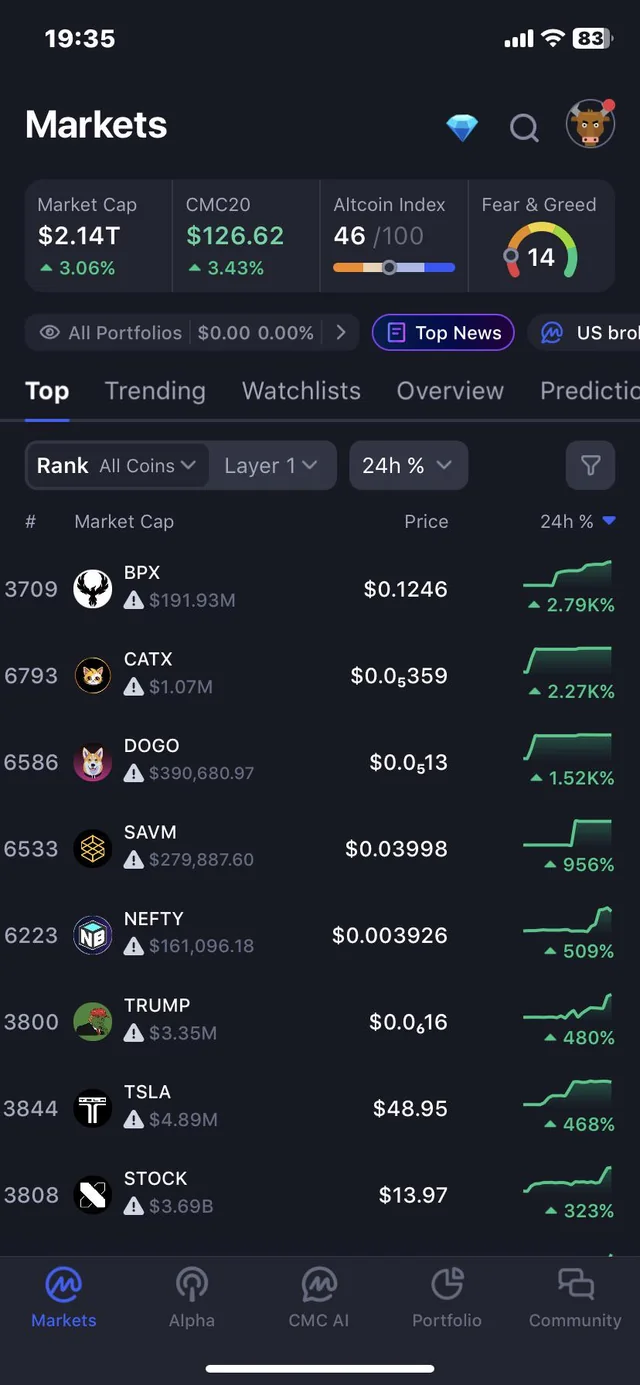
I'm a Dubai resident, here stablecoins are very well adopted, I had a deal which I got USDT, i'm looking to swap it for Bitcoin but the problematic is I got advised not to use Binance/any CEX at any cost as the purpose of Crypto, i heard a ton of horror stories. Is there currently and concretly a way to convert USDT to Bitcoin? submitted by /u/headgod123 [link] [Kommentare]
I got out with a small profit in 2022. Got tired of the scammers and crypto bros. Since then my robinhood stock account had done quite well. Should I wait till October to get back in? submitted by /u/CoatForeign2948 [link] [Kommentare]
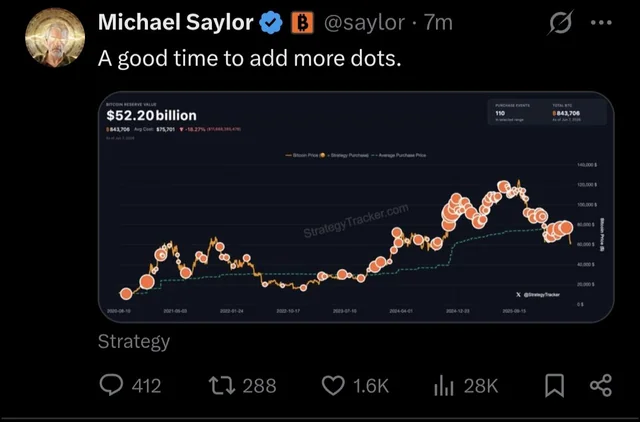
Not on copium, just curious. Will it lead to a bull run ? submitted by /u/-InvictusShadow [link] [Kommentare]
I bought a ton of BTC at 90k, not leveraged but didn’t know about the 4 year cycle before I bought. Anyone any info on how long it’ll take to reclaim since I expect we’ll probably drop to 50k in oct/nov? submitted by /u/012345601234501234 [link] [Kommentare]
Strong bounce off 59k on Fri, rising quickly up to 63k. Alts gaining across the board, looks like we are not over yet! submitted by /u/BrexitBrit [link] [Kommentare]
Except for losing money submitted by /u/Fun_Training6342 [link] [Kommentare]
I’m holding shit bags that keeps getting delisted. Plus I’m down from £18k in 2024 with a total of £5k invested to £1.8k submitted by /u/Civil_Preference3590 [link] [Kommentare]
Rough week across the board. BTC ~51% off its Oct ’25 high, ETH at 2-year lows, SOL at its lowest since Dec 2023, F&G buried in fear, and ~$1.7B in leverage wiped in a single 24h stretch. Instead of the “is the bull market over” doom takes, I tried to separate what broke from what just sold off. Going through the drivers, almost none of them are crypto-native: • Record ETF redemptions — US spot BTC ETFs logged their biggest weekly outflow ever (\~$3.4B); ETH ETFs are on their longest net-outflow streak on record. Direct bid leaving the market. • Macro risk-off — sticky inflation, stronger dollar, Fed “higher for longer.” Capital rotating to cash/bonds/gold. Every risk asset is getting sold, not just crypto. • Leverage flush — mostly mechanical, longs cascading into liquidation. Painful, but it resets froth. • Cycle psychology — we’re squarely in the part of the 4-year window where sentiment historically sours. What’s not on the list: no protocol failure, no exchange blowup, no broken networks. Chains processing, DeFi functioning, dev activity intact. The one genuinely interesting divergence I can’t stop looking at: while BTC and ETH ETFs hemorrhaged billions, Solana spot ETFs just posted their best month of 2026 (~$15.6M net inflows last week, total SOL ETF assets crossing $1B). Smart money rotating into one name during peak fear is at least worth a conversation. Not calling a bottom — ETH prediction markets are pricing 70%+ odds of a deeper leg down, and BTC’s still in a confirmed downtrend. Just that the cause here reads as liquidity + sentiment, not fundamentals. Where’s everyone landing — capitulation flush, or the start of something worse? And is the SOL flow divergence signal or noise? submitted by /u/sunny8888 [link] [Kommentare]