 R
↗
R
↗
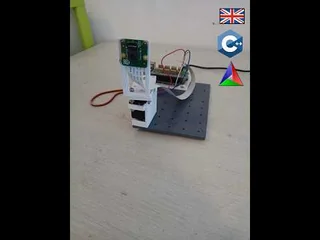
I finnaly after a month or 2 made a Raspberry pi object 1 degrees of freedom tracking robot it took me a while but it was worth it. I was using lccv for raspberry camera module(i also have made code for usb camera).if anyone wants to try out i have the link to the repo in the video description.i do advise ti read the eng_list.txt file first. submitted by /u/Guilty_Question_6914 [link] [Kommentare]
R
↗
Hello community, I am a backend + big data dev. I want to learn about the llms that generate voices. I also read some articles but almost everyone of them starts from regression. There are so much resources available right now that I am now confused where to begin with. submitted by /u/paklupapito007 [link] [Kommentare]
 R
↗
R
↗
R
↗
R
↗
We recently presented a paper at ACM CAIS 2026 on safety evaluation for tool-using LLM agents. The core issue is that task completion alone can be misleading: an agent may complete a task while violating a safety or policy constraint. We separate outcomes into safe success, unsafe success, and failure, and study how verification changes this tradeoff. We evaluate this using τ-bench / Tau-bench tool-use scenarios and propose a two-tier verification architecture: deterministic policy/tool checks first, followed by an LLM-based verifier for more contextual safety cases. The main finding is that verification can reduce unsafe success, but it can also reduce task completion as the task horizon increases. This creates what we call the Verifier Tax: a horizon-dependent safety–success tradeoff in tool-using agents. Paper: https://dl.acm.org/doi/full/10.1145/3786335.3813160 Curious how others think agent evaluations should report unsafe success. Should unsafe completion be counted as success, failure, or a separate category? submitted by /u/AccomplishedLeg1508 [link] [Kommentare]
 R
↗
R
↗
I'm making a custom bldc motor to use as the main propulsion for an automated rigg to map the bottom of the sea! For now i'm testing it in my paddle surf, outside the water it seems to be way to powerful! The motor itself is all 3d printed, I'll soon make a post about it! submitted by /u/ArnauAguilar [link] [Kommentare]
R
↗
Hi everyone, I’m building an open-source machine-learning tutorial repository in Jupyter Notebook format: https://github.com/mohammadijoo/Machine_Learning_Tutorials The course is bilingual: English and Persian/Farsi versions are organized in parallel. The goal is to make a practical, notebook-first ML curriculum that students can run locally and study step by step. Current focus areas include: ML foundations and workflow data cleaning, preprocessing, feature engineering regression and classification tree models and ensembles clustering and dimensionality reduction evaluation, cross-validation, calibration time series, anomaly detection, responsible ML, and MLOps concepts datasets and exercises for hands-on practice I would appreciate feedback on: whether the chapter order makes sense for beginners what important classical ML topics are missing whether bilingual notebooks are useful for non-native English learners how to make the notebooks more practical without turning them into only “copy/paste code” I’m sharing this as a free educational resource and would value constructive criticism. submitted by /u/abolfazl1363 [link] [Kommentare]
R
↗
Hi everyone, I built a small open-source web simulation of a double pendulum to demonstrate chaotic motion and sensitivity to initial conditions. Repo: https://github.com/mohammadijoo/Double-Pendulum-Chaos-Mechanism The goal is educational: a browser-based demo that lets students or beginners see how a simple mechanical system can produce complex, chaotic behavior. It is written with HTML, CSS, and JavaScript, so it can run without installing a physics engine. I would appreciate feedback on: whether the visualization explains chaotic behavior clearly whether the equations / numerical integration could be improved what parameters or plots would make the simulator more useful for control, robotics, or physics students whether adding energy plots, phase portraits, or Lyapunov-style divergence visualization would be useful I’m sharing it mainly for technical feedback, not as a commercial project. submitted by /u/abolfazl1363 [link] [Kommentare]
R
↗
Curation of materials for robotics and Artificial Intelligence. Learn as your practice materials. Today we have some extensive knowledge available for building robotics. And there is a roadmap that everyone interested can easily build using the available resources. submitted by /u/dineshmadhava [link] [Kommentare]
 R
↗
R
↗
Real Steel Fighting .. It says the robot are real autonomous fighting. That means it will be better than real steel movie which is tele operated. submitted by /u/Modulus3360 [link] [Kommentare]
 R
↗
R
↗
R
↗
R
↗
R
↗
R
↗
I'm working on a paper and would love some input on model choice. Suppose you're trying to detect a specific type of cancer, but the negative samples are visually and morphologically very similar (i.e., “mimics” of the cancer). In this setting, would it make more sense to approach the problem as: Anomaly detection (treating the cancer as the target distribution and everything else as out-of-distribution), or Supervised classification (explicitly learning to distinguish cancer vs. mimics)? submitted by /u/DryHat3296 [link] [Kommentare]
R
↗
Upfront disclosure: this is my write-up (and I'll link it below), but laying out the argument here so you can strawman/steelman it without clicking anything. Assertion 1: per token price is the wrong metric for measuring the cost of work done by LLMs/reasoning models. Users get charged the per token price regardless of whether the output/outcome was right or not. Assertion 2: real work lives in long chain processes. Reliability of agents (run through LLMs) drops geometrically in proportion to chain length. 95% per step accuracy translates to 77% process reliability for a 5-step process, 60% for 10, and under 36% for a 20 step process. This calculation holds if errors are independent, which isn't true for real world processes, ergo real world reliability is worse than that. This adds a verification tax on top of the price of tokens the user pays. You can verify through human intervention, inference time compute (less reliable than human intervention), or swallow the decay in reliability. Argument: granted 1 & 2, you can't reliably automate any meaningful work through LLMs/agents in a cost-effective way, because it isn't an issue of economics but of architecture (LLMs can't reason faithfully, which was my previous essay) Link: https://open.substack.com/pub/mauhaq/p/price-is-not-cost?r=7eoi8&utm_campaign=post-expanded-share&utm_medium=web submitted by /u/Sensitive_Air_5745 [link] [Kommentare]
R
↗
Just thought I'd highlight this issue to the ML community, since I recently had this problem arise and it might be useful for some. I had a coauthor who I knew was somewhat untrustworthy when it came to LLM use. This coauthor added some last-minute new references to the paper. The deadline was near, and I had a ton of other stuff to take care of. I asked them to ensure the references were correct. This coauthor confirmed that all references were correct. I trusted them. I submitted the paper. Turns out, I made a critical mistake in trusting them. All of these newly added references had hallucinations in them. The reviewer pointed out the hallucinated references and we withdrew the paper. Besides this reviewer, we had all accept scores: the scientific content of our paper was strong. Of course, this damages my reputation and the reputations of the rest of the coauthors. The takeaway is: check *all* references added to the paper, unless you are absolutely certain you can trust someone to not use LLMs. Hopefully this helps someone avoid this issue, because I worked tirelessly on this paper, in a very high pressure lab environment, and this whole situation has caused me a lot of grief. submitted by /u/treeman0469 [link] [Kommentare]
 R
↗
R
↗