Channels
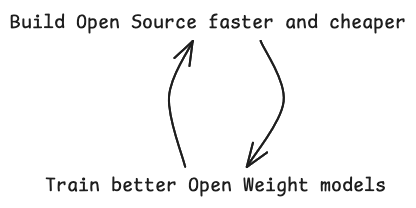
While a few people complain that AI is "stealing Open Source", training on Open Source code and giving nothing in return, I'm currently living the complete opposite: we are in
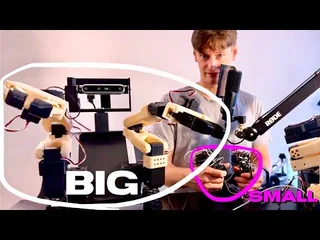
I built Small & Cute Robot arms from Scratch for my ROS 2 mobile robot. I'll probably make new smaller & cuter version of my robot with these small arms. submitted by /u/martincerven [link] [Kommentare]
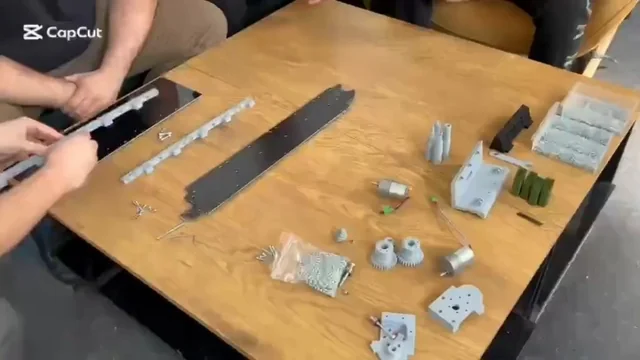
Multiplayer DIY robot where you learn mechanics and engineering...600+ parts and 6 hour build time. It has custom electronics, bb gun mechanism and piezo equipped plates for hit detection. You controll it via mobile app and can have up to 8 tanks in multiplayer game submitted by /u/Iron_Fleet_Support [link] [Kommentare]
⚫ Reconstructed tables ⚫ Census ⚫ Online works ⚫ Computing aids ⚫ Pi ⚫ Sustainable digitization ⚫ Nancy The aim of the LOCOMAT project is to make available a number of interesting and/or important historical tables, and to facilitate the study of the original tables by historians of mathematics. An overview of the motivations of the project appears in Denis Roegel, "The LOCOMAT Project: Recomputing Mathematical and Astronomical Tables", IEEE Annals of the History of Computing, April-June 2012, pages 74-79. Slides of an overview of the project can be found here (in French). This page is located at http://locomat.loria.fr/ GDML (Global Digital Mathematics Library)
The Seeed team will be in Garching-Hochbrück near Munich tomorrow for a hands-on workshop with reBot Arm, our fully open-source robotic arm. Try it in person, ask technical questions, meet robotics folks, and grab some pizza with us. Limited spots: https://www.eventbrite.co.uk/e/robotics-builders-meetup-hands-on-with-rebot-arm-tickets-1990578698472 submitted by /u/MiuoChar [link] [Kommentare]
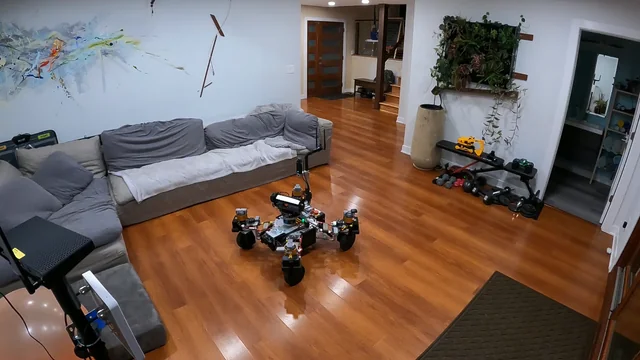
Sorry for the slow pace of the video, but I figured that seeing each visualizer perform the same path makes them more intuitive. All of these visualizers are rendered on a meta quest 3 using OpenXR. submitted by /u/RoboLord66 [link] [Kommentare]

Bundle your digital files, set a price, and share one link. Buyers see blurred previews until they pay. Free to start — no monthly fees.

On 3 December 1992, in a Vodafone office west of London, a 22-year-old British software engineer named Neil Papworth sat at a desktop computer terminal, typed “Merry Christmas” using full words rather than the now-conventional abbreviations, and pressed send. The message travelled through the Vodafone cellular network and arrived seconds later on a four-and-a-half-pound Orbitel […]

Welcome to Cambridge Core

James "Weston" Higginbotham went missing one week ago while on a family vacation in Japan.
Multimodal Large Language Models (MLLMs) have made substantial progress in egocentric video understanding, but their ability to reason cooperatively from multiple embodied viewpoints remains largely unexplored. We study this problem through multi-robot cooperative dynamic spatial reasoning, where a model must answer spatial, temporal, visibility, and coordination questions by integrating synchronized egocentric videos from a team of moving robots. To support this setting, we introduce CoopSR, the first benchmark for this task, together with EgoTeam, a multi-robot egocentric QA dataset. EgoTeam contains 114,227 QA pairs spanning 19 question types, four difficulty tiers, and three team sizes in Habitat and iGibson, along with a real-world test set of around 2,326 QAs collected using two quadruped robots. We further propose SP-CoR (Spectral and Physics-Informed Cooperative Reasoner), an MLLM framework for fine-grained cooperative spatial reasoning. SP-CoR combines dynamics-aware multi-robot frame sampling, spectral- and physics-guided view fusion, and physics-aligned prompt distillation, enabling the model to benefit from privileged robot-pose supervision during training while requiring only egocentric videos at test time. Across 22 MLLM baselines, SP-CoR consistently improves cooperative reasoning, outperforming the strongest fine-tuned baseline by +3.87% on Habitat and +7.12% on iGibson. It also shows stronger generalization to unseen team sizes and real-world robot tests. Code can be found at https://github.com/KPeng9510/seeing-together.git.