Channels
Hi everyone, I wanted to share our latest open-access paper published in the journal Robotics: Multi-Objective Intelligent Industrial Robot Calibration Using Meta-Heuristic Optimization Approaches. The Problem Traditional industrial robot calibration heavily focuses on a single goal: maximizing absolute end-effector position accuracy. However, purely optimizing for position errors often results in the algorithm recommending unrealistic, drastic shifts to the robot’s physical kinematic structure (its Denavit–Hartenberg parameters). This creates a stark deviation from the manufacturer's nominal specifications and can degrade performance across different areas of the workspace. Our Approach We framed this challenge as a multi-objective optimization problem to strike a balance between two competing goals: Position Accuracy: Minimizing discrepancies using joint angle readings and a high-precision laser tracker (LT). Kinematic Realism: Minimizing the mean absolute deviation of the calibrated DH parameters from the manufacturer's original design specs. To find the optimal trade-off, we deployed and benchmarked several leading evolutionary and swarm optimization algorithms: NSGA (Nondominated Sorting Genetic Algorithms) MOEA/D (Multi-Objective Evolutionary Algorithm based on Decomposition) MOPSO (Multi-Objective Particle Swarm Optimization) Key Takeaways Utilizing a multi-objective framework prevents overfitting to specific target points and keeps the structural kinematic parameters physically viable. Swarm and evolutionary approaches excel at generating an adaptable Pareto front, giving automation engineers finer control over calibration tradeoffs. The full methodology, mathematical formulations, and comparative results are available to read for free on the MDPI Robotics Publication Page. I would love to hear the community's thoughts on using meta-heuristics for kinematic calibration, or answer any questions you might have about our experimental setup and algorithm performances! submitted by /u/MAK42018 [link] [Kommentare]
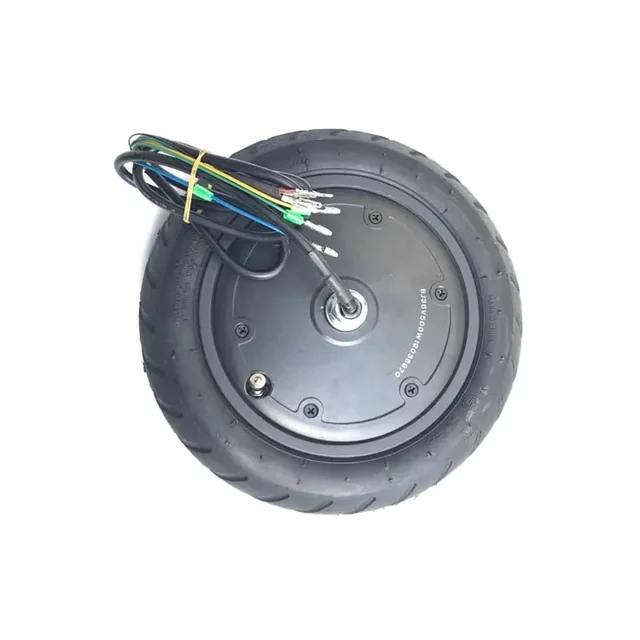
I'm building an autonomous rover using ROS2. For mapping, I'm using SLAM Toolbox, and my goal is to navigate the rover autonomously. My rover uses BLDC hub motors (the type of wheel in the picture) that have built-in hall sensors. However, I'm confused about how to generate the /odom topic required by SLAM Toolbox using these hall sensors. From what I understand, SLAM Toolbox needs odometry data, but I'm not sure: How to convert hall sensor readings into wheel odometry. How to calculate wheel position, velocity, and robot pose from the hall sensor data. Whether hall sensors alone are accurate enough for odometry. If there are any ROS2 packages or existing solutions that can help with this. Has anyone implemented odometry using BLDC hub motor hall sensors in ROS2? Any examples, tutorials, or advice would be greatly appreciated. submitted by /u/Organic-Author9297 [link] [Kommentare]
I made a chapter in my Advanced Robotics course about swarm robotics, focusing on the main ideas behind multi-robot coordination rather than treating it as just a buzzword. The video covers topics like: what makes a robot group a “swarm” decentralized vs. centralized coordination local rules and emergent global behavior examples inspired by ants, birds, and collective systems why scalability and robustness are important in swarm robotics I’m sharing it as a learning resource for students or beginners who are trying to understand where swarm robotics fits inside robotics and multi-agent systems. Video: https://www.youtube.com/watch?v=EXH3NpsKtUc I also keep the related course materials and source codes here, for anyone who prefers to learn by reading or experimenting with code: https://github.com/mohammadijoo/Control_and_Robotics_Tutorials For people working in robotics/control: what topics do you think should be added to make a swarm robotics lecture more useful — communication models, formation control, task allocation, path planning, or real hardware examples? submitted by /u/abolfazl1363 [link] [Kommentare]
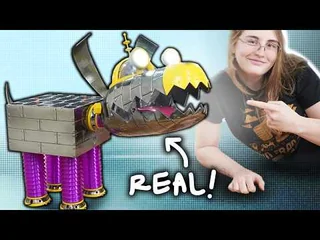
No the thumbnail is not fake and shes quite talented would not be surprised if she is in here anyways enjoy —————————————————————————————————————-——————————————————————- submitted by /u/fake_odelay [link] [Kommentare]
I am 16 years old and have absolutely no experience with Linux, and I am looking for a ROS 2 course. While the courses offered by The Construct seem quite comprehensive, I am concerned about some issues others have reported, such as incorrect quizzes, shallow content, or general quality problems. If you have experience with their courses, could you share how it went, or would you recommend other structured courses instead? submitted by /u/Initial_Animator1465 [link] [Kommentare]
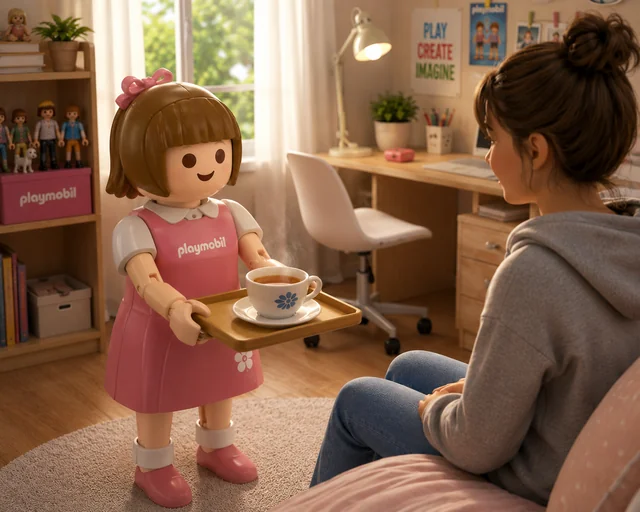
What if Playmobil figures were scaled up and equipped with AI, turning them into physical AI companions? It could be fun if their hands kept the classic C shape design but were upgraded with 3or 4 degrees of articulation, allowing them to perform simple tasks. (such as fetching a pen, making tea or coffee, and other basic household activities) The face could be a display screen. When powered off, it would show the classic Playmobil eyes and smile. Once activated, it would come to life with expressive eyes and facial animations similar to the characters in , allowing it to move and interact more naturally. What do you think? submitted by /u/Difficult-Limit-7551 [link] [Kommentare]
https://preview.redd.it/p5ml1bjytm6h1.png?width=2126&format=png&auto=webp&s=337217b73e76a7c3628cdaf62f5867fb25fb3e0b This robotic piano tutor physically guides your fingers so you can play even if you've never touched a piano before. Instead of just watching videos or apps, this system uses a dual-arm gantry with five-finger robotic hands that: - Precisely control each finger’s position and pressure on the keys - Use compliant (flexible) actuators for natural-feeling guidance instead of stiff pushing - Start with strong support and gradually reduce assistance as you build real muscle memory It turns passive learning into active, embodied practice — helping you feel the correct movements directly. Video: https://www.youtube.com/watch?v=QXn7hCM5yTI submitted by /u/Different-Humor-241 [link] [Kommentare]
Hello, I am trying to get back into the Robotics industry after years as an SWE and find a job. I am based in Chicago so I was thinking of getting an all access pass to network for a job, and take some courses. I am currently unemployed. Does anyone know the best way to network at these things? Are the courses worth it? Does anyone have a coupon to reduce the cost? i would be paying out of pocket and I am unemployed so i figured i would ask. Thanks for your advice! submitted by /u/RickAmes [link] [Kommentare]
ex-Huggingface pre-training team just announce a new library create for robotics data refinment! It supports ingestion of all robotics formats (Parquet, HDF5, MCAP, Zarr, RLDS, and LeRobot), as well as the common processing flows like visual hand-tracking, subtask annotations and reward model running submitted by /u/Other_Housing8453 [link] [Kommentare]
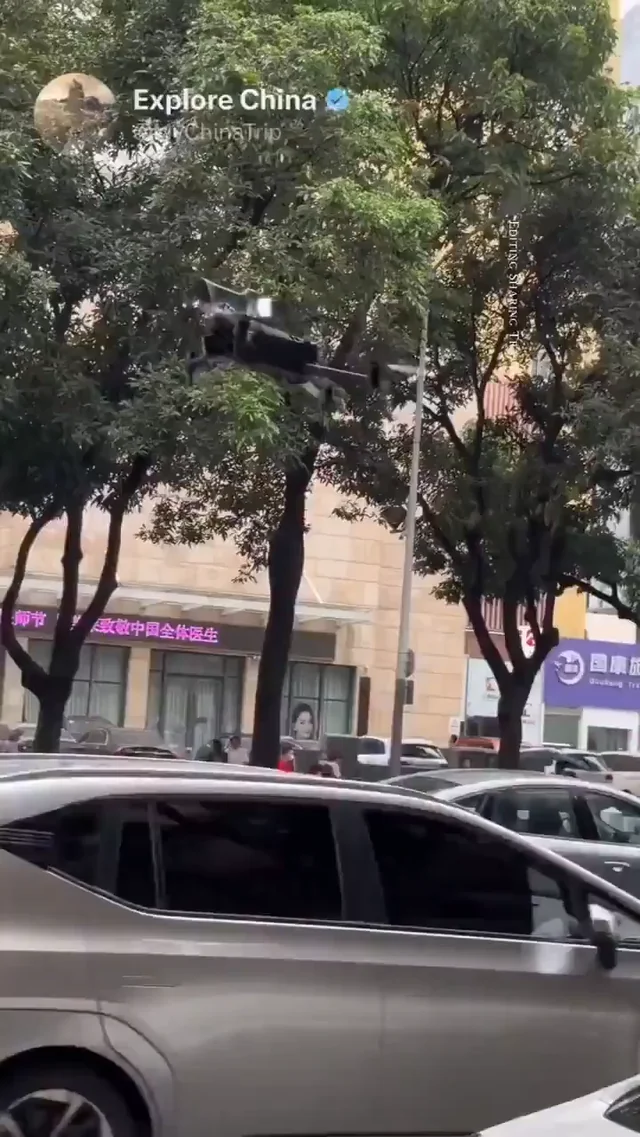

AI image detectors get fooled. Metadata does not. Here is how to check whether a photo was generated by DALL-E, Midjourney, or Adobe Firefly using the signals the generators themselves embed.

Create printable AI coloring worksheets for K-2 lessons, homeschool units, early finishers, and classroom themes from simple prompts.

A researcher claims he has already bypassed Claude Fable 5’s safety filters, exposing flaws in Anthropic’s guardrail system using multi-step AI prompts.