Channels
this site is undergoing maintenance due to physical address change
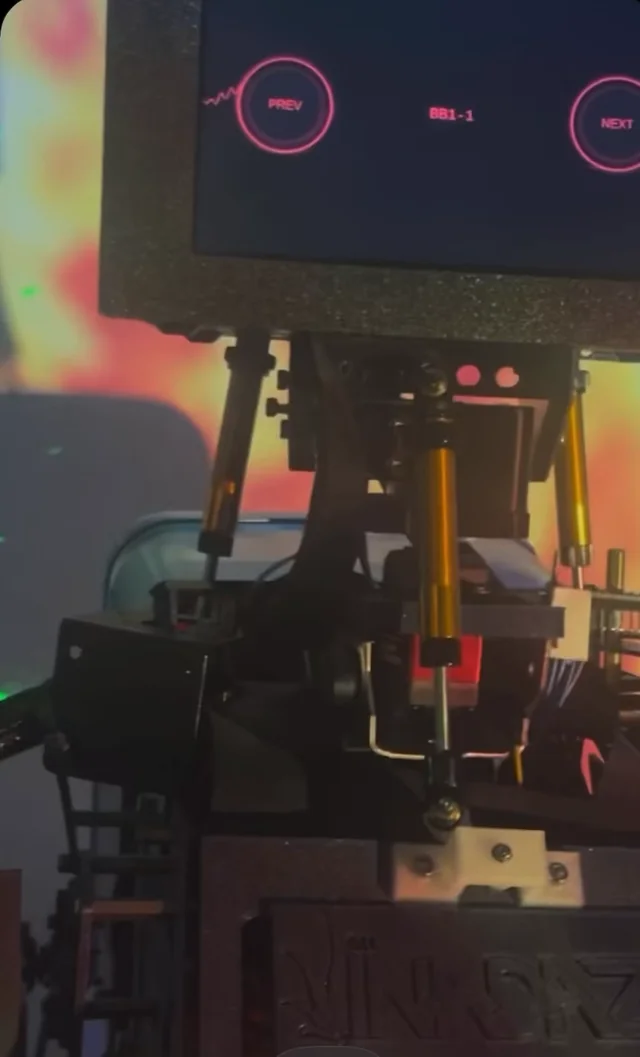
Leaning towards uncanny valley obviously versus trying to make it sound too real but I like getting roasted by a robot. Current progress . Hopefully doesn’t get flagged for having fire in the background or something. Cheers yall! submitted by /u/TheRealFanger [link] [Kommentare]
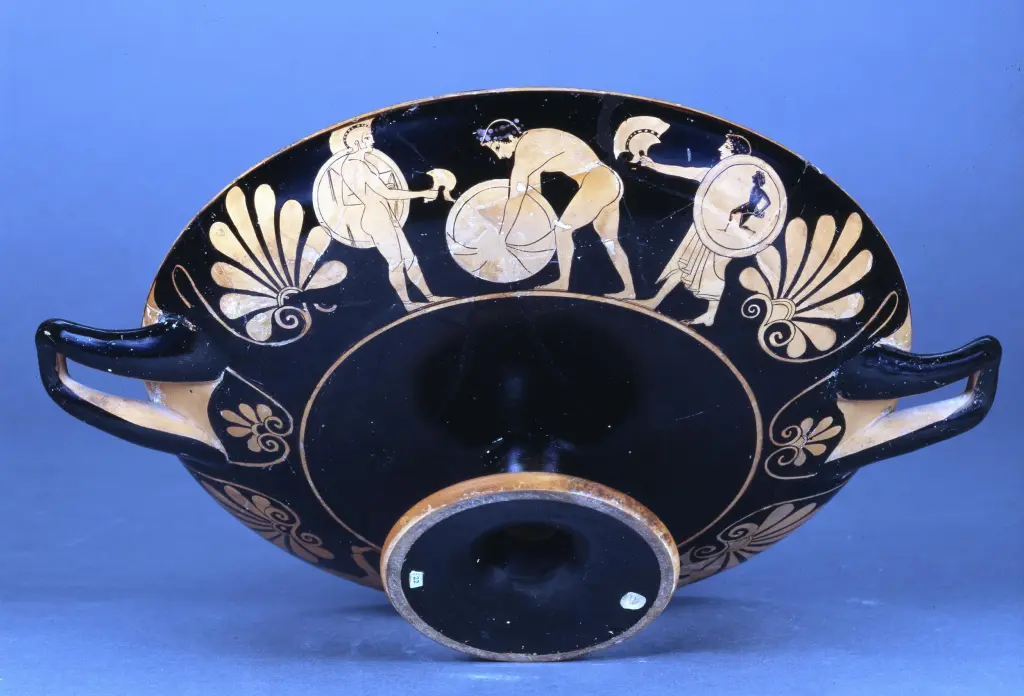
This week I want to try something a little different. Rather than taking apart a particular fantasy military system, I thought I might try to lay out a more general sense of how military systems te…
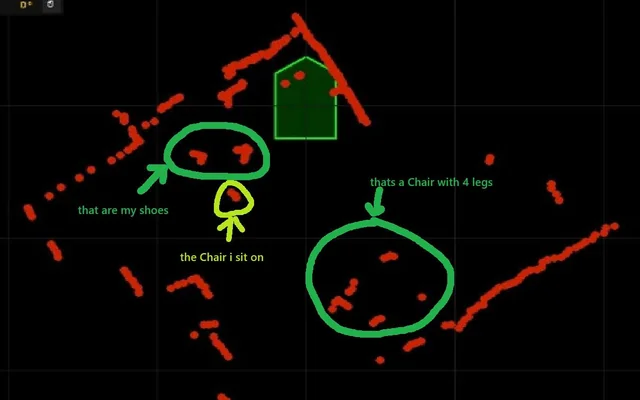

skill.md is not a replacement for docs, llms.txt, or MCP. It is a compact playbook that tells an agent how to use your product and where to start in your docs.
Batch export, download, and sync your PerplexityAI conversations to Markdown files. The ultimate Chrome Extension to bulk export thousands of searches with Spaces organization and smart deduplication.
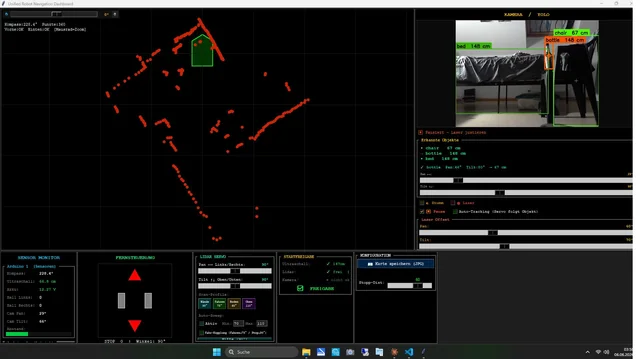

Contribute to egeozgul/Incremental-3D-Reconstruction-SfM development by creating an account on GitHub.

Large Language Model (LLM) code agents increasingly resolve repository-level issues by iteratively editing code, invoking tools, and validating candidate patches. In these workflows, agents often write tests on the fly, but the value of this behavior remains unclear. For example, GPT-5.2 writes almost no new tests yet achieves performance comparable to top-ranking agents.This raises a central question: do such tests meaningfully improve issue resolution, or do they mainly mimic a familiar software-development practice while consuming interaction budget? To better understand the role of agent-written tests, we analyze trajectories produced by six strong LLMs on SWE-bench Verified. Our results show that test writing is common, but resolved and unresolved tasks within the same model exhibit similar test-writing frequencies. When tests are written, they mainly serve as observational feedback channels, with value-revealing print statements appearing much more often than assertion-based checks. Based on these insights, we perform a prompt-intervention study by revising the prompts used with four models to either increase or reduce test writing. The results suggest that prompt-induced changes in the volume of agent-written tests do not significantly change final outcomes in this setting. Taken together, these results suggest that current agent-written testing practices reshape process and cost more than final task outcomes.
In my previous post was a little showcase of my implementation of the pure pursuit path tracking algorithm for omni-directional robots. One of the missing features is the safe curve approaching. The robot doesn't know the upcoming curve and it won't slow down (enough, at least in the previous implementation). Now I added the feed-forward lookahead that will calculate the slowdown cost based on the total sum of the angle differences of every three pose points in a small set of lookahead points. And the slowdown cost then plugged into the e^-x function and used it to scale the maximum velocity. Now it seems that the robot approaches the curve more smoothly. Additional stuff still needs to be added such as the acceleration limit and the better last pose point brake. If you are interested, you can check it out here over GitHub : https://github.com/E12-CO/iRob_bot_ros2 submitted by /u/TinLethax [link] [Kommentare]
Just came across this turn key modular consumer robotic arm that offers hardware and software integration all in one package. Question: Does anything like this exists for industrial application under $5k, each module made out of stainless steel or aluminum and comes with easy to use software integration (machine vision etc)? submitted by /u/innomind [link] [Kommentare]
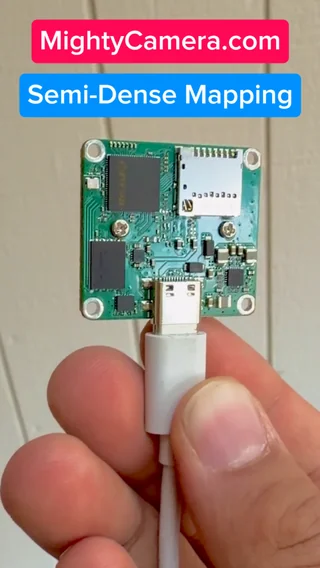
Posting an update here with simplified PCB and robustness. Mighty Camera runs VIO on-device in a tiny package. But for it to be useful, you need things like mapping (and later occupancy, loop closure etc). Here is a demo of lightweight mapping which uses VIO pose from Mighty and generates a semi-dense map on host-side in realtime. It’s early but this will be part of the SDK along with other goodies. submitted by /u/twokiloballs [link] [Kommentare]
Hi all, I’m trying to understand how people working with physical AI, embodied AI, robotics, or VLA models think about benchmarks in practice. This is not a product promotion or a request for upvotes. I’m looking for practical perspectives from people who run, read, or rely on benchmark results. A few questions: - Which benchmarks do you actually pay attention to? - Do benchmark scores influence model, policy, or framework choices, or are they mostly sanity checks? - What makes a benchmark result credible to you? - How much do you trust simulated task results compared with real-robot or hardware-in-the-loop results? - What are the biggest red flags when you see a physical AI benchmark claim? I’m especially interested in how people separate useful evidence from leaderboard noise, overfitting, cherry-picked demos, or unclear evaluation protocols. If this is too broad for this subreddit, I’m happy to narrow the question. submitted by /u/Confident_Gas_5266 [link] [Kommentare]