Channels

Apparatverk is a small design and manufacturing studio specializing in custom furniture, electronics, and objects.
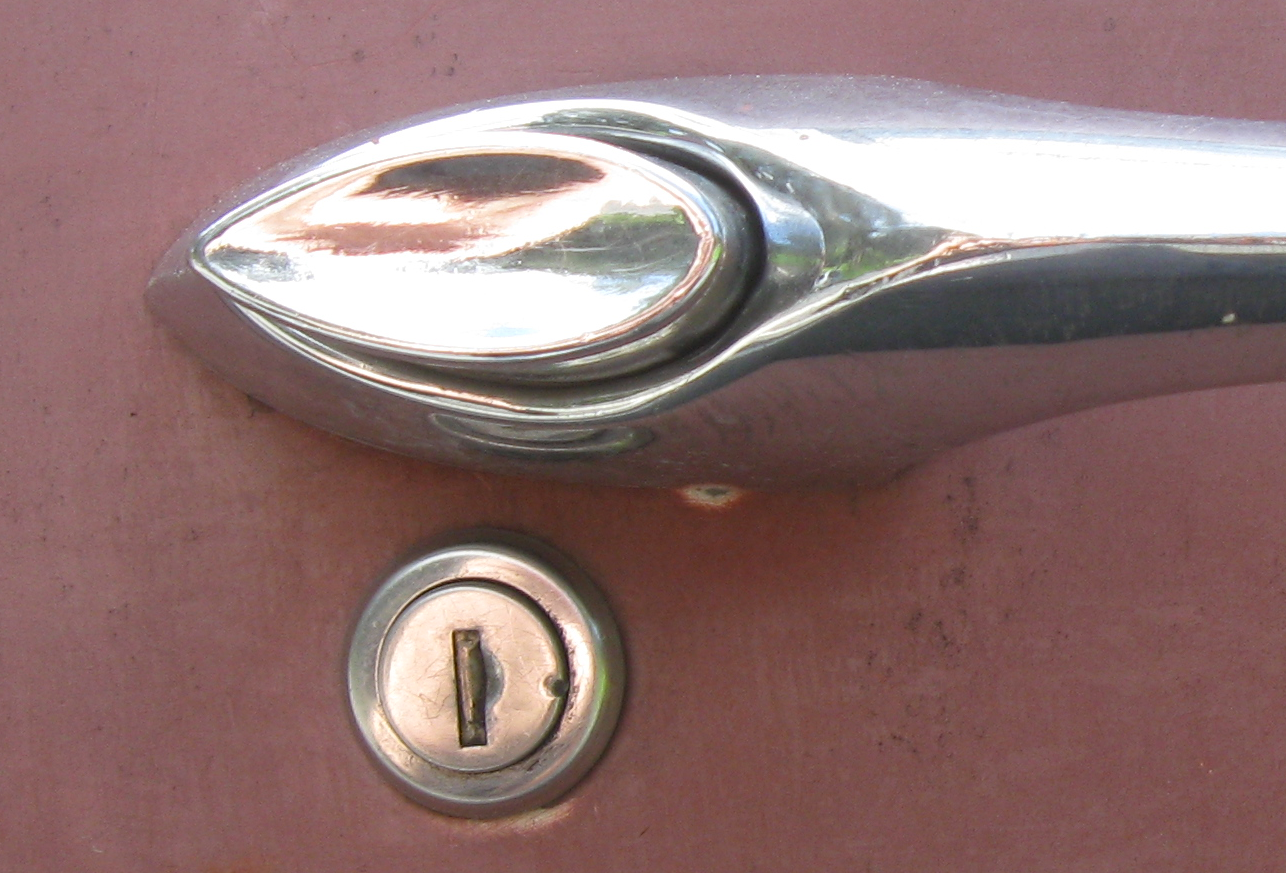
wabi tek sabi is way of seeing and living with human craft and technology. like the japanese idea of wabi sabi it has much to do with aesthetics and pleasure, but it is mainly a way to look at, work with, and live with, technology. wabi sabi is a japanese worldview that accepts the world as in constant change, one where beauty is intimately interwoven with imperfection and transience. in wabi sabi nothing is ever complete; life begins in chaos and ends in decay. in wabi sabi all beauty is "flawed" (in a western sense); not diminished by imperfection but beautiful because of it. wabi sabi is a way to see beauty in an imperfect and inconstant world. the words wabi and sabi are difficult to translate to english, and have somewhat vague meanings in japanese. from "a provisional definition": wabi sabi began, centuries ago, as a reaction of japanese monied classes' desire for more enhanced, exclusive and rarefied aesthetic pleasures, and therefore has a substantial and rarely discussed class component, expanded on elsewhere here. wabi sabi is at best, and in this document, a way of intentionally seeing (finding or creating) beauty in the everyday, the mundane, the imperfect; of seeing things as dynamic situations rather than static, fixed ‘objects’. it is easiest to talk about wabi sabi objects, and since wabi sabi developed around japanese tea ceremonies, a brief look at that may illuminate. wabi sabi objects are often seen as "rustic" because it is how they first appear; unsophisticated, rough, simple. given that monied classes most obvious attribute is sophistication, refined and complex, interest in things wabi sabi would at first appear to be contradictory. but monied classes already had access to things of the highest quality, similar to today’s "high end" consumer perfection. it is the very paradox of this juxtaposition that embodies, or creates, the beauty of wabi sabi. (this seeming paradox is loosely analogous to buying expensively pre-ripped jeans, but traditional wabi sabi is far more concerned with issues of authenticity and the human processes that created the wabi sabi object.) traditional wabi sabi does not welcome flaw nor imperfection into what might be called ‘functional’ life; there is no pleasure in a leaking roof or broken plumbing. wabi sabi is very selective of what it borrows from more rustic living. wabi sabi involves very carefully selected aspects of the underlying ideas associated with zen buddhism, ascetism and self-imposed austerity. actual poverty is nowhere to be found within wabi sabi. flaws and imperfections provide a contrast to intentional elements of an object’s construction; for example lumps and rough texture in a clay cup, or variations in the color of the glaze ensure each item is unique. it is generally argued that wabi sabi cannot be intentionally created; that it is a complex, subtle, irreversible side effect of use and age, and that attempts to create wabi sabi will fail. wabi tek sabi is way of seeing and living with human craft and technology in the world. like wabi sabi it certainly has much to do with aesthetics and pleasure, but it is mainly a way to look at, work with, and live with technology. we all have our favorite objects; comfortably worn-out shoes we can’t bear to part with; we watch the holes grow larger as we wear them year in and year out. a new tool patinas; that patina eventually becomes objectionable wear. a shiny new object may stand out from others like it, until it too achieves the warm dull patina of use and becomes part of a household. mundane things become personalized. objects treated in this way are ongoing, long-term situations, relationships between people and objects, that is not simply about money and is not necessarily fully rational; they give us pleasure and usefulness both. it is the combination of object and human attention that creates the situation of wabi tek sabi. these situations are the very essence of wabi tek sabi. where wabi sabi finds beauty in objects subjected to various (generally unacknowledged or unseen) processes of wear and use; wabi tek sabi embraces the processes and situations themselves that lead to to the creation of an object’s dynamic situation. this is necessarily a crude and simplistic comparison, but it may highlight some of the major characteristics of the three systems of thought: comparisons between wabi sabi, wabi tek sabi, modernism where japanese wabi sabi was "top down", ruling classes borrowing culture from lower classes, wabi tek sabi similarly comes from a culture-of-excess, and most usefully to those of us living in a post-culture-of-excess. the main aesthetic elements of wabi sabi are side effects of use and wear and therefore generally of working and lower classes; removed from their original contexts, accumulated wear on objects can be viewed as beautiful patina, and not painful effort, wear, and deterioration; the causal human effort expended to make it so is conveniently removed from the equation. the distancing inherent in class stratification allows the 'consumption' of class effort created and 'stored' within wabi sabi objects. wabi tek sabi however differs here; in our post-modern situation there are simply unthinkably many objects and uncountable numbers of people, and stratas of objects and technologies. our industrialized/consumer cultures have no shortage of objects, and effort and wear leading to wabi sabi-like aesthetic conditions are not (always) so tightly bound as to require class-remote distancing to enjoy and use. people who create or maintain objects with wabi tek sabi often have sufficient privilege to enjoy them. where wabi sabi had an iemoto (the founder or current grandmaster of a tradition or art) who acted as gatekeeper for wabi sabi-ness, and would control who might have access to it, modern technological life analogously has various gatekeepers to shiny new products, the artificial value of which ensures a near endless supply of cast-off objects. objects with wabi tek sabi are anathema to consumer culture. iemotos maintained power and exclusivity by blocking access to an aesthetic kept obscure and inscrutable; consumer culture does so with branding and other mechanisms; wabi tek sabi does not directly take part in this value system; it simply steps off those particular paths. technology is, at least, human handicraft tied into an economic system. currently technology is inseparable from global corporate economies. people making things, whether simple clay pots or complex science-based instrumentation, is craft. craft is as old as human history, and many people consider the ability to craft matter part of the definition of being human. making a pot or a radio-telescope becomes technology when it is embedded within an economic system. the conversation becomes complex when one attempts to hand-craft objects using materials and or components produced by technological systems; materials, tools, components can and do come from nearly any continent today. therefore the word ‘technology’ is slippery; it is a highly ideological word. i think of the word as containing a tangle of multiple meanings with two ‘magnetic poles’ -- at one end, technology is the use of tools and knowledge, crafts and systems, ultimately to manipulate matter, which exists in most human and some animal cultures; at the other pole technology means the human industrial economic system of production -- products. a dogmatic definition is not required to proceed here. it is customary to think of ‘things’ as having distinct existences; it is how we make sense of a complex world. the wabi tek sabi view however is to accept that nothing is truly isolated or ‘stand alone’; a mirror-polished granite monument does in fact dull, oxidize, accrete dust and acids, is etched slowly by microorganisms and plants that corrode the surface, and more, albeit at a glacial pace. in this sense everything is, literally if subtlely, connected in an entirely non-metaphysical way. all things rot and corrode, people are born, live and die. yet in a mundane and everyday way, a polished granite monument is an unchanging object; under most circumstances, it will persist unchanged through our lifetime. but objects also change in meaning; while it is in fashion it is well regarded and maintained with care, out of fashion it is relegated to dead storage, becomes chipped and is discarded or re-used. objects also change because we think of them differently, and in a cultural sense, a given object is different in each situation. therefore objects are dynamic situations, or create situations, as much as they are unchanging static "objects". mountains always look the same; yet we know they once did not exist, are changing now, and will continue to change long after we are gone. they were painful impediments to travel at one time, beautiful parts of earthly existence in another. technology does not simply produce "objects", things with standalone, isolated existences, but "situations", things with relationships to people and things, things constructed of other things, all of which are entirely dependent on systems and things both hidden and obvious. an automobile does not stand alone; it is embedded in a vast system of roadways, petrochemical infrastructure, legal and social environments. a modern car plunked down in 15th century England, Peru, Russia, or Easter Island, would lose all meaning and remain utterly motionless; like a cake in the rain it would rapidly and irretreivably decay. wabi sabi is found easily in the modern Western world: rain-driven rust streaks along a concrete wall, complex patterning of chipped yellow paint and rusted steel on abandoned machinery. the thatched hut of Rikyu's time is now stucco, shingle, concrete, aluminum and glass. all things change as they remain the same. but this is not necessarily wabi tek sabi. wabi tek sabi begins with a wabi sabi view of the world as experienced through the senses, as wabi sabi does, but incorporates the forces, physical, technological, hidden and visible, involved in the situations that lead to a wabi sabi moment. those forces unfold over time, and will continue to do so into the future; the present is not a static state or even a snapshot, but an experienced moment in an ongoing situation. a moment's beauty in the grain of weathered wood in a backyard fence soon becomes a maintenance issue when that fence needs replacing; that does not diminish past beauty. similarly, a technological product or system, once new and perfect (more precisely, none of it's inherent flaws yet manifest), once removed from it's marketing reality bubble, decays. repairs may be made, and while they restore function and sometimes the original sheen, eventually wear takes its toll. it is in this process that the manufactured ideological magic begins to wear off, and the object must be banished and replaced anew, the old object made to be no longer part of local reality (situation) by being discarded. but wabi tek sabi means not merely rain-caused rust on a nail head in old weathered wood, but metal accumulating stress fractures; decades of wind-plus-sand obscuring windshield vision; soldered electrical connections oxidizing, silicon dopants diffusing through microscopic structures. these sorts of (generally hidden) processes not only accrue to the aesthetic of wabi sabi (where visible), these physical processes themselves as well as their external manifestations are of concern to wabi tek sabi. many technological artifacts are an active part of our lives, consume energy, require involvement and demand relationship. we are not mere passive observers of the beauty within wabi tek sabi objects; our relationship manifests in and upon objects as we use, wear, repair objects. wabi tek sabi is not simply sensory pleasure consumption, however profound or shallow one might take that to be -- it is a way for living with technological matter. wabi tek sabi is how i personally build things and how i maintain my automobiles. wabi tek sabi attempts to blend beauty and function; comfort, pleasure, technical knowledge and skills applied to everyday (or exotic) technology. where wabi sabi is passive, only observing, wabi tek sabi is active, accepting and encouraging our participation in the tearing-down processes we can choose to see as containing beauty. we might as well; fundamental physical processes are unfolding within us and without us; this is how the world works. wabi tek sabi is a way to construct situations that incorporate carefully selected technologies into basic human drives for desires and pleasure. wabi tek sabi is sometimes directly at odds with commercial drives of consumption of technological goods. wabi tek sabi is about an intimate sensual relationship with matter. wabi tek sabi can also be brutally functional. "failure analysis" is an accepted industrial discipline; it is the process of collecting and analyzing data to determine the source of a failure, with the very industrial goal of affecting the occurrence future possible failures. it accepts that failure is as inevitable as success; it is simply physics -- something always breaks first. all things fail eventually, and by studying failures one can learn how to better design things. failure analysis is very wabi tek sabi. wabi tek sabi can be thought of as what happens when you live within your technological means. wabi tek sabi departs fundamentally from wabi sabi in that it acknowledges human involvement in the unfolding of the aesthetic. further, it encourages (requires, really) human meddling with the mechanisms that invisibly (unaddressed and unspoken of, really) form the situations that wabi sabi practitioners observe. wabi tek sabi is at odds with wabi sabi in another fundamental concept: wabi sabi generally claims that it is not possible to create wabi sabi beauty. this may or may not be so; but wabi tek sabi does revel in meddling with the physical world. this is a sort of arrogance, an assertion of human control over the world. wabi tek sabi acknowledges that that human control of the universe is wildly imperfect and flawed and the results thereof, for better and worse, are subject to decay and... wabi sabi-ness. wabi tek sabi explicitly considers the ‘invisible’ as well as the visible, with the thesis that the processes of the physical world, the processes themselves, contain beauty. this idea also contains some anti-modern and social class implications which will be discussed later. it is very difficult to duplicate a given wabi tek sabi situation, since it is almost certainly a case of experiences accumulated over time and happenstance; it would also be pointless, because what makes wabi tek sabi interesting is the very accumulation of experience. wabi tek sabi and wabi sabi are bluntly in opposition to some fundamental ideas within modernism. where modernism puts forth ideas of perfection, seamlessness, hidden infrastructure, timelessness, superficiality and isolation, wabi tek sabi and wabi sabi both accept wear, rot, decay, time, flaw, interdependence and change. wabi tek sabi goes further in that it encourages meddling with innards, processes, and looking-inside-the-machine. the pattern of rust-red nail heads in a fence may be beautiful; it also means that the gripping force of wood fibers displaced in tension by a hammer-driven nail is now gone, and the wall subtlely (or not) moves and creaks in the wind. it is in need of repair; you will have to do the work; it can still still beautiful, and understanding how wood fibers grip nails can enhance your understanding of that beauty (and help understand where the squeaking comes from). you can photograph the wall before repair, as a pale reminder of it's past beauty. that is wabi tek sabi. an intimate relationship with matter, and an understanding of the dynamic processes that affect it's dynamic states is a form of storytelling, and disturbs the cycle of buy/consume/discard of commercial culture. that form of storytelling is interrupted when we live in a continuous stream of new products. wabi tek sabi rewards deeper understanding of physical and technological processes (by "physical process" i mean chemical, electrical, vibratory, abrasive, ... all of the things that cause matter and energy to interact with each other, generally thought of as "natural" processes. "technical processes" are those due to human re-arrangement of materials into forms not-naturally-occurring. i do not intend to be dogmatic about these boundaries.) that cause things we perceive to be beautiful (or ugly) to unfold. the reward for understanding, beyond the obvious increased ability to influence matter (more on this later) can be to see beauty where there was once ugly decay; for many physical processes contain within them symmetries and patterns and deeper processes that are sometimes beautiful and almost always fascinating. the wabi sabi idea of 'beauty in a weathered fence' is deeply classist; that patina represents work, stress, time and materials to the person who will eventually fix it. as originally formulated, wabi sabi was an aesthetic of rich and powerful people looking for ways to further enhance their lives. it brought nature and human imperfection into a highly developed and exquisitely-managed urban environment. if you are poor, a worn fence is a worn fence, work that needs to be done that is, at best, put off until some future time. if you are poor (or not), a new fence might be a more beautiful fence than an old one, because it represents work that no longer need be done. wabi sabi is, at it's best, a way to see beauty in a world that is inherently dynamic and contains "flaws", but "flaw" in this instance requires a perfection to contrast with or react against. wabi tek sabi correspondingly requires a modern world, filled with (alleged) perfection and seamlessness, to contrast itself. if you do not have access to any of this modern world's technological goods, neither wabi tek sabi nor wabi sabi have much value, and merely highlight what it is that you do not now have. one does not need to be poor to fear the immanent work and effort that a squeaking, weathered fence represents; your ability and your desire to afford or maintain the thing, that is, money or skills or time, are factors. but as those of us with access to varying amounts of technological success know, humbly i hope, that commercial goods come at a cost that is not always maintainable. for those of us in various continuums between truly poor and truly rich, wabi tek sabi is one way to live with modern technology. when upkeep of technological systems (for example an automobile needed to get to work daily) is a burden and contains no pleasure, it is hard to apply wabi tek sabi to it's operation. wabi tek sabi is not a universal solvent. wabi sabi and wabi tek sabi therefore exist only in tension with its opposite. within as without -- nothing is stand-alone. by energy or force i mean literally power source -- human, animal, water, petroleum, wind, electrical, whatever -- the difference in energy potential that when harnessed, causes technological mechanism to effect human intent. energy sources of many kinds are hidden behind the gloss of modern, technological devices, and if wabi tek sabi contains a hidden component, a concept approaching the ideological, it is energy. the equation of repairing or replacing a thing is at base a question of energy; more specifically the cost of the energy used to produce or repair. the world is increasingly a closed system; there are few frontiers, and dumped trash is always in someone's backyard. purchasing a new technological thing involves hidden energy that often presupposes an infinite frontier; there will always be more resources and energy to make more things, and there is always somewhere to dump disused things. repair or upkeep of a thing makes clear how much energy is involved in it's original making or needed repair. improved understanding of these processes is very wabi tek sabi. a wooden fence weathering outdoors is subjected to sun-sourced energy of up to 1000 watts per square meter of area. this is no small thing. a polished granite monument begins with a chunk of rock mined from the earth; most of what is mined is ‘flawed’ and is discarded. a chosen block of granite is transported to an artisan who slices the block into the desired shape, and tediously grinds matter off it's surface to obtain the desired finish. each of these steps consumes huge amounts of energy, tremendous amounts of water are used, chemicals and abrasives, the machinery involved in the transport and finishing are are part of the equation of energy. therefore, wabi tek sabi implores one to seek the source and location of the variously involved energy sources, and understanding them. technical and scientific inquiry is integral to wabi tek sabi. inquiry is i believe an apt word; for it is knowledge gained and applied to a real situation that matters. wabi tek sabi informs practice. theory -- ideal/logical preconceptions we use to predict future or explain past behavior of a system -- can enhance practice, but people get things done in all sorts of thought-systems, with and without formal theory. wabi tek sabi doesn't speak much to theoretics. if a technological object ceases to function, it's situation will change. electrical theory works just fine when you incorrectly assume that electrons orbit an atom’s nucleus like planets around a sun. but the described behavior of many things (like transistors and LEDs) make no sense without some grasp of quantum physics. the key is to think flexibly and hop frameworks when doing so enhances understanding and practice. as in all practices, the ability to predict future behavior is a good measure of a theory or of a science. science in this context is not about being right, nor about "truth". people navigated the globe with the incorrect notion that the sun revolved around the earth. there are many world views and approaches to problem solving. the western method of ‘divide and conquer’ is a very useful one, but it’s easy to forget that it is just a mental tool. it is an excellent way to drill down into specifics, but a poor way to view the world; causes, side effects, interactions, history created by situations and objects are too easily missed or worse, intentionally excluded as unimportant or unrelated. failure analysis is an industrial discipline that collects data and analyzes events that led up to a failure, generally with the intent of preventing future failures by making changes to the design of a thing or system. applied more casually, failure analysis is an excellent way to understand processes unfolding within wabi tek sabi. the specific techniques used can be simple observation or formal procedures; all involve putting your attention to an object or situation that is not as desired. paying attention to an object this way means creating a situation in which you are open to surprises and novelty within what might otherwise be a mundane thing. lessons learned through failure analysis often lead to insights outside the situation at hand. the act of failure analysis, sometimes called troubleshooting, requires (and builds) skill and can become quite involved; but it is surprising how much can be learned without specific skills by asking yourself probing fundamental questions: when did it stop working? did it ever work correctly? what preceded the failure? continuing, or beginning, a relationship or situation with a thing now of no use to you -- a failed object -- may reveal things to you about the thing, how you were using it, how you might avoid failure in the future, and possibly how you might find further use of the thing at hand by repair or reuse. in other words, take things apart to see how they work. fixing broken things carries with it much baggage in a consumer society. in a world of alleged plenty, re-using something broken or imperfect often carries with it various stigmas. it calls into question class relationships too, of poor versus comfortably monied. i choose to side-step these issues by concentrating on my relationship to objects in my immediate world, for my own ends and means. if a thing is meeting my needs, both practical and aesthetic, i will continue to analyze failures (or better yet, through attention and close relationship and knowledge, anticipate future possible failures) and effect repairs and improvements. repairs often lead to a change in aesthetic, as does wear, time and weather. sometimes these changes are of substance, but sometimes they are cosmetic. all are an evolving aspect of the object’s wabi tek sabi. there are many instances of wear or ‘worn out’ that are socially acceptable across class boundaries. many people recognize the value of a comfortably worn pair of jeans, a jacket, or favorite shoes. this has always been essentially a wabi tek sabi relationship, not just wabi sabi, as the owner of such objects is well aware, the inevitable deterioration of fabric seams and materials not only enhances aesthetics (increased softness, color and texture complexity) that same change undermines usability (tears, stains). at some point in the process changes need to be effected (sewn patches) or the object discarded and replaced. carried out over a long enough period, repairs or modifications to an object evolve that object over time. sometimes repairs are simply that; to restore a thing as close to it’s original state as possible. however other ways are possible. PRINCIPLE: wabi tek sabi, like wabi sabi, describes an aesthetic situation, a way to see beauty. PRINCIPLE: wabi sabi nor wabi tek sabi cannot exist without it's opposite. PRINCIPLE: wabi tek sabi is wabi sabi with technical rigor. (1) Koren, Leonard (1994). Wabi-Sabi for Artists, Designers, Poets and Philosophers. Stone Bridge Press. ISBN 1-880656-12-4.

We noticed that something strange is happening. We're all writing software with AI, but we are mostly doing it alone, with no real sense of how anyone else does it. So we made a tool to help you understand how you build with AI. It reads your Claude, Codex, and Cursor sessions, so you can discover things about how you build. With time, as more people upload theirs, we'll be able to show you how you compare to other builders. So far, 233,881 sessions have been uploaded and analyzed. Here are examples of what people have learned about their coding habits... This is an experiment from YC. Nobody really knows yet what it means to build well with coding agents, and we are trying to find out. It looks at the AI session transcripts on your computer. Where you run the command tells it whether to analyze every project at once or just one. Best for a broader picture across projects. Change into the parent folder that holds your repos, then run. Best for focusing on a single project. Change into that project's folder (replace ~/path/to/your-project with the real path) and run. You can use this prompt in Claude, Codex, or Cursor to find all your repos on your machine with AI transcripts, show you the list, and hand back ready-to-run commands for the ones you pick. You get a builder profile, a snapshot of how you work with AI across five dimensions of steering, execution, engineering, product instinct, and planning. We name the archetypes we see in your sessions, whether you build like an Architect, a Quality Guardian, a Velocity Machine, or a Night Owl. We also pull out your decision patterns, the signature moves you make when directing the AI, drawn from real exchanges in your transcripts. Then we point at your growth edge, a few specific things to try next, grounded in your actual sessions rather than generic advice. Sign in with your email, then run the command in your terminal from the repo you want analyzed. The analysis runs in Docker on your own machine, so you'll need Docker installed and running first. In about 15 to 30 minutes you get your profile back with scores, archetypes, decision patterns, and a growth edge. Your working tree, your .env files, and your raw transcripts stay on your machine. Only short transcript excerpts go to Claude or GPT so we can summarize and score, and what reaches YC is a small payload of scores, narratives, and redacted decisions. You can read the full breakdown. Your working tree and .env files are not uploaded to YC. During analysis, transcript excerpts (prompts, agent responses, and snippets of tool calls) are sent to Claude or GPT via our proxy so we can summarize what happened. At the end of the run, a JSON payload of scores, narratives, redacted decisions, and session metadata is uploaded to YC. Full breakdown. Claude Code, Codex CLI, and Cursor. We read the transcripts each tool stores locally. Yes. The analysis runs locally in a Docker container on your own machine. Install Docker Desktop (or any Docker runtime like colima or OrbStack) and make sure it's running before you run the command. If the engine isn't up, the script prints exactly how to start it. 15-30 minutes depending on how many sessions you have. You get an email when it's ready. Yes. Run from a parent directory and pick which repos to include, or pass --project NAME. Whenever you want an updated profile. Each upload produces a new report; your profile aggregates across all of them. What's the difference between a report and a profile? A report is a snapshot of one upload. Your profile synthesizes patterns across all your reports: how you've evolved, what's consistent, where you're growing. I code on multiple machines. Can I get credit for both? Yes. Just run the same curl command on each machine. Log in with the same email and your builder profile will automatically aggregate sessions across all of them. How do I attach my Paxel token to my Startup School application? Linking your Paxel token boosts your chances of getting into Startup School 2026. Open your reports page and find your token. If you haven't applied yet or you're still on the waitlist, click the attach link to send your token straight to your application, or copy the token and paste it in yourself. I found a bug or have a feature request. Where do I send it? Use this form to report a bug or request a feature. For feature requests we like, we'll run your prompt with a coding agent and merge the result. Report a bug or submit a feature request Tell us below if you found something broken or want this tool to do something it can't yet. For feature requests we like, we'll run your prompt with a coding agent and merge the result. Try it on one of your repos and you'll have results in about 20 minutes, with YC covering the cost and your code never leaving your machine. Upload
We’ve detected that JavaScript is disabled in this browser. Please enable JavaScript or switch to a supported browser to continue using x.com. You can see a list of supported browsers in our Help Center. Allgemeine Geschäftsbedingungen Datenschutzrichtlinien Cookie-Richtlinie Impressum Anzeigen-Info © 2026 X Corp.
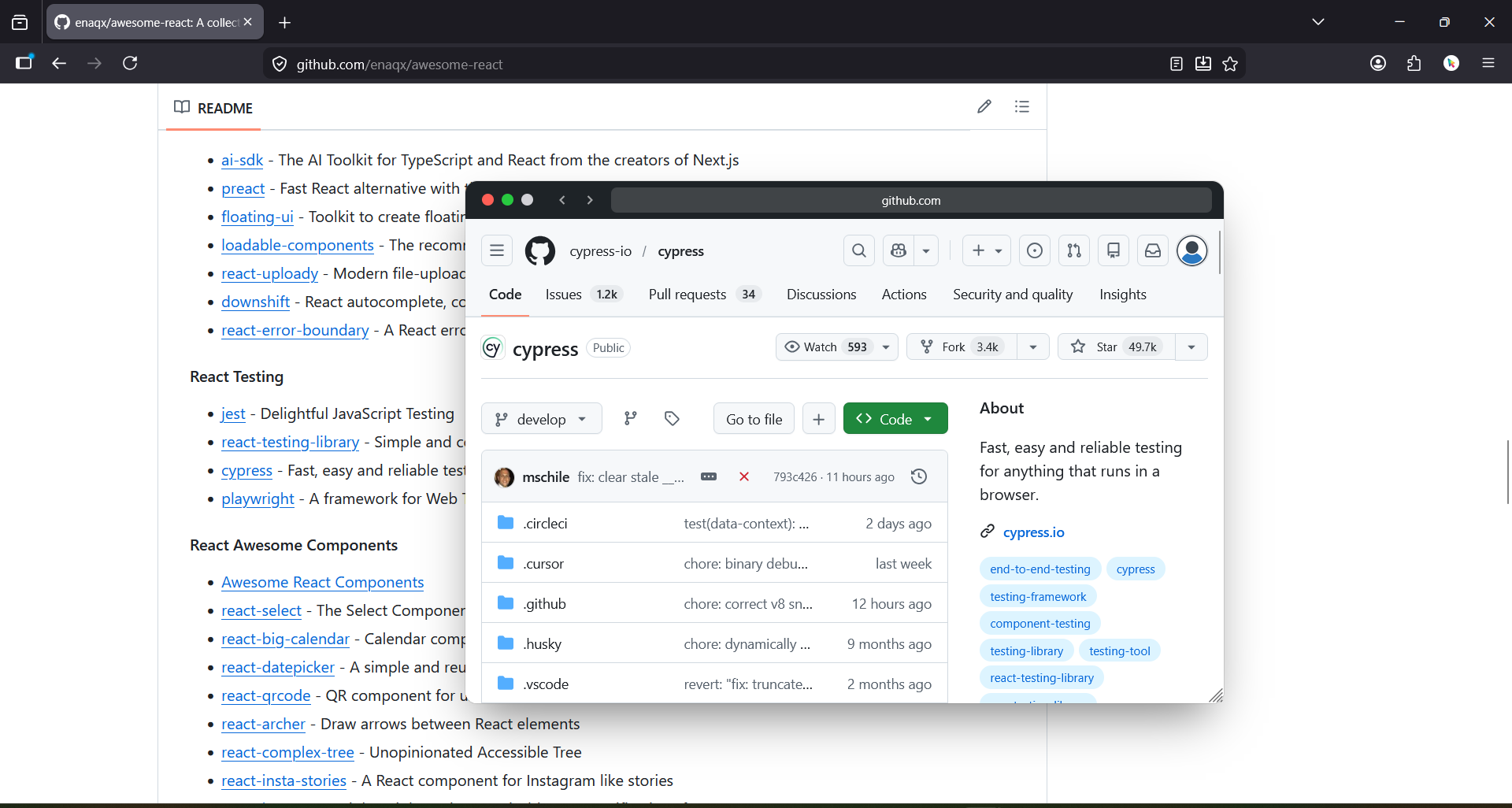
Download GoPeek for Firefox. Open links in live mini browser windows without creating new tabs.

Hey IH 👋 Creators spend hours making content, then post it blind — hoping the algorithm picks it up. Most of the time, it doesn't. Not because the cont...

This is a linkpost for my Harvard Crimson op-ed for its commencement issue. I will not reproduce the whole text here, but my advice to the class of 2026 is in the following parts: My advice for the…

Nichelle Nichols' estate was awarded $13 million.
Extension for Visual Studio Code - Ask coding questions inline and get answers in the format of a Stack Overflow thread — condensed, multiple competing answers, one accepted.

A critical security update has been released for UpdraftPlus and UpdraftCentral. Learn who is affected, how to update, and how to stay protected.

This is an automated check to get rid of most bots. If you have JavaScript enabled, it should redirect to the real page soon. If you don't, it still should redirect soon, but you can click here if you're fast.
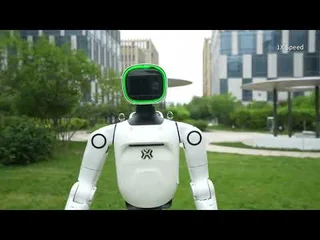
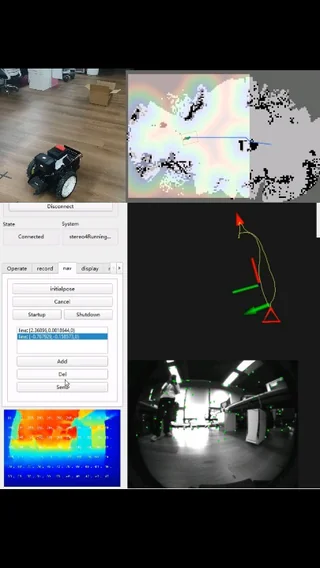
Hey all, I'm a robotics engineer by training turned ML/AI engineer because of passion right after school. I want to start combining these skills together and I think a competition is the best way of doing it. Here's an example of a challenge I'm talking about to set expectations : https://www.intrinsic.ai/events/ai-for-industry-challenge Anyone up for this? L.E.1. I'm based in Europe. I think online only competitions would be easiest to start with to get momentum going, then if the results are worth it, we can consider meeting in person if it makes sense. L.E.2. I don't have the next challenge in mind yet, I'm open to suggestions. submitted by /u/Due_Pickle1627 [link] [Kommentare]