 G
↗
G
↗
Red Dead Redemption 2, Dominoes, and Motorcycles — Brett Fisher
 C
↗
C
↗
We built Doom Agent Arena, an open-source benchmark where AI agents battle in Doom via MCP. Here's what it taught us about AI-assisted incident response.
 R
↗
R
↗
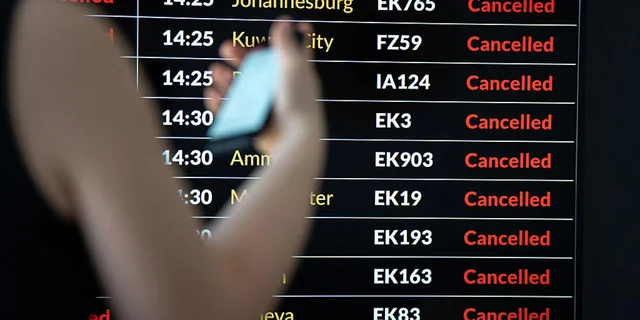
Prediction market platform Kalshi has called off plans for its latest offering: Contracts that would let users wager on upcoming flight cancellations. The decision comes after social media users expressed fears that bad actors could make mischief at airports in order to collect a payout, and after popular airline-tracking service FlightAware said Kalshi could not use its data to resolve the contracts. Kalshi had planned to begin listing flight cancellation contracts on Wednesday, according to a regulatory filing, but a spokesperson on Thursday told Fortune that the company has opted not to go forward for now. Kalshi’s proposed contracts applied to airport-wide cancellations, not individual flights, and included detailed rules prohibiting insiders—including TSA agents and airport and union officials—from placing wagers. Nonetheless, skeptics seized on the news to warn that airport workers seeking a payoff might collude to cancel a flight, or that crooks could call in fake threats to shut down air travel. It’s unclear to what degree the concern over the Kalshi flight contracts was justified given the prohibition of wagers by insiders, and in light of stiff criminal penalties for threats or hoaxes directed at the airport industry. Read more [paywall removed for Redditors]: https://fortune.com/2026/07/16/kalshi-flight-cancellations/?utm_source=reddit/ submitted by /u/fortune [link] [Kommentare]
R
↗
Not necessarily the cheapest trade, but one where everything worked exactly as expected without delays, confusion, or extra steps. It feels like those transactions deserve appreciation because they don't happen as often as they should. submitted by /u/ResidentGur271 [link] [Kommentare]
R
↗
I have been thinking of building a project where a robotic arm is controlled by a local VLM model. In my understanding I feed the VLM a 2D image of the object infront of the robot and query the vlm task like "grab the hammer" and VLM provides the 2D co-ordinates and then it goes to moveit and moveit plans the mission. I'm still at the vague idea state, any kind of input or reference or guide will be appreciated! Thank you in advance!! submitted by /u/LearnfromAsking [link] [Kommentare]
 X
↗
X
↗
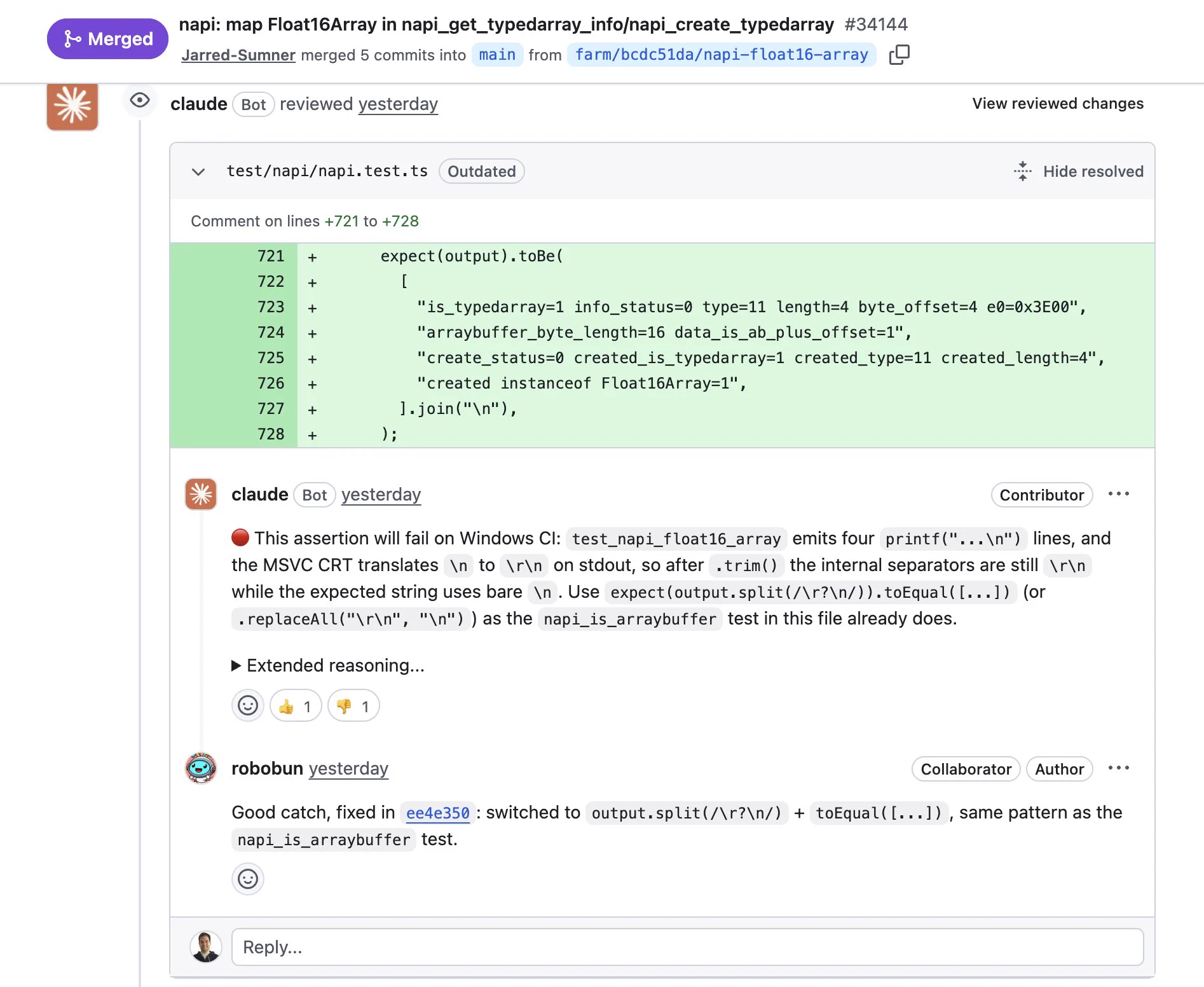
Fascinating to look at PRs in the Bun repo: much of it is AI reviewers talking with AI bots...! CodeRabbit and Claude review bot talking with Robobun. Screenshot from this PR: https://t.co/rfMRRUW4sF
R
↗
I'm working on a project with summarized data from ~40 studies (Excel) involving different protocol variables (durations, intensities, recovery times, frequency, total duration, etc.) and response outcomes conditional on a baseline variable (range ~30-85 units). The aim is to fit a continuous response surface using a hierarchical approach to separate protocol effects from baseline effects, then perform continuous numerical optimization (not grid search) for three objectives: - Total improvement - Improvement per unit time (e.g. per week) - Improvement per unit effort/work Outputs should be fine-grained continuous values rather than rounded study parameters. There are also domain-specific physiological constraints to respect. I'm on a Chromebook with a little Python experience, so Colab-friendly solutions would be ideal. Current candidates I'm considering: PyMC for hierarchical modeling, pymoo + pysamoo for surrogate-assisted MO optimization, SMT for surrogates, or Matlab Global Optimization Toolbox. What is the strongest stack in 2026 for this kind of workflow? Any recommended notebooks, tutorials, or similar applied examples? Are there any AI tools that currently do this without the traditional work of python? Meaning I can upload the spreadsheet give a parameters and it will come up with data.? submitted by /u/BleakReason [link] [Kommentare]
R
↗
tried to post about /r/Nanogotchi and it was taken down without any reason. Nano (XNO) is a cryptocurrency, and it didn't break any of the rules so? submitted by /u/K1LLerCal [link] [Kommentare]
 C
↗
C
↗
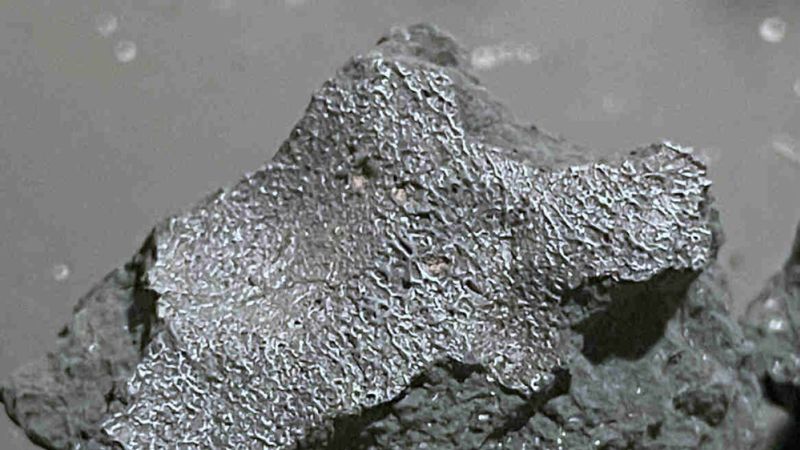
A meteorite that crashed into a New Jersey home in 2024 is a rare, primitive space rock containing evidence of ancient water.
 G
↗
G
↗
Microcontrollers with on-die neural processing units (NPUs) have become mainstream, but the system software hosting them has not: production combinations of Zephyr or FreeRTOS with TensorFlow Lite Micro treat AI inference as an application-layer library, leaving memory fragmentation, accelerator-state hygiene, and model-lifecycle guards as recurring application-developer concerns. We present the Phase 1 foundation of SynapticOS, an open-source runtime built on Zephyr that treats inference as a first-class workload. It contributes four cooperating subsystems: (1) a tensor-aware bump allocator with 16-byte DMA-aligned persistent and ephemeral lifetimes sharing a single arena, achieving constant-time allocation (~154 cycles per call, ~78,000 allocations per second at 150 MHz, invariant across tensor sizes) with zero fragmentation by construction; (2) a four-state hardware abstraction layer for the NPU and DSP, implemented by a deterministic software stub (for CI under QEMU) and a Neutron-flavoured backend (for the NXP MCXN947); (3) a three-state model lifecycle registry with duplicate-name detection, idempotent load/unload, and hot-swap guards; and (4) a four-mark cycle-accurate profiler. We evaluate on the NXP FRDM-MCXN947 (dual Cortex-M33 at 150 MHz) and the qemu_cortex_m3 emulator. Build footprints are 67 KB flash / 184 KB SRAM on FRDM (shell, 128 KB arena) and 24 KB flash / 28 KB SRAM on QEMU (no shell, 8 KB arena). End-to-end inference brackets through the deterministic stub kernel measure 1,038 us on FRDM and 781 us on QEMU for a 16x16x3 INT8 input; these are baseline overhead numbers, not Neutron silicon measurements, which arrive with the real SDK invoke path in Phase 2. A 61-test suite across 10 ZTEST suites passes 100% in 6.6 s on the CI emulator path. SynapticOS is released under Apache 2.0 at https://github.com/Dimitrios-Kafetzis/SynapticOS
 B
↗
B
↗
Ten principles. Real on-chain receipts. A live x402 endpoint: the artifact is never handed over.