 G
↗
G
↗
Red Dead Redemption 2, Dominoes, and Motorcycles — Brett Fisher
 C
↗
C
↗
We built Doom Agent Arena, an open-source benchmark where AI agents battle in Doom via MCP. Here's what it taught us about AI-assisted incident response.
R
↗
I have been thinking of building a project where a robotic arm is controlled by a local VLM model. In my understanding I feed the VLM a 2D image of the object infront of the robot and query the vlm task like "grab the hammer" and VLM provides the 2D co-ordinates and then it goes to moveit and moveit plans the mission. I'm still at the vague idea state, any kind of input or reference or guide will be appreciated! Thank you in advance!! submitted by /u/LearnfromAsking [link] [Kommentare]
 X
↗
X
↗
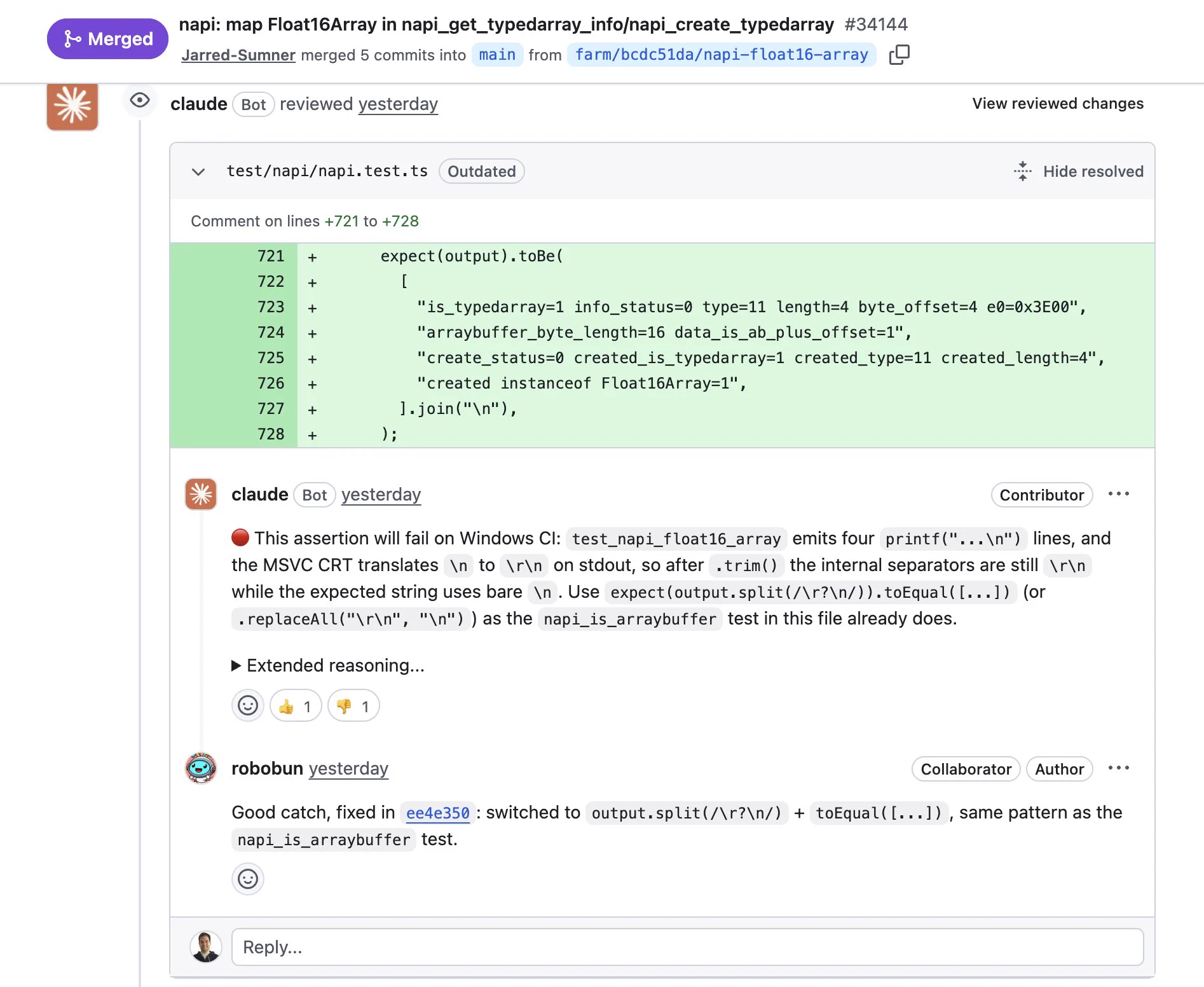
Fascinating to look at PRs in the Bun repo: much of it is AI reviewers talking with AI bots...! CodeRabbit and Claude review bot talking with Robobun. Screenshot from this PR: https://t.co/rfMRRUW4sF
 C
↗
C
↗
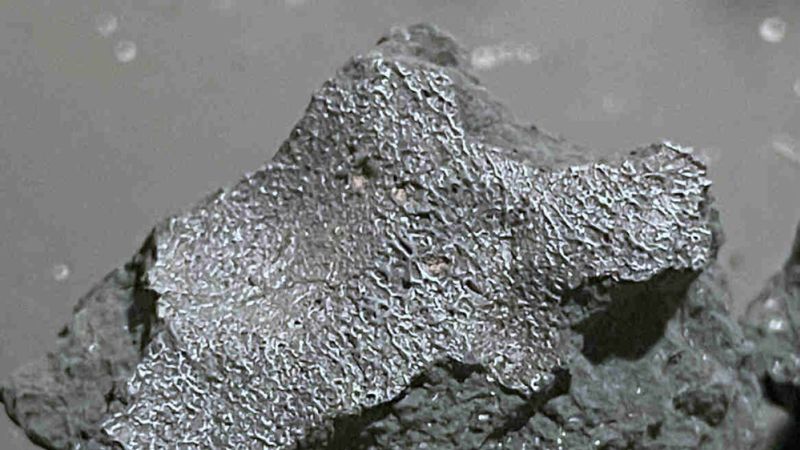
A meteorite that crashed into a New Jersey home in 2024 is a rare, primitive space rock containing evidence of ancient water.
 G
↗
G
↗
Microcontrollers with on-die neural processing units (NPUs) have become mainstream, but the system software hosting them has not: production combinations of Zephyr or FreeRTOS with TensorFlow Lite Micro treat AI inference as an application-layer library, leaving memory fragmentation, accelerator-state hygiene, and model-lifecycle guards as recurring application-developer concerns. We present the Phase 1 foundation of SynapticOS, an open-source runtime built on Zephyr that treats inference as a first-class workload. It contributes four cooperating subsystems: (1) a tensor-aware bump allocator with 16-byte DMA-aligned persistent and ephemeral lifetimes sharing a single arena, achieving constant-time allocation (~154 cycles per call, ~78,000 allocations per second at 150 MHz, invariant across tensor sizes) with zero fragmentation by construction; (2) a four-state hardware abstraction layer for the NPU and DSP, implemented by a deterministic software stub (for CI under QEMU) and a Neutron-flavoured backend (for the NXP MCXN947); (3) a three-state model lifecycle registry with duplicate-name detection, idempotent load/unload, and hot-swap guards; and (4) a four-mark cycle-accurate profiler. We evaluate on the NXP FRDM-MCXN947 (dual Cortex-M33 at 150 MHz) and the qemu_cortex_m3 emulator. Build footprints are 67 KB flash / 184 KB SRAM on FRDM (shell, 128 KB arena) and 24 KB flash / 28 KB SRAM on QEMU (no shell, 8 KB arena). End-to-end inference brackets through the deterministic stub kernel measure 1,038 us on FRDM and 781 us on QEMU for a 16x16x3 INT8 input; these are baseline overhead numbers, not Neutron silicon measurements, which arrive with the real SDK invoke path in Phase 2. A 61-test suite across 10 ZTEST suites passes 100% in 6.6 s on the CI emulator path. SynapticOS is released under Apache 2.0 at https://github.com/Dimitrios-Kafetzis/SynapticOS
 B
↗
B
↗
Ten principles. Real on-chain receipts. A live x402 endpoint: the artifact is never handed over.
 L
↗
L
↗
Live Claude Code usage in your menu bar, a multi-session cockpit, and an AI that trims your token waste — a precise instrument that never becomes the engine. 100% local, macOS 14+.
 R
↗
R
↗
From RoboHub🤖 on 𝕏 (full commercial video in Chinese): https://x.com/XRoboHub/status/2076744784572760570 submitted by /u/Nunki08 [link] [Kommentare]
 T
↗
T
↗
Is the Epic Google case finally over?
 I
↗
I
↗
Embattled telco faces Senate grilling and $30 million in fines.
 F
↗
F
↗
This blog dedicated to resolving CSS / HTML layout problems. There is a need to write down some of my solutions for future use. Hope this blog would help someone.
 S
↗
S
↗
An AI system that solves open mathematics problems using Lean 4 — every solution kernel-verified and downloadable.
 T
↗
T
↗
Buildkite is a CI developers can love, with a hybrid approach that gives a front seat to the increased velocity of software development in 2026.