 C
↗
C
↗
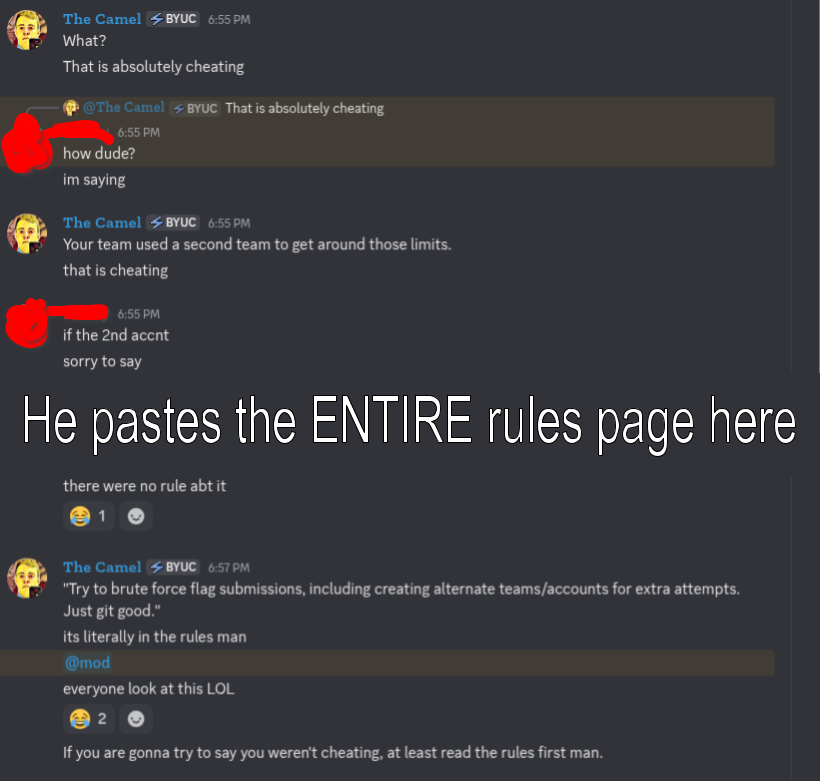
A post-mortem on cheating, AI slop, the slow death of competitive CTFs, and a short analysis on the pitfalls of CTF challenge design.
R
↗
Hi everyone, I wanted to share our latest open-access paper published in the journal Robotics: Multi-Objective Intelligent Industrial Robot Calibration Using Meta-Heuristic Optimization Approaches. The Problem Traditional industrial robot calibration heavily focuses on a single goal: maximizing absolute end-effector position accuracy. However, purely optimizing for position errors often results in the algorithm recommending unrealistic, drastic shifts to the robot’s physical kinematic structure (its Denavit–Hartenberg parameters). This creates a stark deviation from the manufacturer's nominal specifications and can degrade performance across different areas of the workspace. Our Approach We framed this challenge as a multi-objective optimization problem to strike a balance between two competing goals: Position Accuracy: Minimizing discrepancies using joint angle readings and a high-precision laser tracker (LT). Kinematic Realism: Minimizing the mean absolute deviation of the calibrated DH parameters from the manufacturer's original design specs. To find the optimal trade-off, we deployed and benchmarked several leading evolutionary and swarm optimization algorithms: NSGA (Nondominated Sorting Genetic Algorithms) MOEA/D (Multi-Objective Evolutionary Algorithm based on Decomposition) MOPSO (Multi-Objective Particle Swarm Optimization) Key Takeaways Utilizing a multi-objective framework prevents overfitting to specific target points and keeps the structural kinematic parameters physically viable. Swarm and evolutionary approaches excel at generating an adaptable Pareto front, giving automation engineers finer control over calibration tradeoffs. The full methodology, mathematical formulations, and comparative results are available to read for free on the MDPI Robotics Publication Page. I would love to hear the community's thoughts on using meta-heuristics for kinematic calibration, or answer any questions you might have about our experimental setup and algorithm performances! submitted by /u/MAK42018 [link] [Kommentare]
R
↗
Bring the downvotes idc, I just hope a few of you weigh in. What do y'all think? I think there's a pretty fuckin good chance we see another leg or two down after this next local run. I'm in BTC,SOL,TAO,NEAR and MON. submitted by /u/sivartomeus [link] [Kommentare]
R
↗
I am 16 years old and have absolutely no experience with Linux, and I am looking for a ROS 2 course. While the courses offered by The Construct seem quite comprehensive, I am concerned about some issues others have reported, such as incorrect quizzes, shallow content, or general quality problems. If you have experience with their courses, could you share how it went, or would you recommend other structured courses instead? submitted by /u/Initial_Animator1465 [link] [Kommentare]
R
↗
I've been teaching myself about Symbolic Regression (SR), which looks like a super exciting field. (A great intro resource below [1]). But then I was wondering: given LLMs' increasingly-growing power in generating code, which is in a way very similar to Symbolic Regression (or of course, even directly tackling symbolic regression tasks), are existing SR techniques dead? Happy to hear your thoughts. [1] ETH Zürich AISE: Symbolic Regression and Model Discovery - YouTube submitted by /u/omomom42 [link] [Kommentare]
R
↗
Hello, I am trying to get back into the Robotics industry after years as an SWE and find a job. I am based in Chicago so I was thinking of getting an all access pass to network for a job, and take some courses. I am currently unemployed. Does anyone know the best way to network at these things? Are the courses worth it? Does anyone have a coupon to reduce the cost? i would be paying out of pocket and I am unemployed so i figured i would ask. Thanks for your advice! submitted by /u/RickAmes [link] [Kommentare]
 D
↗
D
↗
MiMo-V2.5-Pro-UltraSpeed from Xiaomi blows past the speed threshold custom silicon companies spent years building toward—on regular GPUs.