Hi everyone, I wanted to share our latest open-access paper published in the journal Robotics: Multi-Objective Intelligent Industrial Robot Calibration Using Meta-Heuristic Optimization Approaches. The Problem Traditional industrial robot calibration heavily focuses on a single goal: maximizing absolute end-effector position accuracy. However, purely optimizing for position errors often results in the algorithm recommending unrealistic, drastic shifts to the robot’s physical kinematic structure (its Denavit–Hartenberg parameters). This creates a stark deviation from the manufacturer's nominal specifications and can degrade performance across different areas of the workspace. Our Approach We framed this challenge as a multi-objective optimization problem to strike a balance between two competing goals: Position Accuracy: Minimizing discrepancies using joint angle readings and a high-precision laser tracker (LT). Kinematic Realism: Minimizing the mean absolute deviation of the calibrated DH parameters from the manufacturer's original design specs. To find the optimal trade-off, we deployed and benchmarked several leading evolutionary and swarm optimization algorithms: NSGA (Nondominated Sorting Genetic Algorithms) MOEA/D (Multi-Objective Evolutionary Algorithm based on Decomposition) MOPSO (Multi-Objective Particle Swarm Optimization) Key Takeaways Utilizing a multi-objective framework prevents overfitting to specific target points and keeps the structural kinematic parameters physically viable. Swarm and evolutionary approaches excel at generating an adaptable Pareto front, giving automation engineers finer control over calibration tradeoffs. The full methodology, mathematical formulations, and comparative results are available to read for free on the MDPI Robotics Publication Page. I would love to hear the community's thoughts on using meta-heuristics for kinematic calibration, or answer any questions you might have about our experimental setup and algorithm performances! submitted by /u/MAK42018 [link] [Kommentare]
I am 16 years old and have absolutely no experience with Linux, and I am looking for a ROS 2 course. While the courses offered by The Construct seem quite comprehensive, I am concerned about some issues others have reported, such as incorrect quizzes, shallow content, or general quality problems. If you have experience with their courses, could you share how it went, or would you recommend other structured courses instead? submitted by /u/Initial_Animator1465 [link] [Kommentare]
Hello, I am trying to get back into the Robotics industry after years as an SWE and find a job. I am based in Chicago so I was thinking of getting an all access pass to network for a job, and take some courses. I am currently unemployed. Does anyone know the best way to network at these things? Are the courses worth it? Does anyone have a coupon to reduce the cost? i would be paying out of pocket and I am unemployed so i figured i would ask. Thanks for your advice! submitted by /u/RickAmes [link] [Kommentare]

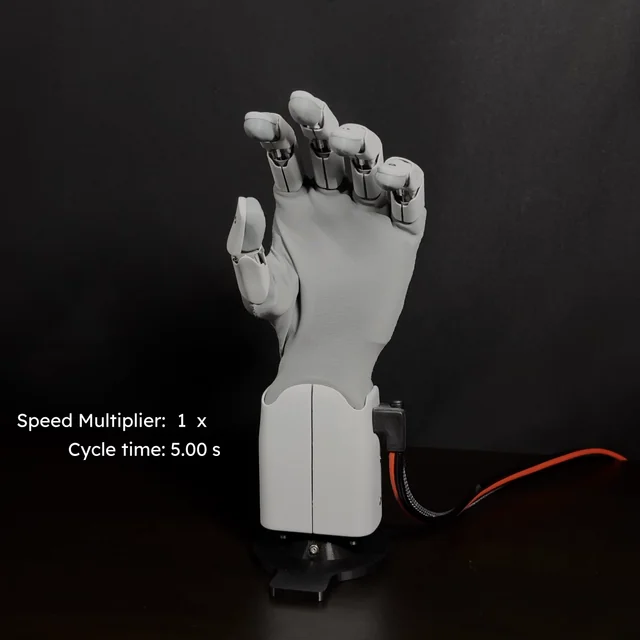
Just a quick demo to see how fast my hand is! I started with a baseline 5 second, finger-to-thumb opposition cycle and increased the speed until the fingers started to lose contact. The pinky starts to lose contact with the thumb at around 12x and the rest of the fingers barely make contact at 14x and beyond. Having the fingers be tendon driven does help a good bit in reducing inertia to get these max achievable speeds. Although, I'm not sure there's even a good reason to be moving this fast.. submitted by /u/qualitygui [link] [Kommentare]
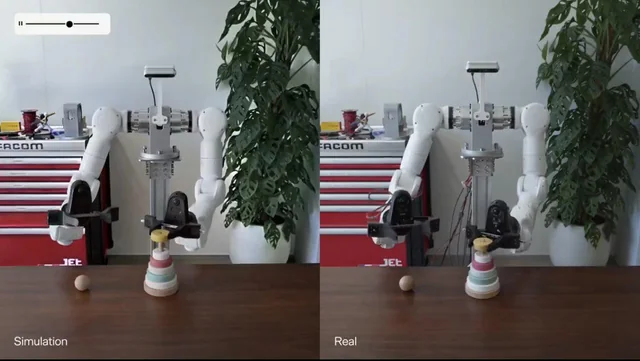
The Genesis sim video got me thinking: what does it actually take to build scenes like that (apart from gaussian splat part) with such accuracy, at scale? Asset and scene generation is one of the biggest bottlenecks in robot training. NVIDIA GR00T, Helix, HumanPlus, and ASAP all show the same pattern: more diverse scenarios lead to better sim-to-real transfer. But generating physically accurate objects and scenes takes time. Four platforms are working on this in 2026. Here's how they compare: 1. Rigyd: Agentic pipeline, best for on-demand scale and new types of objects Takes raw 3D (.glb, .fbx, .obj), images, or text and outputs calibrated OpenUSD + MJCF in ~2 minutes per asset with SimReady asset validator baked in. Generates full interactable scenes with per-object decomposition. Native Isaac Sim and MuJoCo support. Non-rigid and articulated objects are stated in the roadmap. The pipeline is agentic end-to-end, so no per-asset manual work. Good fit for teams that need to move fast with on-demand assets. 2. Lightwheel: High fidelity articulated objects, SimReady catalog Strong catalog of high-fidelity articulated assets and a SimReady library used by large enterprise customers. Per-asset visual and physical quality is high. USD and MJCF support via open-source converters. Good fit if you need a curated, validated catalog. Less flexible for new use cases or object categories outside their existing library. Catalog growth follows a curation model rather than an agentic pipeline. 3. NVIDIA Edify: Generative 3D, physics added separately Generates high-quality 3D meshes from text or image in under 2 minutes. Trained on licensed data, enterprise-safe. Tight Omniverse integration. The gap: it produces visual geometry, not SimReady assets. Physics, collision geometry, and USDPhysics schemas need to be added downstream before the asset is usable for robot training. Works well as an upstream step paired with a SimReady pipeline. 4. Moonlake: World modeling agent approach Acts directly inside Blender, automating the creation of articulated assets, physics-validated scenes, and complex environments rather than per-asset annotation. The approach is promising for research but production-grade Isaac Sim / MuJoCo integration is not there yet. If successful, world models could collapse scene generation and policy training into a single learning loop. What I think actually matters for sim-to-real transfer (ranked by impact): Per-object physics accuracy within the domain-randomization band Scene diversity (variation of scenes the policy sees during training) Visual fidelity (matters most for camera-only policies, less for contact-rich manipulation) How to choose: Need to scale across many object categories fast → Rigyd Need a validated catalog of articulated assets for known use cases → Lightwheel Need high-quality visual 3D in the NVIDIA ecosystem and will add physics downstream → Edify Researching end-to-end learned simulation → Moonlake For most teams the practical pattern is Rigyd for the long tail + hand-authored or Lightwheel assets for the few hero objects your scenario depends on. Both output standard OpenUSD/MJCF so they compose cleanly. Questions for the community: What's missing from this comparison? For those running training: where does asset prep actually bottleneck you? Image Credit: Genesis AI submitted by /u/yektabasak [link] [Kommentare]
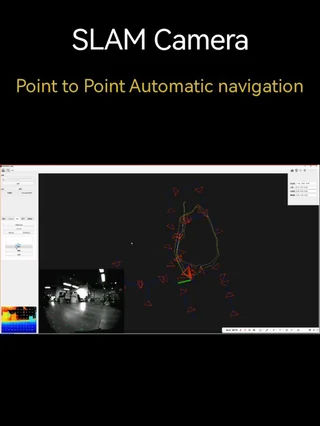
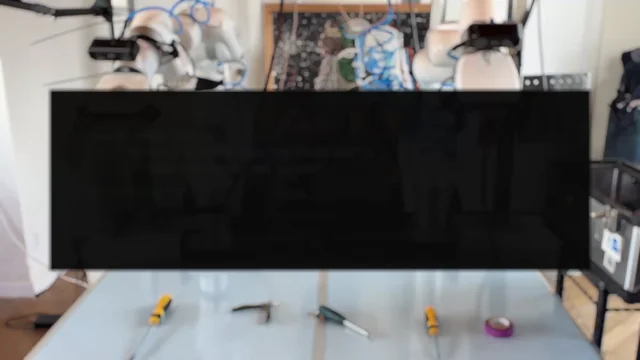

I made a little online multiplayer game inspired by my recent underwater robotics work. You can pilot a little ROV around the ocean, explore shipwrecks, take photos and categorize fish and things. It's multiplayer and I'm thinking of having treasure hunts, etc. Should I ship it? Would you play? submitted by /u/cheese_birder [link] [Kommentare]
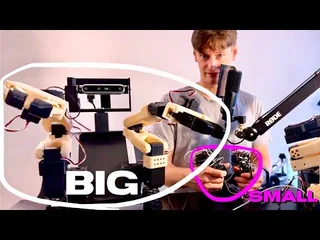
I built Small & Cute Robot arms from Scratch for my ROS 2 mobile robot. I'll probably make new smaller & cuter version of my robot with these small arms. submitted by /u/martincerven [link] [Kommentare]
Hi all, I’m trying to understand how people working with physical AI, embodied AI, robotics, or VLA models think about benchmarks in practice. This is not a product promotion or a request for upvotes. I’m looking for practical perspectives from people who run, read, or rely on benchmark results. A few questions: - Which benchmarks do you actually pay attention to? - Do benchmark scores influence model, policy, or framework choices, or are they mostly sanity checks? - What makes a benchmark result credible to you? - How much do you trust simulated task results compared with real-robot or hardware-in-the-loop results? - What are the biggest red flags when you see a physical AI benchmark claim? I’m especially interested in how people separate useful evidence from leaderboard noise, overfitting, cherry-picked demos, or unclear evaluation protocols. If this is too broad for this subreddit, I’m happy to narrow the question. submitted by /u/Confident_Gas_5266 [link] [Kommentare]