 G
↗
G
↗
Learn GPU programming with lectures, hackathons, and working groups.
 X
↗
X
↗
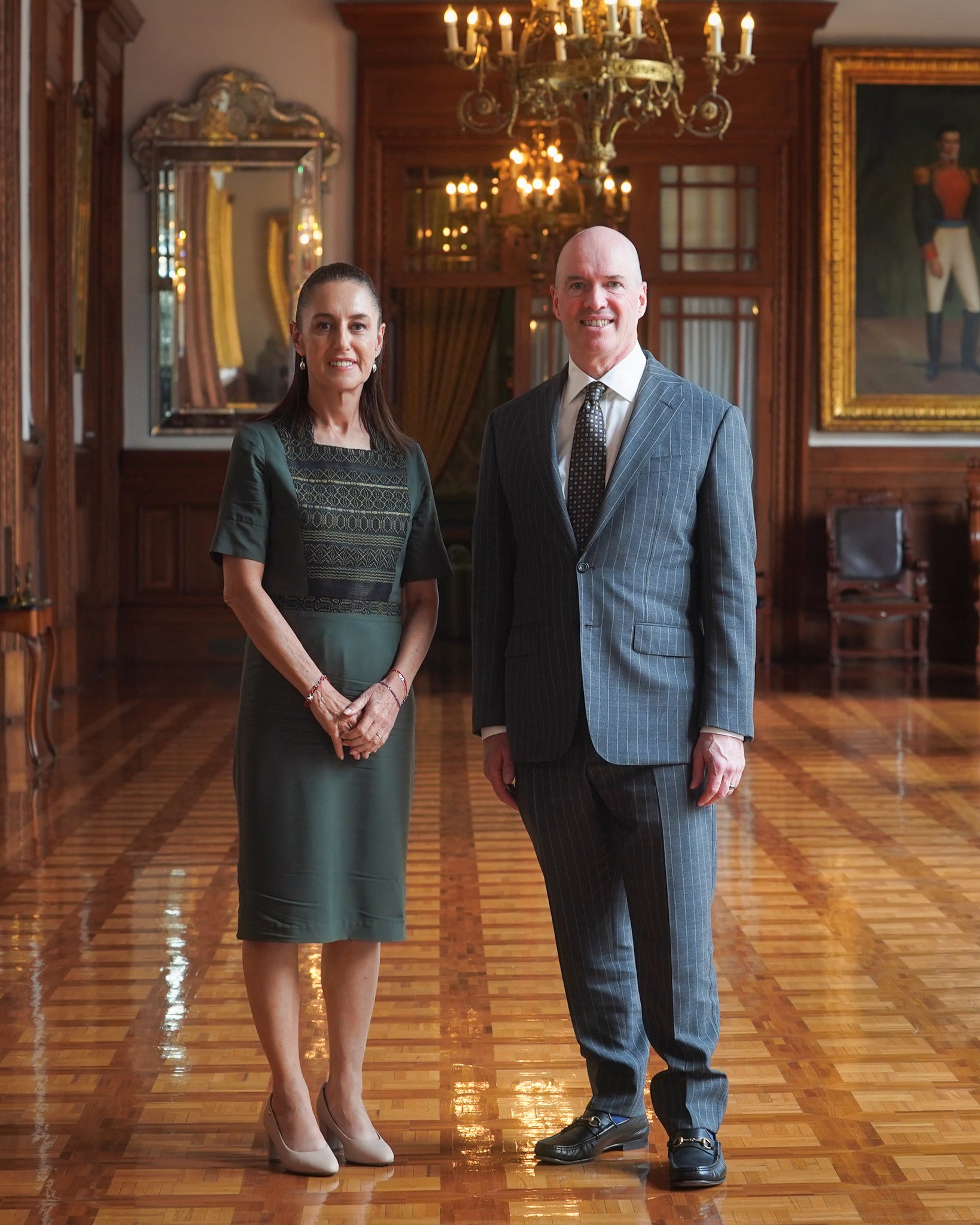
En Palacio Nacional, recibimos a Ben Horowitz, cofundador y socio general de la firma financiera Andreessen Horowitz. Coincidimos en que México es ejemplo de confianza y certeza económica. https://t.co/CAoZq76ctk
 T
↗
T
↗
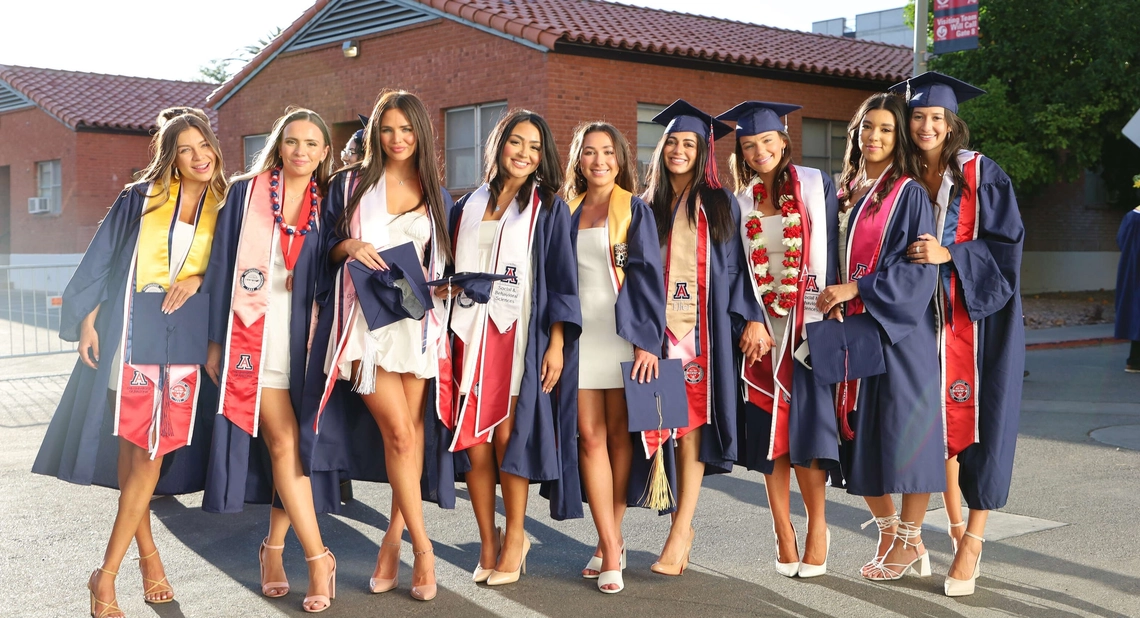
A University of Arizona-led team finds that mitochondria — the cell’s power plants — plug directly into the nucleus, fueling the genes that build the heart, brain and body.
 T
↗
T
↗
The neurophysiological disorder is characterized by a severe aversion to sound—and the struggle to convince others of the severity of that aversion.
 5
↗
5
↗
What makes certain programming languages flourish while others languish? What have natural languages to teach us in this?
 T
↗
T
↗
Alt Carbon said the agreement followed more than a year of scientific review and due diligence, with Microsoft requiring additional verification and data-sharing measures.
 G
↗
G
↗
Someone once asked me whether you can join a dysfunctional company and still have a good career. They assumed dysfunction is rare—something you'd see in advance and choose to join or avoid. But my experience is that most companies are dysfunctional in some significant and non-immediately obvious way, so
R
↗
I put together a small ROS 2 subsystem that turns a 2-DOF pan/tilt platform and a cheap 2D LiDAR into a stop-and-capture 3D scanner, and figured it might be useful to someone else here. The setup: two Feetech STS3215 serial-bus servos aim an LDROBOT LD19. A node sweeps the platform and an assembler stacks the 2D scans into a `PointCloud2` using the live TF tree. There's an optional MQTT bridge so an external controller (in my case a microcontroller mission queue on a rover) can trigger scans and get a completion handshake back. It's a *complete* project — it even includes a fix to the LiDAR driver (upstream `ldlidar_stl_ros2` won't build on recent GCC/glibc; the patched fork is linked below). It talks to the rover over a well-defined set of MQTT messages, but every command also has an equivalent ROS 2 topic, so if you want a pure ROS 2 setup you just don't launch the bridge. (Personally I love the MQTT side — it lets me drive the whole thing from a tablet.) No vendor SDK — the Feetech STS/SMS half-duplex protocol is implemented directly over pyserial, including handling the URT-1 adapter's habit of echoing every TX byte back on the RX line (the kind of thing that eats an evening if you don't know it's coming). The assembler is driver-agnostic: it consumes standard `sensor_msgs/LaserScan` on `/scan`, so any conformant 2D LiDAR should work. It's running on an RK3588 today and is built to go headless on a Pi 5. This is the first piece I'm open-sourcing from a larger autonomous rover project, GPL-3.0. I'd genuinely welcome feedback — particularly from anyone who's done multi-LiDAR or TF-timing work, since the scan-to-TF synchronization was the fussiest part to get right. But it does work! Happy to answer questions about any of it. Project: https://github.com/aa2mz/pan\_tilt\_lidar Patched LiDAR driver: https://github.com/aa2mz/ldlidar\_stl\_ros2 submitted by /u/CorrectAir8833 [link] [Kommentare]
R
↗
Hi all, A real story from my current experience: I'm associated with an internship where the primary work revolves around autonomous UAVs. What has shocked me the most is that almost everyone is so heavily focused on coding agents and AI tools that they're building things without paying enough attention to the fundamentals. This got me thinking: what if we conduct a virtual session on the fundamentals of Computer Vision? This idea comes from my own experience as well. During my first semester, I was terrified of learning from documentation and kept chasing YouTube tutorials instead. Later, I realized that some of the most interesting and valuable concepts are actually explained in the documentation itself. What do you all think about conducting something like this? How many of you would be interested in joining a one-day session? submitted by /u/FishermanResident349 [link] [Kommentare]