Welcome to the Daily Crypto Discussion thread. Please read the disclaimer and rules before participating. Disclaimer: Consider all information posted here with several liberal heaps of salt, and always cross check any information you may read on this thread with known sources. Any trade information posted in this open thread may be highly misleading, and could be an attempt to manipulate new readers by known "pump and dump (PnD) groups" for their own profit. BEWARE of such practices and exercise utmost caution before acting on any trade tip mentioned here. Please be careful about what information you share and the actions you take. Do not share the amounts of your portfolios (why not just share percentage?). Do not share your private keys or wallet seed. Use strong, non-SMS 2FA if possible. Beware of scammers and be smart. Do not invest more than you can afford to lose, and do not fall for pyramid schemes, promises of unrealistic returns (get-rich-quick schemes), and other common scams. Rules: All sub rules apply in this thread. The prior exemption for karma and age requirements is no longer in effect. Discussion topics must be related to cryptocurrency. Behave with civility and politeness. Do not use offensive, racist or homophobic language. Comments will be sorted by newest first. Useful Links: Beginner Resources Intro to r/Cryptocurrency MOONs 🌔 MOONs Wiki Page r/CryptoCurrency Discord r/CryptoCurrencyMemes Prior Daily Discussions - (Link fixed.) r/CryptoCurrencyMeta - Join in on all meta discussions regarding r/CryptoCurrency whether it be moon distributions or governance. Finding Other Discussion Threads Follow a mod account below to be notified in your home feed when the latest r/CC discussion thread of your interest is posted. u/CryptoDaily- — Posts the Daily Crypto Discussion threads. u/CryptoSkeptics — Posts the Monthly Skeptics Discussion threads. u/CryptoOptimists- — Posts the Monthly Optimists Discussion threads. u/CryptoNewsUpdates — Posts the Monthly News Summary threads. submitted by /u/AutoModerator [link] [Kommentare]

TOPF - Talos Orchestrator by PostFinance TOPF is managing Talos based Kubernetes clusters. It provides functionality for bootstrapping new clusters, resetting existing ones, and applying configuration changes. Early Stage Project TOPF has just been released and is in an early stage of development. While it is actively used at PostFinance, APIs, configuration formats, and CLI flags may change between releases. Feedback and contributions are welcome — please open an issue if you run into problems or have suggestions. Get Started What TOPF does TOPF is a single binary that handles the full lifecycle of a Talos cluster: Apply configurations with pre-flight health checks, dry-run diffs, confirmation prompts, and post-apply stabilization — no need to juggle talosctl commands per node Upgrade Talos across all nodes with version comparison, so only nodes that actually need updating are touched Bootstrap and reset clusters with built-in safety checks Generate kubeconfig and talosconfig from the secrets bundle Configuration is built from layered patches — small, composable YAML files organized by scope (all nodes, role, individual host). This makes cluster config easy to review, version, and share across environments. Philosophy TOPF doesn't reinvent the wheel. Under the hood it uses the Talos Go libraries directly — the same operations you would run manually with talosctl, but automated with health checks, diffs, and safety prompts on top. There are no intermediate config files to manage and no dependency on talosctl for day-to-day operations. Where TOPF really shines is its configuration model. Instead of managing one monolithic machine config per node, you compose small, scoped patches — per cluster, per role, or per host. This layered approach keeps configurations DRY, easy to review in pull requests, and straightforward to share across environments. Non-goals TOPF is intentionally limited in scope: Single cluster: TOPF manages one cluster at a time. Multi-cluster orchestration is out of scope — for managing many clusters, run TOPF in a pipeline per cluster (see Production Usage). Not an operator: TOPF is a static tool that runs when you invoke it. It performs a single reconciliation pass, not a continuous control loop. This is by design — you decide when changes are applied. No Kubernetes upgrades: TOPF does not orchestrate Kubernetes version upgrades with proper validation. Use talosctl upgrade-k8s for that (see Kubernetes Upgrade).

I maintain cuTile Rust and just posted the paper "Fearless Concurrency on the GPU." As more GPU code gets AI-generated, the bottleneck moves from writing it to trusting it. cuTile Rust lets you write or generate GPU kernels whose memory safety and data-race freedom are verified by the compiler, through Rust's ownership and borrow checking. You get those guarantees by construction. It's a tile-based programming model that lowers to CUDA Tile IR, carrying Rust's ownership model across the launch boundary. You partition a mutable output into disjoint mutable sub-tensors, pass inputs as shared references, and write tile kernels with single-threaded semantics that the compiler maps to thread blocks. End to end, we built Grout, a Qwen3 inference engine, on cuTile Rust with Hugging Face. At batch-1 decode it reaches 171 tok/s for Qwen3-4B on an RTX 5090 and 82 tok/s for Qwen3-32B on a B200, competitive with vLLM and SGLang. Batch-1 decode is memory-bandwidth-bound, and Grout's throughput is consistent with our HBM roofline analysis. Many of Grout's kernels still use the unsafe path today, but they can be migrated to safe variants, providing a verifiable target for generated kernels. We've started a collection of such kernels in the cutile-kernels crate in the repo. If this is your thing, contributing safe variants helps grow a library of safe, high-performance kernels that future kernel synthesis can draw from. On the kernel side, the safety is effectively free. On a B200 the safe GEMM is within 0.3% of a hand-written low-level version (~92% of dense f16 peak), and element-wise hits ~7 TB/s, matching cuTile Python within measurement noise. Some additional caveats worth noting: Grout is batch-1 with a small set of supported models (a research case study, not a drop-in server), it's NVIDIA-only (lowers to Tile IR), and GEMM still slightly trails cuBLAS at some sizes. - Paper: https://arxiv.org/abs/2606.15991 - Code: https://github.com/nvlabs/cutile-rs - Grout: https://github.com/huggingface/grout Hope you enjoy the paper and learn something new! Happy to answer any questions :) submitted by /u/Exciting_Suspect9088 [link] [Kommentare]
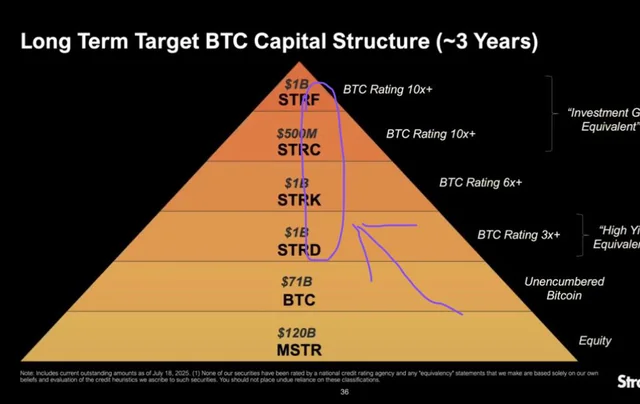
Anyone else furious about Kraken still holding our Humanity Protocol ($H) tokens hostage? Every other major exchange—Binance, Bybit, KuCoin, Gate—already processed the 1:1 token migration and reinstated trading days ago. Meanwhile, Kraken is sitting on their hands, completely stripping away our right to manage our own risk. Their "we're protecting retail" narrative is complete garbage when the house is actively burning down and we aren't even allowed to run for the exit. At this point, it feels like they are intentionally dragging their feet to wait out the massive token unlock scheduled for next week. If they keep trading frozen until those millions of tokens flood the market and obliterate the price even further, Kraken users are the only ones getting completely left behind without a single chance to salvage their capital. Kraken Support, stop the corporate stalling and give us an actual timeline. Let us trade or transfer our assets. Taking away the sell button isn't protection—it's negligence. submitted by /u/tallcantommy23 [link] [Kommentare]


Diskless Kafka® on S3. 10x Cost-Effective. No Cross-AZ Traffic Cost. Autoscale in seconds. Single-digit ms latency. Multi-AZ Availability. - AutoMQ/automq
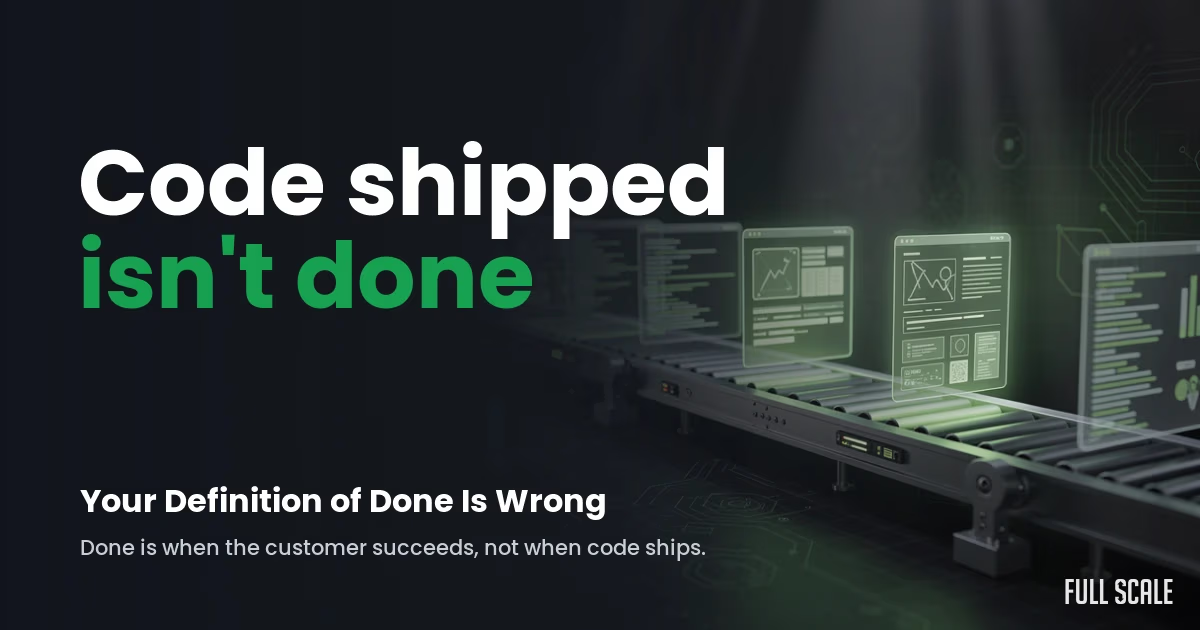
The standard definition of done stops at shipped code. Real done is when the customer’s problem is solved, and AI just made that the only one that matters.