 V
↗
V
↗
Complaining about tech interviews is the favorite pastime of software engineers. We know they're broken, we've seen exactly how they're broken, but, despite a decade of collective hand-waving, we haven't fixed them. In fact, we haven't even understood why they're broken: "interviewers are stupid" is a tempting explanation, but most people I've worked with are quite smart, so it can't be the only reason.I stepped into hiring manager shoes as the job market was descending into AI panic. I've run over a hundred interviews, made a few dozen hires (with a few epic fails), and eventually led a redesign of our process for AI reality. After months of experiments and reflection, I think I see how this works.In this article, we'll trace how an industry full of smart, well-intended engineers created the lunacy of the modern tech interview. This story has it all: chance and fate, fear and bravery, good people crushed by the system that's set up to degrade. I might not have an easy fix, but at least we'll understand the mechanics of this death loop. Let's go!Hiring is not deterministicWe engineers expect actions to have a predictable outcome. Assign a variable in code, beep bop, its memory register value changes. Cause and effect. Naturally, we want an algorithm for hiring that reliably separates good engineers from bad ones. Nice as it would be, this is not a realistic expectation.Imagine: I'm a good engineer, your interview process is great, you hire me. One month in, I decide that work is not really my thing, and I won't try that hard any more. The process was fine, but it failed to predict my performance, because the future is inherently uncertain.Hiring is, in essence, a binary classification problem: based on some observations, predict whether a candidate will perform well on our project. Apart from the good outcomes, we have two types of errors:False positive: we hire a candidate who turns out really bad at the actual job.False negative: we don't hire a candidate who would have been a great fit.With enough hires, we're statistically certain to make both types of errors. But their effects are drastically different.The error asymmetryA bad hire (false positive) is costly and visible. On top of the wasted hiring budget, a truly bad engineer creates security risks, damages architecture, and brings down production, all in a day's work. That's the kind of mistake that gets everyone's attention and causes unpleasant questions along the lines of "Vladimir what were you thinking hiring that guy"?Missed good hires (false negatives), on the other hand, are practically invisible. Usually, the rejected candidate just vanishes. In the rare case we accidentally learn they turned out to be a great success somewhere else, it's easy to shake it off — just because they're a great fit over there, doesn't mean they would've been any good over here. We might get some extra time-to-hire and interview load, but this is nothing compared to the costs of a bad hire, right?So, the conventional wisdom is "false positives, avoid at all costs; false negatives, fine". After a bad hire, we'd run a postmortem to understand what went wrong, and how to avoid all this trouble in the future. Focusing on false positives collapses the hiring problem into one dimension: if a low performer sneaked through, the bar was too low, and we must raise it by adding complexity. This makes tech interviews progressively harder. But is harder always better?The tale of two complexitiesWelcome to our software engineering interview. Here, a surprise awaits: to pass, you must win a game of chess against Grandmaster Anatoly Karpov, former Chess World Champion. This kind of interview will be very hard, but would it be good at selecting productive software engineers? Probably not, because chess is very loosely related to software engineering.While real-world interviews rarely involve chess (I wouldn't mind if they occasionally did), the core principle is clear. Interview complexity has two parts:Relevant complexity predicts the candidate's performance.Incidental complexity randomly eliminates candidates by unrelated criteria.Both kinds make the interview harder, but only the relevant produces useful signals. Incidental complexity produces random noise, and is essentially a time-consuming equivalent of making hiring decisions through dice rolls."Got it, don't involve chess in the interview and I'll be fine" — I hear you say. But in practice, isolating relevant complexity can be tricky. Say, we're hiring for a realtime dashboard team, and we add a pretty relevant topic — WebSockets. Are we filtering on genuine experience, or on recent exposure to the technology? Does current WebSocket knowledge really predict the overall performance, say, 3 months in? Maybe we've done the right call, maybe we're playing chess — probably a bit of both.So, we're stuck piling up complexity based on our gut feeling. Every new topic inevitably adds some incidental complexity, causing more false negatives. This is bad enough for a single team, but once we zoom out to the organization level, things escalate.Scaling the noiseAll across the company, hiring managers are ramping up complexity. At some point, the inefficiency and inconsistency become obvious: some teams go so hard they spend all their bandwidth on endless interviews and rejections; others devolve into low-performer silos. In a noble attempt to balance the complexity, spread the load evenly, and cancel out individual biases, we introduce a shared interviewer pool composed of engineers from different teams. When done naively, this makes things worse.Say, a candidate writes all the code in a single huge function. Interviewer A thinks this rushed slop demonstrates a lack of decomposition skills. To interviewer B, this is pragmatic speed — the candidate prioritized delivering the product over architectural meandering. When hiring for their respective teams, both interviewers may be right. But now the context needed to ground this subjective decision is gone. If the interviewers swap candidates, we get two rejections. When both interview any candidate, at least one is likely to call a "no hire", because their preferences don't intersect. If the interviewers blindly act on each other's "green flag", they get inept candidates. Everybody loses.To counteract, we standardize the process through a shared problem pool and scoring rubrics. A perfect rubric is both relevant and objective, but this turns into an impossible balancing act. Leaning into alignment too hard dumbs down the interview with easily measurable questions like "can list the nine JavaScript data types". Any space for nuance and judgement is also space for subjectivity and misalignment: we're stuck arguing whether the single huge function is a valid balance of speed and maintainability. Balancing between dumbery and misalignment, we get a bit of both.The alienationSadly, misalignment is children's games compared to the structural collapse that lies ahead. A hiring manager fully responsible for their hiring is not a perfect setup, but it gets one thing right: process and outcome are owned by the same actor. The labor of interviewing, the benefits of a good hire, and the pain of a bad one are all yours. A shared interviewer pool fractures this incentive structure.The individual interviewers get the accountability for a bad hire, but gain nothing from a good one. This leaves no incentive to make a more adventurous hire every now and then — when in doubt, just say "no". Group ownership of the hiring decision creates a perfect setup for bystander effect. Facing a barely-there candidate who narrowly misses all the red flags, an interviewer might think: if they're really bad, one of the other 5 interviewers will surely reject them. Once all the interviewers act on this logic, the barely competent hire happily progresses.The interplay between these effect results in a schizophrenic process that favors mediocrity. We reject "spiky" candidates who don't strictly fit our one-size-fits-all profile — say, a great systems engineer with subpar SQL. Meanwhile, borderline candidates get hired via bystander effect.Facing the full cost of running the interviews with a net-negative outcome, some interviewers grow disengaged. Our rubric, designed to help a motivated hiring manager stay objective, backfires. To a burnt-out cog in the hiring machine, it gives an easy way out: just mechanically check the boxes on our "green / red flag" list, and you'll be fine. Unknowingly, we've set things up for the final act.The snake bites its tailWe've seen how the fear of bad hires makes interviews harder and more random, and ultimately cements them into a rigid process that's not owned by anyone in particular. But to close the feedback loop and see how this causes more bad hires, we must look at the other party — the candidates.Faced with brutal multi-stage hiring processes with lots of incidental complexity and a significant chance of random rejection, candidates adapt by overfitting to the incidental complexity of the interviews (aka interview prep). Instead of mastering what you do best, you grind leetcodes — or, even worse, practice cheating with AI. Instead of telling a messy war story, you polish a STAR advertisement with doctored success metrics.This is a classic example of Goodhart's law: when a measure becomes a target, it ceases to be a good measure. Before you know it, you're hiring great interview takers instead of great engineers. A strict rubric additionally sets things up for a nightmare scenario. For top companies, it's very easy to find not just generic interview prep, but a crowdsourced list of specific tasks used in the interviews. Once that happens, the process decays into who's done their homework.And behold, the snake has swallowed its tail: in an effort to avoid bad hires, we inadvertently set in motion the exact machinery that eventually made bad hires more likely. Time for some bar raising!Now that I've laid out all the pieces of the puzzle, I should propose the fix. Well, here you go. To make no hiring mistakes, don't hire. To avoid challenges of growth, don't grow.Once we break these rules, the snake starts eating its tail. We trade bad hires for random rejections. We trade nuance for alignment. We can make the snake eat slower, or pull out a few inches of the tail, but we can't save the snake, because it's driven by probability and the human mind. The best we can do is embrace the mess and keep at least some decency.Tomorrow, I'll log into zoom. I'll give the candidate the best problem we've got. I know it's not 100% relevant, but at least it's refreshing. The candidate won't cheat with AI because we explicitly allow and encourage AI-assisted solutions. If they hit any red flags on our rubric, I'll note this in my report. If they show exceptional promise in some unscored aspect, I'll note that too. At any rate, I'll be as friendly and engaged as I can, because even failing miserably at a random task doesn't mean you're a bad engineer. And even being a bad engineer doesn't mean you don't deserve respect.TweetShareMore? All articles everOlder? Growing my team 4x has been a pain. Can we do better?
 E
↗
E
↗
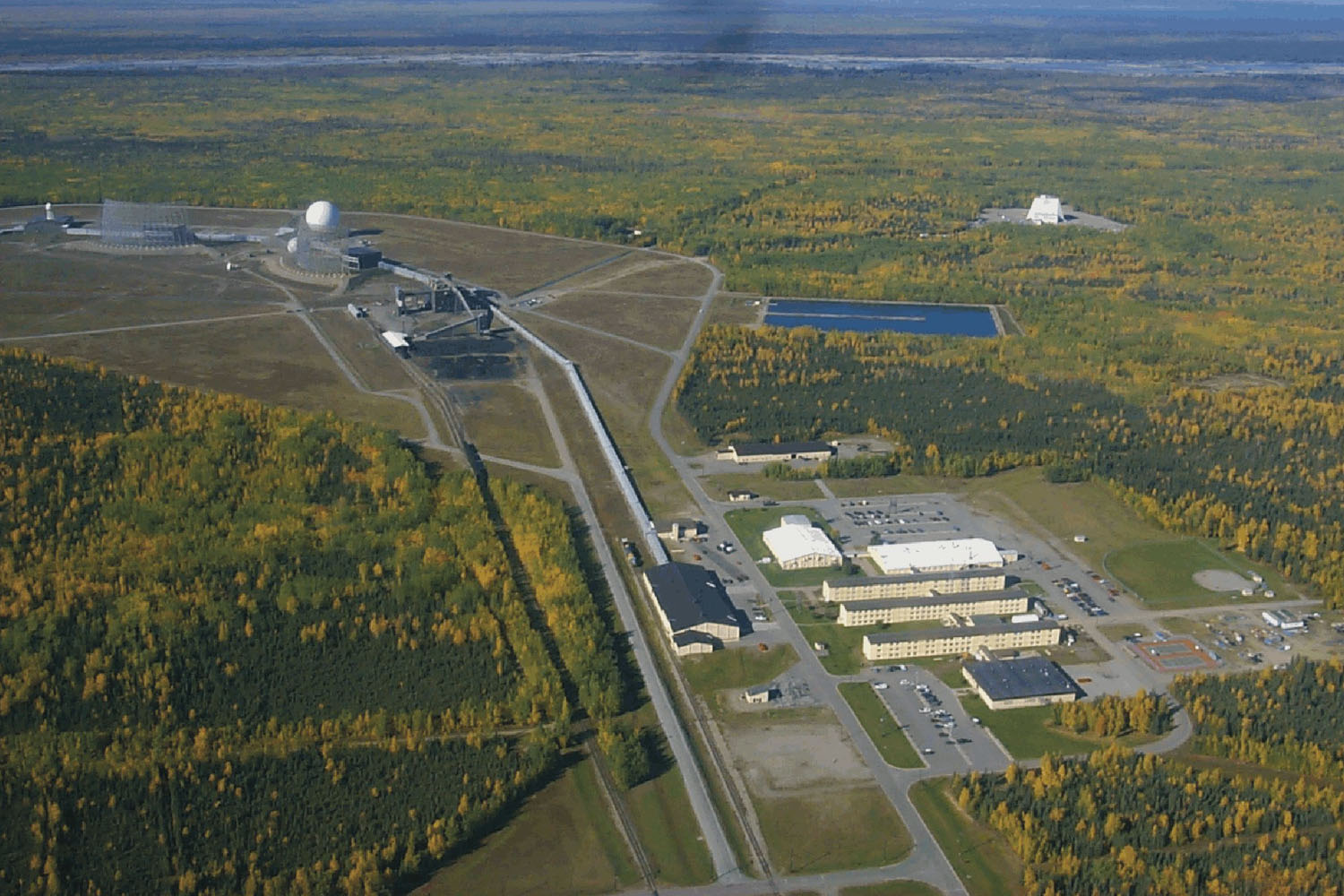
Clear Space Force Station - Wikipedia Jump to content Coordinates: 64°17′26″N 149°11′13″W / 64.29056°N 149.18694°W / 64.29056; -149.18694 From Wikipedia, the free encyclopedia US Space Force station in Alaska Not to be confused with the Shemya Island radar station at Eareckson Air Station, Alaska. Clear Space Force StationNear Anderson, Alaska in the United StatesAn aerial image of Clear SFS in 1999.Emblem of Space Base Delta 2Site informationTypeUS Space Force stationOwnerDepartment of DefenseOperatorUnited States Space ForceControlled bySpace Base Delta 2ConditionOperationalRadar typeAN/FPS-123LocationClear SFSLocation in the United StatesCoordinates64°17′26″N 149°11′13″W / 64.29056°N 149.18694°W / 64.29056; -149.18694Site historyBuilt1949 (1949) (as Clear Air Force Auxiliary Field)In use1949 – presentGarrison informationOccupants13th Space Warning Squadron213th Space Warning Squadron Clear Space Force Station is a United States Space Force radar station for detecting incoming ICBMs and submarine-launched ballistic missiles[1] to NORAD's command center and to provide Space Surveillance data to the United States Space Force. Clear's AN/FPS-123 Upgraded Early Warning Radar is part of the Solid State Phased Array Radar System (SSPARS) which also includes those at Beale AFB, Cape Cod Space Force Station, RAF Fylingdales and Thule Site J. The "historic property" was one of the Alaska World War II Army Airfields and later a Cold War BMEWS site providing NORAD data to Colorado's BMEWS Central Computer and Display Facility (CC&DF). In addition to the "original camp area" with buildings still in use today,[2] areas of the station include the airfield (ICAO: PACL), the "SSPARS Site"[3] the technical site (Utilador,[4] BMEWS reflectors, support buildings, power plant), and the composite site (two permanent dormitories, a mess hall, recreation area, and administrative area).[citation needed] In addition to the Air National Guard unit, Clear has active duty USSF, Royal Canadian Air Force, civilian, and contractor personnel. History[edit] PAVE PAWS and BMEWS coverage The site was purchased by the Department of the Interior in 1949 for use as a gunnery range for Ladd Field.[2] The site became Clear Air Force Auxiliary Field. In May 1958 total costs for the planned BMEWS Site I at Thule and BMEWS Site II at Clear were estimated at ~$800 million. In October 1958 they were both estimated to be completed in September 1960.[5] An additional 10-by-40-mile (16 km × 64 km) area[citation needed] was appropriated for the Clear site. Clear is served by a spur of the Alaska Railroad, being about 15 kilometres (9.3 mi) south of Nenana and the Mears Memorial Bridge over the Tanana River that flows past Clear.[6] This has transported coal for the power station and heavy equipment. Clear Missile Early Warning Station[edit] Clear Missile Early Warning Station construction began in August 1958 with 700 workers[7]—i.e., a "construction" camp was being erected in September 1958 by "Patti-McDonald and Morrison-Knudsen"[8] next to the railroad[citation needed] (for $1.7 million, 40,000 ft of railroad were moved by 1959.)[9] Groundbreaking for radar structures was May 1959[citation needed] ("Baker and Ford built a transmitter and computer building; a heat dissipation system; a radar transmitter building; wells and pumphouses; a fire station; and utilities")[9] and the AN/FPS-50 pedestals were complete by June 2, 1959.[10] In 1959[11] after the original White Alice Communications System contract, "the next segment of WACS... was series of TD-2 microwave installations to support... two routes [that] linked the Ballistic Missile Early Warning Site (BMEWS) at Clear AFB... one going down the southeast coast (the A route) to the Ketchikan-Seattle submarine cable*, and the other, going east to the Canada–US border (B Route) through Canada, down to the lower 48 which was Clear's Rearward Communications System to Murphy Dome (A Route) and the Gold King Creek AFS (B Route) with data for the Ent AFB CC&DF.[12] Three GE AN/FPS-50 Radar Sets were installed with antenna reflectors 165 by 400 feet (50 m × 122 m) that each weigh 1,000 short tons (910 t; 890 long tons). The "Building Two" middle transmitter building had the radar control room[verification needed] and room with the Sylvania AN/FSQ-28 Missile Impact Predictor Set.[13] The "Clear Msl Early Warning Stn, Nenana, AK" was assigned to Hanscom Field, Massachusetts, on April 1, 1961,[14] and BMEWS Site II was completed July 1, 1961[7] (the date of IOC--Full operational capability was declared three months later.)[citation needed] Clear transferred to Air Defense Command in November 1961.[citation needed] By mid-1962, BMEWS "quick fixes" for ECCM had been installed at Thule and Clear[15] and by June 30, 1962, Ent AFB integration of BMEWS and SPADATS data was completed.[16] On July 31, 1962, NORAD recommended a tracking radar at Clear to close the BMEWS gap with Thule for low-angle missiles (compared with those with the 15-65 degree angle for which BMEWS was designed)[15] (North Dakota's Cavalier AFS radar built in 1975 currently monitors for Hudson Bay launches.) Missile warning operations[edit] Detachment 2 of the 71st Missile Warning Wing was responsible for operations by civilian contractor personnel until 1964, when Air Force personnel began permanently manning the Tactical Operations Room (TOR).[citation needed] In 1964, the Good Friday earthquake struck, and Clear was unable to perform its mission for six minutes.[17] In 1966, the last of the five BMEWS tracking radars was installed, an RCA AN/FPS-92 Radar Set with an 84-foot (26 m) diameter antenna[citation needed] housed in a 42.7-meter (140 ft) diameter radome.[18][19][20] The FPS-92 was an improved AN/FPS-49 Radar Set variant with radome blocks having two high-density 1 millimeter thick skins that cover a 15 centimeter thick Kraft-paper core (total of 1,646 hexagonal and pentagonal blocks[21] (the hexagonal blocks were "66-inch panels".)[22] The completion of the FPS-92 raised the final construction price of the missile warning system at Clear to $300 million. $62 million of this figure had been spent by the Alaska District of the Corps of Engineers.)[9] Clear provided emergency shelter for 216 flood refugees during August 1967, the same year many "temporary" buildings were replaced. Personnel at the installation subsequently provided measurements for a University of Alaska experiment which injected sulfur hexafluoride into the upper atmosphere to see if the Aurora Borealis could be affected.[citation needed] Clear had Bomb Alarm System equipment installed by the time the BAS was accepted on 10 February 1961.[23] The BAS was deactivated in 1970.[5] In 1975, the Secretary of Defense told Congress that Clear Air Force Station would be closed when the Shemya Island and Beale AFB radars became operational.[24] After a Thule radome fire, Clear's FPS-92 radome was replaced in 1981 by first disassembling the tracker, constructing the new radome, and reconstructing the FPS-92.[25] Clear's 1st all-female crew pulled its 1st shift on February 28, 1986 (the 1st female, Lt. Anderson was assigned in 1973.) Beginning in 1987, ITT operated and maintained the Clear BMEWS under a USAF Space Command contract[21] and in the 1990s, the Southwest Research Institute upgraded Clear's pulse modulator for the transmitter final-stage power amplifier.[26] Phased array radar[edit] External images Dogsled near FPS-50 reflectors BMEWS radars after phased array was completed AN/FPS-132 Upgraded Early Warning Radar On April 16, 1998, groundbreaking for installing 1987 AN/FPS-115 PAVE PAWS components from Texas (e.g., the array elements) was held at Clear[27] for the more advanced Raytheon AN/FPS-120[27] with 2500 "solid state transmitter" modules.[28] On December 15, 2000, the FPS-50 and −92 transmissions ceased[citation needed] (all of the Arecibo Observatory's Litton L-5773 klystrons were obtained as surplus from Clear's decommissioned BMEWS transmitters.)[29] Clear's FPS-120 began 24-hour operations[citation needed] when Clear's SSPARS Site (separate from the BMEWS site) had Initial Operational Capability on January 31, 2001; the date the entire SSPARS became operational[30] (SSPARS sites were modified in the Early Warning Radar Service Life Extension Program.)[31] On August 30, 2006, after a transition that began in 2001, the ANG's 213th Space Warning Squadron took on the early warning/space surveillance mission.[clarification needed] BAE Systems began a 2007 contract for SSPARS maintenance,[32] and the Clear FPS-120 was subsequently upgraded to an AN/FPS-132 Upgraded Early Warning Radar (UEWR)[33] by Boeing Integrated Defense Systems[34] "featuring processor and software improvements to enhance capability."[20] On 15 June 2021 it was renamed from Clear Air Force Station to Clear Space Force Station.[35] Long Range Discrimination Radar was being tested at the base in 2022.[36] Based units[edit] The 11-story tall phased array buildingUnits based at Clear Space Force Station.[37][38] Those marked as GSU are Geographically Separate Units, which although based at Clear, are subordinate to a unit based at another location. United States Space Force[edit] Space Force Combat Forces Command Space Delta 4 13th Space Warning Squadron (GSU) United States Air Force[edit] Alaska Air National Guard 168th Wing 168th Operations Group 213th Space Warning Squadron (GSU) 268th Security Forces Squadron (GSU) Units to which assigned[edit] 2006: 213th Space Warning Squadron 1983: 1st Space Wing (Air Force Space Command) 1979: 15th Air Force (Strategic Air Command)[39] 1971: Fourteenth Aerospace Force (Aerospace Defense Command) 1967: 13th Missile Warning Squadron (Outstanding Unit Award in 1970 and 1973[citation needed]) 1961: Detachment 2, 71st Missile Warning Wing[citation needed] 1961: Electronic Systems Division[citation needed] 1949: Alaskan Air Command Amateur radio restrictions[edit] The US Code of Federal Regulations specifies that amateur radio operators within 160 kilometers of Clear must not transmit with more than 50 watts of power on the 70-centimeter band.[40] References[edit] ^ "Clear AFS". GlobalSecurity.org. 2005-04-27. Retrieved 2009-11-04. ^ a b Cold War Historic Properties of the 21st Space Wing Air Force Space Command (PDF) (Report). OSTI.gov. Retrieved 2008-11-04. ^ "Clear Air Force Station, Alaska". Airforce-technology.com. Retrieved 23 July 2022. ^ "Clear "Utilador"". Lcweb2.loc.gov. Retrieved 23 July 2022. ^ a b Wainstein, L. (June 1975). The Evolution of U.S. Strategic Command and Control and Warning: Part One (1945-1953) (PDF) (Report). Vol. Study S-467. Institute for Defense Analyses. pp. 1–138. Archived (PDF) from the original on March 11, 2014. Retrieved 2014-03-09. ^ Cultural Resources Survey and Management Plan of the Clear Air Force Station (PDF) (Report). ORNL.gov. 1991. Archived from the original (PDF) on 2012-09-27. Retrieved 2008-11-04. ^ a b "Watchful eye of BMEWS turns toward Soviets" (Google news archive). Ellensburg Daily Record. June 18, 1961. Retrieved 2014-03-09. ^ page 269 "William A. Smith Contracting relocated a 40,000-foot length of the railroad.", Poa.usace.army.mil ^ a b c "VIII : Military Construction : Creating a Permanent Military Establishment in Alaska" (PDF). Poa.usace.army.mil. Retrieved 23 July 2022. ^ Rogers, Warren Jr. (June 2, 1960). "Summit Failure Speeds Up Development of BMEWS". Herald Tribune News Service. Retrieved 2014-03-09. ^ Installation Restoration Program Preliminary Assessment: Gold King Creek Radio Relay Station, Alaska (PDF) (Report). Hazardous Materials Technical Center. April 1989. Archived (PDF) from the original on April 16, 2014. Retrieved 2014-04-14. The RRS originally consisted of one radio relay building, one microwave tower enclosed by a chain link fence, and a 2,050-foot runway. These facilities total 30.32 acres. Two 14,000-gallon steel underground diesel fuel storage tanks are located west of the building. Figure 3 shows the original facilities at Gold King Creek RRS. ^ "Rabbit Creek White Alice Site" (PDF). Archived from the original (PDF) on 2012-10-12. Retrieved 2014-04-15. ^ McManus, Gene (September 1996). "BMEWS - 51- Full Days". Bwcinet.com. Archived from the original on 2009-01-14. Retrieved 2014-03-19. ^ Mueller, Robert (1989). Air Force Bases (PDF) (Report). Vol. I: Active Air Force Bases Within the United States of America on 17 September 1982. Office of Air Force History. p. 600. ISBN 0-912799-53-6. Retrieved 2013-08-15. Gold King Creek AFS (rdsgd Gold King Creek RR Site) (detchd instl), 45 mi NE of Fairbanks, AK, 16 Jul 1959 (dsgd)... Wideawake Fld (rdsgd Ascension Isl Aux Fid)... Ascension Isl, South Atlantic Ocean, 25 Jun 1956 (actvd) ^ a b 1962 NORAD/CONAD Historical Summary, July-December, Northcom.mil ^ Del Papa, Dr. E. Michael; Warner, Mary P (October 1987). A Historical Chronology of the Electronic Systems Division 1947-1986 (PDF) (Report). Archived (PDF) from the original on December 24, 2013. Retrieved 2014-03-08. 7 November [1984] Installation of [SSPARS] radar hardware at Site I, Thule, Greenland, for the Ballistic Missile Early Warning System (BMEWS) was begun. ^ McCann, Chris (24 March 2014). "50 YEARS since 1964 earthquake catastrophe: Military integral to recovery". Pacific Air Forces. Retrieved 12 May 2024. ^ "The Morning Record - Google News Archive Search". News.google.com. Retrieved 23 July 2022. ^ "Electronic Eye Watches For Sneak Missile Attack" (Google news archive). Herald-Journal. July 8, 1966. Retrieved 2014-03-09. ^ a b "[6.0] Miscellaneous Topics". Vectorsite.net. Archived from the original on February 6, 2007. ^ a b "Draft : The Coldest Front : Cold War Military Properties in Alska" (PDF). Nikesummit.net. Retrieved 23 July 2022. ^ "Reading Eagle - Google News Archive Search". News.google.com. Retrieved 23 July 2022. ^ Space and Missile Systems Organization: A Chronology, 1954-1979 ^ "ALERT" (PDF). Dod.mil. Archived from the original (PDF) on 27 November 2011. Retrieved 23 July 2022. ^ "Clear Air Force Station, Alaska". Themilitarystandard.com. Retrieved 23 July 2022. ^ Grimes, M. D.; Grothaus, M. G.; North, W. R.; Brittain, D.; Norander, R.; Kajonpong, D. (1 July 1995). "A new modulator design for the BMEWS transmitter". Digest of Technical Papers. Tenth IEEE International Pulsed Power Conference. Vol. 1. pp. 688–693 vol.1. doi:10.1109/PPC.1995.596791. ISBN 0-7803-2791-8. S2CID 109329176 – via IEEE Xplore. ^ a b Pike, John. "Clear AFS". Globalsecurity.org. ^ Skolnik, Merrill I (1990). Radar Handbook (PDF) (2nd ed.). McGraw-Hill. ISBN 978-0-07-057913-2. Retrieved 2014-04-14. ^ "Arecibo 430 MHz Radar System Operation and Maintenance Manual" (PDF). Naic.edu. Retrieved 23 July 2022. ^ "Clear AFS, AK". GlobalSecurity.org. Retrieved 2014-03-05. ^ Chapman, Bert (2008). Space Warfare and Defense: A Historical Encyclopedia and Research Guide. p. 153. ISBN 978-1-59884-006-3. BMEWS was replaced by the Solid State Phased Array Radar System (SSPARS) in 2001. ... CINCAD (Command in Chief, Aerospace Defense Command) ^ "BAE Systems To Continue Maintaining SSPARS Radar Network for U.S. Air Force - SpaceNews.com". 3 March 2014.{{cite web}}: CS1 maint: deprecated archival service (link) ^ "U.S. to Sell Large Early Warning Radar to Qatar (August 7, 2013) (corrected February 10, 2014)". Mostlymissiledefense.com. 7 August 2013. ^ "Fylingdales". Raytheon.co.uk. Archived from the original on 2014-03-11. Retrieved 2014-03-08. ^ "Clear Air Force Station renamed as Clear Space Force Station". Buckley.spaceforce.mil. ^ "Long-range missile defense radar ready to 'plug in' at NORTHCOM within 'months'". 10 August 2022. ^ "Fact Sheet – Space Delta 4 - Missile Warning". Buckley Air Force Base. US Space Force. July 2020. Archived from the original on July 25, 2020. Retrieved 2 August 2020. ^ Mann, Senior Master Sgt. Paul (20 July 2018). "Clear welcomes a familiar face as new commander". DVIDS. US Department of Defense. Retrieved 2 August 2020. ^ compiled by Johnson, Mildred W. (31 December 1980) [Feb 1973 original by Cornett, Lloyd H. Jr.]. A Handbook of Aerospace Defense Organization 1946 - 1980 (PDF). Peterson AFB: Office of History, Aerospace Defense Center. Archived from the original (PDF) on 2016-02-13. Retrieved 2012-03-26. ^ "47 CFR §2.106 - Footnote US270". Retrieved 2023-04-26. External links[edit] Media related to Clear Space Force Station at Wikimedia Commons Historic American Engineering Record (HAER) No. AK-30-A, "Clear Air Force Station, Ballistic Missile Early Warning System Site II, Anderson, Denali Borough, AK", 131 photos, 9 measured drawings, 80 data pages, 18 photo caption pages vteUnited States Space ForceLeadership Department of the Air Force Secretary of the Air Force Under Secretary of the Air Force Space Staff Chief of Space Operations Vice Chief of Space Operations Chief Master Sergeant of the Space Force Director of Staff Deputy Chiefs of Space Operations General Officers Generals Lieutenant Generals Oversight House Armed Services Committee Strategic Forces subcommittee Senate Committee on Armed Services Strategic Forces subcommittee StructureField commands Space Force Combat Forces Command Commander Space Systems Command Commander Space Training and Readiness Command Commander Space Futures Command Component Field Commands United States Space Forces – Central United States Space Forces – Europe and Africa United States Space Forces – Indo-Pacific United States Space Forces – Korea United States Space Forces – Japan United States Space Forces – Space United States Space Forces – Northern United States Space Forces – Southern Deltas Space Delta 1 Mission Delta 2 Mission Delta 3 Mission Delta 4 Space Delta 5 Space Delta 6 Space Delta 7 Space Delta 8 Space Delta 9 Space Delta 10 Space Delta 11 Space Delta 12 Space Delta 13 Space Delta 15 Space Delta 18 Space Delta 20 Space Delta 21 Space Delta 23 Space Delta 25 Space Delta 26 Space Launch Delta 30 Mission Delta 31 Space Launch Delta 45 System Delta 80 System Delta 81 System Delta 84 System Delta 85 System Delta 88 System Delta 89 System Delta 810 System Delta 831 Space Base Delta 1 Space Base Delta 2 Space Base Delta 3 Space Base Delta 41 Squadrons 1st Delta Operations 319th Combat Training 328th Weapons 392d Combat Training 533rd Training 21st Operations Support 15th Space Surveillance 18th Space Defense 19th Space Defense 20th Space Surveillance 3rd Combat Training 4th EW 5th EW 16th EW 23rd EW 2nd Space Warning 3rd satellite Communications 5th Space Warning 6th Space Warning 7th Space Warning 10th Space Warning 11th Space Warning 12th Space Warning 13th Space Warning 55th Training 21st Space Operations 22nd Space Operations 23rd Space Operations 62nd Cyberspace 63rd Cyberspace 64th Cyberspace 65th Cyberspace 68th Cyberspace 69th Cyberspace 645th Cyberspace 71st ISR 72nd ISR 73rd ISR 74th ISR 75th ISR 76th ISR 1st Space Operations 2nd Navigation Warfare 3rd Space Operations 4th Space Operations 5th Space Operations 10th Space Operations 53rd Space Operations 527th Space Aggressor 1st Test and Evaluation 3rd Test and Evaluation 17th Test and Evaluation 25th Space Range 2nd Space Launch 5th Space Launch 1st Range Operations NSSI Direct reporting units Space Development Agency Space Rapid Capabilities Office Space Warfighting Analysis Center LocationsSpace Force Bases Buckley Los Angeles Patrick Peterson Schriever Vandenberg Space Bases Pituffik Space Force Stations Cape Canaveral Cape Cod Cavalier Cheyenne Mountain Clear Kaena Point New Boston Personneland training Astronauts Awards and decorations Badges Ranks Training Academy Reserve Officer Training Corps Officer Training School Basic Military Training Uniforms History andtraditions Delta Flag History Seal "Semper Supra" Air & Space Forces Association Space Force Association Former wings and deltas 21st Space Wing 50th Space Wing 460th Space Wing Space Training and Readiness Delta (Provisional) Category vteCurrent military installations in AlaskaArmyFort Greely Richardson Wainwright Air Field Allen Bryant Ladd Army National Guard Camp Carroll Camp Denali NavyRangeKetchikanAir ForceAir Force Base Eielson Elmendorf Station Eareckson Air National Guard Base Kulis Joint Base Joint Base Elmendorf-Richardson Space ForceSpace Force Station Clear Coast GuardAir Station Kodiak Sitka Base Ketchikan Kodiak Station Juneau Ketchikan Valdez Sector Anchorage Juneau Support CenterCordova vte Space Operations CommandAir Forces Fourteenth (Strategic) Centers Space and Missile Systems Space Innovation and Development 614th Air and Space Operations Bases Buckley Los Angeles Patrick Peterson Schriever Thule Vandenberg Stations Cape Canaveral Cape Cod Cavalier Cheyenne Mountain Clear Eldorado (closed) Kaena Point New Boston Onizuka (closed) Space wings 21st 30th 45th 50th 310th 460th Air Base groups 61st 821st Air Base Group SquadronsCommand and Control 1st 2d 3d 4th 55th Mobile 119th 153d 222d 721st Mobile Space Control 1st 4th 16th 20th 25th 76th 380th Space Launch 1st 2nd 3d Space Launch Squadron 4th 5th Space Operations 1st 2nd 3rd 4th 5th 6th 7th 8th 9th 19th 21st 22d 23d 111th 148th AFSPC Space Warning 2nd 4th 5th 6th 7th 8th 9th 10th 11th 12th 13th 137th 213th Others 26th Space Aggressor (AFRC) 527th Space Aggressor (ACC) 3d Space Communications 50th Space Communications 850th Space Communications 1st Space Development Squadron 2d Space Development Squadron 3d Space Development Squadron 3rd Space Experimentation 1st Space Surveillance 3d Space Surveillance 5th Space Surveillance 1st Air and Space Test 2d Test Operations Squadron 3d Space Test Squadron 4th Space Test Squadron 55th Space Weather Authority control databases InternationalVIAFNationalUnited StatesIsrael Retrieved from "https://en.wikipedia.org/w/index.php?title=Clear_Space_Force_Station&oldid=1357791472" Categories: Buildings and structures in Denali Borough, AlaskaBuildings and structures completed in 19591959 establishments in AlaskaHistoric American Engineering Record in AlaskaInstallations of the United States Space ForceMilitary installations established in 1959Hidden categories: Pages using gadget WikiMiniAtlasCS1: long volume valueCS1: unfit URLCS1 maint: deprecated archival serviceArticles with short descriptionShort description matches WikidataUse American English from July 2025All Wikipedia articles written in American EnglishCoordinates on WikidataPages using infobox military installation with deprecated parametersAll articles with unsourced statementsArticles with unsourced statements from April 2014All pages needing factual verificationWikipedia articles needing factual verification from April 2014Wikipedia articles needing clarification from April 2014Articles with unsourced statements from September 2022Commons category link from Wikidata Clear Space Force Station Add topic
 U
↗
U
↗
Orch OR Consciousness and Orch OR I became interested in consciousness as an undergraduate, and in medical school in the early 1970s worked in a cancer lab and studied mitotic cell division. The precise separation of chromosomes and formation of dividing daughter cells were performed by mitotic spindles and centrioles, composed of self-organizing protein polymers called microtubules. Fascinated by their apparent intelligence and purposeful behavior, I wondered whether the microtubule polymer lattice processed information as a molecular computer, to organize cellular activities. If so, could this be somehow relevant to consciousness? Following medical school I trained in anesthesiology at the University of Arizona, mentored by the department founding chairman Burnell Brown. He convinced me the best way to understand consciousness was to understand how anesthetic gases selectively block it, sparing non-conscious brain activities. In my academic career I’ve researched anesthetic action, microtubules and consciousness, as well as high frequency jet ventilation, chronic pain therapies, neuromuscular blockade, brain monitoring during anesthesia and transcranial ultrasound brain therapy. With engineer and physicist colleagues I developed models of microtubule information processing at deeper, higher capacity levels within neurons, and in the 1980s challenged mainstream ideas in neuroscience and artificial intelligence (‘AI’). Following an interest which began in medical school in the computational capacity of microtubules inside neurons, Dr. Hameroff proposed in the early 1980’s that microtubules functioned as molecular computers. Hameroff’s 1987 book Ultimate Computing suggested downloading consciousness into microtubule arrays. In the mid-1990s Hameroff teamed with British physicist Sir Roger Penrose to develop the controversial theory of consciousness called “orchestrated objective reduction” – Orch OR theory – in which consciousness derives from quantum computations in microtubules inside brain neurons, quantum computations connected to the fine- scale structure of spacetime geometry. Dr. Hameroff has published five books and well over 100 research articles, and appeared in the film ‘What the Bleep do We Know?’ and numerous TV documentaries on the problem of consciousness including BBC, Discover Channel, History Channel, PBS, OWN, Huff Post Live and the film “What the Bleep?” But one day someone said: “OK, there’s all this information processing in microtubules going on inside neurons. How would that explain consciousness?” I had to admit I didn’t know, but fortunately he suggested I read ‘The emperor’s new mind’ by Roger Penrose (1989), which I did. In it, Roger proposed ‘objective reduction’, ‘OR’, self-collapse of quantum superposition due to spacetime geometry, as a solution for both the quantum measurement problem and the ‘hard problem’ of conscious experience. It was audacious and brilliant. He was suggesting a ‘quantum’ mechanism for consciousness connected to the fine scale structure of the universe, but needed a quantum computer in the brain able to modulate neuronal functions. To me, microtubules fit the bill perfectly, and Roger agreed when we met. In the mid 1990s we published the Penrose-Hameroff theory of ‘orchestrated objective reduction’ (‘Orch OR’) which suggests consciousness arises from quantum vibrations ‘orchestrated’ in microtubules inside brain neurons, orchestrated vibrations which are proposed to interfere, ‘collapse’ and resonate across scale, control neuronal firings, and generate consciousness. Orch OR was viewed skeptically, as quantum technology requires extreme cold to avoid thermal decoherence. But evidence has now shown 1) functional quantum behavior in photosynthesis proteins in sunlight, 2) coherent vibrations in microtubules at ambient temperatures in a multiscale hierarchy spanning terahertz, gigahertz, megahertz, kilohertz and hertz frequencies, 3) anesthetic action on microtubules rather than membrane proteins. Testing Orch OR For Orch OR to be feasible, microtubules would need to sustain functional quantum states spatially and temporally. Microtubules are polymers of the protein tubulin, each of which has 86 ‘aromatic’ amino acid rings (tryptophan, phenylalanine and tyrosine) of delocalized ‘pi electron’ resonance clouds. These electron clouds form non-polar (water-aversive) regions inside tubulin which are friendly to quantum-optical effects like fluorescence, phosphorescence, van der Waals coupled dipole oscillations, delayed luminescence, and superradiance. These non-polar regions are also precisely where anesthetic gases bind and act by weak, quantum interactions to selectively block consciousness. To test Orch OR we set out to 1) demonstrate quantum optical states in microtubules at physiological conditions. If demonstrated, we would then 2) test effects of general anesthetics upon the microtubule quantum optical states. Failure to find quantum effects in microtubules, or, if found, determination that they were not dampened by anesthetics, would effectively ‘falsify’ Orch OR (Hameroff, 2021). With funding from the Templeton World Charity Foundation (‘TWCF’; $230,000 over 2 years) program in ‘Accelerating Research in Consciousness’, Stuart Hameroff and Sir Roger Penrose convened an experimental group including Jack Tuszynski (U Alberta), Greg Scholes and Aarat Kalra (Princeton), Aristide Dogariu (Central Florida), Travis Craddock (Nova SE), and M. Bruce MacIver (Stanford). Two sets of experiments were planned and have been performed over the past two years. At Princeton, Greg Scholes and Aarat Kalra studied tryptophan fluorescence lifetimes (‘TFLs’) in tubulin, and microtubules. Laser-induced optical excitations propagate far further, and persist far longer through microtubules than expected. Two different anesthetics (etomidate, and isoflurane) both significantly alter TFL excitation time and distance in microtubules (Lewton, 2022). In Aristide Dogariu’s lab at the University of Central Florida, brief pulses of blue light shown on microtubules and tubulin proteins resulted in apparent ‘light-trapping’, and then re-emission in a process called delayed luminescence (‘DL’), apparently mediated by quantum ‘superradiance’ (Celardo et al., 2019). Tubulin units re-emitted half the light after hundreds of milliseconds, and microtubules re-emitted after more than a second. The experiments were repeated with anesthetics etomidate and isoflurane, and also a structurally related anti-convulsant (but non-anesthetic) drug. Both anesthetics, but not the anti-convulsant shortened the DL/superradiance time. Superradiance and other quantum optical effects in microtubules support Orch OR, and could be essential for consciousness. We are writing up both studies, and planning further experiments with anesthetics in the gas phase to look for reversibility in superradiance inhibition, and compare different anesthetic potencies with their known potencies in rendering humans and animals unconscious and unresponsive. If those sets of potencies match, superradiance in microtubules would be, at least, a presumptive correlate of consciousness. A new paradigm in neuroscience Increasing evidence suggests functional aspects of consciousness and cognition operate and extend in a scale-invariant hierarchy, both 1) upward from the level of neurons to larger and larger neuronal networks and networks of networks in the brain, but also 2) downward, inward, smaller, to deeper, faster quantum processes in cytoskeletal microtubules inside neurons. For the past 9 years Anirban Bandyopadhyay’s group at National Institutes of Material Sciences, in Tsukuba, Japan has found excitation and resonance in microtubules in terahertz, gigahertz, megahertz, kilohertz and hertz frequency ranges. The excitations occur in self-similar patterns which repeat every ~3 orders of magnitude as ‘triplets of triplets’, i.e. three peaks, each composed of 3 peaks. The biological quantum vibrations apparently originate in terahertz quantum (van der Waals) dipole oscillations in and among aromatic amino acid rings of tryptophan, phenylalanine and tyrosine within each tubulin. This is the medium in which anesthesia acts to prevent consciousness, possibly by dampening quantum terahertz dipole oscillations. Anirban’s group has also shown that gigahertz and megahertz oscillations in dendritic-somatic microtubules regulate axonal firings, and have detected gigahertz and megahertz from the scalp within the EEG, with self-similar ‘triplet-of-triplet’ patterns. The brain should be viewed as a scale-invariant hierarchy, with 15 orders of magnitude of activities critical to consciousness and cognition extending inward, deeper, faster into microtubules inside neurons. And further still to fundamental spacetime geometry, according to Penrose OR. Orch OR Stuart Hameroff Stuart Hameroff’s research pursued microtubule information processing and anesthetic action. In the mid-1990s he teamed with eminent British physicist and Nobel Laureate Sir Roger Penrose to develop a controversial quantum theory of consciousness (‘orchestrated objective reduction’, ‘Orch OR’) based on microtubule quantum computing. Harshly criticized initially, Orch OR is now supported by experimental results including anesthetic action. In 2017, with Sir Roger Penrose, James Tagg, Ivette Fuentes and Erik Viierre, Hameroff co-founded the Penrose Institute, intended to support research based on the various works of Sir Roger (cosmology, quantum mechanics, general relativity, black holes, geometry and consciousness). Stuart Hameroff | Sir Roger Penrose Roger Penrose Oxford University, Mathematics Dept. Born, 8 August 1931, Colchester Essex UK; 1st cass mathematics degree at University College London; PhD at Cambridge UK: assistant lecturer, Bedford College London: Research Fellow St John's College, Cambridge (now Honorary Fellow) post-doc at King's College London; Cambridge; NATO Fellow at Princeton, Syracuse, and Cornell Universities, USA; 1-year appointment at University of Texas; Reader then full Professor at Birkbeck College;, London; Rouse Ball Professor of Mathematics, Oxford University (during which, several 1/2-year periods as Mathematics Professor at Rice University, Houston, Texas)now Emeritus Rouse Ball Professor; Fellow, Wadham College, Oxford (now Emeritus Fellow). Many awards and honorary degrees, including knighthood, Fellow of Royal Society and of US National Academy of Sciences, De Morgan Medal of London Mathematical Society, Copley Medal of the Royal Society, Wolf Prize (shared with Stephen Hawking), Pomeranchuk Prize (Mosow). Designed many non-periodic tiling patterns including large paving at entrance of Andrew Wiles Mathematics Building, Oxford and Transbay Center, San Francisco October 6, 2020 - The Royal Swedish Academy of Sciences awarded the Nobel Prize in Physics 2020 with one half to Roger Penrose for the discovery that black hole formation is a robust prediction of the general theory of relativity and the other half jointly to Reinhard Genzel and Andrea Ghez for the discovery of a supermassive compact object at the centre of our galaxy. Roger Penrose's affiliation at the time of the Nobel award: University of Oxford, Oxford, United Kingdom - The Royal Swedish Academy of Sciences, Physics, 2020 - Scientific Background on the Nobel Prize in Physics 2020 View | Download 2.64 MB Peer Reviewed Publications - Orch OR Aarat P. Kalra, Alfy Benny, Sophie M. Travis, Eric A. Zizzi, Austin Morales-Sanchez, Daniel G. Oblinsky, Travis J. A. Craddock, Stuart R. Hameroff, M. Bruce MacIver, Jack A. Tuszynski, Sabine Petry, Roger Penrose, Gregory D. Scholes. Electronic Energy Migration in Microtubules, Aug 22, 2022. arXiv:2208.10628 https://arxiv.org/abs/2208.10628 - PDF Hameroff, S. Consciousness, Cognition and the Neuronal Cytoskeleton - A New Paradigm Needed in Neuroscience. Hameroff S. Front Mol Neurosci. 2022 Jun 16;15:869935. https://pubmed.ncbi.nlm.nih.gov/35782391/ https://doi.org/10.3389/fnmol.2022.869935 Hameroff, S ‘Orch OR’ is the most complete, and most easily falsifiable theory of consciousness. Hameroff, Stuart. 2020. Cognitive Neuroscience, Published online: 24 Nov 2020. https://doi.org/10.1080/17588928.2020.1839037 Kalra, A. P., Hameroff, S., Tuszynski, J., Dogariu, A., Nicolas, Sachin, & Gross, P. J. 2022, August 14. Anesthetic gas effects on quantum vibrations in microtubules – Testing the Orch OR theory of consciousness. https://osf.io/zqnjd/ Kalra, Aarat P, Hameroff, S, Tuszynski, J, Dogariu, A. “Anesthetic Gas Effects on Quantum Vibrations in Microtubules – Testing the Orch OR Theory of Consciousness.” 2020, OSF August 21. https://osf.io/zqnjd/ Editorial Views. “Anesthetic action and ‘quantum consciousness: A match made in olive oil.” Hameroff, SR., 2018. Anesthesiology, 8(129):228-231 http://anesthesiology.pubs.asahq.org/article.aspx?articleid=2682839 Hameroff, S., Newswise, September 5, 2017, Consciousness Depends on Tubulin Vibrations Inside Neurons, Anesthesia Study Suggests. Anesthetic alterations of collective terahertz oscillations in tubulin correlate with clinical potency: Implications for anesthetic action and post-operative cognitive dysfunction. See: Craddock TJA, Kurian P, Preto J, Sahu K, Hameroff SR, Klobukowski M, Tuszynski JA. In Scientific Reports Craddock, TJA, Hameroff SR, AT Ayoub AT, Klobukowski M,Tuszynski JA, Anesthetics Act in Quantum in Brain Microtubules to Prevent Consciousness, Current Topics in Medicinal Chemistry, 2015 15 (6), 523- 33. https://www.ncbi.nlm.nih.gov/pubmed/25714379 https://www.newswise.com/articles/consciousness-depends-on-tubulin-vibrations-inside-neurons-anesthesia-study-suggests Craddock TJA, Kurian P, Preto J, Sahu K, Hameroff SR, Klobukowski M, Tuszynski JA. Scientific Report, 2017, August. Anesthetic Alterations of Collective Terahertz Oscillations in Tubulin Correlate with Clinical Potency: Implications for Anesthetic Action and Post-Operative Cognitive Dysfunction. https://www.ncbi.nlm.nih.gov/pubmed/28852014 Hameroff, Stuart R., Penrose, Roger, Chapter 14, eds. Roman R. Poznanski, Jack A. Tuszynski, Todd E. Feinberg, World Scientific, 2016. Consciousness in the Universe: An Updated Review of the "Orch OR" Theory, in Biophysics of Consciousness: A Foundational Approach. https://www.worldscientific.com/doi/abs/10.1142/9789814644266_0014 Hameroff, S. “Change the Music: Psychotherapy and Brain Vibrations.” The Neuropsychotherapist 2016. Vol 4(4). 31-35. pdf https://www.thescienceofpsychotherapy.com/the-neuropsychotherapist-volume-4-issue-4/ Craddock, Travis J.A., Stuart R. Hameroff, Ahmed T. Ayoub, Mariusz Klobukowski, & Jack A. Tuszynski. “Anesthetics act in quantum channels in brain microtubules to prevent consciousness.” Current Topics in Medicinal Chemistry 2015 Vol 15:6, 523-533 https://www.ncbi.nlm.nih.gov/pubmed/25714379 Hameroff, S., Commentary on Stuart Kauffman's Quantum Criticality at the Origins of Life in John Hewitt's Quantum Criticality in Life's Proteins (update), Phys.org, Apr 15, 2015. https://phys.org/news/2015-04-quantum-criticality-life-proteins.html Hameroff, S., Anesthesia Points to Deeper Level ‘Quantum Channels’ Newswise, March 23, 2015 http://newswise.com/articles/view/631215/ Craddock, Travis John Adrian, Douglas Friesen, Jonathan Mane, Stuart Hameroff, & Jack A. Tuszynski. “The Feasibility of Coherent Energy Transfer in Microtubules.” Journal of the Royal Society Interface, 2014 11(100). https://royalsocietypublishing.org/doi/full/10.1098/rsif.2014.0677 Hameroff, SR., Craddock TJ, & Tuszynski JA. Quantum effects in the understanding of consciousness. 2014. J Integr Neurosci. 13 June (2):229-52. https://www.ncbi.nlm.nih.gov/pubmed/25012711 Hameroff, S., Comment on L Turin et al, Proc. Nat. Acad. Sci., “Electron spin change during general anesthesia.” Aug. 11, 2014 https://www.pnas.org/content/early/2014/08/06/1404387111 Response Hameroff to L. Turin et al., 2014. Re Hadlington, Simon. “Knock-out theory puts new spin on general anaesthesia.” Chemistry World Review. 12 August,https://www.chemistryworld.com/research/knock-out-theory-puts-new-spin-on-general-anaesthesia/7643.article Ref: Citation in Luca Turin et al. 2014 “Electron spin changes during general anesthesia in Drosophilia. Proc. Nat. Acad. Sci.,10.1073/ PNAS 1404387111. 26 April, https://www.pnas.org/content/111/34/E3524 Ref: Hadlington, Simon. “Knock-out theory puts new spin on general anaesthesia.” Chemistry World Review, 2014, August 11. https://www.chemistryworld.com/news/knock-out-theory-puts-new-spin-on-general-anaesthesia/7643.article Ref: citation in Luca Turin et al. 2014. “Electron spin changes during general anesthesia in Drosophilia. Proc. Nat. Acad. Sci., 2014, 10.1073/ pnas. 26 April, Luca Turin, Efthimios M. C. Skoulakis, Andrew P. Horsfield https://www.pnas.org/doi/10.1073/pnas.1404387111 Ref: Hameroff, SR. 2006. “The entwined mysteries of anesthesia and consciousness: Is there a common underlying mechanism?” Anesthesiology 105(2):400–412. http://anesthesiology.pubs.asahq.org/Article.aspx?articleid=1931238 Hameroff, S., & Roger Penrose "Consciousness in the universe: A review of the ‘Orch OR’ theory." Physics of Life Reviews, 2014 March 11(1):39-78. http://www.ncbi.nlm.nih.gov/pubmed/24070914 A Review by Elsevier, PhysOrg. Discovery of quantum vibrations in ‘microtubules’ corroborates theory of consciousness. 16 January 2014. https://phys.org/news/2014-01-discovery-quantum-vibrations-microtubules-corroborates.html Reply to Seven Commentaries on “Consciousness in the Universe: Review of the ‘Orch OR’ theory” Hameroff, S., & Penrose R. 2014 Physics of Life Reviews, 11:94–100. http://www.sciencedirect.com/science/article/pii/S1571064513001905 Hameroff, S., & Penrose, R., Reply to Criticism of the ‘Orch OR qubit’ – Orchestrated objective reduction is scientifically justified.” Physics of Life Reviews, 2014 11(1):104-112. http://www.sciencedirect.com/science/article/pii/S1571064513001917 Hameroff, Stuart, Consciousness, Microtubules and “Orch-OR”: A ‘Space-time’ Odyssey, Journal of Consciousness Studies, Imprint Academic. 2014 Vol 21, 3-4,126-153. https://www.ingentaconnect.com/content/imp/jcs/2014/00000021/f0020003/art00008 Hameroff, S., Quantum walks in brain microtubules-a biomolecular basis for quantum cognition? Top Cogn Sci., 2014 January; 6(1):91-7 http://www.ncbi.nlm.nih.gov/pubmed/24259348 Discovery of quantum vibrations in ‘microtubules’ corroborates theory of consciousness, Phys Org, 2014. 16 January. https://phys.org/news/2014-01-discovery-quantum-vibrations-microtubules-corroborates.html Hameroff, S.R., Craddock T.J., & Tuszynski J.A. Quantum effects in the understanding of consciousness. J Integr Neurosci. 13 June 2014 (2):229-52. https://www.ncbi.nlm.nih.gov/pubmed/25012711 Hameroff, SR. Quantum mathematical cognition requires quantum brain biology: the “Orch OR” theory. Behav Brain Sci, 2013. June; 36(3):287-90. http://www.ncbi.nlm.nih.gov/pubmed/23673035 Comment by Hameroff, S. on: A Tale of Two Fields: “Dissipation of ‘dark energy’ by cortex in knowledge retrieval” by Capolupo, Freeman and Vitiello. Phys Life Rev. 2013 March; 10(1):95-6; discussion 112-6. http://www.ncbi.nlm.nih.gov/pubmed/23375127 Hameroff, S Trakas M, Duffield C, Annabi E, Gerace MB, Boyle P, Lucas A, Amos Q, Buadu A, Badal JJ, Transcranial ultrasound (TUS) effects on mental states: a pilot study, Brain Stimul, 2013; May;6(3):409-15. http://www.ncbi.nlm.nih.gov/pubmed/22664271 Hameroff, S., How quantum brain biology can rescue conscious free will. Front Integr Neurosci, 2012; 6:93, Oct 12. http://www.ncbi.nlm.nih.gov/pubmed/23091452 Craddock TJ, St. George Marc, Freedman Holly, Barakat Khaled, Damaraju Sambasivarao, Hameroff Stuart, Tuszynski Jack A. Computational Predictions of Volatile Anesthetic Interactions with the Microtubule Cytoskeleton: Implications for Side Effects of General Anesthesia. , PLoS One, 2012; June 25. http://journals.plos.org/plosone/article?id=10.1371/journal.pone.0037251 Hameroff S., Quantum brain biology complements neuronal assembly approaches to consciousness: Comment on "Consciousness, biology and quantum hypotheses" by Baars and Edelman. Phys Life Rev. 2012 Sep;9(3):303-5; discussion 306-7. http://www.ncbi.nlm.nih.gov/pubmed/22795934 Craddock T, Tuszynski J, & Hameroff S. Cytoskeletal Signaling: Is Memory Encoded in Microtubule Lattices by CaMKII Phosphorylation? PLoS Comput Biology, 2012; March 8. http://journals.plos.org/ploscompbiol/article?id=10.1371/journal.pcbi.1002421 Craddock TJ, Tuszynski JA, Chopra D, Casey N, Goldstein LE, Hameroff SR, Tanzi RE, The Zinc Dyshomeostasis Hypothesis of Alzheimer's Disease, PLoS One, 2012; Mar 23 7(3). http://journals.plos.org/plosone/article?id=10.1371/journal.pone.0033552 Penrose, R., & Hameroff, S.R. “Consciousness in the Universe: Neuroscience, Quantum Space-Time Geometry and Orch OR Theory.” Journal of Cosmology, 2011, Vol 14. http://www.neurohumanitiestudies.eu/archivio/penrose_consciousness.pdf See Bio/CV/Press Link for full list of publications/citations