I've been developing an AI product using LLM APIs (from OpenRouter) but want to deploy an open-source LLM in my own Prod env. which I can control. Few reasons behind this are: - I wanna own the complete stack around my product. - Second I wanna fine-tune the model around my usecase. So, what's the most affordable but a good platform for this? I'm not an AI engineer so don't wanna stuck in CUDA or Transformers hell, anything which can give me a straight path towards my private deployment. Thanks, submitted by /u/Necessary_Gazelle211 [link] [Kommentare]
Sharing a project I have been working on called Third Eye. It does visual geolocation. Given a video, it figures out where it was filmed using only the image content, and draws the route on a map. Pipeline in short: per frame place recognition against a street imagery index a trajectory search that stitches the frames into one coherent path a geometric verification step to catch false matches per frame confidence so weak frames are flagged, not faked I ran it on real dashcam footage and it traced the route quite well. Cross domain matching like this is genuinely hard, so a fair amount of the work went into making it honest about uncertainty. Keen to hear feedback on the matching and trajectory side. Video Demo: https://youtu.be/U3sItFlvq6E?si=-KJrwb0gSlk-GxVH The Index was covering a 12KM2 Area around NYC. submitted by /u/Ok-Apricot956 [link] [Kommentare]
I’m working with a dataset inventory of around 500K hours, including egocentric and real-world robot-training footage. I’m curious what formats robotics teams currently need most—manipulation, household tasks, teleoperation, or something else? Comment below or PM me if you’d like to see samples. submitted by /u/WideAmbition1964 [link] [Kommentare]

How do you handle optical-flow dropout in GPS-denied tunnels? Been poking at navigation for tight indoor/underground spaces (tunnels, under bridges) where GPS just drops and there's nothing to fall back on. The annoying part is optical flow basically dies in there: bare concrete, repeating geometry, almost nothing to lock onto. Ends up being mostly lidar plus an illuminated camera doing the work. Testing it in sim first for obvious reasons (not keen on flying real hardware into a concrete wall to find the failure modes). Running it on UE5 with PX4/ArduPilot in the loop. For those who've flown GPS-denied in feature-poor spaces: do you just lean harder on lidar, or is there a VIO setup that actually holds up when the visual texture is that poor? Curious what's worked. submitted by /u/AlexThunderRex [link] [Kommentare]
Three things broke my faith in published benchmarks recently. One, Kimi K2.7 Code shipped with plus 21.8 percent on Kimi Code Bench v2, plus 11 percent on Program Bench, plus 31.5 percent on MLS Bench Lite. All three are Moonshot's own benchmarks. None were submitted to DeepSWE, which is the one independent coding benchmark that actually produces a meaningful spread between models. When a vendor reports gains on benchmarks they designed and control, the gains are real but the question they answer is "are we better at our own test" not "are we better at your workload." Two, GLM-5.2 hit 51 on the Artificial Analysis Intelligence Index, which is third party, but the model parameters are self reported. The index is good for relative ranking within the artificial analysis methodology. It is not a prediction of how the model performs on the specific distribution of inputs my product sends it. Three, Seed 2.1 just landed and the official information is thin. No clear public eval yet, no third party leaderboard entries I could find. So for now "Seed 2.1 is good" is just not a claim I can verify either way. What I did was build a small eval set from real production traffic, about 240 tasks sampled across our actual usage distribution, frozen so it does not drift. Every model I consider has to run all 240 and I record pass rate, latency, token cost, and a subjective quality score from the person who owns that task area. It is not as rigorous as a published benchmark and it is definitely smaller, but it has one property the published ones do not, which is that it is my distribution. The implementation detail that mattered more than I expected was removing provider variance from the run itself. I route every candidate model through GPTProto so each one gets the exact same 240 prompts in the same order, and the cost and latency come back in one log schema instead of five dashboards. A homegrown shim would do the same job, the point is not the product, it is that a fair comparison only works when everything except the model is held constant. The results have been humbling. The model that wins on our set is not always the one at the top of the public leaderboard, and the gap between first and second place on our set is much smaller than the gap the press releases imply. We also caught one model that benchmarked great but had a nasty failure mode on our long tail of edge case prompts that would have been a production incident if we had shipped it. I am not saying public benchmarks are useless. They are useful for narrowing the field. But the decision of which model to actually put in front of users should be made on your own data, and the eval set has to be frozen and versioned or it will quietly become "things the current model is good at" and stop measuring anything. submitted by /u/Additional-Engine402 [link] [Kommentare]

I've been comparing GPU/LLM providers for a side project and ended up with way too many browser tabs and spreadsheets. So I decided to pull the public pricing data into one sheet and compare it side by side. A quick disclaimer: this is not benchmark data. I didn't run latency tests or throughput measurements. Everything comes from public pricing pages and APIs (OpenRouter, DeepSeek, Together AI, Fireworks, Groq, etc.). The spreadsheet currently tracks: Input/output token pricing Context windows Cached input pricing (where available) Supported models Provider-specific pricing differences The thing that surprised me most was caching. For example, when looking at DeepSeek V4 Pro pricing across providers, cached input costs vary dramatically. In some cases a cache hit is tens of times cheaper than a cache miss. That made me realize that if you're running: Agents with large system prompts RAG pipelines with reusable context Multi-turn conversations Repeated prompt templates ...the "headline" token price can be a lot less important than the caching policy. A few other interesting things I noticed: The same model can vary by multiple times in cost depending on provider. Some providers expose caching clearly, while others barely document it. Model availability and context windows aren't always consistent across providers. It's surprisingly hard to find all of this information in one place. A few things I haven't figured out how to compare yet: Real throughput (tokens/sec) Cold-start / queue times Whether providers are serving FP16, FP8, quantized variants, etc. Egress/network costs Reliability/uptime I'm curious how others evaluate providers. When you're choosing between OpenRouter, Together, Fireworks, Groq, DeepSeek, etc., what metrics actually matter to you beyond token pricing? https://preview.redd.it/4vj50mvhu79h1.png?width=1615&format=png&auto=webp&s=6c6c084927f83bfdadb5ed8e4378f520a1da6766 Am I missing any important data points that should be included in a v2? submitted by /u/Technomadlyf [link] [Kommentare]
Hey! I came across this post, which I found quite neat as a minimal demonstration of JEPA. However, as the comments pointed out, there was some room for improvement. So I added a few things such as environment noise and a fair* comparison to a pixel-space baseline. I think the inclusion of environment noise is pretty key, as LeCun himself has stated often and clearly that one of the key motivating factors for JEPA is its ability to disregard unpredictable and irrelevant environment details. Anyway, here’s the result which I think speaks for itself: https://i.redd.it/kadcsrx4nn8h1.gif I think my version paints a much clearer picture of JEPA’s promise. I did remove the web-demo and anomaly detection bit as I felt that wasn't so important to the core demonstration of JEPA as an idea Linking my fork for those interested. Note: Since this was a very quick afternoon-project , I did use AI to make most of the changes, though I did try to do so thoughtfully. Hate that if you must. *fair as in: roughly same parameter count and compute budget. I considered the linear probe and decoder compute budget to be independent from core model training. submitted by /u/Kirne [link] [Kommentare]
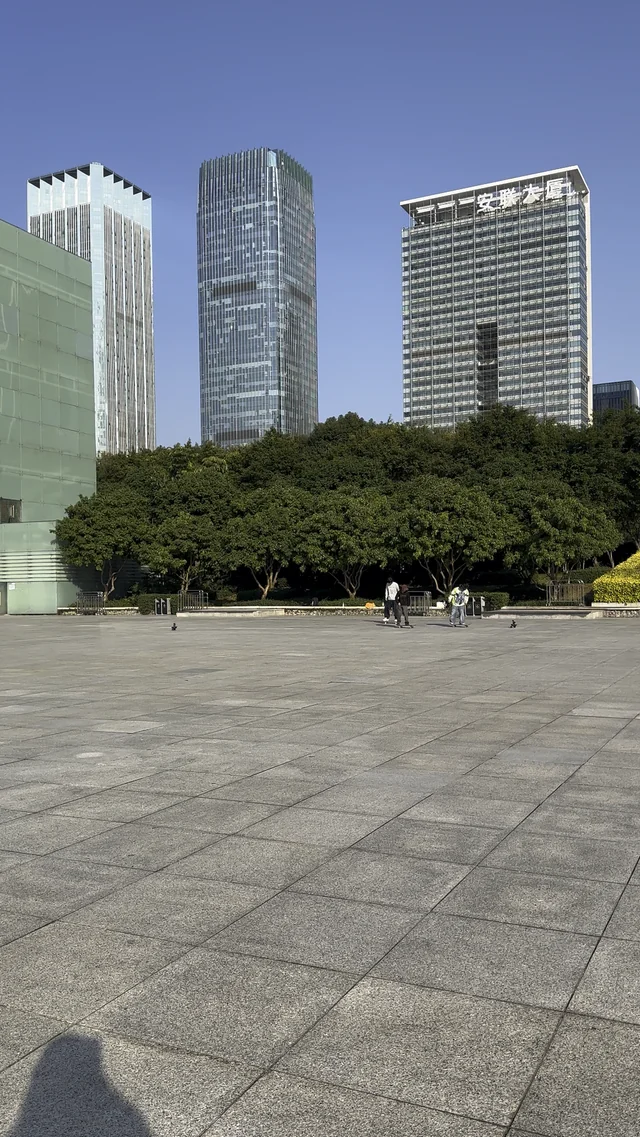
Hey Community, Back in January I was visiting Shenzen and I saw these camera robots that follow skater and film . A few days a go I saw these camera robots BENI robot but since it’s not open platform it’s not an option for me . I was searching around for follow bots in china but did not find a lot :( Anyone here who knows wich one this is ? submitted by /u/Spinning-Complex [link] [Kommentare]
I maintain cuTile Rust and just posted the paper "Fearless Concurrency on the GPU." As more GPU code gets AI-generated, the bottleneck moves from writing it to trusting it. cuTile Rust lets you write or generate GPU kernels whose memory safety and data-race freedom are verified by the compiler, through Rust's ownership and borrow checking. You get those guarantees by construction. It's a tile-based programming model that lowers to CUDA Tile IR, carrying Rust's ownership model across the launch boundary. You partition a mutable output into disjoint mutable sub-tensors, pass inputs as shared references, and write tile kernels with single-threaded semantics that the compiler maps to thread blocks. End to end, we built Grout, a Qwen3 inference engine, on cuTile Rust with Hugging Face. At batch-1 decode it reaches 171 tok/s for Qwen3-4B on an RTX 5090 and 82 tok/s for Qwen3-32B on a B200, competitive with vLLM and SGLang. Batch-1 decode is memory-bandwidth-bound, and Grout's throughput is consistent with our HBM roofline analysis. Many of Grout's kernels still use the unsafe path today, but they can be migrated to safe variants, providing a verifiable target for generated kernels. We've started a collection of such kernels in the cutile-kernels crate in the repo. If this is your thing, contributing safe variants helps grow a library of safe, high-performance kernels that future kernel synthesis can draw from. On the kernel side, the safety is effectively free. On a B200 the safe GEMM is within 0.3% of a hand-written low-level version (~92% of dense f16 peak), and element-wise hits ~7 TB/s, matching cuTile Python within measurement noise. Some additional caveats worth noting: Grout is batch-1 with a small set of supported models (a research case study, not a drop-in server), it's NVIDIA-only (lowers to Tile IR), and GEMM still slightly trails cuBLAS at some sizes. - Paper: https://arxiv.org/abs/2606.15991 - Code: https://github.com/nvlabs/cutile-rs - Grout: https://github.com/huggingface/grout Hope you enjoy the paper and learn something new! Happy to answer any questions :) submitted by /u/Exciting_Suspect9088 [link] [Kommentare]
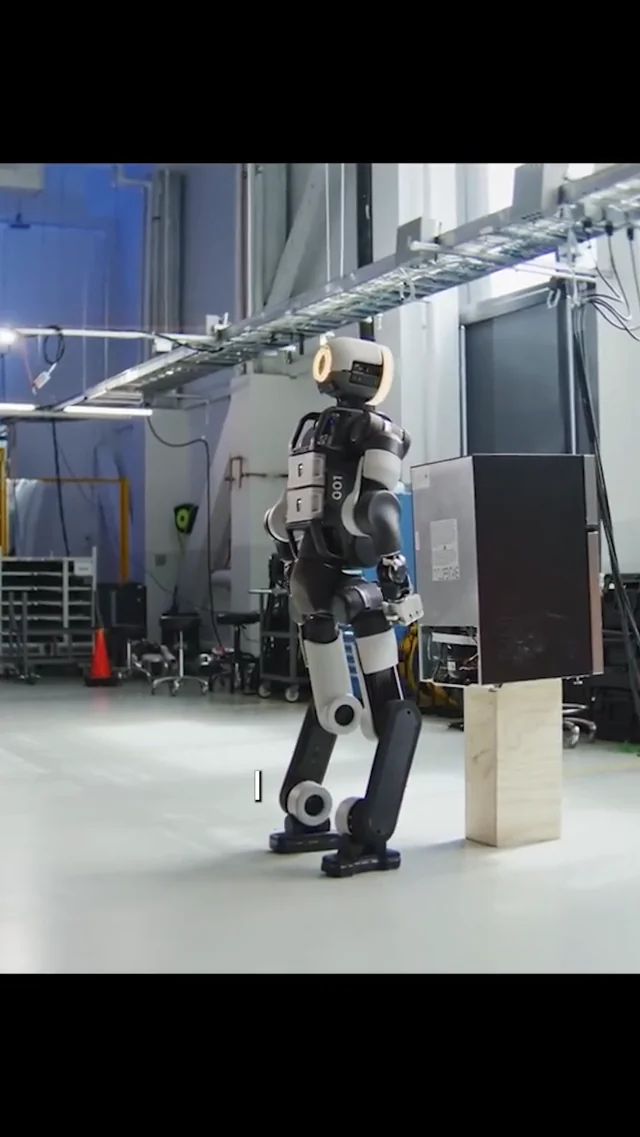
Aya Durbin says humanoid robots need to prove real customer value before they can scale. She says the goal for Atlas is not just to be impressive, but to deliver positive ROI for customers. Boston Dynamics is focusing on industrial environments first, especially work that is hard to hire for, physically demanding and difficult to automate with traditional systems. She also says customers need robots that are reliable, useful and able to become a trusted part of the workforce. submitted by /u/Responsible-Grass452 [link] [Kommentare]
This article looks at some of the common sensor integration challenges in motion control, including signal compatibility, communication protocols, environmental noise, and the growing demand for smarter feedback systems. As robots, AMRs, machine vision systems, and motion control platforms get more advanced, the challenge is not just adding more sensors. It is making sure the data is usable, synchronized, reliable, and actually helps the system make better decisions. As submitted by /u/Responsible-Grass452 [link] [Kommentare]
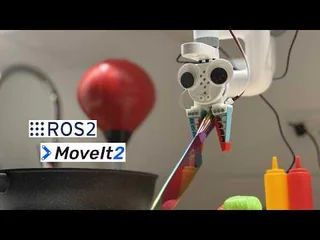
Hi all, just wanted to share a small project I built over a few robotics series. This one builds on top of the mycobot 280pi that I won from a competition, thought it was a fun project to learn with MoveIt2. The raspi itself ran extremely slow, so I had to find an alternative to control from another PC to run the MoveIt and Computer Vision applications via TCP. Feel free to check it out. submitted by /u/OkThought8642 [link] [Kommentare]
Should I buy a 3D printer to print it? Will I likely make use of the printer again for desiging other parts or something? submitted by /u/boringblobking [link] [Kommentare]
Hi everyone, I’m building an open-source machine-learning tutorial repository in Jupyter Notebook format: https://github.com/mohammadijoo/Machine_Learning_Tutorials The course is bilingual: English and Persian/Farsi versions are organized in parallel. The goal is to make a practical, notebook-first ML curriculum that students can run locally and study step by step. Current focus areas include: ML foundations and workflow data cleaning, preprocessing, feature engineering regression and classification tree models and ensembles clustering and dimensionality reduction evaluation, cross-validation, calibration time series, anomaly detection, responsible ML, and MLOps concepts datasets and exercises for hands-on practice I would appreciate feedback on: whether the chapter order makes sense for beginners what important classical ML topics are missing whether bilingual notebooks are useful for non-native English learners how to make the notebooks more practical without turning them into only “copy/paste code” I’m sharing this as a free educational resource and would value constructive criticism. submitted by /u/abolfazl1363 [link] [Kommentare]