Hello everyone! I recently used Switcher.finance, as I noticed many people recommended it. Unfortunately, after using it to swap some crypto, they received my crypto but refused to send the crypto that I am supposed to get. After contacting them, they keep saying that they sent it to me but stuck at transit. I also did some digging afterwards, and realised that they operate a massive bot farm, using multiple account to promote their services across social media. This is a massive fraud and scam. Until this is resolved, please avoid it at all costs. Based on my experience, I believe this is a massive scam. submitted by /u/JestonT [link] [Kommentare]
I've been trying to come up with a solution for keeping extremely long ai sessions coherent. Sometimes there is too much substance to risk compaction. With so much buzz around diffusion going on it got me thinking, what if we treat the context like a progressive render, blurry>sharp. The practical way to make text "blurry" is compression. This is a "diffusion inspired" system which borrows the coarse-to-fine process, not the formal math. It uses semantic compression so the overall structure of the session stays intact. Read the compressed version first to build an outline. Then read progressively less compressed slices until you're reading small verbatim chunks that give full detail. So you're basically using compression as noise on the input side, then progressively building an output. Each slice is compressed to fit within the context window, so the model only ever needs to read the current slice+input+current output. Tell the model what pass it's on, so it knows whether to write an outline or add detail. The thing I'm actually trying to preserve is what you'd call "non-local information". Think of it as stuff that surfaces when looking at the whole session & doesn't survive fragmented retrieval. Retrieval misses it, compaction deletes it. Both miss what only exists in a holistic view. Here is a visual demonstration to get a general idea of the workflow. https://dev-boz.github.io/diffusive-semantic-compression/demo/architecture-demo.html There is substantial overlap with lots of prior art, Recursive Language Models is one of the closest (source and output on disk, process recursively). I wrote most of this before I found RLM and nearly gave up before realising there was still a small part that was novel. As far as I can tell there's no exact match for this particular implementation. Please let me know if I've missed one. The difference to regular masked diffusion is in changing the length of the input rather than just masking. What seems to be new ground is using compression as noise and a position-aware process. I've done some basic testing. Mainly to see if it was at all viable. Just some basic tests using small models like Qwen2.5 7B. The untrained models show that they can do each part (outline, refine, add detail) but they struggle with the full end-to-end process. There 's occasional end-to-end success, but it's nowhere near reliable. On untrained models it also hasn't yet beaten a cheap dense read of the same document. The main bet is whether position-aware training changes that, I haven't been able to test that yet. I've published all the pre-registered failures, parser bugs I found etc. Another note: the goal is preserving structure and nuance, but the tests so far measure planted facts and split-up numeric composition. Mainly because the experiments needed answers you can actually score. The nuance evaluation is being designed but isn't ready yet. The next step is a small model fine tune to test if position aware training can help. If you have the time to look at the idea, it really needs a prior art check from anyone who knows the diffusion-LM/long-context space. And if anyone wanted to help expand the idea or contribute with compute or collaboration for the fine-tune please do. Here is the repo for the proposal. Links to testing repo and prior art inside. https://github.com/dev-boz/diffusive-semantic-compression submitted by /u/Bravo_Oscar_Zulu [link] [Kommentare]



Community updates make Tailscale on a jailbroken Kindle more useful, with Tailscale SSH, proxy modes for KOReader, and full TUN mode on some devices. Plus: plugins for Kobo and Pocket Reader.
Google Drive kann privat mit einem Google-Konto oder geschäftlich mit einem Google Workspace-Konto verwendet werden.

A destitute former student in St. Petersburg murders a pawnbroker to prove a theory about extraordinary men, then is hunted as much by his own conscience as by the law.

Play Meccha Chameleon Game online free in your browser. No download: start fast, learn controls, try modes, and use Mecha Chameleon map routes.

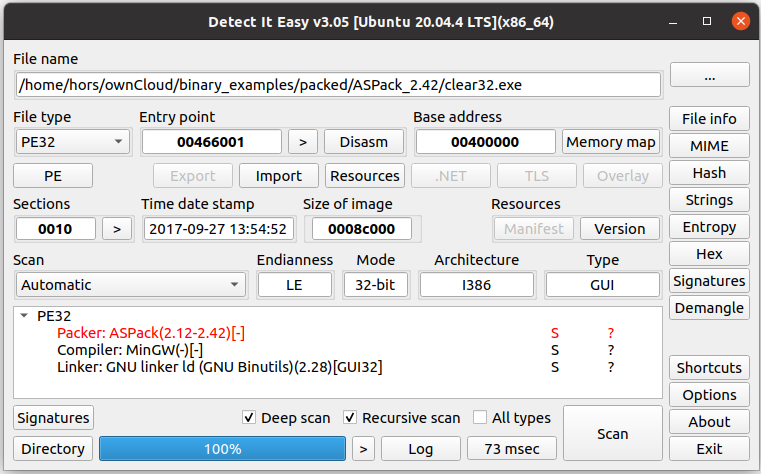
Abusing named pipes in proprietary software to get LocalSystem privileges in seconds.

I haven’t done any bridging since 2021, and back then it was really stressful and a total pain in the ass. I just want to know what you guys are using these days. I came across Jumper and Debridge, but to swap an altcoin 1 to 1 like Polygon from BNB chain to Polygon chain it always seems to cost 1 to 2%, which I’d rather avoid. Do you always need to swap to USDC first before bridging so it doesn’t cost an arm and a leg? Is that just how it works? Also, I still use Metamask and I’m wondering if that’s outdated. I’ve tried Rabby a little, even though a lot of people said it’s way better, but I don’t really think it is. submitted by /u/Famous-Helicopter-36 [link] [Kommentare]

Researchers designed an origami-inspired robotic arm that allows surgeons to perform precise subretinal injections by folding lightweight plastic into a structure strong enough to deliver exact surgical force without any heavy metal components. Weighing under 18 grams and precise to 12 micrometers, the device has already been used successfully in real in vivo eye surgery for cell and gene therapy delivery. This breakthrough could replace bulky kilogram-heavy surgical robots with lightweight origami-based tools, transforming how delicate procedures are performed in crowded operating rooms. Published in npj Robotics, 2026. submitted by /u/Similar_Suit_3709 [link] [Kommentare]