 R
↗
R
↗
Hello all, I am trying to recreate this mechanism as a personal project - and I am really having trouble wrapping my head around how it works. The knees and below make perfect sense, but the hips are throwing me off. What is the purpose of the 2 perpendicular motors at the top? The ones facing horizontally? And how does the rest of the hip fit in with that purpose? I hope this question makes sense. Here is a research paper showing another angle and a more mechanical breakdown. https://arxiv.org/html/2512.16705v1#S4.F3 Also Nvidia GTC 2026 is where the original clip is from (2:11:36) further in the video it shows a side view: https://www.nvidia.com/gtc/keynote/ submitted by /u/halxcyion [link] [Kommentare]
 R
↗
R
↗
 R
↗
R
↗
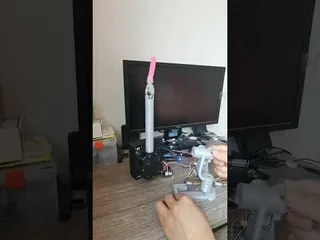
We brought the robot world to Chicago. At Automate 2026, Faraday Future showcased our full EAI robot lineup on the show floor — humanoid, bionic, and mobile manipulator robots, powered by one brain across multiple forms. From the All-New Futurist to our new Faber mobile manipulator series, the FF EAI Robot World drew strong attendee traffic and major media coverage throughout the show. This is only the beginning of robots stepping into real-world life. Learn more: https://robotics.ff.com/us/ submitted by /u/FaradayFuture_FFAI [link] [Kommentare]
 R
↗
R
↗
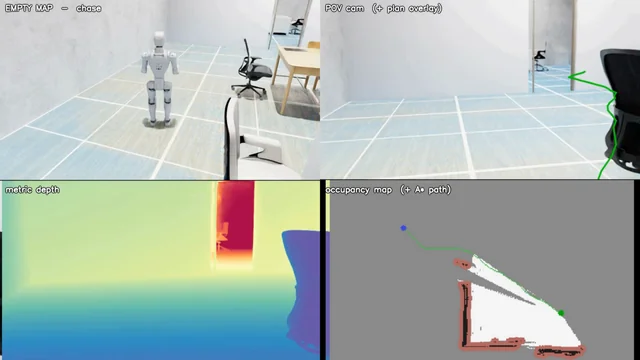
- chase: third-person view of the humanoid walking to the goal - POV cam: the robot's onboard RGB, with the planner overlay (🟢 global A* path, 🔴 immediate move) - metric depth: Depth-Anything 2's per-pixel depth - occupancy map: top-down log-odds grid being built live-> white=free, red=obstacle+inflation, green dot=robot, blue=goal, green line=A* path The robot starts with no map. It draws one as it walks, steering around furniture to reach a goal in the next room. This is a monocular-vision stack for perception, mapping, and navigation: Depth-Anything-V2 turns each RGB frame into metric depth, visual-inertial odometry (VIO) fuses that depth with the IMU for pose, the two build a live occupancy map, and an A*/DWA planner walks the robot to the goal. What would make this more close to reality? Curious to know what tends to break first when a stack like this moves onto hardware. submitted by /u/airwarmedd [link] [Kommentare]
R
↗
Is this the Move-37 moment for flooring? I know, this machine is engineered for this job and probably needs close to perfect conditions to work, hence lacking the "creativity" of AlphaGo. But still, don't look where we are today, but 2 more machines down the line. Seems frightening for flooring installers at least. submitted by /u/LatentSpaceLeaper [link] [Kommentare]
 R
↗
R
↗
(Translating this interesting Japanese post into English for the community! [Repost/Translation] Original link provided at the end.) We are diving right into microcontroller-based control today to explore some new IMU sensors for the Mini Pupper. Here is the breakdown: Table of contents BNO055 Integrating the BNO055 into Mini Pupper Key Notes Party Trick Time! Conclusion BNO055 Previously, I used the ATOM Matrix for control and had fun experimenting with attitude control using its built-in MPU6886 IMU sensor. My goal was to track the Yaw angle (rotation around the gravity axis) so the robot could keep facing the same direction even when the floor beneath it rotated. However, the MPU6886 suffered from significant Yaw drift, forcing me to abandon that approach. In this post, I’m switching to a different IMU sensor to finally achieve accurate Yaw control. To be fair, it's no surprise that a 6-axis IMU like the MPU6886 struggles with Yaw. That said, even with another 6-axis sensor like the MPU6050, you can actually get a relatively low-drift Yaw angle after a proper offset calibration. I could have gone with the MPU6050, but I decided to try out the BNO055 9-axis IMU sensor instead. Honestly, while the internal processing of the BNO055 is a bit of a black box, it delivers highly accurate attitude angles. You can get precise orientation data right out of the box without any tedious calibration or manual compensation using this sample code. Integrating the BNO055 into Mini Pupper I could have simply added the BNO055 to my previous ATOM Matrix setup. However, adding an extra IMU to a board that already integrates an MPU6886 felt way too redundant, and I just couldn't accept it. So, I opted for the ATOM Lite as the controller instead. BNO055 Circuit Board Key Notes While the BNO055 communicates via I2C, I ran into an issue where using M5Atom.h from the M5Stack Arduino library prevented me from mapping custom I2C pins for the Adafruit_BNO055 library. https://preview.redd.it/obc4fr764r8h1.png?width=1196&format=png&auto=webp&s=72d581213069e44203c269b73a8353f036312c93 To bypass this, I skipped the M5Stack library entirely and programmed the ATOM Lite using the standard ESP32 Arduino framework instead. This allowed me to freely specify the I2C pins, and communication with the BNO055 worked flawlessly. In this setup, I assigned Wire.begin(25, 21) for the BNO055 and Wire1.begin(22, 19) for the PCA9685 servo driver. I can confirm that everything runs perfectly without any issues! Reading attitude data with the BNO055, controlling the servos with the PCA9685, and lighting up the NeoPixels —— I've finally built my ideal board! Party trick Time! Thanks to the BNO055, I can now get highly accurate orientation angles. No Kalman filtering or complex algorithms needed—I just used the raw angle data straight from the sensor. The BNO055 is a beast and made this incredibly easy. I tested out the Yaw-based turn control to keep the robot locked onto a single heading while rotating. The longed-for Mini Pupper party trick Looks great! The walking gaits I programmed earlier are also working perfectly. ATOM Lite version Mini Pupper is also doing very well Even when the floor is tilted, parallel control based on foot height is smoothly achieved using only the attitude angle P control of BNO055. Conclusion I had a blast using the BNO055 9-axis IMU sensor to control the Mini Pupper. The BNO055 is honestly a game-changer—it finally allowed me to bring my dream Mini Pupper party trick to life! It's incredibly rewarding to watch this little robot get smarter and smarter. I'll definitely keep learning and experimenting! Original Japanese Post Original X Post #1 (Media) Original X Post #2 (Media) Original X Post #3 (Media) Original X Post #4 (Media) submitted by /u/Designer-Cricket7504 [link] [Kommentare]
 R
↗
R
↗
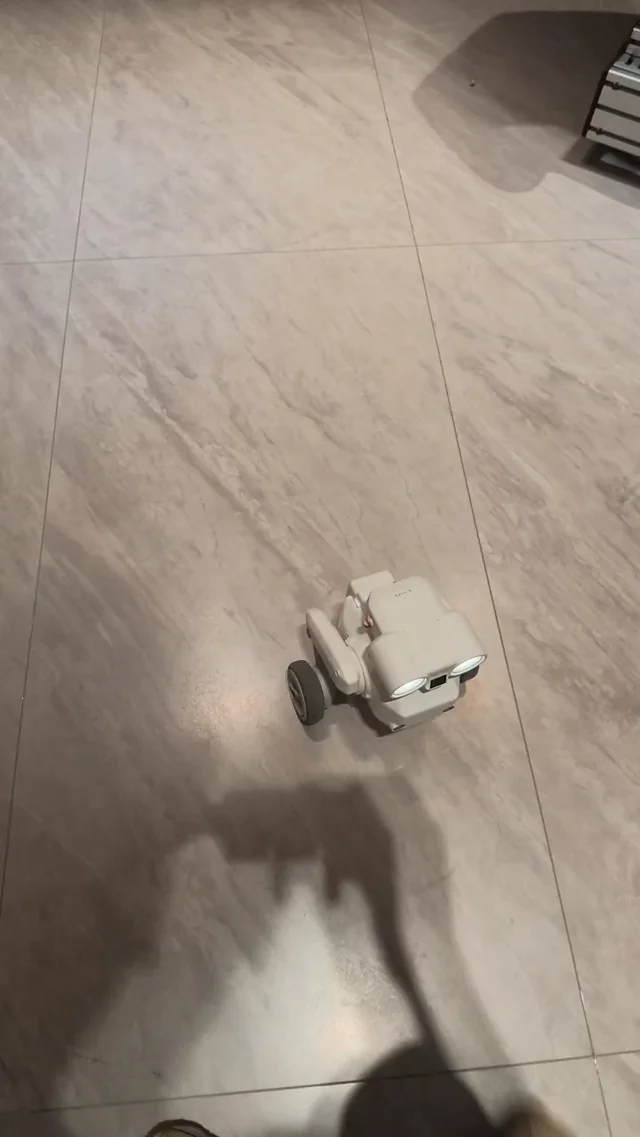
From Mondo Robotics on 𝕏: https://x.com/mondorobotics/status/2059305305553723725 submitted by /u/Nunki08 [link] [Kommentare]
 R
↗
R
↗
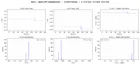
Follow-up to my v2 trajectory post. The RViz trajectory had visible zig-zag jitter even when the robot was stationary. Before deciding what filter to apply, I wanted to actually measure the noise and understand what's driving it. The problem The v2 system uses a physically fixed AprilTag (tag1) as a world frame anchor. The Pi detects it each frame, inverts the camera→tag transform to get world→camera, and publishes that as a TF. The zig-zags in the trajectory come from frame-to-frame instability in that pose estimate. The root cause is AprilTag PnP pose ambiguity — the solver has two valid geometric solutions for a planar tag and flips between them. The flip shows up as a large swing on one axis, typically ±15cm, even with the camera stationary. On top of that, small angular errors get amplified into position noise through the matrix inversion: at ~74cm tag distance, a 5° rotation error becomes ~6.5cm of position noise in world frame. The question I wanted to answer before touching the filter: how much does tag size actually move the needle? Method Added a single_tag_world_mode flag to config so ManualTracker can run with just the world anchor tag in frame — no chase target needed. Camera held stationary, pointed directly at the tag, for ~2–3 minutes per condition. Raw camera-frame poses recorded automatically to JSON. Four conditions: 5cm and 20cm printed tags, each with room lights on and off. All four plots below share identical axis scales so the distributions are directly comparable. Results Condition σ X σ Y σ Z (depth) 5cm — lights off 3.4 cm 0.5 cm 4.5 cm 5cm — lights on 5.1 cm 1.7 cm 3.7 cm 20cm — lights on 2.7 cm 0.4 cm 1.4 cm 20cm — lights off 2.1 cm 1.0 cm 1.7 cm (Images: 5cm lights off → 5cm lights on → 20cm lights on → 20cm lights off) What the plots show Tag size dominates. Going from 5cm to 20cm cuts depth noise by roughly 3x. The distributions tighten and become more unimodal — the PnP flip signature (broad or bimodal histogram on X and Z) is clearly visible in the 5cm sessions and largely absent in the 20cm sessions. Lighting is secondary. For the 5cm tag, lights-on is actually worse on X (σ 5.1 vs 3.4cm), likely because uncontrolled ambient light causes glare that degrades corner localization on a small tag. For the 20cm tag the lighting effect is small enough that it's not the thing to optimize. Best condition across all three axes simultaneously: 20cm + lights on (σX=2.7cm, σY=0.4cm, σZ=1.4cm). What's next This experiment was groundwork, not a fix. The noise is reduced but still present — 2cm+ std dev on X and Z with a stationary camera is not acceptable for a usable world frame. The next step is a filter, but the right choice (EWMA, velocity gate, Kalman, or some combination) depends on understanding the noise characteristics, which is what this data was for. Still deciding. Open to suggestions from anyone who's dealt with PnP jitter on planar markers before. References Post history v2 trajectory post v1 tag chaser PiCar-X introduction Hardware / code PiCar-X on Amazon Git repo submitted by /u/okineedaplan [link] [Kommentare]
R
↗
Hey i was working on a 6dof robot arm and completely new to this And just found out about inverse kinematics I'm having trouble trying to find the right material to learn it where can I find good material submitted by /u/OkCash6221 [link] [Kommentare]
R
↗
I recently visited a robotics space that’s focused specifically on humanoid robots. Not industrial arms, warehouse AGVs, or general automation, but bipedal / human-form platforms. It’s part of an incubator-style setup for early-stage teams working in this niche. What surprised me most wasn’t actually the full robots. The complete humanoid demos were interesting, of course, but the component side stood out more: actuators, dexterous hands, sensing systems, and all the less visible hardware that makes these machines possible. It made me think that the real progress may be happening below the “cool demo video” layer. Another thing I noticed was the visitor mix. Over just a couple of weeks, there seemed to be people coming through from different parts of the world: corporate visitors, researchers, MBA / exec ed groups, and others trying to understand where the field really is. The common question seemed to be: are humanoids actually close to being useful in real-world environments, or is this still mostly future-facing R&D? The incubator model itself also felt notable. Instead of every startup trying to build everything alone, the space seems designed to put founders, suppliers, researchers, and component companies near each other. That kind of clustering has worked in other deep-tech sectors, so I’m curious whether humanoids need the same thing to move faster. A few questions I’m still thinking about: Are humanoid robots finally approaching real product-market fit, or are we still in the “ten years away” phase? Which use cases are most likely to come first: logistics, manufacturing, elder care, inspection, retail, or something else? Is the recent momentum mostly driven by hype and funding, or are there specific technical bottlenecks that have genuinely improved? Are components like actuators and robotic hands the real near-term market before full humanoids become practical? I’m interested in how people here read the current moment. For those working in robotics, automation, or related hardware: does this feel meaningfully different from previous humanoid waves? submitted by /u/Great_Arachnid5776 [link] [Kommentare]
 R
↗
R
↗
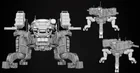
Would a ASL-ML from BO3 work in real life as a Autonomous Quadruped Robot. I kinda think it could only problem would be power/batteries. If it would work what could it be used for? I mainly think security, patrolling important assets etc. submitted by /u/LowAcanthocephala528 [link] [Kommentare]
 R
↗
R
↗
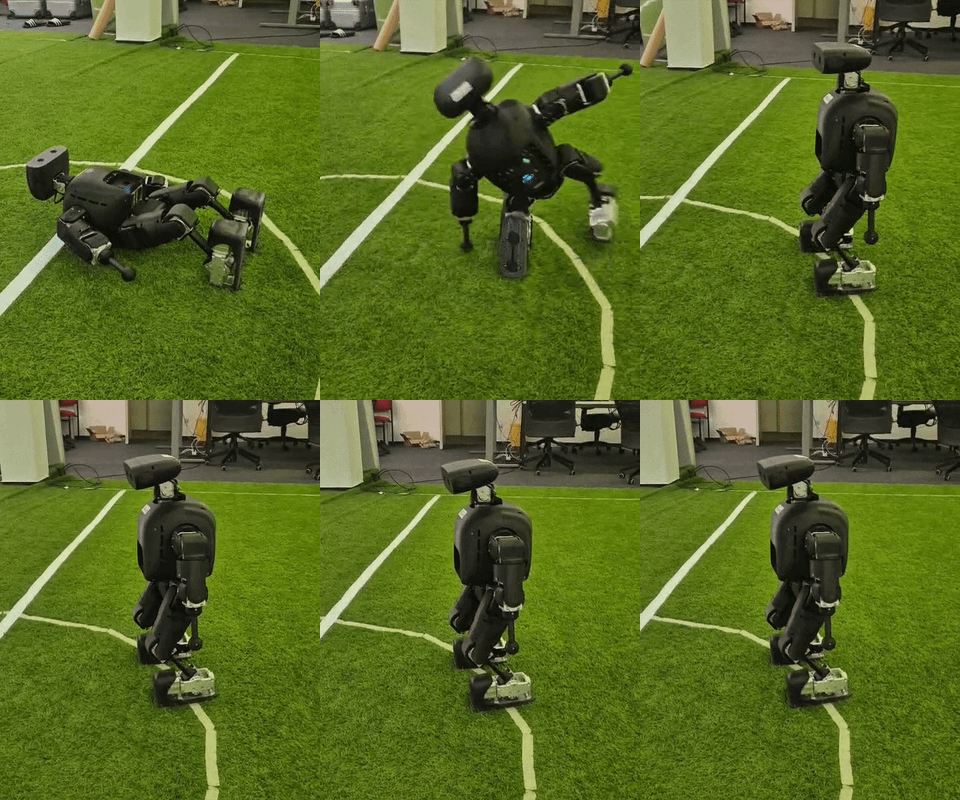
Trained in mjlab with a relatively simple reward function mainly rewarding torso height and end pose + some simple energy, self collision etc penalty. submitted by /u/floriv1999 [link] [Kommentare]
 R
↗
R
↗
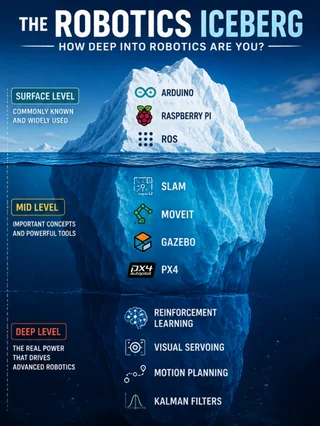
I know this isn't a perfect robotics iceberg, but I thought it'd be fun to visualize how deep the field gets. What would you move up, move down, or add? I'm curious to see what experienced roboticists think belongs at the deepest level. submitted by /u/RoboticsDaddy [link] [Kommentare]
 R
↗
R
↗
I’m working on a concept called CENTAUR — a self-balancing single-wheel vehicle combined with an embodied AI companion. It’s not positioned as a scooter or e-bike. It’s designed as a personal mobility companion that learns you over time. Core idea A vehicle that: balances itself (single-wheel platform) carries you safely in urban + off-road environments has an AI personality that evolves with your behavior remembers places, routes, and shared experiences communicates through a physical “face” (eyes + expressions) actively supports safety in real time What it includes (MVP concept) Self-balancing single-wheel system Ride + follow modes AI voice companion (local edge model) Memory system (routes, preferences, history) Safety assistant (fatigue, risk detection, emergency response) Expressive front “face” (eyes + basic emotions) Safety-first design Real-time balance + obstacle avoidance runs locally (
R
↗
like in the next 10 mins. I have everything ready. I already have another person whose doing his setup rn. I just wanna complete it and get it over with quick. Maybe we can hop on a call?? submitted by /u/SundeepKuPanigrahi [link] [Kommentare]