 R
↗
R
↗
I built this Snake demo to show how easy it can be to go from data preparation to training and evaluation with FeynRL. The model is overkill for Snake, but that’s not the point. This example walks through the full VLM training pipeline in a simple, visual, and fun setting, showing how FeynRL makes it easier to understand how large models like LLMs and VLMs are built, trained, and optimized end to end. https://i.redd.it/9j0t2bukg8dh1.gif GitHub: https://github.com/FeynRL-project/FeynRL Check out the examples section to build something similar yourself, and feel free to share feedback or contribute. submitted by /u/murdock_aubry [link] [Kommentare]
R
↗
Can LLM agents coordinate in long-horizon, open-ended worlds? We evaluate 13 modern LLMs in a new benchmark where agents must work together to explore, communicate, trade resources, craft tools, build structures, and fight mobs. TL;DR: Most agents struggle, averaging only ~6% normalised return. Yet on the hardest setting, zero-shot Gemini 3.1 Pro performs comparably to the best MARL agent trained for 1 billion environment steps. More broadly, we find coordination is a distinct bottleneck beyond long-horizon task competence, with communication having the largest effect in our harness ablations. Paper: https://arxiv.org/abs/2606.08340 Project page and leaderboard: https://alem-world.github.io Code: https://github.com/alem-world/alem-env Interactive traces: https://alem-world.github.io/traces.html Feel free to ask any questions! submitted by /u/ktessera [link] [Kommentare]
 R
↗
R
↗
As stablecoin use surges globally, traditional finance is rushing to keep pace. Many businesses, though, are still getting up to speed on how to integrate dollar-pegged tokens into customer payments, and London-based startup Velocity—which on Tuesday announced a $38 million Series A funding round—is one of the firms helping them to do so. “These are companies that do not understand that they can be using stablecoins to solve their problems. Those are the people we are going for,” said Rob Hadick, a general partner at the venture capital firm Dragonfly, which has carved out a niche in backing firms that facilitate fiat-to-bridge transactions. Dragonfly and Firstmark led Velocity’s Series A round, which also included investments from Coinbase, Capital One Ventures, QED Investors, Activant Capital, Ripple, and Wintermute. Eric Queathem, founder and CEO of Velocity, declined to specify at what valuation his startup raised its most recent stash of capital. Founded in 2025, Velocity aims to tap into the industry’s rapid expansion, with its name pointing to its goal of making payments faster through stablecoins. The company declined to name specific clients but said its customers include a mix of global merchants, payment providers, fintechs, and financial institutions. Read more [paywall removed for Redditors]: https://fortune.com/2026/07/14/exclusive-payments-startup-velocity-38-million-businesses-stablecoin-growth/?utm_source=reddit/ submitted by /u/fortune [link] [Kommentare]
 R
↗
R
↗
Hello guys. I want to introduce my recent research presented at ICML workshop. github link : genji970/SRM-LoRA: official implementation of "SRM-LoRA: Sub-Riemannian-Metric Updates for Mitigating LLM Hallucination in Low-Rank Adaptation" ICML2026 Workshop FoGen Shot summarization of Paper. """ SRM-LoRA is a sub-Riemannian-inspired LoRA method designed to reduce LLM hallucination. It builds a sensitivity-based Riemannian metric that reshapes backward gradients in the LoRA parameter space. This metric suppresses high-cost update directions while leaving the forward computation and inference cost unchanged. Trained only on HaluEval-QA, SRM-LoRA improves factual reliability on both related and out-of-distribution benchmarks. """ Experiment """ https://preview.redd.it/3uyvbtoa76dh1.png?width=740&format=png&auto=webp&s=4431233186dffae885db8e989f009bf37710fe22 """ In my view, the reason mathematics is not effectively used in the context of improving the performance of the latest AI systems, such as LLMs, is that progress in discussions about what should serve as the elements of mathematical theories has been slow. For example, suppose that we use a Riemannian metric. In the parameter space of an LLM, the update vector produced by backpropagation arises from a loss objective that contains the training data. However, if we introduce learnable parameters in order to construct the Riemannian metric and train those learnable parameters by passing through them the same signal as the main training signal, then this may simply amount to a more complicated form of training and may only increase the possibility of overfitting to the training data. Then, how can we obtain the benefits of mathematical theory while moving in a direction that can generalize? In this paper, the Riemannian metric is constructed based on the rate of change of the LLM model parameters with respect to the loss signal. The reason for defining it in this way is as follows. No matter how good the data or the distribution that can be learned may be, in practice there is still a high possibility of overfitting that results in hallucinations. Therefore, the cost used to construct the Riemannian metric, where a higher cost indicates a worse path, is defined using this sensitivity, which can be understood simply as gradient(loss)/gradient(parameter). In other words, rather than merely introducing a more complicated metric, the Riemannian metric acts as a brake on the updates generated from the training data, which is the main signal. I believe that mathematics can be incorporated more deeply into AI if, when using theory A and theory B, the elements of theory A and the elements of theory B are each designed appropriately for the specific situation. submitted by /u/Round_Apple2573 [link] [Kommentare]
 Z
↗
Z
↗
ZenStack is the modern data layer for TypeScript apps - with a type-safe ORM, built-in access control, and automatic query services.
 R
↗
R
↗
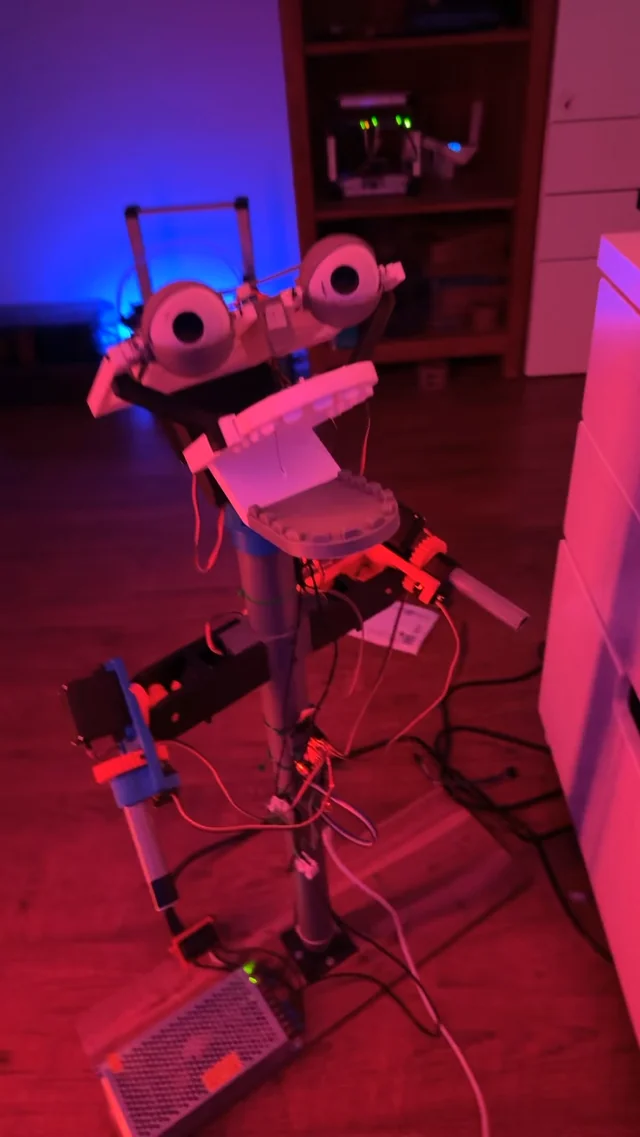
https://www.youtube.com/@ALMA.Industries Chapter 2, a home theatre, 3D printed parts, motorized projector, home decoration, and DIY electronics -- if you know of anyone else that might be interested in this stuff, sharing to others would really help me out! Hope to see you around here or YouTube :) submitted by /u/ALMA_x11 [link] [Kommentare]
 L
↗
L
↗
The Solar Sharer Offer launches 1 July 2026. Here's what changed, how the cap works, and how to maximise free daytime electricity for your home.
 G
↗
G
↗
Yuku is a high-performance JavaScript and TypeScript compiler toolchain written in Zig. Spec-compliant, zero dependencies, fast by design.