 R
↗
R
↗
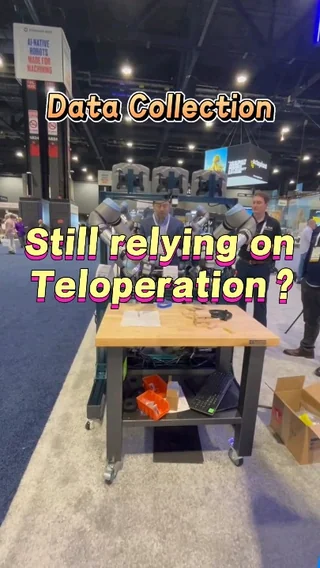
I’m attending the Automate Show in Chicago and tested the teleoperation solution on display at the Universal Robots booth. When it comes to physical intelligence, data collection is a critical component. Today the industry uses a variety of acquisition methods including VR systems and optical motion capture. Teleoperation remains a highly practical approach for data collection thanks to its reliability and intuitiveness. What do you think? submitted by /u/No_Challenge_3410 [link] [Kommentare]
R
↗
R
↗
not sure if this is the right flair 😕 I had put this post up on r/gradadmissions but i feel like I'd get a better demographic that knows the field better here submitted by /u/Proud_Imagination_94 [link] [Kommentare]
 R
↗
R
↗
I designed and built this 16-DOF humanoid robot using low-cost servos and fully 3D-printed parts. I’m currently working on the bipedal walking system and developing the locomotion algorithms based on the robot’s forward and inverse kinematics. I’ll be sharing more updates soon! Here’s a short video showing the development process so far: https://vt.tiktok.com/ZSCJJAqr6/ submitted by /u/RoboDIYer [link] [Kommentare]
 R
↗
R
↗
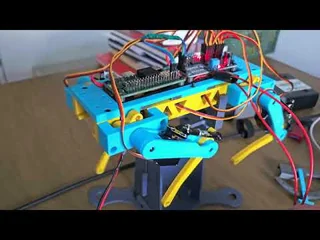
It seems that everyone around is building robots these days. Overcoming my laziness, I decided to also build my own small robodog, and I'm sharing the result of this project, which took me quite a bit of trials and errors during long evenings. All parts were designed from scratch. Everything that is plastic was 3D printed. Everything that isn't plastic was sourced from generic stores - there are no custom CNC orders here. The main SBC is a Radxa Zero 3W running Ubuntu 24.04 with ROS 2 Jazzy. The servos are powered by a Sunflower PCA9685 driver board. There are two separate power rails: 5V for the Radxa and 6-7V for the servos. The trotting gait is shown in the video. I'm currently using an inverse kinematics algorithm, but my long-term plans include Tensor Lite and trained neural networks for skills. The project is still ongoing - I have so many things to try and learn. But it is solid enough as a good foundation for future iterations. submitted by /u/Consistent_Chance_97 [link] [Kommentare]
 R
↗
R
↗
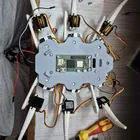
Everything works fine, just for these maze of cables, I have run out of ideas, how do I actually get rid of the mess? I am using 2 16 channel servo drivers. all 18 (plus 2 for camera) are connected to those 2. I am using a buck converter on top and a 4200 MAH battery. The raspberry pi relays all info to my laptop and it control the motion additionally i also need space to put an imu sensor over it. Help !! submitted by /u/Grand-Station-6886 [link] [Kommentare]
 R
↗
R
↗
R
↗
R
↗
So we're using an ESP32S with a TJA1050 transceiver and basically we're using this setup to operate a rover using ROS2 Humble and MAVLink commands, so it has a lot of modules like actuators, PDB, mini-arm, and etc connected through a CAN bus network. Now the issue is that we will be using multiple BLDCs for our rover's arm and these motors continuously send out updates (or heartbeats or sth) so using these BLDCs in the same network seems like the MCU will lag or slow down and just be downright ineffective. So is there any way to isolate the motors to a different network or CAN line? I was thinking of adding another MCU on top of the ESP32 to only handle the motors but is there an alternative to this approach, preferably one without adding more hardware? submitted by /u/Sadhya [link] [Kommentare]
 R
↗
R
↗
 R
↗
R
↗
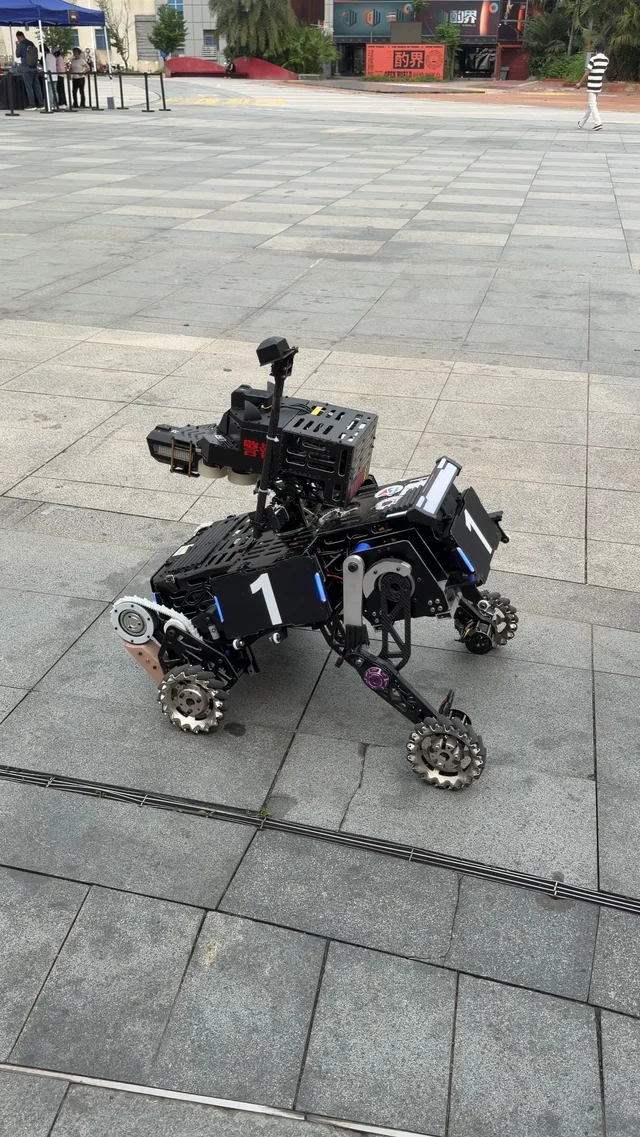
The robot behaved long enough for us to record this video. This robot was developed for the RoboMaster competition and powered by us. submitted by /u/Cubemars [link] [Kommentare]
 R
↗
R
↗
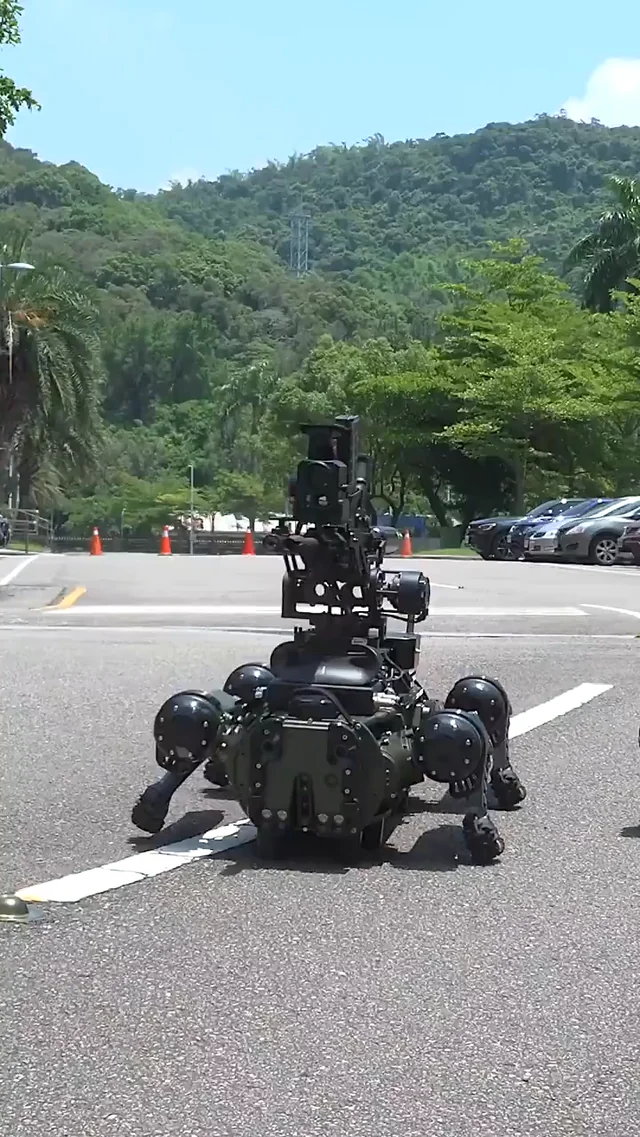
From Eren Chen on 𝕏: https://x.com/ErenChenAI/status/2065565071816741000 submitted by /u/Nunki08 [link] [Kommentare]
R
↗
Hi everyone, I built a small open-source web simulation of a double pendulum to demonstrate chaotic motion and sensitivity to initial conditions. Repo: https://github.com/mohammadijoo/Double-Pendulum-Chaos-Mechanism The goal is educational: a browser-based demo that lets students or beginners see how a simple mechanical system can produce complex, chaotic behavior. It is written with HTML, CSS, and JavaScript, so it can run without installing a physics engine. I would appreciate feedback on: whether the visualization explains chaotic behavior clearly whether the equations / numerical integration could be improved what parameters or plots would make the simulator more useful for control, robotics, or physics students whether adding energy plots, phase portraits, or Lyapunov-style divergence visualization would be useful I’m sharing it mainly for technical feedback, not as a commercial project. submitted by /u/abolfazl1363 [link] [Kommentare]
 R
↗
R
↗
ex-Huggingface pre-training team just announce a new library create for robotics data refinment! It supports ingestion of all robotics formats (Parquet, HDF5, MCAP, Zarr, RLDS, and LeRobot), as well as the common processing flows like visual hand-tracking, subtask annotations and reward model running submitted by /u/Other_Housing8453 [link] [Kommentare]
R
↗
Just a machine that made you stop and think: "wow...somebody put a ridiculous amount of engineering into this". Could be anything.sometimes the most impressive machines are the ones that make incredibly difficult things look effortless. submitted by /u/hannimalki [link] [Kommentare]
 R
↗
R
↗
I would love feedback on the data quality and the 3D renderings specifically, because the renderings were the hardest part about getting this to work. Basically, Chaveta is a agentic dataset curation tool that allows you to submit a prompt and instantly receive a dataset for: - World models - Robotics (JSON Trajectories) - LLM Fine Tuning - Geological - Synthetic Tool Calling / LLM flows - Time series For the robotics path, you can also download to MCAP or simple JSON and we have a render tab that allows you to edit joints visually + we provide copy/paste scripts for importing the dataset into things like Transformers. Let me know what you think. submitted by /u/ComradePampers [link] [Kommentare]