
Organizers promise 850,000 fireworks in roughly 40 minutes over the National Mall this Saturday. I did what a mathematician does with a big number: I divided. It did not make the show look better.
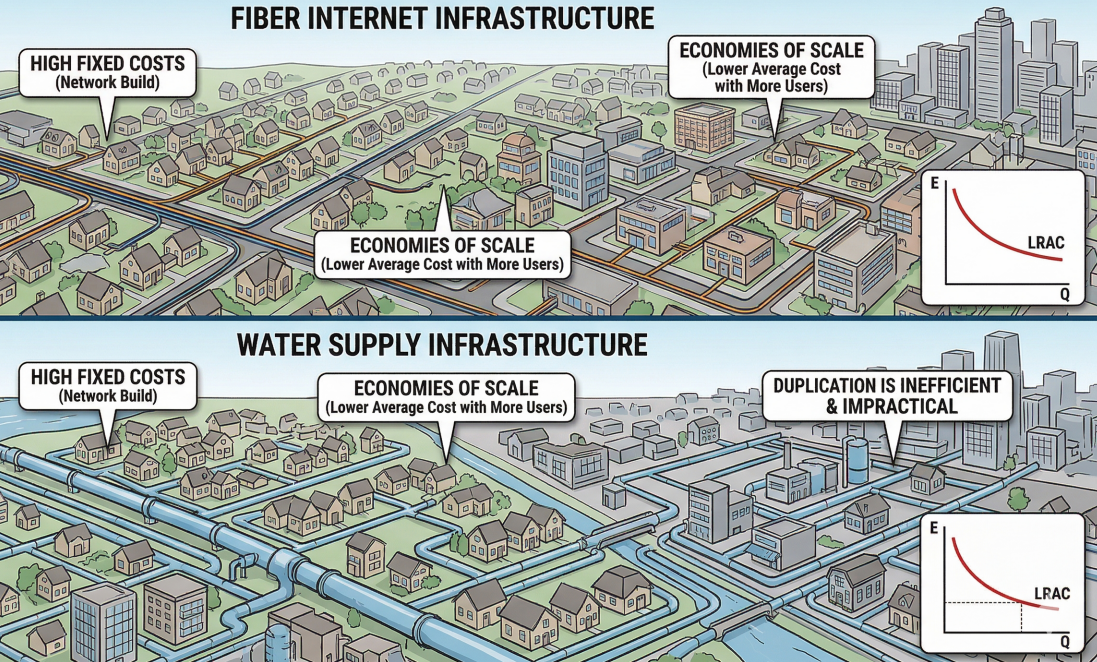
The Free Market Lie: Why Switzerland Has 25 Gbit Internet and America Doesn't

Experience the new container technology powered by WebAssembly that runs your programs safely, anywhere. Locally or in the cloud.


Learn why traditional GIS formats break at scale, how vector tiles solve the memory and rendering bottleneck, and what the shift from flat files to tiled architectures means for web-based geospatial data.

As AI systems become more capable, training procedures that optimize for downstream outcomes risk introducing implicit agency: goal-directed behavior that designers never specified. We present a formal safety argument for the Scientist AI (SAI) Predictor, trained to approximate the Bayesian posterior conditioned on a dataset of "epistemically contextualized" natural-language statements. We argue that such a Predictor can honestly predict agents, actions, and their consequences without itself being an agent that selects outputs to achieve goals. This rests on data representation and on the training procedure. Epistemic contextualization of text distinguishes latent factual claims from communication acts, so expressions of goals are treated as evidence to be explained rather than drives the model adopts. With a posterior-seeking training objective, this is intended to drive the Predictor toward calibrated, cautious predictions. Training proceeds so downstream effects of deploying a prediction never serve as a reward signal; any agency the system needs is supplied by explicit scaffolding constrained by guardrails. We prove that, under assumptions on the training dynamics and on the argued sparsity of dangerous Predictors, the probability that training produces a Predictor whose guarded deployment carries residual harm above a specified threshold is small: a dangerous Predictor would have to underestimate harm in a coordinated way across many queries while such coordinated patterns are rare under the initialization distribution and receive no direct training signal. Safety and accuracy are jointly supported in this framework, since the constraints that secure accuracy are the same ones that make coordinated deception costly. These guarantees against misalignment and agency arising from within the Predictor itself do not preclude the use of the Predictor as part of an agentic system.
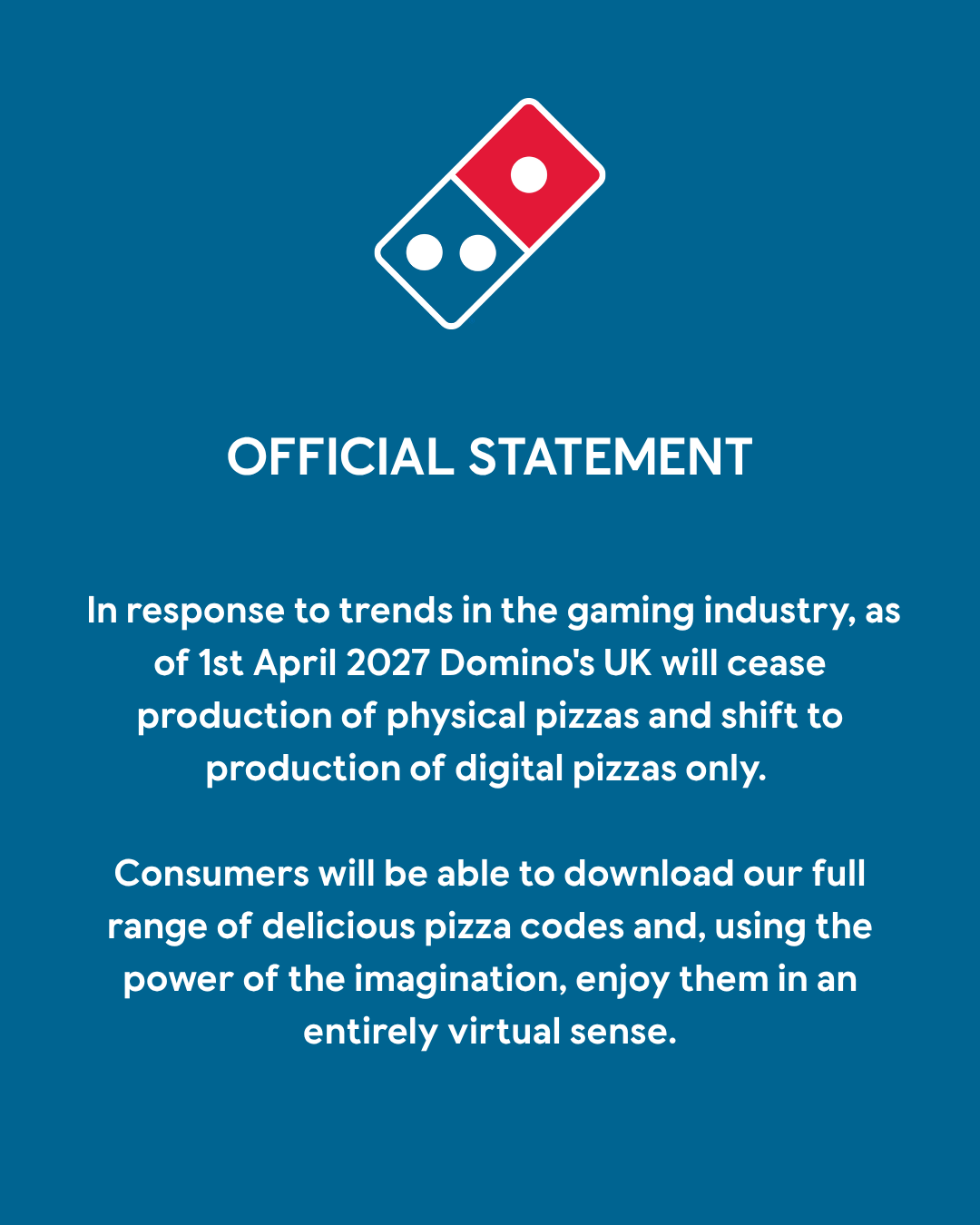
BREAKING NEWS
Introducing OneWill, or: why write-ahead logging is better than letting agents rawdog your computer.


A friend of mine told me that 1Inch will go crazy soon. He is working as an analyzer for crypto currency and financial products. Maybe invest in it to make a bit of money. submitted by /u/Lennske123 [link] [Kommentare]
I share the same disappointment as most others that they're removing the option of owning physical games. The main complaints I've seen are: licensing (not actually owning the product) and not being able to resale, trade, or let someone borrow a game. But doesn't blockchain allow for that to happen? People associate NFTs with jpegs. But this is what it's for. Proof of digital ownership and the ability to sell, trade, or lend the digital product as vou wish. For example, when you buy GTA6, you would own "GTA6#001". Of the millions of copies sold, no one could ever own "GTA6#001" but you until you sold it. It's pro-consumer. So I doubt companies would want that. But I think it makes sense in a world where we seem to be inevitably moving away from physical media. We could sell and trade on any marketplace without relying on Sony or MF$T and their inflated prices. Or we could trade/sell things directly with each other. If viable, which blockchains do you think would be most fitting? submitted by /u/da_loud_man [link] [Kommentare]