G
↗
G
↗
brick is a smart AI Models router, based on complexity & capabilities extraction from the query to the models via proprietary spatial embedding algorythm - regolo-ai/brick-SR1
 C
↗
C
↗
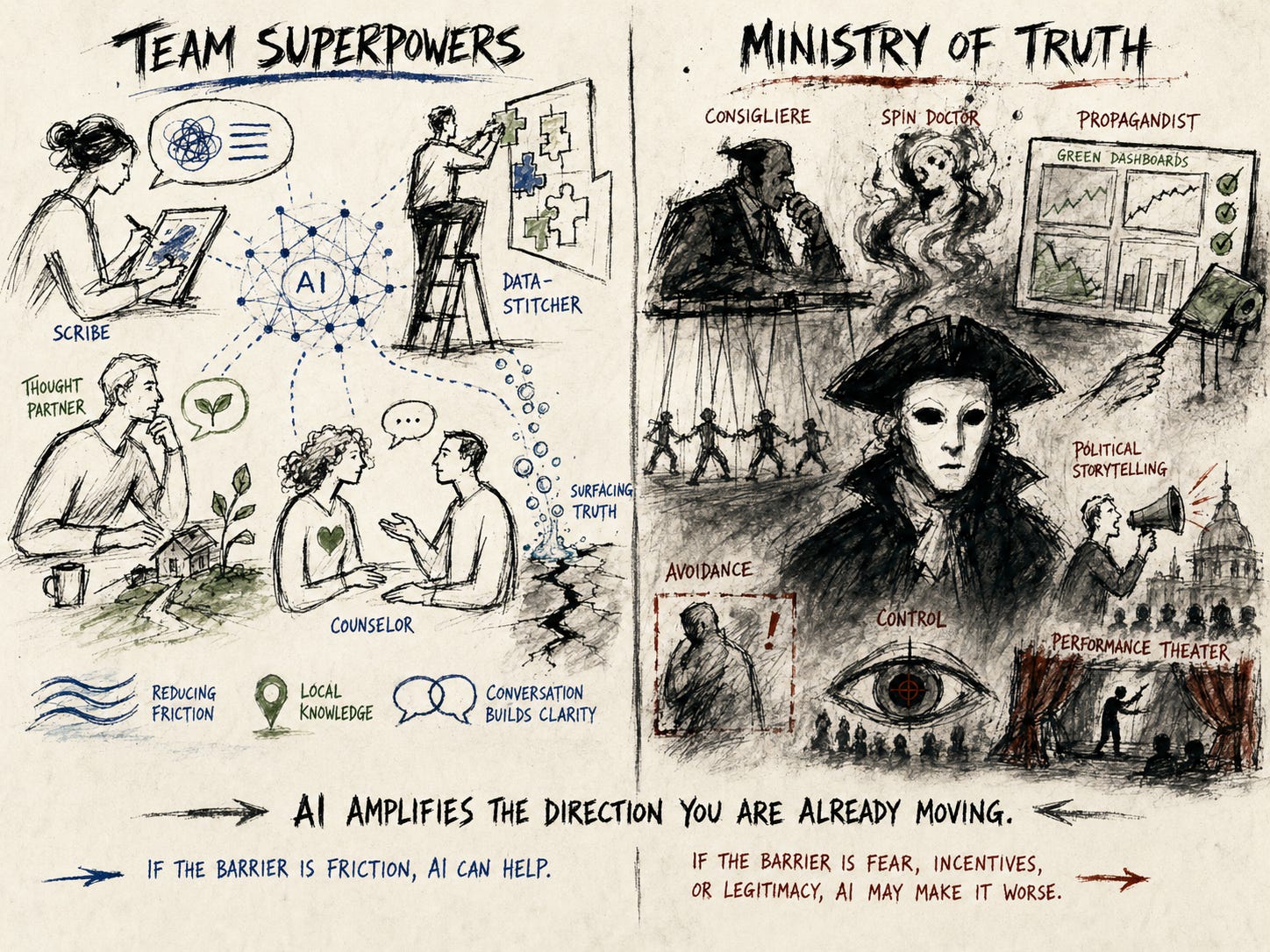
AI can be your scribe, your thought partner, data-stitcher, or your counselor.
 C
↗
C
↗
Organizers promise 850,000 fireworks in roughly 40 minutes over the National Mall this Saturday. I did what a mathematician does with a big number: I divided. It did not make the show look better.
 W
↗
W
↗
Experience the new container technology powered by WebAssembly that runs your programs safely, anywhere. Locally or in the cloud.
 G
↗
G
↗
Learn why traditional GIS formats break at scale, how vector tiles solve the memory and rendering bottleneck, and what the shift from flat files to tiled architectures means for web-based geospatial data.
 A
↗
A
↗
As AI systems become more capable, training procedures that optimize for downstream outcomes risk introducing implicit agency: goal-directed behavior that designers never specified. We present a formal safety argument for the Scientist AI (SAI) Predictor, trained to approximate the Bayesian posterior conditioned on a dataset of "epistemically contextualized" natural-language statements. We argue that such a Predictor can honestly predict agents, actions, and their consequences without itself being an agent that selects outputs to achieve goals. This rests on data representation and on the training procedure. Epistemic contextualization of text distinguishes latent factual claims from communication acts, so expressions of goals are treated as evidence to be explained rather than drives the model adopts. With a posterior-seeking training objective, this is intended to drive the Predictor toward calibrated, cautious predictions. Training proceeds so downstream effects of deploying a prediction never serve as a reward signal; any agency the system needs is supplied by explicit scaffolding constrained by guardrails. We prove that, under assumptions on the training dynamics and on the argued sparsity of dangerous Predictors, the probability that training produces a Predictor whose guarded deployment carries residual harm above a specified threshold is small: a dangerous Predictor would have to underestimate harm in a coordinated way across many queries while such coordinated patterns are rare under the initialization distribution and receive no direct training signal. Safety and accuracy are jointly supported in this framework, since the constraints that secure accuracy are the same ones that make coordinated deception costly. These guarantees against misalignment and agency arising from within the Predictor itself do not preclude the use of the Predictor as part of an agentic system.
 O
↗
O
↗
Introducing OneWill, or: why write-ahead logging is better than letting agents rawdog your computer.
R
↗
ROS Intern – CNDE Lab, IIT Madras Position - Robotics Operating System (ROS) Intern Organization - Centre for Nondestructive Evaluation (CNDE), IIT Madras Location - IIT Madras, Chennai, India Duration 3–6 Months (extendable based on performance) About the Role CNDE Lab, IIT Madras is seeking a motivated and enthusiastic ROS Intern to support the development of robotic systems, autonomous navigation solutions, perception pipelines, and AI-driven applications. The intern will work closely with researchers and engineers on cutting-edge robotics projects involving ROS/ROS2, computer vision, sensor integration, and robotic automation. Key Responsibilities - Develop, test, and maintain ROS/ROS2 packages and nodes. - Integrate sensors such as LiDAR, RGB-D cameras, IMUs, and other robotic peripherals. - Implement robotic navigation, localization, and mapping algorithms. - Develop communication interfaces between hardware and software systems. - Assist in simulation and testing using Gazebo, RViz, Isaac Sim, or similar platforms. - Debug and optimize robotic software for real-world deployment. - Participate in system integration, testing, and documentation activities. - Collaborate with researchers on robotics, AI, and automation projects. Required Skills Programming - Strong knowledge of Python. - Good understanding of C++ programming. - Experience with Linux (Ubuntu) environment. Robotics - Familiarity with ROS/ROS2 concepts, including nodes, topics, services, actions, and launch files. - Understanding of robotic kinematics, localization, navigation, and sensor integration. - Knowledge of Git and version control systems. CAD & Design - Experience with Fusion 360 for basic mechanical design, robot assembly, and component modeling. Preferred Skills - Experience with Computer Vision using OpenCV. - Knowledge of SLAM, Navigation Stack, MoveIt, or robotic manipulation. - Experience with simulation environments such as Gazebo or Isaac Sim. - Familiarity with AI/ML applications in robotics. - Experience working with robotic arms, mobile robots, or autonomous systems. Eligibility - Undergraduate, postgraduate, or recent graduates in: - Robotics - Computer Science - Mechanical Engineering - Electronics Engineering - Artificial Intelligence - Related disciplines What You Will Gain - Hands-on experience with advanced robotics research. - Exposure to real-world robotic systems and deployments. - Mentorship from researchers and engineers at IIT Madras. - Opportunity to contribute to innovative robotics and AI projects. Application Process Interested candidates should send their updated resume along with a brief statement of interest to: Email: msalamdata@gmail.com submitted by /u/Independent_Loss_593 [link] [Kommentare]
 G
↗
G
↗
A retrospective on autofz, fuzzer orchestration, and how the idea connects to CRS and agent systems.
 T
↗
T
↗
Riyadh initially refused Washington request to use bases critical to Hormuz ship escort operation, prompting US ire; Riyadh interprets Rubio skipping over Saudi on Gulf tour as snub