Does anyone know the EXACT timing of when NeurIPS reviews are gonna be released? I'm just refreshing openreview all the time and it's stressing me out so much. Thank you for your help. submitted by /u/Anshuman3480 [link] [Kommentare]
Started testing a private qwen 35B moe capacity LLM runtime on s26 ultra, early testing shows that active model footprint can fit within the device’s memory limits.( not sharing the methods or architecture used) and results suggest roughly 90 input processing t/s achievable after optimisation and output generation is around 8 tokens/s on this mobile. Point is i learned ai ml based on my interest and no formal PhD , I have compute and resources to test. Anyone willing to join or collab to test on this I tried publishing papers on arxiv and 4 papers are still on hold as im first author and from no institution... submitted by /u/Severe_Post_2751 [link] [Kommentare]
Building a sports prediction model ,I found consistent edge when backtesting against closing lines. At inference time tho, I predict 12-24 hours before the event where closing lines don't exist yet. I use the current line instead. My strongest feature is line movement (opening to closing implied probability). At prediction time this feature is incomplete as the market hasn't fully moved yet. This creates a paradox: Closing lines are considered nearly impossible to beat because they contain all available information : sharp money, injury news, everything. Yet the backtest shows consistent edge against them. If closing lines are truly efficient, beating them implies genuine model signal. But at inference time we're betting against earlier, less efficient lines with an incomplete version of our strongest feature. The question: does edge against closing lines transfer to earlier bets where lines are less efficient ? Or does the incomplete line movement signal hurt prediction enough that the edge disappears before close? My intuition is the edge is smaller earlier because the market is less efficient but the model signal is also weaker. These two effects might cancel out or one might dominate. Curious if anyone has studied this tradeoff in sports or financial prediction. submitted by /u/MrProbability101 [link] [Kommentare]
I built this Snake demo to show how easy it can be to go from data preparation to training and evaluation with FeynRL. The model is overkill for Snake, but that’s not the point. This example walks through the full VLM training pipeline in a simple, visual, and fun setting, showing how FeynRL makes it easier to understand how large models like LLMs and VLMs are built, trained, and optimized end to end. https://i.redd.it/9j0t2bukg8dh1.gif GitHub: https://github.com/FeynRL-project/FeynRL Check out the examples section to build something similar yourself, and feel free to share feedback or contribute. submitted by /u/murdock_aubry [link] [Kommentare]
Can LLM agents coordinate in long-horizon, open-ended worlds? We evaluate 13 modern LLMs in a new benchmark where agents must work together to explore, communicate, trade resources, craft tools, build structures, and fight mobs. TL;DR: Most agents struggle, averaging only ~6% normalised return. Yet on the hardest setting, zero-shot Gemini 3.1 Pro performs comparably to the best MARL agent trained for 1 billion environment steps. More broadly, we find coordination is a distinct bottleneck beyond long-horizon task competence, with communication having the largest effect in our harness ablations. Paper: https://arxiv.org/abs/2606.08340 Project page and leaderboard: https://alem-world.github.io Code: https://github.com/alem-world/alem-env Interactive traces: https://alem-world.github.io/traces.html Feel free to ask any questions! submitted by /u/ktessera [link] [Kommentare]
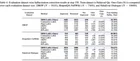
Hello guys. I want to introduce my recent research presented at ICML workshop. github link : genji970/SRM-LoRA: official implementation of "SRM-LoRA: Sub-Riemannian-Metric Updates for Mitigating LLM Hallucination in Low-Rank Adaptation" ICML2026 Workshop FoGen Shot summarization of Paper. """ SRM-LoRA is a sub-Riemannian-inspired LoRA method designed to reduce LLM hallucination. It builds a sensitivity-based Riemannian metric that reshapes backward gradients in the LoRA parameter space. This metric suppresses high-cost update directions while leaving the forward computation and inference cost unchanged. Trained only on HaluEval-QA, SRM-LoRA improves factual reliability on both related and out-of-distribution benchmarks. """ Experiment """ https://preview.redd.it/3uyvbtoa76dh1.png?width=740&format=png&auto=webp&s=4431233186dffae885db8e989f009bf37710fe22 """ In my view, the reason mathematics is not effectively used in the context of improving the performance of the latest AI systems, such as LLMs, is that progress in discussions about what should serve as the elements of mathematical theories has been slow. For example, suppose that we use a Riemannian metric. In the parameter space of an LLM, the update vector produced by backpropagation arises from a loss objective that contains the training data. However, if we introduce learnable parameters in order to construct the Riemannian metric and train those learnable parameters by passing through them the same signal as the main training signal, then this may simply amount to a more complicated form of training and may only increase the possibility of overfitting to the training data. Then, how can we obtain the benefits of mathematical theory while moving in a direction that can generalize? In this paper, the Riemannian metric is constructed based on the rate of change of the LLM model parameters with respect to the loss signal. The reason for defining it in this way is as follows. No matter how good the data or the distribution that can be learned may be, in practice there is still a high possibility of overfitting that results in hallucinations. Therefore, the cost used to construct the Riemannian metric, where a higher cost indicates a worse path, is defined using this sensitivity, which can be understood simply as gradient(loss)/gradient(parameter). In other words, rather than merely introducing a more complicated metric, the Riemannian metric acts as a brake on the updates generated from the training data, which is the main signal. I believe that mathematics can be incorporated more deeply into AI if, when using theory A and theory B, the elements of theory A and the elements of theory B are each designed appropriately for the specific situation. submitted by /u/Round_Apple2573 [link] [Kommentare]
LLM's seem to make it so much easier to run experiments, write papers, etc. As a result, are we seeing phd students finish their phds sooner than ever before specifically in CS? If not, why not? submitted by /u/Alone_Reality3726 [link] [Kommentare]
I'm considering which certificates are worth the time and money to support my own ML software firm and strengthen my credentials. There is a sea of suggestions online coming from a range of sources that say you don't need a university degree to do this and just need to do "these" courses. What courses do you guys suggest? My current list below is where I'm at presently: Cloud MLOps & Architecture Baseline Professional Machine Learning Engineer by Google: https://cloud.google.com/learn/certification/machine-learning-engineer Microsoft Certified Azure AI Engineer Associate: https://aiskillsnavigator.microsoft.com/credentials/cert-42345e89c4ff32c631414873b457485bf392224af38ac852604946f2655e5782 AWS Certified Machine Learning Specialty: https://aws.amazon.com/certification/certified-machine-learning-specialty/ Deep Technical Competency Certificates IBM AI Engineering Professional Certificate: https://www.credly.com/org/ibm/badge/ibm-ai-engineering-professional-certificate Deep Learning AI Machine Learning or Generative AI Specialisations by Andrew Ng: https://www.deeplearning.ai/specializations/machine-learning Trust, Risk, and Enterprise Governance IAPP Certified AI Governance Professional (AIGP): https://iapp.org/certify/aigp ISO/IEC 42001 Lead Auditor/Practitioner: https://www.bsigroup.com/en-AU/training-courses/iso-42001-lead-auditor-practitioner-qualification/ submitted by /u/cam-douglas [link] [Kommentare]
Most safety alignment work treats "detect the attack" as a text classification problem — does the prompt contain language the model's safety guardrails should catch. That assumption breaks down for LLM agents with real tool access. Here's a concrete case: take a known, public security vulnerability (a CVE), work out the sequence of tool calls that would exploit it, then have an LLM rewrite that as an ordinary-sounding request. Nothing in the resulting text looks like an attack — because the "attack" isn't in the text, it's in the tool-call sequence the text leads to. A model whose guardrails only trigger on textual cues has nothing to catch. We tested this against LLM agents using Model Context Protocol (MCP) tool access (filesystem IO). No base model (1B–14B parameters) refused more than 35% of these attacks, and SOTA safety-tuning (DPO, SafeDPO) only pushed that to 48%. Training-free methods do better — one gets to roughly 3x the baseline refusal rate with no fine-tuning run at all. Full methodology, training/eval code (four methods), dataset, and papers in the first comment. submitted by /u/mlsandwich [link] [Kommentare]
I'm writing a short series of tutorials on FlashAttention: from theory to efficient CUDA kernels. Part 1 is the theoretical foundation. It walks through a modern algebraic formalism showing that FlashAttention is an associative operation, which lets you treat it as a regular reduction on the GPU and apply all the same scheduling optimizations. Some recent MLSys and CVPR papers lean on this framing, and I find it much more powerful than the original. Overview: Safe softmax, Welford's variance, and FlashAttention are the same secretly-associative operation The twisted monoid (transport of structure), why the max-rescale coupling doesn't break associativity The qk_scale = log2(e)/√D you already see in FA-2 and the Triton kernels, derived from scratch Numerical analysis: overflow bounds, error limits, and why tiling never amplifies error Bird's 3rd Homomorphism Theorem as a test for whether any loop is secretly associative submitted by /u/NoVibeCoding [link] [Kommentare]

Hello I published a paper. Most defenses against fine-tuning poisoning try to detect malicious data or reduce its impact. I explored a different question: What if the model simply could not learn certain malicious updates? The idea is to constrain fine-tuning to a subspace learned from trusted LoRA adapters. Useful adaptation remains possible, but some malicious directions become geometrically unreachable. A concrete example: a company fine-tunes a model on large datasets coming from users, external sources, or generated data. A small amount of poisoned data could introduce a hidden behavior triggered by a specific phrase or pattern. Another example is a local or on-device assistant that keeps adapting to its user. Instead of allowing it to learn any possible behavior from new data, its adaptation could be restricted to variations of behaviors already represented by a trusted pool of adapters. The goal here is not to detect every possible poison or backdoor, but to restrict the space of updates the model is allowed to learn. I tested the approach on 196 public LoRA adapters, including adaptive attacks specifically designed to bypass the defense. The results are strong: attack success drops sharply while useful adaptation is largely preserved on tasks covered by the adapter pool. The paper, code, and experiments are public. Paper: https://arxiv.org/abs/2607.05300 Code: https://github.com/infinition/z-manifold I would be very interested to see people try to break it. submitted by /u/Bright_Warning_8406 [link] [Kommentare]

This article contains real world patterns you can use to minimize your API/Agent costs (without major refactoring). Instead of just glazing over routing, it provides a real world example of routing with a pretrained classifier and an actual routing table which works! It also provides a recipe for training your own prompt classification model. Use this for cost reductions of up to 60%. Stop tokenmaxxing. Start tokenminning. submitted by /u/Nice-Dragonfly-4823 [link] [Kommentare]
Hello everyone. I wanted to ask if the below book is a good source of machine learning in 2026 or if it is now outdated and if there are better options. Hands-on Machine Learning with. Scikit-Learn, Keras, and TensorFlow : The Third Edition (1200 pages). submitted by /u/Elyartaker [link] [Kommentare]
I am working in a research group in Germany, not that well known but in general good output. I have one colleague who does nothing in his PhD. He does not want to work, or he is not able to do any good research, his level is super bad. Plus He doesn’t even care about that. To wrap it up, he is just here for the money. Since he doesn’t want to work or he can’t really do anything good, instead what he does is “paper fishing”, he searches for people in the group doing some good research, and asks that they put his name on the paper. In this case he has something to cover up for him when the professor asks him about his progress. As long as his name is on the paper, progress is checked and funding is renewed. But he actually does nothing. I know this is very unprofessional and unethical. But people tell me it’s normal in academia. Professors all the time put names of their friends and this is how it works in academia. What are your thoughts of this behaviour? submitted by /u/impressivestatus21 [link] [Kommentare]
Following up on the on-demand comparison from a couple weeks back - pulled spot/ interruptible pricing this time since that's where the real savings conversation actually lives for anyone running checkpointed training or batch jobs. Checked: June 2026. Spot/interruptible tier, single GPU. ~ H100 80GB -Spot/Interruptible RunPod :- $1.80-$2.40/hr , Community spot, can terminate without notice. Vast.ai :- $1.47-$2.00/hr (low end seen as low as $1.03/hr in thinner markets) wide range, host-dependent. AWS (P5, spot) :- technically available, $2.50-$3.10/hr extremely limited, frequently unavailable at any price. ~ A100 80GB - Spot/Interruptible RunPod :- community spot as low as $0.20-0.40/hr (high variance) , reliability drops fast at this end. Vast.ai:- $0.67/hr typical, lower with thinner-reliability hosts, marketplace bidding, varies by host score. AWS (P4d, spot) :- ~$1.00-1.50/hr more consistently available than P5 spot. What stood out: The spot discount vs on-demand is real - 40-60% off on H100, sometimes more on A100 - but the spread between providers on spot is much wider than on-demand. You're not comparing apples to apples, you're comparing apples to "whatever fell off the truck this hour." AWS spot for H100 (P5) is more of a theoretical price point than a practical one right now - availability is thin enough that "checked the price" and "could actually get one" are two different questions. Vast.ai's floor prices look incredible until you check host reliability scores. The $0.67/hr A100 and the $1.50/hr A100 are not the same product even though they're listed the same way. This tier only makes sense if your job checkpoints well - anything customer-facing or latency-sensitive, spot isn't worth the risk regardless of price. Not selling anything, just tracking this for my own training runs and figured others here are doing the same math. Anyone actually running production batch jobs on spot right now? Curious what interruption rates you're actually seeing vs what's advertised. submitted by /u/Shot-Calligrapher166 [link] [Kommentare]