 R
↗
R
↗
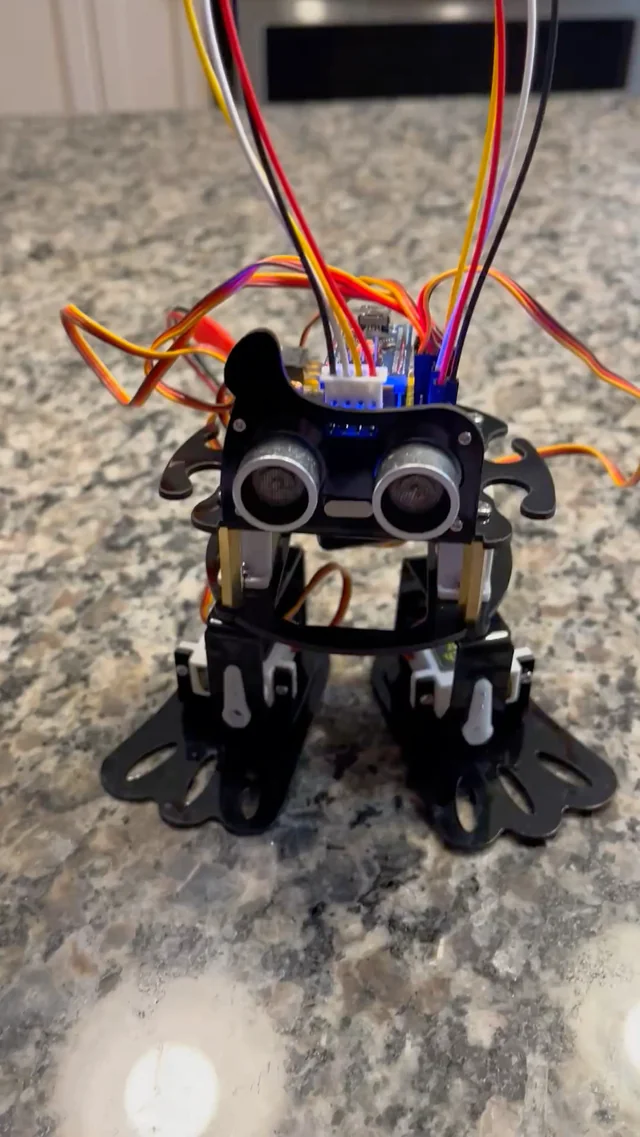
Built my first robot still have a lot to learn. Open to any advice on how to improve look of wires. When I built this, I lost two of the baby screws for the knee of the robot so it topples over in the middle of its dance. But it was fun to build and I learned a lot. Also, open to any ideas on other kits or sites where I can create more stuff myself following tutorials and things like that submitted by /u/Specific_Dingo8631 [link] [Kommentare]
 R
↗
R
↗
R
↗
R
↗
Hi everyone, I’m Marvel, a computational neuroscientist at Cambridge and founder of Synexis. We’re building infrastructure that sits between AI policies (VLA/foundation models, teleoperation, planners) and robot controllers. Rather than replacing existing stacks, Synexis validates, constrains, and translates commands before execution to provide deterministic safety guarantees and reproducible execution across different robot platforms. I’m currently looking to speak with robotics companies, research labs, or teams working on manipulation, humanoids, or industrial robotics that are deploying AI-driven control. I’m interested in learning: What are your biggest deployment bottlenecks today? Where do command failures or unsafe actions occur most often? Would a deterministic command-assurance layer solve a meaningful problem for your team? If this sounds relevant or if you’d simply be willing to provide technical feedback I’d really appreciate a conversation. Feel free to comment below or send me a DM. Thanks!😁 submitted by /u/NoMud673 [link] [Kommentare]
 R
↗
R
↗
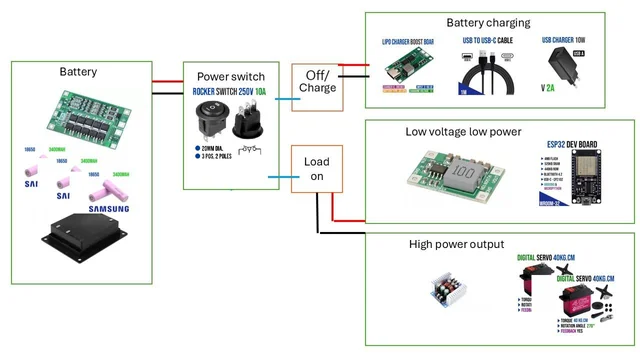
I've been building a home robotic assistant with a goal of keeping it quiet, smooth, and simple to use. I plan to make both the hardware and software open source. I'm currently experimenting with voice control, remote operation, health monitoring integration, and optional camera tracking. It's still a work in progress, and I'd love to hear what features or improvements you'd find most useful. submitted by /u/Training_Income353 [link] [Kommentare]
 R
↗
R
↗
I need to transfer a lot of force through this keyway into a 3d print, and am confused on the intended way to attach to this shaft. submitted by /u/IntroductionNo1700 [link] [Kommentare]
 R
↗
R
↗
Researchers at the University of Toronto's Continuum Robotics Laboratory introduced CRAFT, a 3D-printed modular design library for tendon-driven continuum robots that allows a single robot to physically reconfigure its shape, stiffness, and degrees of freedom within minutes by snapping together six interchangeable modules. The same base robot was reconfigured into a long teleoperated probe for aircraft-wing inspection achieving 41% reduction in sag, a pipe-crawling robot capable of navigating 90-degree bends and 30-degree inclines, and a soft robotic hand that successfully cracked eggs with 85% accuracy. CRAFT eliminates the need to build entirely new robots for different tasks, replacing bespoke redesign with rapid modular composition. Credits: https://www.nature.com/articles/s44182-026-00107-x submitted by /u/Similar_Suit_3709 [link] [Kommentare]
 R
↗
R
↗
R
↗
R
↗
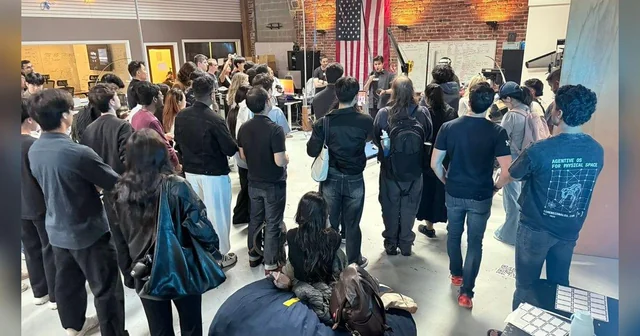
Hi! I don't know if this has been posted about before or not, but for the past week, I've been trying to control my SPIKE Prime with custom commands via BLE. However, as far as the forums stated (from what I have read), it wasn't possible without Pybricks. However, while tinkering with the robot, I found that BLE control is just an "environment variable" that could be switched. Thus, we don't need a firmware to control BLE, we just need a *one-time setup" using a USB UART communication. If you want to use this for your own projects, please check out the code, and if you like it, please drop a star on the repo! https://github.com/Somespi/prime-connect submitted by /u/Formal-Arachnid-4247 [link] [Kommentare]
R
↗
Inventory robots are moving beyond isolated pilots and becoming part of larger systems that combine computer vision, electronic shelf labels, AI, cleaning robots, and real-time analytics. Tesco, Kroger, Harmons, BJ’s, Stop & Shop, Wakefern, Schnucks, and others are using autonomous shelf-scanning systems to track out-of-stocks, misplaced products, pricing errors, promotional compliance, and shelf conditions. Harmons says autonomous shelf scanning reduced out-of-stock conditions by more than 50% and pricing errors by 75%. submitted by /u/Responsible-Grass452 [link] [Kommentare]
 R
↗
R
↗
 R
↗
R
↗
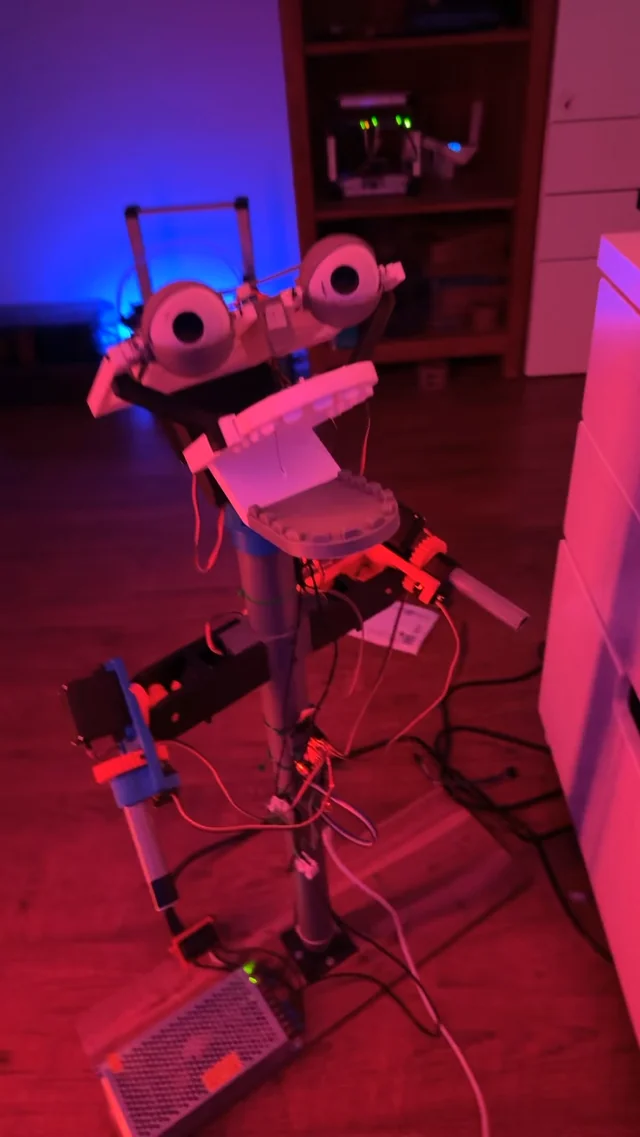
https://www.youtube.com/@ALMA.Industries Chapter 2, a home theatre, 3D printed parts, motorized projector, home decoration, and DIY electronics -- if you know of anyone else that might be interested in this stuff, sharing to others would really help me out! Hope to see you around here or YouTube :) submitted by /u/ALMA_x11 [link] [Kommentare]
 R
↗
R
↗
Ranjay Krishna argues that language may be an unnecessary intermediary between perception and action in robotics. Humans do not translate every physical interaction into words before reacting. Catching a ball, pulling a hand away from something hot or moving through a room happens through a direct connection between perception and movement. He believes robotics models should work the same way, moving directly from visual and sensor input to action rather than relying on an LLM in the middle. submitted by /u/Responsible-Grass452 [link] [Kommentare]
R
↗
Leading with the number that matters most if you're deciding whether to bother: on refrigerator-sorting, success goes from 60.0% in-domain to 13.3% out of distribution (robot pose perturbed ±10cm, previously-unseen objects swapped in). The other soft spot is long horizon, where the policy makes real partial progress and then misses the final precise placement. I'm putting that first because the release reel is slick and I'd rather calibrate before the demos do it for me. With that framing, here's what Robbyant open-sourced: LingBot-VLA 2.0 (Robbyant is an embodied AI company under Ant Group). The design bet is a unified whole-body action space. Everything maps to one 55-dim canonical action vector (arm joints, end-effector, gripper, a 12-dim dexterous hand, waist, head, mobile base), and a single policy is jointly trained across 20 embodiments, from an 8-DoF single arm up to a 32-DoF humanoid, on about 60,000 hours (roughly 50,000 h robot trajectories and 10,000 h egocentric human video). The action head is a MoE expert (loss-free token-level routing, DeepSeek-V3 style) with dual-query distillation from a depth teacher (LingBot-Depth) and a causal video teacher (DINO-Video, released too, which edges out DINOv3 and V-JEPA 2 on 3 of 4 LARYBench metrics). The one practitioner takeaway from their ablations I'd actually act on: the biggest single lever was representation, not architecture. Absolute to relative joint actions moved average success from 33.7 to 55.0 (+21.3), a larger swing than any model change they tested. Videos, matter-of-factly: a multi-embodiment grid (multiple robots, different tasks, at once), an 8-minute continuous autonomous run, transparent glass-vase flower arranging with a live depth window, and a contact-rich zipper pouch. Dual-arm real hardware, watermarked 1x speed and autonomous. It's a release reel, so no claim of zero cherry-picking, weight the failure cases above accordingly. One catch worth surfacing so nobody has to dig for it: GM-100 ("The Great March 100") is their own bimanual benchmark, from Yong-Lu Li's RHOS lab at SJTU with Robbyant and co-authored by the project lead. Not independent. Generalist scores (progress / success): Agilex Cobot Magic 66.2 / 34.4, Galaxea R1 Pro 34.6 / 15.6, ahead of GR00T N1.7, pi-0.5, and their own 1.0. Note success sits far under progress (Galaxea overall 15.6%, some tasks 0%). If you run a bimanual setup, the weights and code are open under the Robbyant org on GitHub and HuggingFace, so pulling them and breaking them on your own robots is the real test here. Independent numbers would be worth more than the self-reported ones. submitted by /u/Good-Razzmatazz-6179 [link] [Kommentare]
R
↗
I have done quite a bit of work, including most of my Master's thesis, with ROS Noetic and Ubuntu 20.04, which worked well. However, I recently got a Raspberry Pi 5 that I want to use for various personal robotics projects, and the Pi 5 doesn't support anything below Ubuntu 23.10. I'm currently debating between installing ROS 2 Jazzy Jalisco with Ubuntu 24.04 or ROS 2 Lyrical Luth with Ubuntu 26.04. Both have similar EoL (2029 vs 2031), so I'm curious if any of you in the robotics community have found major advantages or disadvantages between the two distros. Any reason not to choose Lyrical, since it's newer? Thanks for all your wisdom! submitted by /u/Dying_Of_Board-dom [link] [Kommentare]
R
↗
Have been building this project for a while now, and would love to get eyes on it. Will appreciate it if you could try it out in actual workflows and give me feedback so I can decide the direction to move in. Currently it has been benchmarked against OPEN3D v0.19 on the same machine, using full-resolution frames from three real datasets: TUM RGB-D, KITTI, and nuScenes-mini. In the table below, higher is better — a ratio above 1 means ThreeCrate is faster than Open3D. Workload How ThreeCrate compares Reading files (raw float parsing) 1.8x–2.2x faster Voxel downsampling (CPU) 1.6x–1.8x faster Voxel downsampling (GPU, wgpu) 1.8x–2.9x faster (vs our own CPU path, not Open3D) Normal estimation 0.57x–1.09x (falls behind on big clouds) Single-scale ICP 0.71x–0.99x (falls behind on big clouds) Would appreciate any contributions and feedback for the repo. Link to the repo: https://github.com/rajgandhi1/threecrate submitted by /u/Practical-Dig-4052 [link] [Kommentare]