Self-hosted Otter.ai alternative. Whisper-powered transcription + Claude summaries. Your audio never leaves your machine.

GPTZero is joining Superhuman to build an authenticity layer that travels with you wherever you read, write, and create. Our mission to preserve what's human on the internet stays the same. We are excited to take that mission further with Superhuman.
Free online Mermaid live editor. Create and preview diagrams in your browser, including flowchart, sequence, ER, class, mindmap, and gantt, then export to SVG or PNG.
Crafted with care. Built for speed. Ready for what’s next. A great browser is so intuitive that you often forget you’re using it. Yet today the int
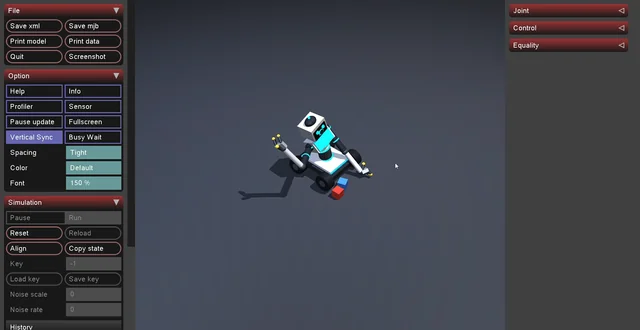
Hey everyone, I've been building CARL, an embodied virtual primate scout in MuJoCo. He has a 28-DOF body, 3-fingered hands, and is controlled by a multi-tiered biologically-inspired cognitive architecture. The codebase is fully open-source, but it is far from perfect. We are looking for help, critiques, and design upgrades on absolutely everything: 🛠️ 1. Physical Design & Body Upgrades (Morphology/Hardware) - Suggestions for better hand/gripper layouts (should we go to 5-fingers or use compliant pads?). - Better limb length proportions to maximize reach and avoid joint locking. - Optimal positioning of LiDAR, camera sensors, and tactile grids. - Bipedal chassis balancing and layout suggestions. 🎮 2. Control Loops & Trajectories (Robotics/Controls) - Smother arm trajectory models to fix our sudden joint-angle jumps and snapping. - Calibrating physics contact constraints in MuJoCo to stop fingertip clipping. - Alternatives to our current Damped Least Squares IK solver. 🧠 3. Cognitive Architecture & AI Models (Deep Learning/RL) - Optimizing our PPO actor-critic network and Liquid Time-Constant (LTC) arm policy. - Better reward shaping to speed up learning convergence (currently too slow!). - Improving how our high-level emotional drives (dopamine, cortisol) link down to motor execution. We are completely open to any feedback, design overhauls, or code contributions. Take a look at the repo and tell us what you would change! * GitHub Link: https://github.com/Manassadashiv/carl-simulation * Honest breakdown of our struggles: https://github.com/Manassadashiv/carl-simulation/blob/main/CONTRIBUTING.md submitted by /u/Manas_Sadashiv [link] [Kommentare]
I've been working on tlabel, an open-source Python toolkit that loads tactile sensor data (GelSight, DIGIT, PaXini, etc.) into a unified format. One thing we struggled with: how to define and label manipulation primitives consistently. The T-Rex paper (Tactile-Reactive Dexterous Manipulation) defined 22 motor primitives for dexterous manipulation — grasp, press, wipe, twist, poke, and so on. That's probably the most comprehensive taxonomy out there right now. But not every task needs all 22, and not every lab uses the same definitions. So we built a configurable taxonomy system on top of tlabel, with T-Rex's set as the default starting point. How it works We picked 7 primitives from T-Rex that have clear force signatures (reach, grasp, press, squeeze, wrap, wipe, lift), plus Cutkosky grasp subtypes. The engine can auto-predict these from visual-tactile images — even without a force sensor, it estimates force distributions from GelSight/DIGIT images and maps patterns to primitives. python import tlabel data = tlabel.demo('gelsight') data.predict_primitives() Every prediction carries a source tag (ai_predicted vs ai_predicted_estimated vs manual) and a confidence score. Low-confidence segments are left blank for you to annotate. Defining your own primitives If your task has primitives not in the default set, you can register custom ones with physical rules: python tlabel.register_custom_primitive('poke', force_range=(0.1, 0.8), deformation_max=0.15, contact_required=True, confidence=0.5 ) data.predict_primitives(min_confidence=0.4) Or scope it to a local taxonomy without polluting the global registry: python taxonomy = tlabel.get_default_taxonomy() from tlabel import PrimitiveRule taxonomy.register(PrimitiveRule( name='poke', min_force=0.1, max_deformation=0.15, contact_required=True, min_confidence=0.5 )) data.predict_primitives(taxonomy=taxonomy, min_confidence=0.4) Manual annotation still works python data.add_primitive('reach', start_frame=0, end_frame=10) data.add_primitive('grasp', start_frame=10, end_frame=25) data.add_primitive('lift', start_frame=25, end_frame=40) data.get_primitive_timeline() # [('reach', 0, 10), ('grasp', 10, 25), ('lift', 25, 40)] Export python data.export("output.csv") # Columns: primitive_label, primitive_source, primitive_confidence The design principle is "assist, not autoritate" — AI predictions are suggestions with metadata, not ground truth. You stay in control. Pure Python, MIT license, no dependencies beyond numpy. Code: https://github.com/liesliy/tlabel Curious what primitive sets other people are using for their manipulation tasks. submitted by /u/ImmediateArm7942 [link] [Kommentare]

I've been having fun trying to find new number systems that aren't in the OEIS. One such number system, is the "Snowball Numbers", which I will define below. Apologies if these have been
Compose your screen before you share it. Scenes, live drawing, zoom to cursor, and overlays on one clean canvas.
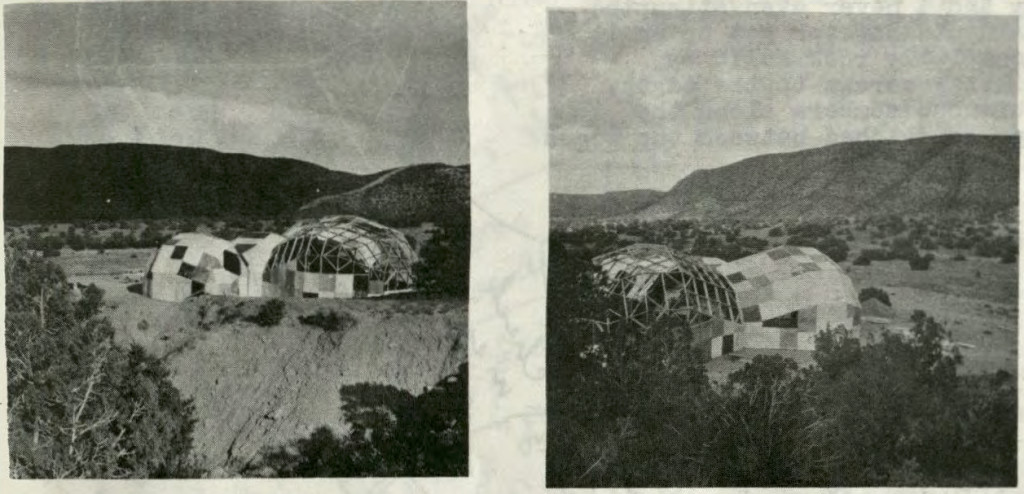
A guide to Mid-Century architecture in Albuquerque, New Mexico
This paper establishes a formal framework, grounded in mathematical logic and order theory, to analyze the inherent limitations of radical transparency. We demonstrate that self-referential disclosure policies inevitably encounter fixed-point phenomena and diagonalization barriers, imposing fundamental trade-offs between openness and stability. Key results include: (i) an impossibility theorem showing no sufficiently expressive system can define a total, consistent transparency predicate for its own statements; (ii) a categorical fixed-point argument (Lawvere) for the inevitability of self-referential equilibria; (iii) order-theoretic design theorems (Knaster-Tarski) proving extremal fixed points exist and that the least fixed point minimizes a formal ethical risk functional; (iv) a construction for consistent partial transparency using Kripkean truth; (v) an analysis of self-endorsement hazards via Löb's Theorem; (vi) a recursion-theoretic exploitation theorem (Kleene) formalizing Goodhart's Law under full disclosure; (vii) an exploration of non-classical logics for circumventing classical paradoxes; and (viii) a modal $μ$-calculus formulation for safety invariants under iterative disclosure. Our analysis provides a mathematical foundation for transparency design, proving that optimal policies are necessarily partial and must balance accountability against strategic gaming and paradox. We conclude with equilibrium analysis and lattice-theoretic optimality conditions, offering a principled calculus for ethical disclosure in complex systems.
Up to 150 more stores to get the 'Orwellian' tech by year's end