
A fast, decentralized web search engine in one Rust binary. Every node is complete alone; federation is additive. No DHT, no tokens, no telemetry.
Self-hosted Otter.ai alternative. Whisper-powered transcription + Claude summaries. Your audio never leaves your machine.

GPTZero is joining Superhuman to build an authenticity layer that travels with you wherever you read, write, and create. Our mission to preserve what's human on the internet stays the same. We are excited to take that mission further with Superhuman.
Free online Mermaid live editor. Create and preview diagrams in your browser, including flowchart, sequence, ER, class, mindmap, and gantt, then export to SVG or PNG.
Crafted with care. Built for speed. Ready for what’s next. A great browser is so intuitive that you often forget you’re using it. Yet today the int

I've been having fun trying to find new number systems that aren't in the OEIS. One such number system, is the "Snowball Numbers", which I will define below. Apologies if these have been

Compose your screen before you share it. Scenes, live drawing, zoom to cursor, and overlays on one clean canvas.
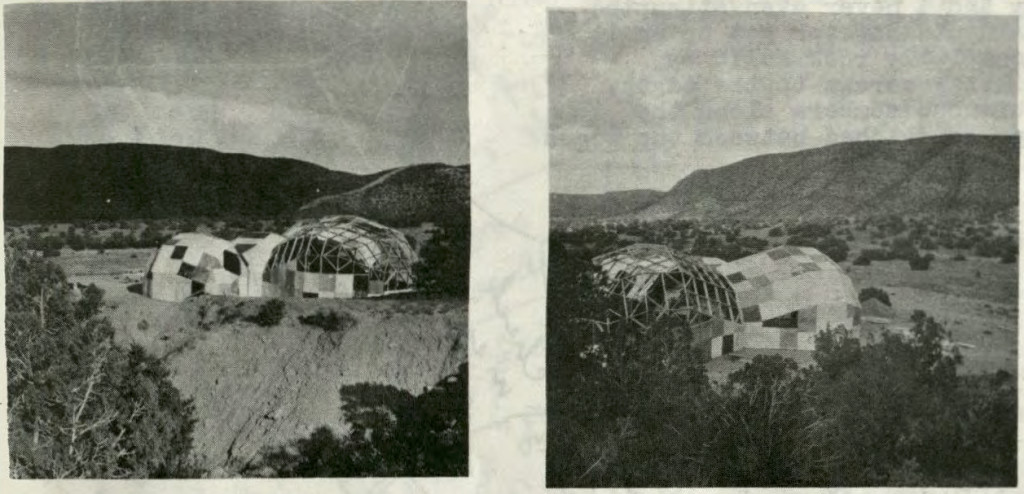
A guide to Mid-Century architecture in Albuquerque, New Mexico

This paper establishes a formal framework, grounded in mathematical logic and order theory, to analyze the inherent limitations of radical transparency. We demonstrate that self-referential disclosure policies inevitably encounter fixed-point phenomena and diagonalization barriers, imposing fundamental trade-offs between openness and stability. Key results include: (i) an impossibility theorem showing no sufficiently expressive system can define a total, consistent transparency predicate for its own statements; (ii) a categorical fixed-point argument (Lawvere) for the inevitability of self-referential equilibria; (iii) order-theoretic design theorems (Knaster-Tarski) proving extremal fixed points exist and that the least fixed point minimizes a formal ethical risk functional; (iv) a construction for consistent partial transparency using Kripkean truth; (v) an analysis of self-endorsement hazards via Löb's Theorem; (vi) a recursion-theoretic exploitation theorem (Kleene) formalizing Goodhart's Law under full disclosure; (vii) an exploration of non-classical logics for circumventing classical paradoxes; and (viii) a modal $μ$-calculus formulation for safety invariants under iterative disclosure. Our analysis provides a mathematical foundation for transparency design, proving that optimal policies are necessarily partial and must balance accountability against strategic gaming and paradox. We conclude with equilibrium analysis and lattice-theoretic optimality conditions, offering a principled calculus for ethical disclosure in complex systems.
Up to 150 more stores to get the 'Orwellian' tech by year's end