 R
↗
R
↗
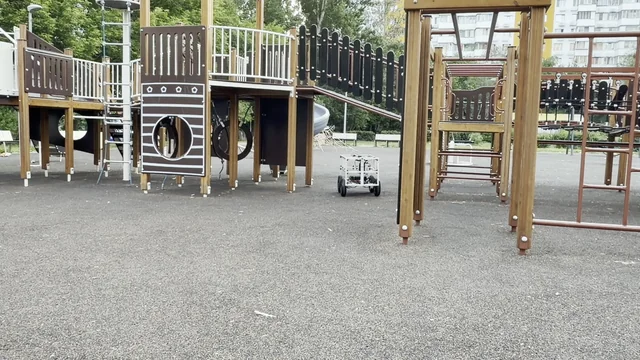
First real drive outside. Before this it only ran on the bench. Build: four 10.5" hoverboard hub motors, 2x ODrive (ODESC 3.6), Raspberry Pi 5, aluminium profile frame. Control is fully manual right now, from a laptop over 4G: live camera, per-motor telemetry, ARM / E-STOP. Main thing I learned: skid-steer turning depends heavily on surface grip, so that has to go into the control logic rather than being tuned by feel. Next step is autonomous A-to-B: 3D lidar, ODrive on CAN with closed-loop wheel control, ROS2/Nav2 for planning. Still early. Happy to answer anything about the build. submitted by /u/NiamorroMilky [link] [Kommentare]
 B
↗
B
↗
Despite breathless reporting on how AI is going to change the world, Hannah Cyrus, a Bangor librarian, said that, in her experience, most library patrons aren’t finding it helpful.
 A
↗
A
↗
AI agents act on behalf of user prompts, consuming external data and taking actions based on the agent context. Prior research on AI agent security has primarily focused on indirect prompt injection (IPI). Its most well-studied category is instruction injection, where attacker-controlled untrusted data is interpreted as an instruction. In response, many mitigations have been proposed to prevent instruction injection attacks. In this paper, we introduce a new category of IPI, agent data injection attacks (ADI). ADI injects malicious data disguised as trusted data, such as security-critical metadata (e.g., resource identifiers or data origins) or agent context data (e.g., tool call and response formats). As a result, agents unknowingly execute unintended actions based on attacker-controlled data. ADI has similar attack impacts as instruction injection attacks, because it causes agents to misbehave and execute unintended actions. Despite the similar impact, ADI remains underexplored and easily bypasses existing IPI defenses. We found several critical vulnerabilities in real-world agents that allow an attacker to launch various attacks: arbitrary click attacks on web agents (Claude in Chrome, Antigravity, and Nanobrowser), and remote code execution and supply-chain attacks on coding agents (Claude Code, Codex, and Gemini CLI). We evaluate ADI vulnerabilities across off-the-shelf models and AI agents, and find that ADI is effective in both standalone LLMs and AI agent settings. ADI exposes a critical gap in agent security, signifying that current AI agents do not employ a fundamental security principle: current agents do not isolate trusted data from untrusted data.
 G
↗
G
↗
A fast, decentralized web search engine in one Rust binary. Every node is complete alone; federation is additive. No DHT, no tokens, no telemetry.
 G
↗
G
↗
Self-hosted Otter.ai alternative. Whisper-powered transcription + Claude summaries. Your audio never leaves your machine.
 X
↗
X
↗
GPTZero is joining Superhuman to build an authenticity layer that travels with you wherever you read, write, and create. Our mission to preserve what's human on the internet stays the same. We are excited to take that mission further with Superhuman.
 M
↗
M
↗
Free online Mermaid live editor. Create and preview diagrams in your browser, including flowchart, sequence, ER, class, mindmap, and gantt, then export to SVG or PNG.
X
↗
Crafted with care. Built for speed. Ready for what’s next. A great browser is so intuitive that you often forget you’re using it. Yet today the int
 R
↗
R
↗
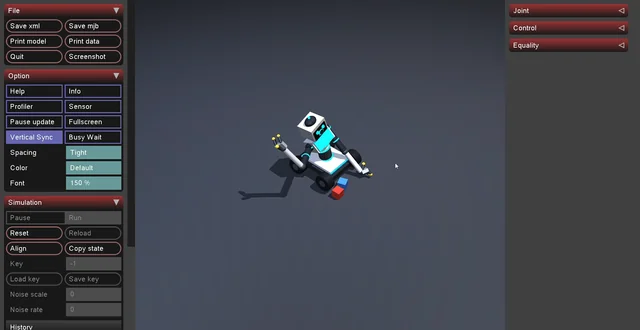
Hey everyone, I've been building CARL, an embodied virtual primate scout in MuJoCo. He has a 28-DOF body, 3-fingered hands, and is controlled by a multi-tiered biologically-inspired cognitive architecture. The codebase is fully open-source, but it is far from perfect. We are looking for help, critiques, and design upgrades on absolutely everything: 🛠️ 1. Physical Design & Body Upgrades (Morphology/Hardware) - Suggestions for better hand/gripper layouts (should we go to 5-fingers or use compliant pads?). - Better limb length proportions to maximize reach and avoid joint locking. - Optimal positioning of LiDAR, camera sensors, and tactile grids. - Bipedal chassis balancing and layout suggestions. 🎮 2. Control Loops & Trajectories (Robotics/Controls) - Smother arm trajectory models to fix our sudden joint-angle jumps and snapping. - Calibrating physics contact constraints in MuJoCo to stop fingertip clipping. - Alternatives to our current Damped Least Squares IK solver. 🧠 3. Cognitive Architecture & AI Models (Deep Learning/RL) - Optimizing our PPO actor-critic network and Liquid Time-Constant (LTC) arm policy. - Better reward shaping to speed up learning convergence (currently too slow!). - Improving how our high-level emotional drives (dopamine, cortisol) link down to motor execution. We are completely open to any feedback, design overhauls, or code contributions. Take a look at the repo and tell us what you would change! * GitHub Link: https://github.com/Manassadashiv/carl-simulation * Honest breakdown of our struggles: https://github.com/Manassadashiv/carl-simulation/blob/main/CONTRIBUTING.md submitted by /u/Manas_Sadashiv [link] [Kommentare]
![[OC] The word umpire comes from Old French 'non-per' which means 'not equal' – Image](https://infeeo.com/m/4483/oc-the-word-umpire-comes-from-old-french-non-per-which-means-not-equal-image.webp "[OC] The word umpire comes from Old French 'non-per' which means 'not equal' – Image")