
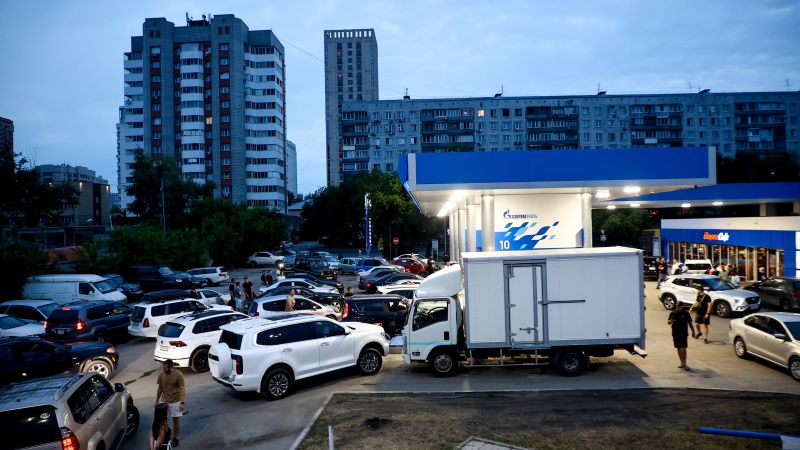
Russia has fully banned exports of diesel after Ukrainian drone strikes on its refineries triggered widespread fuel shortages and as the global energy market braces for more disruption in the Strait of Hormuz.

Ab September 2026 werden Chrome-Releases alle zwei Wochen veröffentlicht.
You’ll see a typeface and four countries — guess which country’s design system it belongs to.
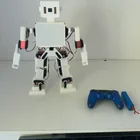
Hello, my name is Noah , I’m 14 years old and I’ve been building this humanoid robot from scratch. I designed the parts in CAD, 3D printed them, assembled the servos, and now I’m working on the software and walking algorithms/ gaits . It’s powered by a Raspberry Pi and uses multiple servo motors for its joints. There’s still plenty to improve, but seeing it come together has been really rewarding. I have posted it on TikTok and Instagram under the name of NoahisRobotix , but have not been that successful so far.. I’d love to hear what you think or answer any questions! submitted by /u/Equivalent_Ask_1156 [link] [Kommentare]


Drop your URL. Karmy finds the Reddit threads where people ask for what you do.

The AI agent circuit breaker. Govern every tool call before it executes.


I received a promotional email from robinhood offering 3% bonus on crypto deposit. In the email they said the transferred assets only need to be kept on Robinhood for 2.5 months. However, when I clicked the link and got to the App, the fine print says that you must maintain the crypto assets for 2.5 YEARS. What a convenient mistake to make in the promotional email… submitted by /u/Lala-dc [link] [Kommentare]

Real work, done with AI. Every action leaves a record you can check.
Parkinson's disease (PD) affects millions worldwide and causes severe motor symptoms. Adaptive deep brain stimulation (aDBS) delivers physiologically informed stimulation that can track fluctuations in PD motor symptoms, enabling more intelligent DBS control. However, most existing aDBS approaches are primarily algorithm- and software-driven, with limited efforts toward circuit realization, particularly low-power and implantable integrated circuits. This paper presents the Silicon Leaky Integrate-and-Fire Deep Brain Stimulation (SiLIF-DBS) controller, a neuromorphic silicon neuron stimulator implemented with metal-oxide-semiconductor (CMOS) technology. For system-level evaluation, a simplified computational model of the SiLIF-DBS controller is derived and embedded within a Parkinsonian cortico-basal ganglia framework for closed-loop validation. The system is driven by beta-band subthalamic nucleus local field potentials (STN-LFPs), with their average rectified value (Beta ARV) used as the control biomarker. Our SiLIF-DBS controller for aDBS suppresses pathological beta activity while consuming only 25% of the power required by open-loop stimulation and achieving a suppression efficiency of $5.85\%$/$μ$W. Overall, our SiLIF-DBS controller achieves strong beta suppression at substantially reduced power, delivering high suppression efficiency that demonstrates it is a viable foundation for low-power implantable aDBS.
Why does contrastive learning with simple images and augmentations yield useful representations for downstream tasks? We address this question by analytically computing the optimal representation in terms of a contrastive loss for a range of basic augmentations and any image dataset with stationary statistics. We show that for certain augmentations the optimum can be attained by a CNN whose first layer filters are sinusoids, followed by a pointwise nonlinearity, global average pooling, and a final linear layer that performs partial whitening. We also show that the optimal weights in such CNNs for more complicated augmentations are still sinusoids. The frequencies of the sinusoids and their weights can be computed using a simple waterfilling algorithm given the dataset's expected power spectrum. Experiments with different image datasets and augmentations show that such CNNs trained with SGD empirically learn sinusoids in their first layer and to perform partial whitening