 L
↗
L
↗
Drop in a LinkedIn profile. Lead Qualifier researches the person across the web, builds a full dossier, and drafts outreach in their voice.
 A
↗
A
↗
Discover the newest advancements on Apple platforms.
 G
↗
G
↗
Fujifilm X-mount lens database. 169 lenses across 10 brands. Normalized specs, cross-brand comparison.
 L
↗
L
↗
And it's everyone's problem
 L
↗
L
↗
New research used whaling logbooks to explain why only two of the four bowhead whale populations are bouncing back from whaling, which was abandoned a century ago.
 X
↗
X
↗
You have seen the posts. The LinkedIn announcement that opens "In a world where", four hundred words long and not one of them the author's. The comment that thanks you for "this incredibly thoughtful piece" and then describes a piece you did not write. The company email so completely handed over to a machine, start to finish, that no human could have read it back without wincing, which is the tell, because plainly no human did. Bad work is not the part that gets to me. Bad work has always been with us. It is that nobody making it appears to feel a thing. Not a wince, not a flicker.
 A
↗
A
↗
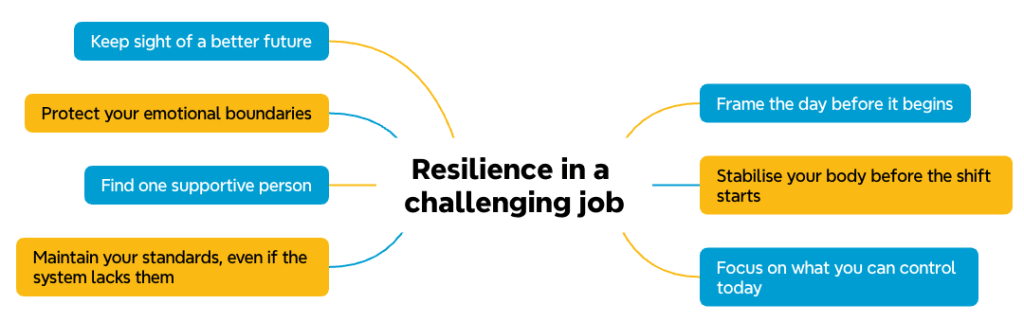
Learn how to stay resilient in a difficult job with poor management, shift work, low morale, or constant stress. Seven practical, science-informed strategies to protect your wellbeing, motivation, and sense of control.
 L
↗
L
↗
We talk with the VendingBench authors on evaling Claudes from Haiku to Mythos, and how they build leading, and lasting, frontier evals from scratch.
X
↗
I recently read Concurrency in Go by Katherine Cox-Buday. In the “Queuing” section, there was a discussion of how we can use Little’s Law to predict our pipeline’s throughput, given sufficient sampling. I honestly wondered why I had not come across this simple idea before, after finishing that part. As I understand it, it can potentially be used in almost any situation where a queue is involved. Not just message queues, even things like physical queues. So I thought I’d write an intuitive explanation to help it stick and share the idea.