 R
↗
R
↗
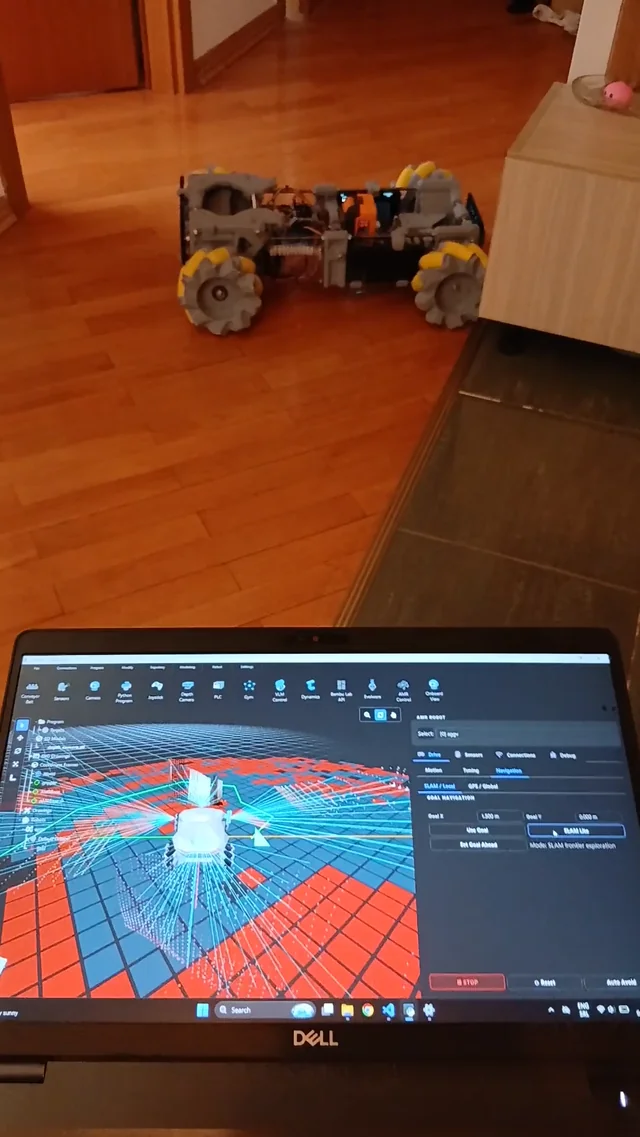
Hey r/robotics, Wanted to share my latest budget mobile robot build. The goal was to keep it under $250, so instead of buying an expensive LiDAR setup or dedicated depth cameras, I rigged up 4 cheap smartphones to stream video data. I’m running the streams through Depth Anything v3 (DA3) to estimate the depth maps, and honestly, for a "poor man's LiDAR," it’s going incredibly strong. The issue I'm running into: Since DA3 outputs relative/monocular depth maps, I’m struggling with absolute scale calibration. Right now, the robot thinks walls are further away than they actually are. It knows where the obstacles are, but the metric distance is skewed because DA3 doesn't have real-world depth data. I want to fix this by adding a hardware sensor to act as a "ground truth" anchor to correct and scale the DA3 depth data in real-time. Has anyone here tried using a ToF (Time-of-Flight) sensor or an Ultrasonic sensor to handle this kind of depth correction? Would a single-point distance reading be enough to dynamically scale the relative map, or is there a better way to do it? If anyone is curious about the hardware or wants to check out the setup, I put the specs and documentation here and the chassis CAD files here. Looking forward to hearing your thoughts on how to fix the depth scaling! submitted by /u/ganacbicnio [link] [Kommentare]
 F
↗
F
↗
So what is a kuksa and what’s so special about it? It is a wooden cup that has almost sacred status among traditional hikers, bushcrafters, fell-goers and so on. Many claim that it actually originates here from Finland but I think it would be safer to say that it has Nordic origins. The saying goes […]
 P
↗
P
↗
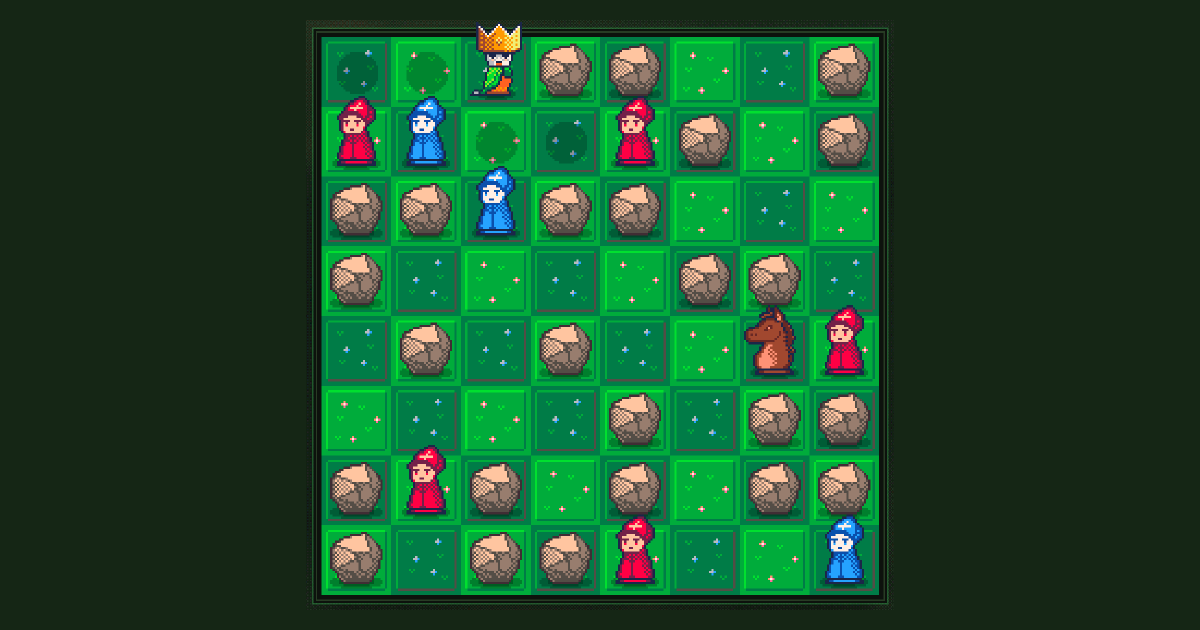
A seeded chess-pathfinding roguelite. Guide Prince Chazz across the board, dodging enemy pieces, and race the per-seed leaderboard.
 L
↗
L
↗
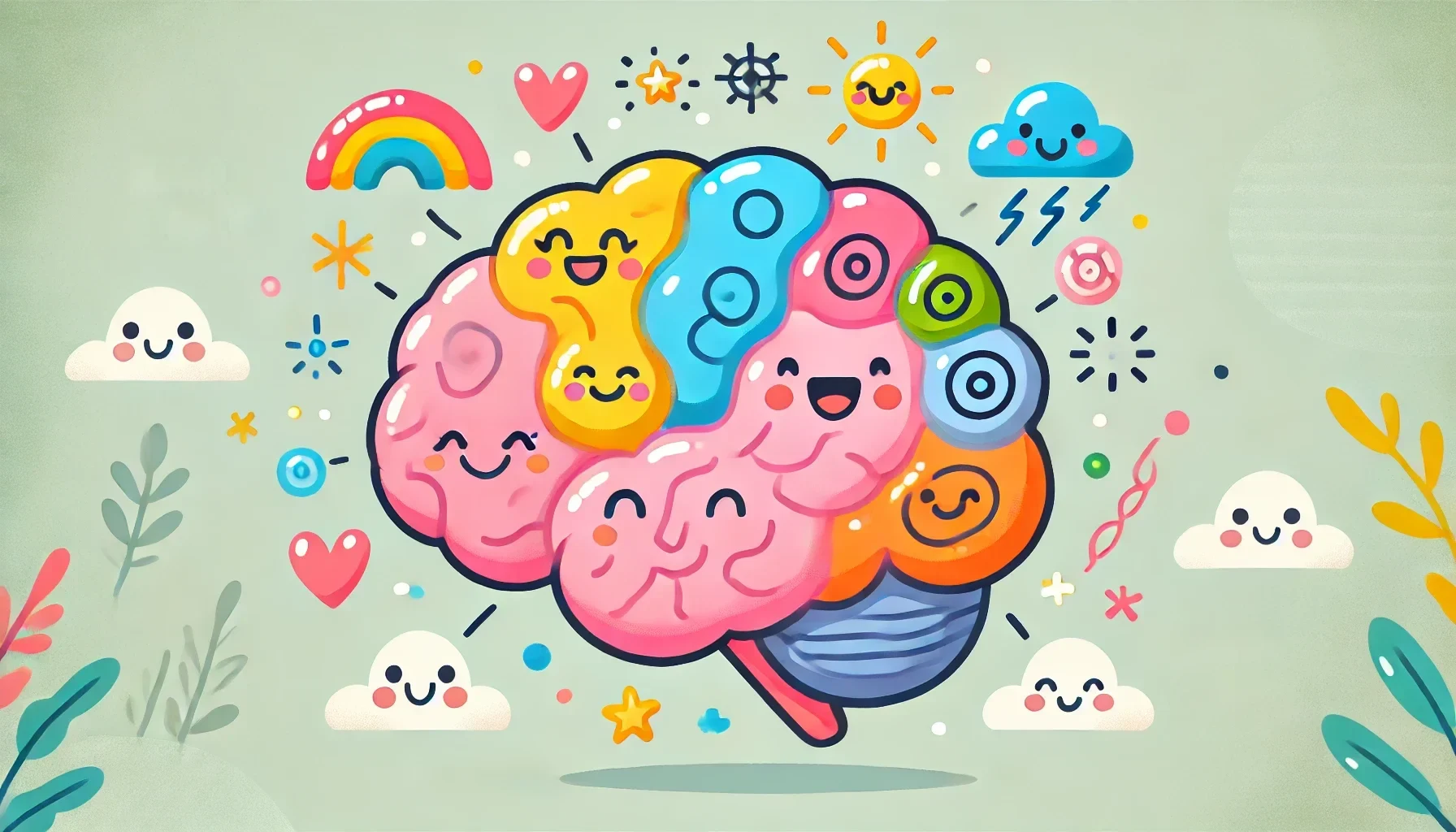
This is a rather ambitious series of blog posts, in that I’ll attempt to explain what’s the deal with consciousness, free will, hypnotism, enlightenment, hallucinations, flow states, dissociation, akrasia, delusions, and more. The starting point for this whole journey is very simple: * The brain has a predictive (a.k.a. self-supervised) learning algorithm. * This algorithm builds generative models (a.k.a. “intuitive models”) that can predict incoming data. * It turns out that, in order to predict incoming data, the algorithm winds up not only building generative models capturing properties of trucks and shoes and birds, but also building generative models capturing properties of the brain algorithm itself. Those latter models, which I call “intuitive self-models”, wind up including ingredients like conscious awareness, deliberate actions, and the sense of applying one’s will. That’s a simple idea, but exploring its consequences will take us to all kinds of strange places—plenty to fill up an eight-post series! Here’s the outline: * Post 1 (Preliminaries) gives some background on the brain’s predictive learning algorithm, how to think about the “intuitive models” built by that algorithm, how intuitive self-models come about, and the relation of this whole series to Philosophy Of Mind. * Post 2 (Conscious Awareness) proposes that our intuitive self-models include an ingredient called “conscious awareness”, and that this ingredient is built by the predictive learning algorithm to represent a serial aspect of cortex computation. I’ll discuss ways in which this model is veridical (faithful to the algorithmic phenomenon that it’s modeling), and ways that it isn’t. I’ll also talk about how intentions and decisions fit into that framework. * Post 3 (The Active Self) focuses more specifically on the intuitive self-model that almost everyone reading this post is experiencing right now (as opposed to the other possibilities covered later in the series), which I call
 G
↗
G
↗
LiveKit Turn Detector v1 listens to speech directly instead of waiting on a transcript, fusing semantic and acoustic understanding for state-of-the-art end-of-turn detection across 14 languages. With v1, turn detection is a solved problem for agents built on LiveKit.
 P
↗
P
↗
FulcrumSec claims 1.3 TB stolen from Novo Nordisk, including the Ozempic formula, source code, and clinical trial data. Initial access via a GitHub token, two months of dwell time, and what every engineering org should learn.
 R
↗
R
↗
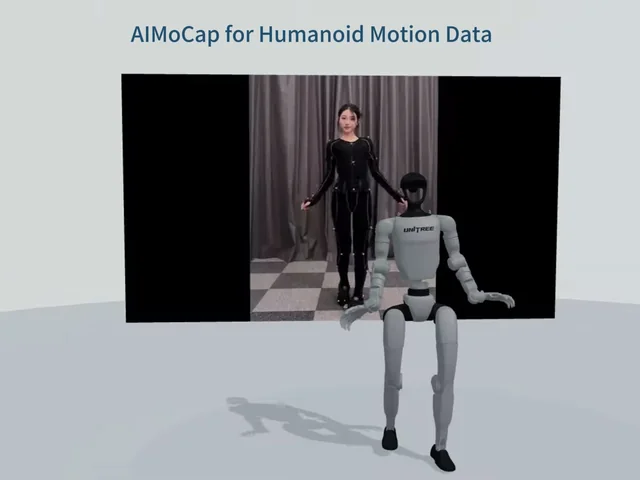
I've been experimenting with converting ordinary third-person videos into humanoid motion data. This demo includes several motion categories: • Acting • Sports • Combat • Dance The motivation is not animation alone. Recent humanoid robotics work increasingly relies on large-scale motion datasets and motion priors to improve movement quality, robustness, and generalization. Projects such as NVIDIA KIMODO also show the value of scaling high-quality motion data for downstream humanoid motion generation and control. This made me wonder whether ordinary videos could become a low-cost source of motion data for humanoid systems. There is already a massive amount of human motion available in online videos. If useful motion can be extracted reliably, it may help expand humanoid motion datasets beyond traditional mocap pipelines. For this experiment, I focused on: • Foot contact stability • Reduced foot sliding • Natural balance and movement dynamics • Consistency across different motion styles The long-term idea is: Video → Motion Data → Motion Models → Humanoid Control For anyone interested in testing their own clips, I made a public demo available here: huggingface demo I'd love to hear thoughts from people working on humanoid robotics, motion generation, imitation learning, or robot locomotion. submitted by /u/AIMoCap [link] [Kommentare]
 F
↗
F
↗
As soon as we started doing any operations above Europe, we noticed that there was really something going on there.
 P
↗
P
↗
On a sound bath at the edge of a lake, the word for melting what has frozen, and the oldest medicine there is.
 L
↗
L
↗
Owners of affected iPhones can stop checking for patches now: the fix for this SecureROM bug comes in a new handset
 B
↗
B
↗
Despite all his wealth, Musk’s existence is a cautionary tale.
 M
↗
M
↗
Moji ist eine persönliche KI, die in WhatsApp, Telegram und LINE lebt — ein echter Agent mit eigenem Computer. Erinnerungen, Pläne, Antworten und Infos, genau dort, wo du eh schon chattest.