I’m working on a mini self-driving car project with Ackermann steering. The car has to follow a lane with boundary lines on both sides, stay centered, and handle both straight and curved sections like a small F1-style track. I plan to use OpenCV + a webcam for lane detection and then control the steering based on the detected lane center. I’m looking for ideas on lane detection methods, steering control, and how to make it robust on curves and under different lighting conditions submitted by /u/Risheyyy [link] [Kommentare]
My background is a programmer. Recently I decided to build a robot for chatting and daily use. For chatting, it's easy to implement by connecting it into a LLM. But that's all about software stuff, you can just implement it on a phone. So I want to make it movable. But I don't know what can I do in daily life for its mobility. Sorry for my poor imagination, all I can think out is that I can make it a new born duck, so it can always follow me when I walk around. So what kind of robots are you building by yourselves? Can anyone help me to get some cool ideas about my robot? My budget is about 500~1000 dollars. Feel free to comment or send a DM to me. Thanks! submitted by /u/cocoyoung [link] [Kommentare]
So, I just read LeCun's interview with Nebius Science. I feel he had some cool points about LLMs being able to answer things, but not literally understand the physics of the physical world. (Like, being able to explain a task and actually performing it are two completely different things.) But I wanted to get opinions on what others thought of his solution to the problem. He thinks JEPA could be the solution. But it made me think about whether JEPA is genuinely the architectural solution to this, or if we’re just looking for a "magic bullet" that doesn't exist yet in our toolbox I have the link here: https://nebius.science/stories/meet-yann-lecuns-lab-and-the-ai-world-of-2030 submitted by /u/ConsciousGreenPepper [link] [Kommentare]

Hello, I recently finished reading this survey paper: Deep learning tackles single-cell analysis – A survey of deep learning for scRNA-seq analysis, which comprehensively covers 25 different methods across 6 subcategories for applying deep learning to scRNA-seq analysis. To summarize the methods from this paper, I prepared a table containing the Category, Method, Purpose, Architecture, Metrics, Explanation, and the specific Novelty of each method. I hope you find this summary useful. https://preview.redd.it/n3okgq66t1eh1.png?width=1662&format=png&auto=webp&s=fb71b306d3ffc346f243b04ccc9fe7a14076fbd7 https://preview.redd.it/njs5lq66t1eh1.png?width=1662&format=png&auto=webp&s=1dcdebbef3f2746b1e94f7182c9e4a11f10a7f12 https://preview.redd.it/zsv2yq66t1eh1.png?width=1662&format=png&auto=webp&s=05ecb58355b6a32a25d32cc25a2a9e500f9cd489 submitted by /u/teraRockstar [link] [Kommentare]
Does anyone have accepted short-paper at ACL/EMNLP/EACL 2025/26? Could you share your track and overall assessment? I'm just trying to get a sense of things, as it seems short papers have a lower acceptance rate than long ones. submitted by /u/No_Cardiologist7609 [link] [Kommentare]
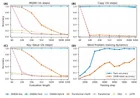
Hi everyone, I've been working independently on a recurrent architecture called **DABSN (Dynamic Adaptive Bias State Network)** for the past several months, and I finally reached the point where I feel comfortable sharing the first preprint. The paper is mainly about the architecture itself and its behavior on reasoning, memory, and long-sequence benchmarks (MQAR, Copy, Key-Value retrieval, A5/60, etc.). The code is also public with PyTorch, C++, and Triton implementations so everything can be reproduced. While finishing the paper, I also trained my first language model with the same cell: - 24M parameters - 1B pretraining tokens - GPT-2 tokenizer Those results ended up being much more interesting than I expected, so I'm now writing a second paper focused entirely on language modeling, long-context behavior, and scaling. This is where I'd love some help. I'm looking for people who might be interested in collaborating on the next paper, whether that's: - independent reproduction of the results, - helping design stronger baselines and evaluations, - or having access to larger GPU clusters so we can scale the architecture much further than I can on my own. Everything I'm doing is intended to be open and reproducible from day one. I'd really appreciate any feedback on the paper, and if the project sounds interesting, I'd love to chat. Preprint and Github are in the comments. submitted by /u/BleedingXiko [link] [Kommentare]
Background: I confounded a startup last year on Execution as a Service model. We're two confounders, and a core team of 5 guys. 4 of us used to be at xAI human data. And collectively we've worked for most of the leading genAI companies in the human data space. We started off as a managed outsourcing platform where we assign a frac COO to handle your entire outsourcing ops across functionalities which also included AI annotation and labelling. The problem: We were trying to secure contracts all over the place. Though we had 150+ registered fulfilment partners, and we secured some sizable contracts, I was genuinely confused about the growth and the direction of the company, specially with the kind of developments happening in the ops domain. I just brokered a deal valued at over 100k just for sharing internal ops data for AI training. We can't predict exactly how would the space look like. The present: The outsourcing business isn't fully justified to the kind of profiles the core team has. We were being reduced a software and marketing firm. We figured out that we need to stay relevant in the data industry. With the logistical edge that I have, and the trial run I did, I am very confident about working on physical data. We collected over 10 hours sample dataset spanning across household, industrial, construction, and electrical egocentric data. The question: Before we jump into physical data, I am genuinely looking for researchers' perspectives on ego-exocentric vs synthetic data. I understand that the upfront cost is high for synthetic, but long term cost is significantly cheaper, but how does the difference play out in the actual training workplace. TIA submitted by /u/Low_Can_4600 [link] [Kommentare]
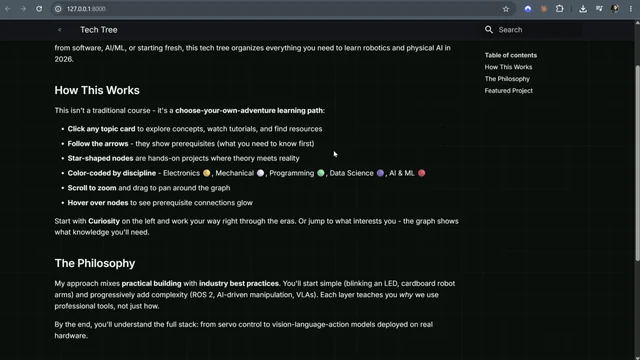
If you've tried to get into robotics, you've probably hit one of these walls: How do I get started? How do I get from blinking an LED to an autonomous robot? I come from a software (or mechanical, or data) background, what am I missing? I couldn't find a single good answer to these, so I started building one: an open source "tech tree" for robotics. It's a visual skill map. You start at the root and unlock the rest as you go (electronics, mechanics, programming, data science, AI), with hands-on builds as the milestones: blink an LED, a sensor project, a robot arm, a robot dog, and up into more serious AI. The main idea: it's not new content. There is already a ton of great tutorials, courses, and docs out there. The tech tree is just the map that sits on top of it and points you to the right resource for each skill, in an order that makes sense. It's early and nowhere near complete, which is kind of the point. It's fully open on GitHub, so if you have a favorite tutorial, a course that made something finally click, or a resource you wish you'd found sooner, you can add it. PRs and issues welcome, and "you forgot X" comments even more so. Links: Website: https://www.backtoengineering.com/ Repo: https://github.com/iuliaferoli/backtoengineering What would you add, or what's missing from the paths? submitted by /u/Growth-Sea [link] [Kommentare]
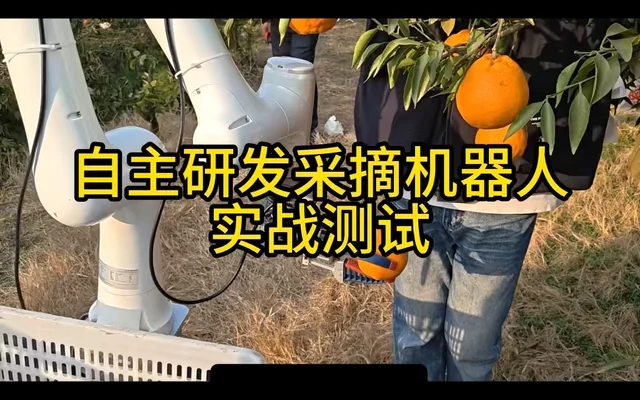
Fruit harvesting remains one of the most challenging robotics applications. Detecting ripe fruit is becoming easier with modern vision models, but reliable picking in unstructured environments is still difficult. Do you think the biggest challenge today is: • Vision? • Motion planning? • End-effector design? • Cost? Curious to hear different opinions. submitted by /u/ROS_RobotAlisa [link] [Kommentare]
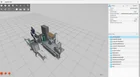
Created Simulation From LLM Output Background: I studied EECS and I'm now getting into robotics, mostly working through the simulation side of things. While digging into the sim pipeline I came across this repo: https://github.com/AlexKaravaev/world-creator It's a CLI that generates Gazebo and Mujoco simulation worlds from a text prompt. You type something like "warehouse with shelves and some obstacles for navigation testing" and it picks models from the Gazebo model database and places them for you. I think it's genuinely a great idea and ahead of its time. It's from ~2023, so it predates all the recent LLM progress, and the author was upfront that the model hallucinated a lot back then. With today's models this approach could work way better. Curious about a few things: Has anyone here used this or something like it in real work? Is prompt-to-world something you'd actually want, or is scene setup not painful enough to matter? From what I've seen so far, people complain way more about getting the robot itself into sim (URDF, meshes, inertia values) than the environment around it. Is that right? If someone built an upgraded version of this, what would the use cases be for you? Randomized scenes for RL training? Test scenarios in CI? Quick demos? I'm exploring building in this space, so honest "nobody needs this" takes are just as useful as feature wishlists. submitted by /u/Few_Film8907 [link] [Kommentare]
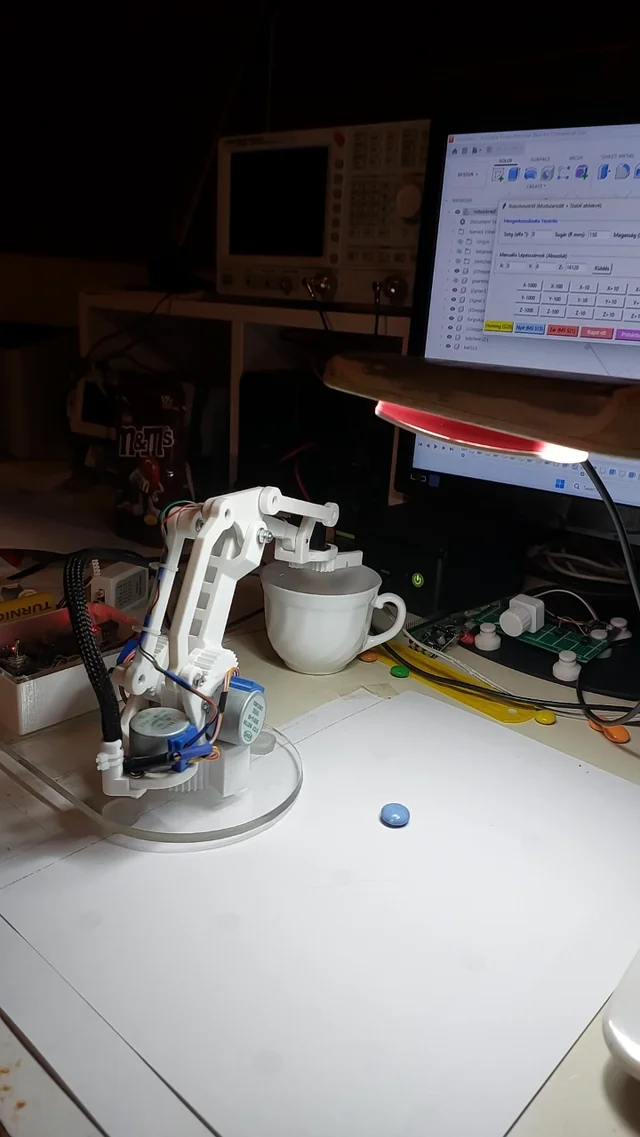
Teaching my 13-year-old grandson programming using Arduino, Python, and AI. We are currently programming this small robotic arm. I originally built the arm for him 5 years ago for Christmas. Back then he just played with it, but now he is writing new code for it. The goal is to detect candies placed in front of it and drop them into a cup. How it works: A Raspberry Pi-based USB camera monitors the workspace. A Python script running on a PC detects the candies and sends G-code commands to control the arm. Hardware & Firmware: The robotic arm is powered by an STM32F103 microcontroller running Arduino-based firmware. submitted by /u/Available-String-891 [link] [Kommentare]
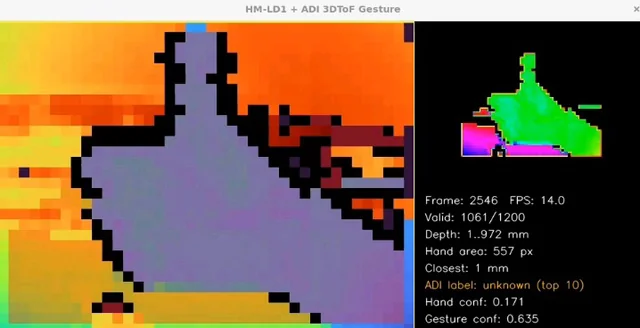
I saw other products that can do this, so I also want to use my dtof lidar HM-LD1 to implement this. I haven't finished yet, just share a video first. I believe I am about to realize my idea. Looking forward to it, I will open source it on GitHub. submitted by /u/RiskHot1017 [link] [Kommentare]
My TMLR paper was assigned to reviewers on April 23, and as of July 13 I've received 2 reviews, but the third is still pending. The discussion phase hasn't opened yet, so I can't respond to the existing reviews. Is this normal for TMLR, or is it reasonable to send the Action Editor a polite status email? asking for the 3rd review, apprecite the suggestions submitted by /u/Ok_Ant_4311 [link] [Kommentare]
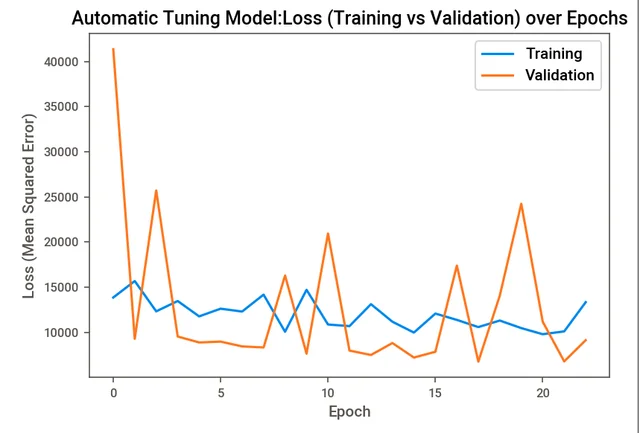
I have used Hyperband automatic tuning for an ANN model to predict price. After running HyberBand automatic tuning to get the 'best' architecture, I am obtaining a strange Val/Training loss learning curve. I cannot figure out if this is due to an error within the code or just a case of me not understanding the graph and not be able to interpret why the graph is showing as it is. I am also obtaining an R2 score of 1.00 which may suggest overfitting. I've not come across a learning curve (only shown the most basic learning curves at Uni) such as this as of yet so any advice would be greatly appreciated! Here is the code for the actual tuning, in case it is due to a coding error but I am not sure that is the case. def model_builder(hp): model = tf.keras.Sequential() model.add(tf.keras.layers.Flatten(input_dim = (train_final.shape[1]))) #creating activation choices - choosing betweeen relu and tanh hp_activation = hp.Choice('activation', values = ['relu', 'tanh']) #creating node choices - maxing unit amounts to 500 hp_layer_1 = hp.Int('layer_1', min_value=1, max_value=500, step=100) hp_layer_2 = hp.Int('layer_2', min_value=1, max_value=500, step=100) #creating learning rate choice - choice between 0.01, 0.001, 0.0001 hp_learning_rate = hp.Choice('learning_rate', values = [1e-2, 1e-3, 1e-4]) #specifies first layer after the flatten layer model.add(tf.keras.layers.Dense(units = hp_layer_1, activation = hp_activation)) #creating the second layer model.add(tf.keras.layers.Dense(units = hp_layer_2, activation = hp_activation)) model.add(tf.keras.layers.Dense(1, activation='linear')) model.compile(optimizer=tf.keras.optimizers.Adam(learning_rate = hp_learning_rate), loss tf.keras.losses.MeanSquaredError(), metrics = ['mean_absolute_error']) return model import keras_tuner as kt #creating the tuner tuner = kt.Hyperband(model_builder, objective = 'val_loss', max_epochs = 50, factor = 3, directory = 'dir', project_name = 'x', overwrite = True) # makes tuner rewrite over old tuning experiments #adding early stopping - stops each model from running too long stop_early = tf.keras.callbacks.EarlyStopping(monitor = 'val_loss', patience = 5) tuner.search(train_final, y_train, epochs = 50, validation_split = 0.2, callbacks = [stop_early]) best_hp = tuner.get_best_hyperparameters(num_trials=1)[0] best_hp.values #obtaining the best model best_model = tuner.get_best_models(num_models = 1)[0] history = best_model.fit(train_final, y_train, epochs = 50, validation_split = 0.2, callbacks=[stop_early]) tuned_df = pd.DataFrame(history.history) #running epoch loss visual def epoch_loss_visual(tuned_df, model_name = 'Automatic Tuning Model') Could it be an issue with the code itself causing the issue or is it simply the way the model is? If it's a case of it's just a bad model, I do not need to improve at the moment, but do need to understand the results, especially that of the learning curve representation. submitted by /u/Grouchy-Archer3034 [link] [Kommentare]