Channels

All ETH ETFs up3-4% higher than BMNR . I thought bmnr was equal to 1.5x or am I confusing with MSTR? Either way wtf? Nice ETH day and this turd barely moves submitted by /u/Dip2Tip [link] [Kommentare]
watching Strategy stack another 1,587 BTC and it hit me, MSTR is basically just a wrapper. you’re not buying software, you’re buying exposure to Saylor’s conviction bet, tradeable on an exchange. the company became a vehicle for backing a thesis early. so here’s what i can’t stop chewing on: if a corporation can tokenize its balance sheet into something you can buy a piece of… why is it weird for a person to do the same with their future output? a creator’s attention/audience is real economic value. the only reason you’ve never been able to “buy early” into a creator the way you buy MSTR for BTC exposure is that the rails didn’t exist. now they kind of do. the version of this i find interesting works like: a creator launches a token, but they only ever get paid in SOL/USDC, tips, content unlocks never their own token. so there’s no founder bag to dump. the token’s a key to their stuff and a bet that their market cap climbs as they grow. you’re early to a person the way MSTR holders were early to Saylor’s BTC call. the obvious holes: a person is way more volatile than a balance sheet, and “betting on a human” gets weird fast. but is it actually structurally different from buying a company that’s just a wrapper around one guy’s conviction? or is Saylor allowed to do it because it’s a corp, and a creator doing the same is automatically a “scam”? submitted by /u/alexsssaint [link] [Kommentare]
A while ago I realized that intuitively understanding classical ML and calling fit() / predict() wasn't enough to feel confident in my skills or ace interviews. So I did the only thing that actually fixes that: built the algorithms from the ground up in NumPy, then validated them against Scikit-learn and PyTorch. The repo has 10 algorithms as Jupyter notebooks, each implemented as simply and directly as possible: Linear & Logistic Regression Regularization K-Nearest Neighbors Naïve Bayes Decision Tree, Random Forest Gradient Boosting, XGBoost Neural Network Three things I noticed while building these: Structure matters more than you think. A neural network becomes much clearer when you model it as a collection of blocks (linear layers and activations), each capable of a forward and backward pass. The breakdown into small pieces makes backprop feel obvious instead of complex. The same ideas keep showing up. Gradient descent isn't just one algorithm – it's the backbone of most of what's in this repo. Once you implement it by hand the first time, everything after gets easier. When something goes wrong, fixing it is the most rewarding part. You can't blame the library – you have to understand exactly what broke and why, which forces a real depth of understanding. Everything is free: https://github.com/ml-from-scratch-book/code Each notebook runs locally or opens directly in Google Colab. If you're studying for ML interviews or just want the fundamentals to feel solid, this might be useful. submitted by /u/OleksandrAkm [link] [Kommentare]


Is there a website/indicator/app that helps you track how alts perform when bitcoin is going sideways, going up or going down. What I'm interested into seeing is if there's a pattern. I noticed that if certain alts dont fall that much when Bitcoin goes down, they tend to go up more once Bitcoin bounces. Similar rule applies in other way. It's hard for me to track this on the chart, best way I found to do it is to go on coinmarketcap and go on historical snapshot, but it's not exactly what I want. Also when I'm looking on Tradingview I can maybe track ETH, XRP or SOL like that, but can't track as many coins as I want like that. I'm completely rekt with alts, but I want to analyze and see which ones can potentially be good buy when the market bounces and which ones I can short when the market turns around and goes down again. submitted by /u/Impossible-Buyer6389 [link] [Kommentare]
Hi everyone, I shared PrintGuard here about a year ago as a few-shot FDM failure detector built on a ShuffleNetV2 backbone classified by a prototypical network — the model from my dissertation, packaged with a hub and a web UI. v2.0 ships today and is a complete rewrite of everything around the model, so I wanted to walk you through what's changed and what hasn't. What hasn't changed is the model. It's still a ShuffleNetV2 encoder classified by nearest prototype, trained for few-shot FDM fault detection in Edge-FDM-Fault-Detection (with a technical write-up in the repo). What has changed is the runtime: the model is now a ≈5 MB TFLite export via LiteRT, classified by nearest prototype, with per-printer sensitivity and threshold sliders that map directly onto the prototype distances — so you can tune for camera and lighting without retraining. The interesting bit for this sub is the architecture around the model. v2.0 is a single Python engine that runs unmodified on CPython (hub mode) and on Pyodide in the browser (local mode). Everything mode-specific is confined to one Platform implementation per runtime — the two modes cannot drift apart because they execute the same files. The methods on the Platform contract are exactly the ones that aren't portable: infer(rgb), discover_cameras(), open_camera(id, source), http(...), encode_jpeg(rgb), load_state / save_state. On the CPython side, infer is ai-edge-litert on CPU threads, discover_cameras walks the MediaMTX path list, and open_camera is a PyAV reader thread per RTSP stream. On the browser side, infer is LiteRT.js in WASM via a JS bridge, discover_cameras is enumerateDevices(), and open_camera is getUserMedia + canvas grabs. The UI is presentation-only and speaks one JSON command/event protocol — over a WebSocket in hub mode, over an in-page Pyodide bridge in local mode. The engine cannot tell which transport it is on. No mode-specific logic lives anywhere else; if a feature needs a runtime service, it extends the Platform contract on both sides. Inference scheduling is fully dynamic and fairness-aware: A smoothed estimate of observed inference latency continuously yields the sustainable total rate (workers / latency). That capacity is water-filled across in-use cameras (max-min fairness): no camera is allocated beyond its native fps, and surplus flows to cameras that can use it. A free worker takes the most overdue camera and grabs its freshest frame at dispatch time. Frames carry a sequence identity, so the same frame is never inferred twice, and results always describe the present, not a backlog. On RTSP, MediaMTX bursts the buffered GOP on connect, so stream fps is trusted from the SDP average_rate where available, and measured only after a warm-up otherwise. The defect pipeline is a monitor on top of a per-printer score stream. score ≥ threshold for N consecutive frames triggers the configured action (alert only, pause, or cancel) on the linked OctoPrint or Moonraker service, with retries on failure; the alert event carries the action and its outcome, the UI error feed gets a copy, and the snapshot goes out to every enabled notification channel (ntfy, Telegram, Discord). The fail-safe behaviour is the part I most want feedback on, because I have strong opinions about it. A printer's watching state gates inference: Linked service reports Watched? Why no service linked yes nothing to gate on printing yes the job needs eyes no state yet / unknown yes can't tell → watch offline (unreachable) yes losing the signal must not stop monitoring idle / paused / error no (standby) positively not printing Only a positive "not printing" stands inference down. The watchdog then warns on the dashboard and through notification channels when a camera drops, a feed freezes or a printer service stops answering, and a failed pause is announced, never swallowed. I'd be very interested to hear how this stance interacts with people who run multiple printers with mixed reliability on their printer services. There's a live browser demo (the whole engine in Pyodide + LiteRT.js WASM), the Docker image is multi-arch, and the architecture doc goes into all of the above in more detail with diagrams of the engine layout and the defect pipeline. This is a major version — nothing from 1.x migrates, and a 2.0 hub starts from a fresh configuration. Issues, especially around the fairness scheduler, the CORS / mixed-content / host.docker.internal edge cases, and the LiteRT ↔ Pyodide bridge, are very welcome. Let's keep failure detection open-source, local and accessible for all. submitted by /u/oliverbravery [link] [Kommentare]
Hi everyone, I’m a recent CS graduate working mainly on NLP/LLMs and VLMs failures. I’m currently in a phase where I can dedicate a lot of focused time to research, but the main bottleneck holding me back is compute. I know “asking for GPUs” can sound vague or unserious, so I want to be transparent. I’m not looking for free compute to casually experiment or waste cycles. I have already been actively publishing and submitting research, including papers at EACL 2026, IJCNLP-AACL 2025, MICCAI 2026, an EMNLP 2025 workshop paper, and a recent ARR submission. I’m happy to share my Google Scholar/CV/papers privately with anyone interested. The ideas I’m currently working on are GPU-intensive, mostly around LLMs, NLP, and VLMs. I’ve discussed some of them with PhD friends/peers, and the feedback has been encouraging. The goal is to develop these ideas into strong, publishable work, ideally targeting top conferences such as *CL venues, CVPR, ICLR, and related ML/AI conferences. To run the experiments properly, I likely need more than a single consumer GPU. Ideally, I’m looking for access to something like a 4x or 8x GPU setup, L40S, A100, H100, H200, or similar. I understand that asking for H100/H200-class compute is a big ask, so I’m also open to scheduled access, partial access, university/lab cluster time, unused credits, or any practical arrangement. What I can offer: Serious research effort and consistent execution Weekly progress updates, logs, and experiment summaries Clear compute usage reports so the resources are not wasted Reproducible code, experiment tracking, and documentation Open discussion of ideas before running expensive experiments Proper acknowledgment of compute support Co-authorship To be very clear: this is purely for research work, no mining, no commercial misuse, no unrelated jobs. I’m comfortable discussing the project scope, risks, expected compute needs, and authorship/acknowledgment expectations before using anything. I know this is a long shot. Maybe nothing comes out of it. But I also know many early-career researchers face this same wall: you may have the time, motivation, and ideas, but not the infrastructure to test them properly. So I’m putting this out here in case someone has unused compute, lab access, cloud credits, or is interested in collaborating on publishable research. If this sounds relevant, please DM me or comment, and I’ll be happy to share more details about my background and the research directions. Thanks for reading. submitted by /u/Academic-Success9525 [link] [Kommentare]

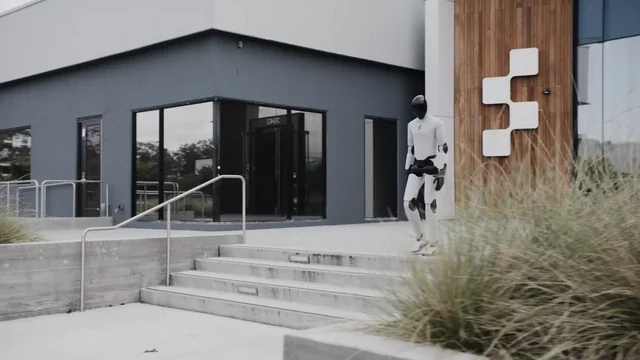
From Brett Adcock on 𝕏: https://x.com/adcock_brett/status/2066181478904705357 submitted by /u/Nunki08 [link] [Kommentare]

Hello, The problem looks simple at first, but it really isn't. Building a media stack that behaves the same whether it runs inside the robot, on your laptop, in simulation, on your phone, or on a distant powerful machine (all with short, repeatable delays) is anything but trivial! Sharing here the excellent blog post on the media stack behind Reachy Mini: https://huggingface.co/blog/pollen-robotics/reachy-mini-media-stack submitted by /u/LKama07 [link] [Kommentare]
With NVIDIA Jetson AGX Thor bringing a major jump in AI performance, I've been wondering whether the next bottleneck in embedded vision systems will no longer be compute—but camera architecture. In many real-world deployments, challenges often come from: Multi-camera synchronization Camera bandwidth Sensor interface limitations High-resolution video pipelines System latency Memory throughput As AI compute becomes less of a constraint, do you think future vision systems will be limited more by how cameras are connected and managed than by inference performance itself? For example: Will larger multi-camera systems become more common? Which interfaces are best positioned for next-generation systems: MIPI, GMSL, Ethernet, or something else? What challenges do you see when scaling vision systems for robotics, autonomous machines, or industrial automation? One interesting point I've been seeing is that discussions around AGX Thor are increasingly focused on sensor bandwidth, camera scalability, and system architecture rather than AI performance alone. Curious to hear how others see AGX Thor changing embedded vision system design over the next few years. For anyone interested, I recently came across a discussion on AGX Thor from a vision-system perspective that covers camera integration, multi-camera scalability, and future deployment considerations: 🎧 NVIDIA Jetson AGX Thor Vision Systems: Camera Integration and Deployment Considerations What do you think will be the biggest bottleneck in next-generation vision systems? AI compute, camera architecture, memory bandwidth, or something else? submitted by /u/Wonderful-Brush-2843 [link] [Kommentare]