Channels
Serious question. Iran war is over. We beat them “hugely” according to our POTUS. Putin seems to also be looking for an exit for his war that he also started. Yes, it does seem like the war has cause a massive ripple effect on the entire global economy, leaving the poorest countries to suffer the most. But we just had a first of firsts with an actual crypto sponsored UFC fight on the White house lawn!!! And the fighters are being paid in crypto. What’s more, is we have basically bottomed out over the last few months. So the only scenario I can really see is banana tits to the moon for all the major coins. submitted by /u/OpinionsRdumb [link] [Kommentare]
Don’t wanna be left out but $57k can buy me a sick watch submitted by /u/SimpleSeahorse [link] [Kommentare]

Spent the last few weeks on a benchmark/harness that tries to answer one question honestly: did a robot arm actually do the demonstrated task, or did the success metric just get fooled? The setup: compile a human demo into an object-centric graph (what changed in the world: relations, contacts, event order), run a solver, then independently extract a graph from the rollout only and check if they match. The whole point is a hard information boundary so the "answer key" can never leak into the side that grades the rollout. A no-op baseline fails with named failure classes; a dumb scripted arm passes. That contrast is the thing I care about. Most manipulation success metrics are hand-coded predicates written by the same person training the policy. The policy author controls both the behavior and the definition of "success." That's a conflict of interest we'd never accept in ML benchmarking, yet it's standard in manipulation eval. But I keep going back and forth on whether this matters, and I'd like other people's read: The case that it's real: VLA/foundation-model training is starved for reliable dense reward at scale. Human raters don't scale, brittle predicates lie. An automatic, embodiment-agnostic grader that can say "this rollout reproduced the demonstrated transformation, here's why it failed" seems like an obviously-missing piece of the training loop. The case that it's a non-problem: maybe everyone's already fine with task-specific success checks because in practice you only care about the tasks you're shipping, and a general verifier is solving for a generality nobody needs. And the representation that makes verification tractable (discrete relational state — INSIDE/TOUCHING/event-order) is also what caps it: it handles pick/place/insert/open-drawer but has no obvious purchase on force-profile or deformable tasks, which is exactly where the frontier is. There's also the uncomfortable bit: the hard 80% is perception (video → graph under occlusion and contact noise), and that's where the leakage discipline gets harder, not easier, because your extractor is now a learned, error-prone thing. Two questions I don't have a settled answer on: Is reward/eval honesty a first-order bottleneck for the current generation of manipulation learning, or second-order polish? Is object-centric relational state a dead representation for where manipulation is actually going, or a reasonable floor you build up from? submitted by /u/Alexpplay [link] [Kommentare]
Spent the last few weeks on a benchmark/harness that tries to answer one question honestly: did a robot arm actually do the demonstrated task, or did the success metric just get fooled? The setup: compile a human demo into an object-centric graph (what changed in the world: relations, contacts, event order), run a solver, then independently extract a graph from the rollout only and check if they match. The whole point is a hard information boundary so the "answer key" can never leak into the side that grades the rollout. A no-op baseline fails with named failure classes; a dumb scripted arm passes. That contrast is the thing I care about. Most manipulation success metrics are hand-coded predicates written by the same person training the policy. The policy author controls both the behavior and the definition of "success." That's a conflict of interest we'd never accept in ML benchmarking, yet it's standard in manipulation eval. But I keep going back and forth on whether this matters, and I'd like other people's read: The case that it's real: VLA/foundation-model training is starved for reliable dense reward at scale. Human raters don't scale, brittle predicates lie. An automatic, embodiment-agnostic grader that can say "this rollout reproduced the demonstrated transformation, here's why it failed" seems like an obviously-missing piece of the training loop. The case that it's a non-problem: maybe everyone's already fine with task-specific success checks because in practice you only care about the tasks you're shipping, and a general verifier is solving for a generality nobody needs. And the representation that makes verification tractable (discrete relational state — INSIDE/TOUCHING/event-order) is also what caps it: it handles pick/place/insert/open-drawer but has no obvious purchase on force-profile or deformable tasks, which is exactly where the frontier is. There's also the uncomfortable bit: the hard 80% is perception (video → graph under occlusion and contact noise), and that's where the leakage discipline gets harder, not easier, because your extractor is now a learned, error-prone thing. Two questions I don't have a settled answer on: Is reward/eval honesty a first-order bottleneck for the current generation of manipulation learning, or second-order polish? Is object-centric relational state a dead representation for where manipulation is actually going, or a reasonable floor you build up from? submitted by /u/Alexpplay [link] [Kommentare]


> Article Except; In an X post on Tuesday, Saylor outlined a five-layer “Digital Asset Stack” positioning Bitcoin (BTC) as the base for credit, money, yield and equity structures. Saylor said Bitcoin should remain “pure digital capital” and that it “does not need to become Ethereum” to generate investor returns. The framework reinforces Strategy's approach to Bitcoin as a treasury reserve asset, where returns are generated through financial products built around the company's Bitcoin holdings, the largest among publicly listed firms. submitted by /u/zesushv [link] [Kommentare]
https://cryptobriefing.com/taiwan-central-bank-bitcoin-reserve-asset/ submitted by /u/CriticalCobraz [link] [Kommentare]
ECCV 2026 final decisions are expected to be released on June 17, 2026. Since there was no exact release time specified, results will likely roll out within 48 hours. This thread is for everyone to share updates, discuss outcomes, and support each other through the decisions. Good luck to everyone! submitted by /u/mclovingho [link] [Kommentare]

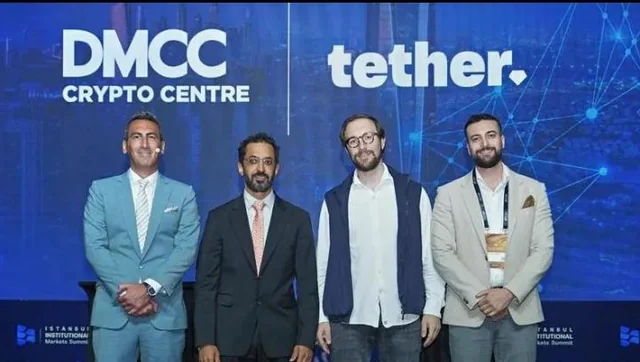
Good to see Dubai moving forward to take serious decisions to build Blockchain and crypto infrastructure Thoughts? submitted by /u/ocean_protocol [link] [Kommentare]