Channels
An open educational evercookie lab showing how websites can persistently re-identify a browser across storage vectors.

Choosing DuckDuckGo says a lot about you and we like your style.
This is post 4 of a series.
Fungi are more closely related to us than they are to plants. Yet, fungi have been grouped with plants historically, with an impact felt even today.
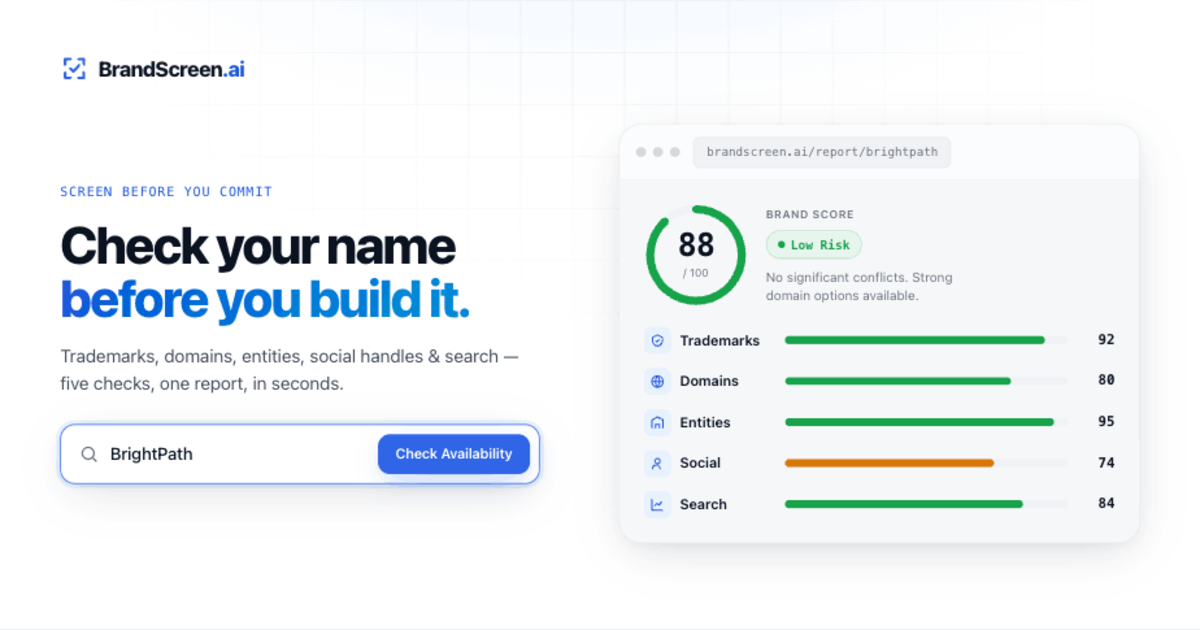
Instantly screen trademarks, domains, business entities, social handles, and search competition across the United States — in one report.
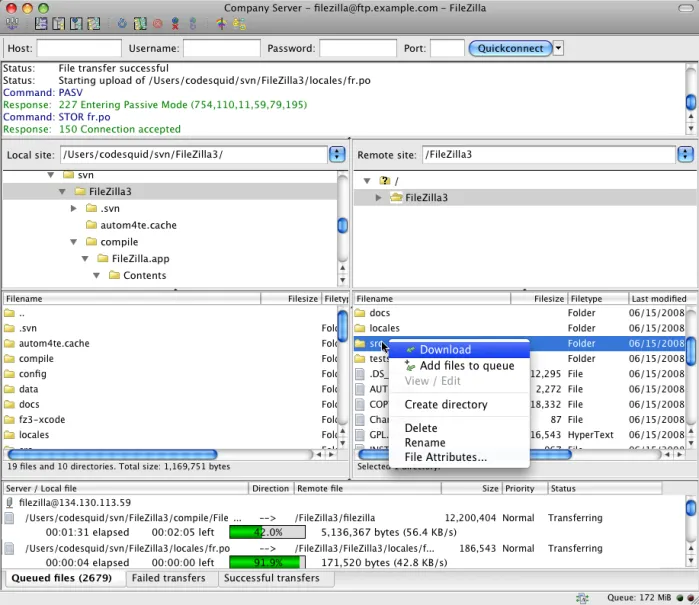
Discover why FileZilla remains a top choice for SFTP transfers, offering impressive speed and reliability for backup uploads.
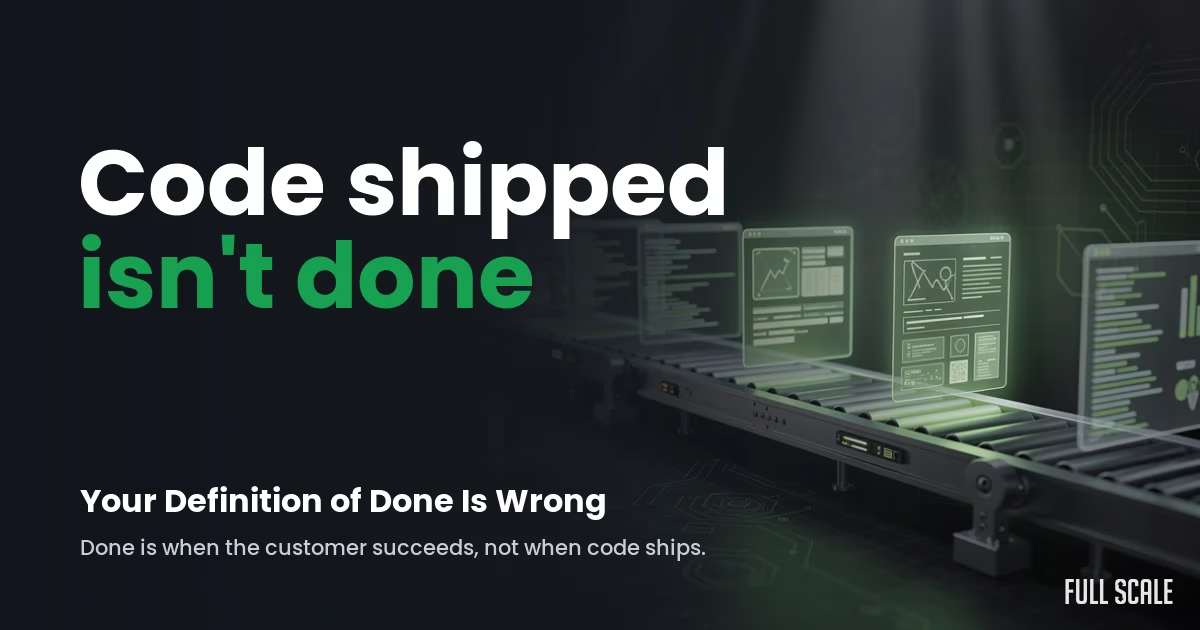
The standard definition of done stops at shipped code. Real done is when the customer’s problem is solved, and AI just made that the only one that matters.

x86 Ecosystem Advisory Group

From one VM to a million sandboxes: the architecture redesign behind OpenComputer's scaling — cells, edge routing on Cloudflare Workers, and per-second billing from 10-second heartbeats.

GenDB is a Generative Query Engine that uses LLM agents to generate instance-optimized query execution code, tailored to your specific data, workloads, and hardware. Five specialized LLM agents collaborate through a structured pipeline to generate optimized storage, indexes, and standalone native executables — all tailored to the specific data, workload, and hardware. Profiles hardware, samples data, extracts workload characteristics Designs layouts with encoding, compression, indexes, and zone maps Generates resource-aware execution plans adapted to data and hardware Implements plans as optimized native code with SIMD and parallelism Iteratively refines code using runtime profiling feedback Today, every new use case demands either a painful extension or an entirely new system: PostgreSQL → PostGIS, TimescaleDB, pgvector, Citus, AGE … Each extension fights the host system’s architectural constraints. DuckDB, Umbra, ClickHouse, Milvus, Pinecone, InfluxDB, Neo4j … Each requires years of engineering and huge monetary costs. Use LLMs to generate per-query execution code. No extension wrestling, no multi-year engineering. New techniques become reachable through prompt updates. Instance-optimized code exploits exact data distributions, join selectivities, group cardinalities, and hardware characteristics. No general-purpose engine can match this. Integrating new techniques requires prompting, not re-engineering. Semantic queries, GPU-native code — all reachable through prompt updates. 80% of queries repeat in 50% of clusters. Generation cost is amortized over many executions, making it cost-effective for recurring analytical workloads. Total query execution time across all queries. GenDB variants use different LLM backbone models. All systems run on identical hardware with full parallelism enabled. Different LLM backbone models offer different trade-offs between generated code quality, generation time, and cost. Ranked by average query execution time. We select the best-performing C++ binary for each TPC-H query from a GenDB run, then give Claude Code (Opus 4.6) 5 iterations to analyze, profile, and improve — first for optimized C++, then for a full Rust rewrite. GenDB-generated code with standard compilation. Aggressive flags, madvise tuning, parallelized joins, thread optimization. Full rewrite with rayon, memmap2, unsafe bounds-check elimination. Key findings: Optimized C++ achieves a 1.30x overall speedup, with Q18 showing the largest gain (2.44x) from parallelized join building. Rust wins on Q6 (zone-map scan with get_unchecked) but carries ~30ms per-query overhead from mmap page table setup, penalizing short queries. The Rust main_scan compute times are competitive with C++, suggesting the overhead is structural rather than algorithmic. We plan to introduce a dedicated Code Refiner agent to the pipeline, responsible for low-level, implementation-level optimizations — to automatically achieve these gains as part of the standard GenDB workflow. GenDB is under active development. Every step follows three principles: Multi-agent pipeline for analytical queries. Evaluated on TPC-H and SEC-EDGAR, outperforming DuckDB, Umbra, ClickHouse, MonetDB, and PostgreSQL. Agents learn from past runs, accumulate optimization experience, and improve generation quality over time — without retraining the underlying LLMs. Generate CUDA and GPU-accelerated code targeting libcudf for cost-efficient GPU analytics, not just CPU. Generate code for multimodal data — images, audio, text — with AI-powered operators, moving beyond SQL’s relational model. Reusable operators across queries, query template generation, hybrid execution with traditional DBMS, and further cost reduction as LLMs become faster and cheaper.
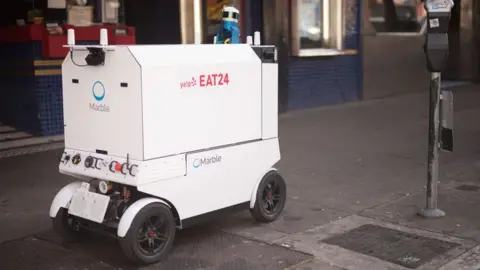
As the delivery vehicles increasing take to US streets, bans and protest groups are springing up.




As the number of new high-school graduates drops, colleges will close, some will merge, and others may change beyond recognition.