Channels





The failure mode of an autonomous agent isn't that it does nothing. It's that it does too much. Capabilities induce behaviors — more than instructions.

We have the pleasure of celebrating the birthday of Blaise Pascal by announcing the release of OCaml version 5.5.0. Some of the highlights in OCaml 5.5.0 are: Module-dependent Functions Modules can now be used as function arguments in a form of lightweight functors. For instance, we can define a function for printing a map generated by the Map.Make functor: let pp_map (module M: Map.S) pp_key pp_v ppf set = if M.is_empty set then Format.fprintf ppf "ø" else let pp_sep ppf () = Fo...
Every company wants AI in their development process right now. That part is clear. What’s less clear is where they’re putting it.
Designing Workflows for Human Judgment and Taste

Trust Identity Protocol (TIP), by Dinesh Mendhe, published by The AI Lab Intelligence Unobscured, Inc. The open standard for verified human identity and content provenance on the internet. Post-quantum cryptography from genesis (ML-DSA-65, ML-KEM-768, SLH-DSA), federated DAG, AI Trust Council multi-stakeholder governance under EU AI Act Article 95. 140 pages. Whitepaper Version 1.0. Licensed CC BY 4.0. DOI: 10.5281/zenodo.20722378.

This is the second half of the second part (I, IIa, IIb) of our honestly-who-knows-how-many part series laying out some general guidelines for how pre-modern armies are recruited, raised, equipped …

In which I painstakingly remove functionality from a Linux live image. Like a normal person.
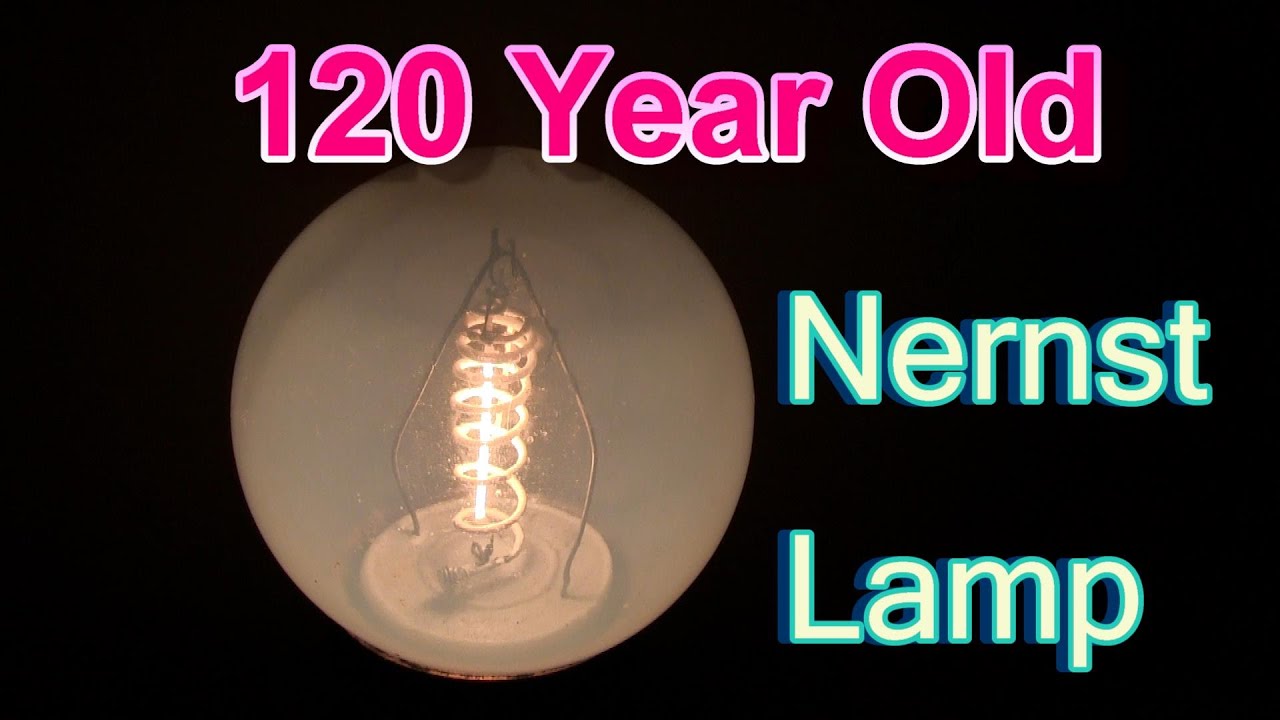
Glassblowing #2: Making a tungsten lamp and (bad) vacuum diode 2026-06-18 Now that I have a way to run electrodes through glass, it's time to do something with that. An old school lightbulb is rather simple: just a thin wire that gets hot enough to glow. However, to produce anything approaching white light, the wire must get to around 2500 C. While conductors like tungsten or graphite can survive those temperatures, they all burn on contact with air. To prevent this, I'll be sealing my lamp in glass under vacuum: no air, no problem. I lied. Some ceramics start conducting once heated, and being oxides, are completely unaffected by oxygen. Open air "Nernst lamps" did enjoy brief popularity in the 1890-1900s, but because of the added complexity of preheating the filament, they were replaced by filament lamps once vacuum pumps became good enough for commercial production. https://en.wikipedia.org/wiki/Nernst_lamp: those lamps. https://www.youtube.com/watch?v=-spTvp5-sf0: Using one. To start, I bent some some 0.3mm diameter tungsten wire into a "U" shape, and twisted a length of very fine 0.012 mm tungsten wire onto the free ends. I cut one side of the lead frame shorter so that the filament would sit diagonally: allowing it to be reasonably long without looping it around which could result in a short. To make the bulb, I partially inserted the lead frame into a glass tube, heated the end with an oxy-propane torch and pinched the glass onto the wires: Once one end was sealed, I connected the other to a rotary vane vacuum pump, and pumped it down while lightly heating the tube to remove moisture. After a few minutes, I headed the middle of the tube to sale the bulb, and pulled off the excess tubing. After the glass cooled, I cut the middle of the wire "U" to separate the leads: Glowing at 4 volts The finished lamp glows nicely between 200 and 400 mA (3-6 V and 0.5-2.5 W): I didn't stretch the filament tight enough and it ended up touching the glass, which creates a dim spot. The glass is borosilicate, so I'm not too worried about cracking, but it's still not ideal. I've tested the bulb up to 10 volts (~7 W), which is bright to light up a whole room, and the creates white light instead of the orange-ish color seen at low power — but it also gets very hot and won't last very long. In addition to color, the filament's temperature also affects the bulb's efficiency: a low temperature filament emits the vast majority of it's light in the infrared. A hot filament emits more visible light per watt, but tungsten evaporates faster leading to early failure. This tradeoff between lifespan and color/efficiency is why most light bulbs have rather short lifespans... or at least they did until we stopped using filaments. As an experiment, I ran a length of wire through a hole in the glass tube before evacuating it: When making seals like this, first melt a capillary tube (~1 mm) onto the tungsten wire before sealing it. This ensures good contact to the metal and protects the wire from the torch flame. The idea was to observe thermionic emission: when the filament is white hot, the atom's have enough kinetic energy to knock electrons into the vacuum. If the cold electrode is at a positive voltage, these electrons allow a small current to flow. If it's negative, the free electrons are repelled and nothing happens. While a diode isn't terribly exciting, it's the basis of more interesting devices like triodes, X-ray tubes and CRTs. ... and it's terrible: only conducting 1 uA with 700 V of bias between the filament and anode. Reverse biased, it conducts around 50 nA, mostly from the photoelectric effect. I suspect this is the result of two problems. Tungsten wire contains trapped gasses, which are released when it's heated. To avoid ruining the vacuum, the filament should be run while pumping down the tube, which I forgot to do. Second, the anode area is really small: Its ~6 mm of 0.3 mm wire, several centimeters away from the filament. Most emitted electrons will miss the anode and create a negative charge on the glass, which impedes current flow. Real vacuum diodes surrounding the filament in a metal tube, but I didn't do that because I wanted it to work as a light bulb. Just for fun, here's a photograph of my spool of filament wire, lit by the bulb made using it: Related: /projects/glass/1/: Considerations for sealing metal through glass http://www.rhunt.f9.co.uk/Glass_Blowing/Filament_Lamp_A/Filament_Lamp_A_Page1.htm: another homemade incandescent lamp

This week, politicians in the UK pushed forward with plans to eviscerate privacy and free speech on the internet by announcing a ban on social media for users under 16 that is set to take effect in Spring 2027. The UK government continues to falsely characterize this policy as a necessary response...