Channels

This post is a cursed compendium of 69 ways to f*** up your deploy. It is the irreverent Grimms Brothers version of deployment scenarios.

Death by a Thousand CommentsJune 22, 2026 Gergely Orosz of the Pragmatic Engineer newsletter/podcast writes: I’m seeing so many VC-funded, internally built infrastructure and bootstrapped solutions around “building a context layer for engineering teams.” Aka trying to solve the problem of “if only eg Claude Code had the context from all your other systems” I believe the “context layer for engineering teams” is called leadership with clear communication. We have turned everything into dozens of tabs with information scattered across countless clouds which leads to fragmented communication and noisy decision making and so we search for the silver bullet that will make sense of it all. Perhaps being able to comment on the Figma design and the GitHub pull request and within the last Slack message and on the issue tracker and within the monitoring system is making our communication worse not better because our brains have to literally tie it all together into a consistent model. You chat to the same coworker in dozens of places. Imagine being in an office and having a conversation with someone and then having to switch rooms every time the topic changed? “Yes this code is a little odd (walks into the GitHub room) but if you read our plan (steps into Notion) then it’s clear that this database decision requires us to do this (points at Alex’s comment in Notion) and it was constrained by what we have in the designs (enters the Figma chamber) which you can see the client approved last year (strides over to Slack where furious searching for the message is conducted). If you see the old hats at Apple and Microsoft they loved email. I don’t but I’ve begun to understand why they liked it. They spoke in the most straight-forward way with single sentences going back-and-forth and missing punctuation but the message was clear! They didn’t need to dress it up with formalities and executive summaries and TLDR sections and hastly-assembled tables and diagrams that are now so out of date so you ignore them anyway. Single-sign on has encouraged us to set up many mini-offices with their own communication channels. But it’s with the same folks! So then there’s 11 versions of “Simon” that you have to piece together like Poirot the detective trying to understand the killer’s movements in the final hours. Simon posted here 15 minutes ago but then commented here before but this message came later with a link to this issue here where he must have clicked these three buttons that made the build pipeline retry. Which must mean the original message has been resolved! But there’s one comment elsewhere from Jordan that everyone missed and then three new notifications come through… You chat around the water cooler but there’s dozens of them and you have to work out “are we chatting around this one now or are we moving to this one over here?” like some sort of fast-paced walking tour and you enter a Zoom meeting and see someone else’s view of the same chaos with a hundred pinned tabs like two paintings of the same battle from two viewpoints that capture the drama in markedly different light. And then as the presenter scrolls through you say “I don’t have access to that Google Doc” and then they apologize and someone else half asleep peeps up “me too!” and then finally you hope you have all the pieces to the lego set you just wish you could see the picture on the box that shows what it’s supposed to look like when it’s all put together. Then as you wait patiently for the invitation email you get pinged about two pull requests that need your re-review and then you hunt down the important conversation that occurred in Slack when the first (or was it the second) PR was posted on Slack yesterday. So I understand why there’s a desire for an all seeing eye of Sauron scouring the lands of Middle Earth picking up every stray word from every hobbit and piecing it together into a coherent timeline. “Did Gandalf say ‘Fly you fools’ or Flee you fools’” you type into the latest search box that promises to index everything so you never have to go hunting for knowledge again. Perhaps breaking everything in our organization into distinct proprietary clouds clouded our thinking and crumbled our communication which ultimately hurts our decision making. An organization is supposed to organize a group of people into executing a common goal but we decided as a tech industry the best way to do this is to create dozens of denormalized databases each with their own subset of the data synced sporadically over a network with code you can’t control that each person makes their own eventually-consistent consensus from via fine-grained trust-no-one permission systems that would make Ivan the Terrible blush. Meanwhile Steve Jobs used Apple fucking Mail to direct the creation of the iPhone. He got context from talking with people and shared context by telling others. He had a regular morning Monday meeting where all his executives would get on the same page. Somehow they did this without any AI at all! Meanwhile software development has become hiring proprietary systems and gluing them together into structures more intricate than the Sagrada Familia and as we lift up our foot stuck to the floor we think the thing slowing us down is not enough glue? If only we had robots running around in loops with glue guns then we’d truly find productivity. We desire R2D2 to project us a personalized hologram of the most important two minutes of the last meeting instead of realizing: this is what the work is! We have to come to our own conclusion of what the most important two minutes is and if the leaders in that meeting did not help to make that clear then they aren’t leading well. Leaders are supposed to shape the communication of everyone who follows them. Their words affect how I think and what I do. And ideally my actions and words affect theirs. They are the walking, talking, breathing context layer. They bleed context. They consume, digest, inspect, and then direct. They have agency for goodness sake, why are we calling these probabilistic-for-loops ‘agents’ and not ourselves? We’ve become passive, resigned to drown in endless information and not brave enough to pick up the oars after having a direct conversation with the people seated around us on the same boat. Instead we throw endless messages-in-a-bottle overboard and mutter if only we installed the latest GPS system we’d know where to row.
I've been considering a long-term quadruped project and have been poking around the builds that are out there. There's a ton of cool stuff, but so far I haven't seen anything open-source seems to match the dynamic motion capabilities of the mini-cheetah. "Dynamic motion capabilities" is pretty hard to pin down without benchmarks, but subjectively I mean the speed, rough-terrain capabilities, and performance jumping/falling. (Even more subjectively I mean the backflip). Given the seven year gap that really surprised me. My question for the community is two-fold: Is there an open-source quadruped build that does match the mini-cheetah that I just missed? If not, why? submitted by /u/lellasone [link] [Kommentare]




question - i was just informed that I cannot transfer crypto back to my bank account, AML? Is this true? How are people who are taking payments this way transfer it to bank? submitted by /u/Several_Luck5717 [link] [Kommentare]
I work in firmware adjacent to AI, so not an ML guy exactly, so that's why I've come here. For work we got a bit concerned about Mythos and all the hype made me explore some benchmarking work. I now have this pretty cool benchmark that's about 80% done sitting around and haven't had the time to polish it up and show it off. I was hoping some more AI focused people could check it out, tell me if it's duplicate work, or if it is worth putting some time into and finishing. Also happy for some help too. The rundown of the code is that it is Juliet code that's been "hidden" to look somewhat like a real codebase, removing LLM's natural advantage when viewing known CWEs, while preserving the "ground truth" associated with Juliet. I also used an LLM to inject comments into the code in accurate, misleading, or neutral sentiments, allowing the user to examine how comments and plain English data can manipulate an LLMs ability to identify a CWE. There are a couple hundred CWEs, generally enough code to fill up the input context, the work that needs to be done is around presentation, actual benchmarking of publish LLMs, and possibly pruning of a couple CWEs that might occasionally get caught by certain LLMs as Juliet code still. Here's the project. Hopefully this doesn't break rule 6. I am not a regular here, just looking for advice. submitted by /u/Psychological_Meat_6 [link] [Kommentare]
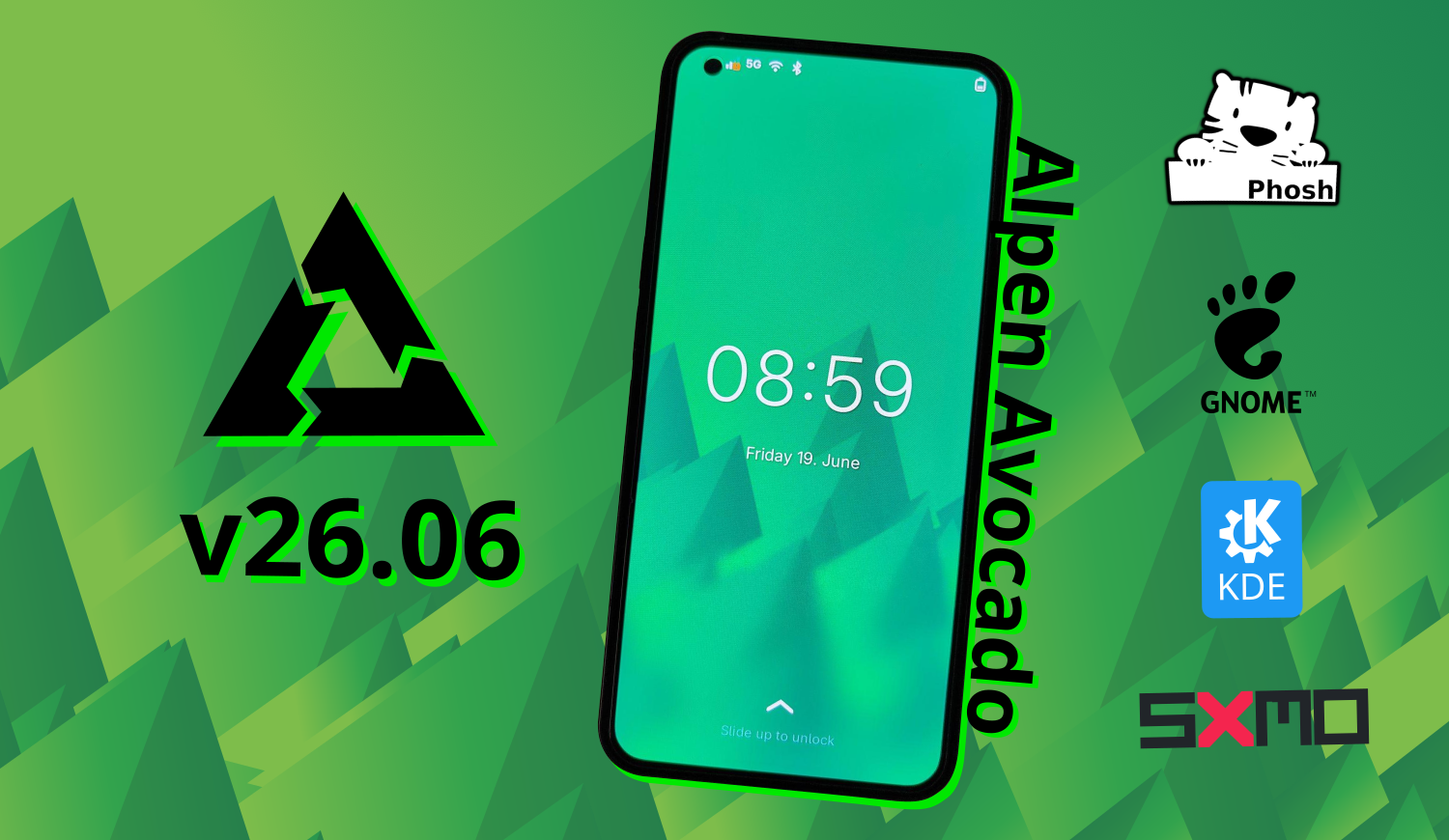
Aiming for a 10 year life-cycle for smartphones

A popular way to explain how current LLMs work is to say that “all” they do is predict the next most likely word in a sentence. From one perspective, this is correct. Trained on all human language, the LLMs distilled … Continue reading →
Contribute to SakanaAI/fugu development by creating an account on GitHub.

What every line of a PyTorch training loop does, why it belongs where it is, and what breaks if you move it.