Channels

This post contains content not supported on old Reddit. Click here to view the full post submitted by /u/discordditapp [link] [Kommentare]
Since it looks like Binance won't be MiCa compliant in Europe i'm looking to withdraw my crypto to another exchange. Can anyone help me out to find the cheapest way to do this? Would it be best to convert everything to USDC? submitted by /u/FitInitiative5532 [link] [Kommentare]
The Setlur et al result that scaling test time compute without verification or RL is provably suboptimal keeps showing up in my reading and I think it deserves more weight than the "yet another scaling paper" treatment it got. The core claim is that verifier based methods, RL or search guided by a verifier, dominate verifier free methods like distilling successful traces, given a fixed compute budget, and the gap widens as the test time budget grows. What I find underappreciated is how cleanly this maps onto what the deployed systems are now converging on. The single agent ReAct loop is the verifier free extreme, you sample a trace and keep it, maybe with some self reflection that is still the same model grading itself. The multi agent setups that actually move numbers split the verifier off into a separate process. Apodex is the most explicit example I have seen, they train the team behavior in and run a verification team, conflict reviewer, fact checker, draft reviewer, that does not share the reasoning trace, and the reported lift is coming from the verifier not from added parameters. Same trained model, heavy duty mode adds double digits on BrowseComp and FrontierScience-Research. That is exactly the regime the theory predicts, the verifier is where the gain lives. The reason I think this matters beyond benchmark watching is that it reframes where the next chunk of capability comes from. If you believe the VB over VF result, then the path is not just bigger models or longer traces, it is better verifiers that are structurally independent of the generator. The pseudo correctness framing fits here too. The failure mode the verifier has to catch is not the obvious hallucination, it is the answer that passes every self check but is still wrong, and that failure mode is invisible to any verifier that shares context with the generator. What I want to hear from others is the open questions. My list. How much of the verifier gain is transferable to domains without clean reward signals, since the math proof case is the easy one. Whether the independence has to be architectural, separate agents, or whether a sufficiently disciplined prompt separation on one model gets you most of the way. And whether the VB advantage keeps widening or saturates once the verifier itself becomes the bottleneck. The practical version of this for anyone building. If your agent loop has the same model reviewing its own work, you are in the VF regime and the theory says you are leaving capability on the table. The cheapest structural change is to make the verifier a different process with denied context, even if it is the same weights. submitted by /u/Mysterious_Sign_9501 [link] [Kommentare]

Do it , do it , do it submitted by /u/Jolly-Schedule7386 [link] [Kommentare]







>From article. Traditional card networks often charge merchants various fees. These costs can add up quickly when businesses process large transaction volumes. By accepting Bitcoin, Steak ‘n Shake reports that it reduces those expenses significantly. The company views the lower cost structure as one of the strongest advantages of cryptocurrency transactions. Those savings can improve operational efficiency and potentially strengthen profit margins. submitted by /u/zesushv [link] [Kommentare]
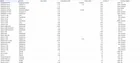
I've been comparing GPU/LLM providers for a side project and ended up with way too many browser tabs and spreadsheets. So I decided to pull the public pricing data into one sheet and compare it side by side. A quick disclaimer: this is not benchmark data. I didn't run latency tests or throughput measurements. Everything comes from public pricing pages and APIs (OpenRouter, DeepSeek, Together AI, Fireworks, Groq, etc.). The spreadsheet currently tracks: Input/output token pricing Context windows Cached input pricing (where available) Supported models Provider-specific pricing differences The thing that surprised me most was caching. For example, when looking at DeepSeek V4 Pro pricing across providers, cached input costs vary dramatically. In some cases a cache hit is tens of times cheaper than a cache miss. That made me realize that if you're running: Agents with large system prompts RAG pipelines with reusable context Multi-turn conversations Repeated prompt templates ...the "headline" token price can be a lot less important than the caching policy. A few other interesting things I noticed: The same model can vary by multiple times in cost depending on provider. Some providers expose caching clearly, while others barely document it. Model availability and context windows aren't always consistent across providers. It's surprisingly hard to find all of this information in one place. A few things I haven't figured out how to compare yet: Real throughput (tokens/sec) Cold-start / queue times Whether providers are serving FP16, FP8, quantized variants, etc. Egress/network costs Reliability/uptime I'm curious how others evaluate providers. When you're choosing between OpenRouter, Together, Fireworks, Groq, DeepSeek, etc., what metrics actually matter to you beyond token pricing? https://preview.redd.it/4vj50mvhu79h1.png?width=1615&format=png&auto=webp&s=6c6c084927f83bfdadb5ed8e4378f520a1da6766 Am I missing any important data points that should be included in a v2? submitted by /u/Technomadlyf [link] [Kommentare]