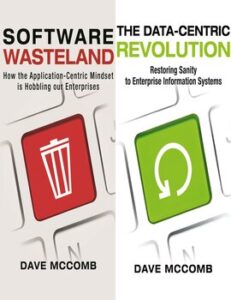
The Data-Centric Revolution: Restoring Sanity to Enterprise Information Systems
Shift from application-centric to data-centric to enable your organization to develop more efficient and successful Enterprise Information Systems.
Software Wasteland: How the Application-Centric Mindset is Hobbling our Enterprises
Know what’s causing application development waste so you can turn the tide.
Waste in the information systems industryIndustries that clean up the wasteA thought experiment on wasteHow to spend a billion dollars on a million-dollar system
How to think about information systems resourcesHow information system costs really behave
DependencyRedundancyComplexityApplication centricity and complexity math
Relational databasesERP systemsEnterprise data modelingService-oriented architecture and APIsAgileData warehouse and business intelligenceOutsourcing and offshoringCloudSoftware as a Service (SaaS)Data lakesMachine learning and artificial intelligence
Fallacy # 1: Detailed requirementsFallacy # 2: Reinvent the wheelFallacy # 3: Construction analogyFallacy # 4: Estimation by analogyFallacy # 5: One neck to chokeFallacy # 6: Portfolio managementFallacy # 7: Not in the IT business
How the quagmire looks for governmentThe death and rebirth of the software industryTwo industries under siegeOutsourcingOffshoringThe new platform vendorsHow application centricity robs productivity
AssessmentStarting to extricate yourself
This movement requires executive sponsorshipIf you are not an executive
Data-centric vs. Data-drivenWe need our applications to be ephemeralData-centric is designed with data sharing in mindThe Data-Centric visionEvolve-ableSpecialize-ableSingle but federatedEnterprise app storeIncludes all types of dataThe economics of the end game
What it requiresInertial resistanceOvert and covert resistanceWhat it doesn’t requireThis is a program, not a projectThe transition requires discipline and consistencyThe IT fashion industryIs the Data-Centric approach a fad?Can Data-Centric methods benefit from other fads?From Fad Surfing to New DisciplineNew modeling disciplineNew delivery architecture
The status quo is getting exponentially worseCode creates maintenanceComplexity creates high priestsApplication-centricity creates silosSilos create the need for integrationLegacy creates entrenchmentInflexibility creates shadow ITMega projects create mega failuresWhere application complexity comes fromA case example in complexitySeparation and isolationHumans in the loopThe negative network effectComplexity math and the way out of the quagmire
It’s the data, stupidTask-centric is a trapIt’s the stupid dataThe “what if” view on Data-Centric methodsFewer modelsSimpler modelsIntegration almost for freeMore flexibility
Paradigm shiftThe original paradigm shiftHow new ideas take holdRound earthHeavier than air flightScurvyHand washing before the germ theoryNon-linear changeWho is not going to help with your transformation?Digital transformationThe herdSocial proofIncentives
When Linked Data becomes Data-CentricSeparating meaning from structureA single structure for expressing all dataGraph databases (triple stores) for structuresRDF Resource Description FrameworkGlobal identifiersDealing with non-unique but unambiguous IDsSelf-assembling dataResolvable IDsFollow your noseQuerying a triple storeLinked data
Metadata is triples as wellFormal definitionsSelf-describing dataSchema laterOpen worldLocal constraintsCurated and uncurated dataOntologiesModularity and reuseSelf-policing dataComputable modelsIntegration with relationalIntegration with big dataNatural language processingSemantic standards stack
Isn’t software a good thing?How much code do we have?How much do we need?Where does it all come from?
Reducing schema complexityReducing schema varietyMaking possible massive reuseWriting to a subset of the schemaCode reduction through integration elimination
Model-driven developmentLow-code and No-codeDeclarative codeModel-driven constraints and validationModel-driven ConstraintsModel-driven UIModel-driven identity managementModel-driven security
Big dataData lakesCloudNLPRule-based systemsMachine learningMicroservicesKafkaInternet of thingsSmart contracts
Accessing your current situationA small coreGetting to self-funding
Think big and start smallEnterprise ontologyGist as a starting point for your ontologyPilots, not POCsTrue contingenciesCorporate antibodiesFederated developmentAn enterprise knowledge graph
The new approach becomes “hot”The executive’s role in piloting the changeA kinder/ gentler voluntary governance structureGood, better, bestTBox, CBox, ABoxShare the learningData-centric maturity
This is the book your Systems Integrator and your Application Software vendor don’t want you to read. Enterprise IT (Information Technology) is a $3.8 trillion per year industry worldwide. Most of it is waste.
We’ve grown used to projects costing tens of millions or even billions of dollars, and routinely running over budget and schedule many times over. These overages in both time and money are almost all wasted resources. However, the waste is hard to see, after being so marbled through all the products, processes, and guiding principles. That is what this book is about. We must see, understand, and agree about the problem before we can take coordinated action to address it.The trajectory of this book is as follows:
This book is the first part of a trilogy to follow Software Wasteland. In Software Wasteland, we detailed the current poor state of application software development. We offered some tactical advice for reducing some of the worse of the excess. This is the first book in the “what to do instead” trilogy.
“Even if the thought of data modeling makes you cringe, Dave McComb’s latest book makes the case that it is a necessary exercise for the data-driven organization. The ‘Data-Centric Revolution’ shows how to be data-driven in an extensible, flexible way that is baked-into organizational culture, rather than taking a typical project-by-project approach. The book is a fun, insightful and meaty read, well-illustrated, and with endless wonderful examples.”Doug Laney, Principal, Data & Analytics Strategy, Caserta, and author of the best-seller, “Infonomics: How to Monetize, Manage, and Measure Information for Competitive Advantage”
“Dave McComb has laid out a roadmap to travel the exciting path towards data centricity. Dave’s passion for semantic modeling is contagious and his expert advice will give you the motivation to rethink application development and the direction needed to deliver value in your organization with linked data.”Nic Seyot, Executive Director, Information Management at a major investment bank
“In his new book, Dave teaches us why most of the stack we’ve spent decades trying to maintain is just a big, unmanageable pile of duplicative, inflexible code. He shows us how to collapse the stack and blend the logic and data each business needs to thrive, in one contextually rich, machine readable, dynamic, smart data layer. The bloated app and process layers of the stack go away, leaving a thin execution layer calling on the power of the smart data underneath. After ‘Software Wasteland’ explained the problem, ‘The Data-Centric Revolution’ articulates the solution.”Alan Morrison, Sr. Research Fellow, New Services and Emerging Tech, PwC
From the age of punched cards to today’s internet-driven systems, one thing has stayed fairly constant: software vendors and their implementers have been driving the Enterprise IT industry. This is changing. It will be hard to see initially, but it’s already happening in some more prescient organizations.
As organizations realize they can take control of their own destiny by adopting data-centric principles, they will see their dependency on application software wither. The cost of running internal information systems will drop at least ten-fold, and the cost of integrating them will drop even more rapidly. This will decimate the $400 billion/ year application software industry and the $400 billion/year systems integration industry. The benefit will accrue to the buyers, and will accrue earliest to the first movers.The trajectory of this book is as follows:
Dave McComb is the President and co-founder of Semantic Arts, a consulting firm that helps organizations uncover the meaning in the data from their information systems. For 18 years, Semantic Arts has helped firms of all sizes in this endeavor, including Procter & Gamble, Goldman Sachs, Schneider-Electric, Lexis Nexis, Dun & Bradstreet and Morgan Stanley. Prior to Semantic Arts, Dave co-founded Velocity Healthcare, where he developed and patented the first fully model driven architecture. Prior to that, he was part of the problem.
 Link preview
Software Wasteland and The Data-Centric Revolution – Technics Publications
The Data-Centric Revolution: Restoring Sanity to Enterprise Information Systems Shift from application-centric to data-centric to enable your organization to develop more efficient and successful Enterprise Information Systems. Software Wasteland: How the Application-Centric Mindset is Hobbling our Enterprises Know what’s causing application development waste so you can turn the tide. Waste in the information systems industryIndustries that clean up the wasteA thought experiment on wasteHow to spend a billion dollars on a million-dollar system How to think about information systems resourcesHow information system costs really behave DependencyRedundancyComplexityApplication centricity and complexity math Relational databasesERP systemsEnterprise data modelingService-oriented architecture and APIsAgileData warehouse and business intelligenceOutsourcing and offshoringCloudSoftware as a Service (SaaS)Data lakesMachine learning and artificial intelligence Fallacy # 1: Detailed requirementsFallacy # 2: Reinvent the wheelFallacy # 3: Construction analogyFallacy # 4: Estimation by analogyFallacy # 5: One neck to chokeFallacy # 6: Portfolio managementFallacy # 7: Not in the IT business How the quagmire looks for governmentThe death and rebirth of the software industryTwo industries under siegeOutsourcingOffshoringThe new platform vendorsHow application centricity robs productivity AssessmentStarting to extricate yourself This movement requires executive sponsorshipIf you are not an executive Data-centric vs. Data-drivenWe need our applications to be ephemeralData-centric is designed with data sharing in mindThe Data-Centric visionEvolve-ableSpecialize-ableSingle but federatedEnterprise app storeIncludes all types of dataThe economics of the end game What it requiresInertial resistanceOvert and covert resistanceWhat it doesn’t requireThis is a program, not a projectThe transition requires discipline and consistencyThe IT fashion industryIs the Data-Centric approach a fad?Can Data-Centric methods benefit from other fads?From Fad Surfing to New DisciplineNew modeling disciplineNew delivery architecture The status quo is getting exponentially worseCode creates maintenanceComplexity creates high priestsApplication-centricity creates silosSilos create the need for integrationLegacy creates entrenchmentInflexibility creates shadow ITMega projects create mega failuresWhere application complexity comes fromA case example in complexitySeparation and isolationHumans in the loopThe negative network effectComplexity math and the way out of the quagmire It’s the data, stupidTask-centric is a trapIt’s the stupid dataThe “what if” view on Data-Centric methodsFewer modelsSimpler modelsIntegration almost for freeMore flexibility Paradigm shiftThe original paradigm shiftHow new ideas take holdRound earthHeavier than air flightScurvyHand washing before the germ theoryNon-linear changeWho is not going to help with your transformation?Digital transformationThe herdSocial proofIncentives When Linked Data becomes Data-CentricSeparating meaning from structureA single structure for expressing all dataGraph databases (triple stores) for structuresRDF Resource Description FrameworkGlobal identifiersDealing with non-unique but unambiguous IDsSelf-assembling dataResolvable IDsFollow your noseQuerying a triple storeLinked data Metadata is triples as wellFormal definitionsSelf-describing dataSchema laterOpen worldLocal constraintsCurated and uncurated dataOntologiesModularity and reuseSelf-policing dataComputable modelsIntegration with relationalIntegration with big dataNatural language processingSemantic standards stack Isn’t software a good thing?How much code do we have?How much do we need?Where does it all come from? Reducing schema complexityReducing schema varietyMaking possible massive reuseWriting to a subset of the schemaCode reduction through integration elimination Model-driven developmentLow-code and No-codeDeclarative codeModel-driven constraints and validationModel-driven ConstraintsModel-driven UIModel-driven identity managementModel-driven security Big dataData lakesCloudNLPRule-based systemsMachine learningMicroservicesKafkaInternet of thingsSmart contracts Accessing your current situationA small coreGetting to self-funding Think big and start smallEnterprise ontologyGist as a starting point for your ontologyPilots, not POCsTrue contingenciesCorporate antibodiesFederated developmentAn enterprise knowledge graph The new approach becomes “hot”The executive’s role in piloting the changeA kinder/ gentler voluntary governance structureGood, better, bestTBox, CBox, ABoxShare the learningData-centric maturity This is the book your Systems Integrator and your Application Software vendor don’t want you to read. Enterprise IT (Information Technology) is a $3.8 trillion per year industry worldwide. Most of it is waste. We’ve grown used to projects costing tens of millions or even billions of dollars, and routinely running over budget and schedule many times over. These overages in both time and money are almost all wasted resources. However, the waste is hard to see, after being so marbled through all the products, processes, and guiding principles. That is what this book is about. We must see, understand, and agree about the problem before we can take coordinated action to address it.The trajectory of this book is as follows: This book is the first part of a trilogy to follow Software Wasteland. In Software Wasteland, we detailed the current poor state of application software development. We offered some tactical advice for reducing some of the worse of the excess. This is the first book in the “what to do instead” trilogy. “Even if the thought of data modeling makes you cringe, Dave McComb’s latest book makes the case that it is a necessary exercise for the data-driven organization. The ‘Data-Centric Revolution’ shows how to be data-driven in an extensible, flexible way that is baked-into organizational culture, rather than taking a typical project-by-project approach. The book is a fun, insightful and meaty read, well-illustrated, and with endless wonderful examples.”Doug Laney, Principal, Data & Analytics Strategy, Caserta, and author of the best-seller, “Infonomics: How to Monetize, Manage, and Measure Information for Competitive Advantage” “Dave McComb has laid out a roadmap to travel the exciting path towards data centricity. Dave’s passion for semantic modeling is contagious and his expert advice will give you the motivation to rethink application development and the direction needed to deliver value in your organization with linked data.”Nic Seyot, Executive Director, Information Management at a major investment bank “In his new book, Dave teaches us why most of the stack we’ve spent decades trying to maintain is just a big, unmanageable pile of duplicative, inflexible code. He shows us how to collapse the stack and blend the logic and data each business needs to thrive, in one contextually rich, machine readable, dynamic, smart data layer. The bloated app and process layers of the stack go away, leaving a thin execution layer calling on the power of the smart data underneath. After ‘Software Wasteland’ explained the problem, ‘The Data-Centric Revolution’ articulates the solution.”Alan Morrison, Sr. Research Fellow, New Services and Emerging Tech, PwC From the age of punched cards to today’s internet-driven systems, one thing has stayed fairly constant: software vendors and their implementers have been driving the Enterprise IT industry. This is changing. It will be hard to see initially, but it’s already happening in some more prescient organizations. As organizations realize they can take control of their own destiny by adopting data-centric principles, they will see their dependency on application software wither. The cost of running internal information systems will drop at least ten-fold, and the cost of integrating them will drop even more rapidly. This will decimate the $400 billion/ year application software industry and the $400 billion/year systems integration industry. The benefit will accrue to the buyers, and will accrue earliest to the first movers.The trajectory of this book is as follows: Dave McComb is the President and co-founder of Semantic Arts, a consulting firm that helps organizations uncover the meaning in the data from their information systems. For 18 years, Semantic Arts has helped firms of all sizes in this endeavor, including Procter & Gamble, Goldman Sachs, Schneider-Electric, Lexis Nexis, Dun & Bradstreet and Morgan Stanley. Prior to Semantic Arts, Dave co-founded Velocity Healthcare, where he developed and patented the first fully model driven architecture. Prior to that, he was part of the problem. Source: https://technicspub.com/software_wasteland/ technicspub.com · technicspub.com
Link preview
Software Wasteland and The Data-Centric Revolution – Technics Publications
The Data-Centric Revolution: Restoring Sanity to Enterprise Information Systems Shift from application-centric to data-centric to enable your organization to develop more efficient and successful Enterprise Information Systems. Software Wasteland: How the Application-Centric Mindset is Hobbling our Enterprises Know what’s causing application development waste so you can turn the tide. Waste in the information systems industryIndustries that clean up the wasteA thought experiment on wasteHow to spend a billion dollars on a million-dollar system How to think about information systems resourcesHow information system costs really behave DependencyRedundancyComplexityApplication centricity and complexity math Relational databasesERP systemsEnterprise data modelingService-oriented architecture and APIsAgileData warehouse and business intelligenceOutsourcing and offshoringCloudSoftware as a Service (SaaS)Data lakesMachine learning and artificial intelligence Fallacy # 1: Detailed requirementsFallacy # 2: Reinvent the wheelFallacy # 3: Construction analogyFallacy # 4: Estimation by analogyFallacy # 5: One neck to chokeFallacy # 6: Portfolio managementFallacy # 7: Not in the IT business How the quagmire looks for governmentThe death and rebirth of the software industryTwo industries under siegeOutsourcingOffshoringThe new platform vendorsHow application centricity robs productivity AssessmentStarting to extricate yourself This movement requires executive sponsorshipIf you are not an executive Data-centric vs. Data-drivenWe need our applications to be ephemeralData-centric is designed with data sharing in mindThe Data-Centric visionEvolve-ableSpecialize-ableSingle but federatedEnterprise app storeIncludes all types of dataThe economics of the end game What it requiresInertial resistanceOvert and covert resistanceWhat it doesn’t requireThis is a program, not a projectThe transition requires discipline and consistencyThe IT fashion industryIs the Data-Centric approach a fad?Can Data-Centric methods benefit from other fads?From Fad Surfing to New DisciplineNew modeling disciplineNew delivery architecture The status quo is getting exponentially worseCode creates maintenanceComplexity creates high priestsApplication-centricity creates silosSilos create the need for integrationLegacy creates entrenchmentInflexibility creates shadow ITMega projects create mega failuresWhere application complexity comes fromA case example in complexitySeparation and isolationHumans in the loopThe negative network effectComplexity math and the way out of the quagmire It’s the data, stupidTask-centric is a trapIt’s the stupid dataThe “what if” view on Data-Centric methodsFewer modelsSimpler modelsIntegration almost for freeMore flexibility Paradigm shiftThe original paradigm shiftHow new ideas take holdRound earthHeavier than air flightScurvyHand washing before the germ theoryNon-linear changeWho is not going to help with your transformation?Digital transformationThe herdSocial proofIncentives When Linked Data becomes Data-CentricSeparating meaning from structureA single structure for expressing all dataGraph databases (triple stores) for structuresRDF Resource Description FrameworkGlobal identifiersDealing with non-unique but unambiguous IDsSelf-assembling dataResolvable IDsFollow your noseQuerying a triple storeLinked data Metadata is triples as wellFormal definitionsSelf-describing dataSchema laterOpen worldLocal constraintsCurated and uncurated dataOntologiesModularity and reuseSelf-policing dataComputable modelsIntegration with relationalIntegration with big dataNatural language processingSemantic standards stack Isn’t software a good thing?How much code do we have?How much do we need?Where does it all come from? Reducing schema complexityReducing schema varietyMaking possible massive reuseWriting to a subset of the schemaCode reduction through integration elimination Model-driven developmentLow-code and No-codeDeclarative codeModel-driven constraints and validationModel-driven ConstraintsModel-driven UIModel-driven identity managementModel-driven security Big dataData lakesCloudNLPRule-based systemsMachine learningMicroservicesKafkaInternet of thingsSmart contracts Accessing your current situationA small coreGetting to self-funding Think big and start smallEnterprise ontologyGist as a starting point for your ontologyPilots, not POCsTrue contingenciesCorporate antibodiesFederated developmentAn enterprise knowledge graph The new approach becomes “hot”The executive’s role in piloting the changeA kinder/ gentler voluntary governance structureGood, better, bestTBox, CBox, ABoxShare the learningData-centric maturity This is the book your Systems Integrator and your Application Software vendor don’t want you to read. Enterprise IT (Information Technology) is a $3.8 trillion per year industry worldwide. Most of it is waste. We’ve grown used to projects costing tens of millions or even billions of dollars, and routinely running over budget and schedule many times over. These overages in both time and money are almost all wasted resources. However, the waste is hard to see, after being so marbled through all the products, processes, and guiding principles. That is what this book is about. We must see, understand, and agree about the problem before we can take coordinated action to address it.The trajectory of this book is as follows: This book is the first part of a trilogy to follow Software Wasteland. In Software Wasteland, we detailed the current poor state of application software development. We offered some tactical advice for reducing some of the worse of the excess. This is the first book in the “what to do instead” trilogy. “Even if the thought of data modeling makes you cringe, Dave McComb’s latest book makes the case that it is a necessary exercise for the data-driven organization. The ‘Data-Centric Revolution’ shows how to be data-driven in an extensible, flexible way that is baked-into organizational culture, rather than taking a typical project-by-project approach. The book is a fun, insightful and meaty read, well-illustrated, and with endless wonderful examples.”Doug Laney, Principal, Data & Analytics Strategy, Caserta, and author of the best-seller, “Infonomics: How to Monetize, Manage, and Measure Information for Competitive Advantage” “Dave McComb has laid out a roadmap to travel the exciting path towards data centricity. Dave’s passion for semantic modeling is contagious and his expert advice will give you the motivation to rethink application development and the direction needed to deliver value in your organization with linked data.”Nic Seyot, Executive Director, Information Management at a major investment bank “In his new book, Dave teaches us why most of the stack we’ve spent decades trying to maintain is just a big, unmanageable pile of duplicative, inflexible code. He shows us how to collapse the stack and blend the logic and data each business needs to thrive, in one contextually rich, machine readable, dynamic, smart data layer. The bloated app and process layers of the stack go away, leaving a thin execution layer calling on the power of the smart data underneath. After ‘Software Wasteland’ explained the problem, ‘The Data-Centric Revolution’ articulates the solution.”Alan Morrison, Sr. Research Fellow, New Services and Emerging Tech, PwC From the age of punched cards to today’s internet-driven systems, one thing has stayed fairly constant: software vendors and their implementers have been driving the Enterprise IT industry. This is changing. It will be hard to see initially, but it’s already happening in some more prescient organizations. As organizations realize they can take control of their own destiny by adopting data-centric principles, they will see their dependency on application software wither. The cost of running internal information systems will drop at least ten-fold, and the cost of integrating them will drop even more rapidly. This will decimate the $400 billion/ year application software industry and the $400 billion/year systems integration industry. The benefit will accrue to the buyers, and will accrue earliest to the first movers.The trajectory of this book is as follows: Dave McComb is the President and co-founder of Semantic Arts, a consulting firm that helps organizations uncover the meaning in the data from their information systems. For 18 years, Semantic Arts has helped firms of all sizes in this endeavor, including Procter & Gamble, Goldman Sachs, Schneider-Electric, Lexis Nexis, Dun & Bradstreet and Morgan Stanley. Prior to Semantic Arts, Dave co-founded Velocity Healthcare, where he developed and patented the first fully model driven architecture. Prior to that, he was part of the problem. Source: https://technicspub.com/software_wasteland/ technicspub.com · technicspub.com
Comments