Channels
https://reddit.com/link/1u0rx4y/video/yhckg2drz56h1/player Sick of writing custom parsers every time I switch tactile sensors. Threw this together — one API, any sensor, 3 lines. Video shows the useful thing: demo: AI pre-annotate → review → export. Took me like 2 minutes. pip install tlabel import tlabel tlabel.demo() # try it right now, zero config Works with GelSight Mini, DIGIT, PaXini, Daimon. MIT, free. submitted by /u/ImmediateArm7942 [link] [Kommentare]
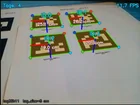
I've recently completed the assembly of a SunFounder PiCar-X and am currently running it on a legacy Raspberry Pi B. I have the base movement and motor control working and am currently prepping to get it chasing ArUco/AprilTags this coming week. I'm looking to evolve this platform into something capable of SLAM and eventually Structure from Motion (SfM). I'd love to get some community advice on the best way to handle these upgrades: Traction The stock wheels are quite slippery. Has anyone found direct-fit replacement tires or wheels that offer better grip on smooth indoor surfaces? Odometry Since the stock motors lack encoders, my dead reckoning is non-existent. Should I attempt to mount external encoders to these motors, or is it better to swap out the motor/gearbox assembly entirely for something with integrated feedback? IMU for SLAM I'm planning to add an accelerometer/gyroscope. Any specific sensors (such as the BNO055 vs. MPU6050) that are currently considered the "gold standard" for stability and ease of integration on a Raspberry Pi? Computer Vision The current camera resolution is limiting for SfM. Any recommendations for a higher-resolution CSI or USB camera that fits well within the PiCar's chassis? ROS 2 / Distributed Computing A specific question on the software side: I'm planning to move this platform to ROS 2. Given that I'm working with a legacy Raspberry Pi B, is this a lost cause, or should I keep the Pi as a low-level hardware node and offload the heavy ROS 2 processing, SLAM, and visualization tasks to a more powerful machine on my network? If a distributed setup is the preferred approach, what does the typical workflow look like? For example: Pi handles motor control, sensors, and camera acquisition ROS 2 nodes run on a desktop/laptop workstation Visualization and mapping performed via RViz on the workstation Communication over Wi-Fi using DDS Is this the recommended architecture, or are there better approaches for a platform like the PiCar-X? General Advice Any feedback on the hardware upgrade path, software architecture, or general "gotchas" with this kit would be greatly appreciated. Thanks in advance! submitted by /u/okineedaplan [link] [Kommentare]

This guy was just doing a live set on Kill Tony. He claims to have worked for Mt Gox in Japan, specifically doing their English press releases, before (and after) the hack. The show is still going on, will provide a time stamped link later. submitted by /u/TatarAmerican [link] [Kommentare]


Recently the question If $\frac{d}{dx}$ is an operator, on what does it operate? was asked on mathoverflow. It seems that some users there objected to the question, apparently interpreting it as a…

The Domain Name System (DNS) was designed under the implicit assumption that the underlying transport would be fast, reliable, and free from predation. This document specifies DNS over Avian Carriers (DoAC), enabling hostname resolution for networks operating over avian-carrier infrastructure. Without DoAC, operators of avian- carrier networks are forced to hardcode IP addresses directly onto their Carriers, a practice that does not scale and is widely considered inelegant.

Why any strategy built on appeasing the loudest voices on social media is doomed to fail.

Apple developers can now securely call cloud-hosted Gemini models using the Foundation Models framework, and access Gemini in Xcode.
How to use AI, IDE, and testrunner settings to implant a node.js or bun based self-spreading Worm
Tracking cryptocurrency and artificial intelligence industry influence on 2026 elections in the United States.
Trophic memory in deer antlers: a remarkable phenomenon showing how the morphogenetic collective intelligence learns from experience. In this post I talk about George Bubenik, who discovered this p…