Channels
‘Ultrasonic espresso’ made with cold water and high-frequency sound waves uses less energy than the traditional version – and taste tests show it’s just as good.
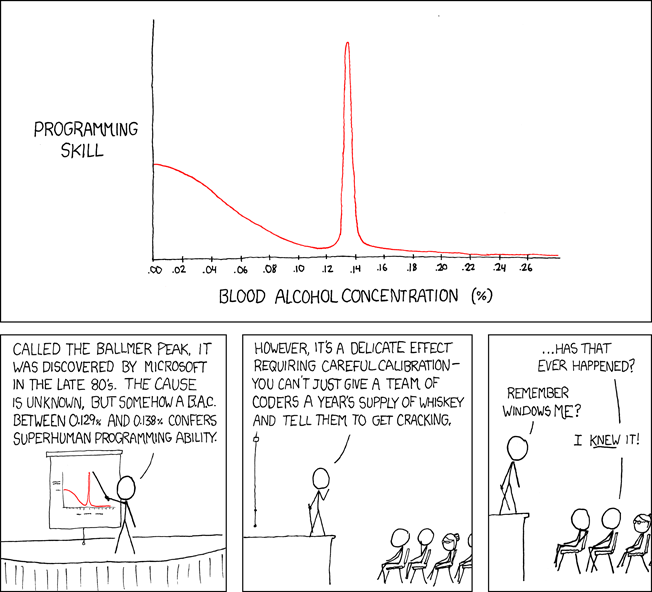
This work is licensed under a Creative Commons Attribution-NonCommercial 2.5 License. This means you're free to copy and share these comics (but not to sell them). More details.
Everyone draws on the same canvas, straight from their browser.
Partition's still there, but good luck seeing it and don't upgrade until fix lands, says team
Natural language endpoint router for market intelligence workflows.
Germany and France failed to come to terms on requirements, apparently bringing Europe’s flagship next gen fighter program to an end. Germany and France have failed to reconcile requirements, apparently bringing Europe’s flagship combat air program to an end.
Curated resources to help you manage and govern your enterprise-scale agents with Agent 365 — the control plane for AI agents.
Free interactive financial education for kids and teens ages 8–17. Learn budgeting, saving, and investing. No teacher needed.

The Digital Embrace | Social Security’s Final Paper Cutoff The digital embrace Social Security shuts the ...

Sequoyah’s syllabary faced suspicion initially, but after a demonstration, his version of “talking leaves” was widely embraced. And then the word spread
Hey everyone! I teach CS and programming at a small school in Syria and I'm in the middle of designing a full 5-year hardware-focused IT curriculum. I'd love some honest feedback from people with hands-on robotics/embedded systems experience. Here's the current plan: - **Grade 7:** Lego Spike Prime + Micro:bit - **Grade 8:** Arduino Uno with multiple sensors - **Grade 9:** Project-based learning with Arduino *(see note below)* - **Grade 10:** ESP32 - **Grade 11:** Advanced ESP32 + Raspberry Pi **Note on Grade 9:** This is the Basic Education Certificate year (think national standardized exams), so the curriculum here is intentionally lighter — more of a consolidation year with small projects rather than introducing heavy new concepts. Students won't have the bandwidth for anything too demanding, so I'm keeping it Arduino-based but project-driven to keep them engaged without piling on. --- **My questions for the community:** **Is this hardware progression age-appropriate?** Students range from roughly 12–17. Does the jump between stages feel right, or are there places where it's too much too soon (or not enough)? **ESP32 in grades 10–11 — good idea or not?** I like it because it covers WiFi/BLE, has plenty of GPIO, and feels like a natural step up from Arduino. But I've heard mixed things about its learning curve and toolchain complexity for high schoolers. What's been your experience? **Are there better alternatives to the ESP32 at that level?** I'm open to suggestions — whether that's staying on the Arduino ecosystem (Nano 33 IoT, Portenta, Uno R4 ?), or something else entirely. Budget is a consideration but not the only one. Any feedback appreciated — curriculum design resources, pitfalls to avoid, or even just "this worked great for my students" stories. Thanks in advance! submitted by /u/Pastalini_Byte [link] [Kommentare]
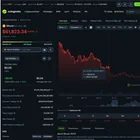
https://preview.redd.it/w70oeo7mhi6h1.png?width=1875&format=png&auto=webp&s=5d55785b820d0396ae7bbc6d1a76ee7ee410f51a On this day in the last cycle we went lower, just saying. submitted by /u/Own_Chapter9338 [link] [Kommentare]