 R
↗
R
↗
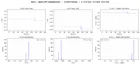
Follow-up to my v2 trajectory post. The RViz trajectory had visible zig-zag jitter even when the robot was stationary. Before deciding what filter to apply, I wanted to actually measure the noise and understand what's driving it. The problem The v2 system uses a physically fixed AprilTag (tag1) as a world frame anchor. The Pi detects it each frame, inverts the camera→tag transform to get world→camera, and publishes that as a TF. The zig-zags in the trajectory come from frame-to-frame instability in that pose estimate. The root cause is AprilTag PnP pose ambiguity — the solver has two valid geometric solutions for a planar tag and flips between them. The flip shows up as a large swing on one axis, typically ±15cm, even with the camera stationary. On top of that, small angular errors get amplified into position noise through the matrix inversion: at ~74cm tag distance, a 5° rotation error becomes ~6.5cm of position noise in world frame. The question I wanted to answer before touching the filter: how much does tag size actually move the needle? Method Added a single_tag_world_mode flag to config so ManualTracker can run with just the world anchor tag in frame — no chase target needed. Camera held stationary, pointed directly at the tag, for ~2–3 minutes per condition. Raw camera-frame poses recorded automatically to JSON. Four conditions: 5cm and 20cm printed tags, each with room lights on and off. All four plots below share identical axis scales so the distributions are directly comparable. Results Condition σ X σ Y σ Z (depth) 5cm — lights off 3.4 cm 0.5 cm 4.5 cm 5cm — lights on 5.1 cm 1.7 cm 3.7 cm 20cm — lights on 2.7 cm 0.4 cm 1.4 cm 20cm — lights off 2.1 cm 1.0 cm 1.7 cm (Images: 5cm lights off → 5cm lights on → 20cm lights on → 20cm lights off) What the plots show Tag size dominates. Going from 5cm to 20cm cuts depth noise by roughly 3x. The distributions tighten and become more unimodal — the PnP flip signature (broad or bimodal histogram on X and Z) is clearly visible in the 5cm sessions and largely absent in the 20cm sessions. Lighting is secondary. For the 5cm tag, lights-on is actually worse on X (σ 5.1 vs 3.4cm), likely because uncontrolled ambient light causes glare that degrades corner localization on a small tag. For the 20cm tag the lighting effect is small enough that it's not the thing to optimize. Best condition across all three axes simultaneously: 20cm + lights on (σX=2.7cm, σY=0.4cm, σZ=1.4cm). What's next This experiment was groundwork, not a fix. The noise is reduced but still present — 2cm+ std dev on X and Z with a stationary camera is not acceptable for a usable world frame. The next step is a filter, but the right choice (EWMA, velocity gate, Kalman, or some combination) depends on understanding the noise characteristics, which is what this data was for. Still deciding. Open to suggestions from anyone who's dealt with PnP jitter on planar markers before. References Post history v2 trajectory post v1 tag chaser PiCar-X introduction Hardware / code PiCar-X on Amazon Git repo submitted by /u/okineedaplan [link] [Kommentare]
R
↗
Hey i was working on a 6dof robot arm and completely new to this And just found out about inverse kinematics I'm having trouble trying to find the right material to learn it where can I find good material submitted by /u/OkCash6221 [link] [Kommentare]
R
↗
Hello, WACV conference submission deadline is by the end of this week, good luck everyone! Does anyone know what the expected format/duration of the video for the supp. mat. is? The guidelines only mention: The supplementary material can be either PDF or ZIP only (maximum 200MB). Supplementary material may include videos, proofs, additional figures or tables, more detailed analysis of experiments presented in the paper, or code. It is a bit vague for a first-time submission to this conference. Any help appreciated. submitted by /u/LetterheadOk7021 [link] [Kommentare]
R
↗
I recently visited a robotics space that’s focused specifically on humanoid robots. Not industrial arms, warehouse AGVs, or general automation, but bipedal / human-form platforms. It’s part of an incubator-style setup for early-stage teams working in this niche. What surprised me most wasn’t actually the full robots. The complete humanoid demos were interesting, of course, but the component side stood out more: actuators, dexterous hands, sensing systems, and all the less visible hardware that makes these machines possible. It made me think that the real progress may be happening below the “cool demo video” layer. Another thing I noticed was the visitor mix. Over just a couple of weeks, there seemed to be people coming through from different parts of the world: corporate visitors, researchers, MBA / exec ed groups, and others trying to understand where the field really is. The common question seemed to be: are humanoids actually close to being useful in real-world environments, or is this still mostly future-facing R&D? The incubator model itself also felt notable. Instead of every startup trying to build everything alone, the space seems designed to put founders, suppliers, researchers, and component companies near each other. That kind of clustering has worked in other deep-tech sectors, so I’m curious whether humanoids need the same thing to move faster. A few questions I’m still thinking about: Are humanoid robots finally approaching real product-market fit, or are we still in the “ten years away” phase? Which use cases are most likely to come first: logistics, manufacturing, elder care, inspection, retail, or something else? Is the recent momentum mostly driven by hype and funding, or are there specific technical bottlenecks that have genuinely improved? Are components like actuators and robotic hands the real near-term market before full humanoids become practical? I’m interested in how people here read the current moment. For those working in robotics, automation, or related hardware: does this feel meaningfully different from previous humanoid waves? submitted by /u/Great_Arachnid5776 [link] [Kommentare]
 R
↗
R
↗
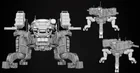
Would a ASL-ML from BO3 work in real life as a Autonomous Quadruped Robot. I kinda think it could only problem would be power/batteries. If it would work what could it be used for? I mainly think security, patrolling important assets etc. submitted by /u/LowAcanthocephala528 [link] [Kommentare]
 R
↗
R
↗
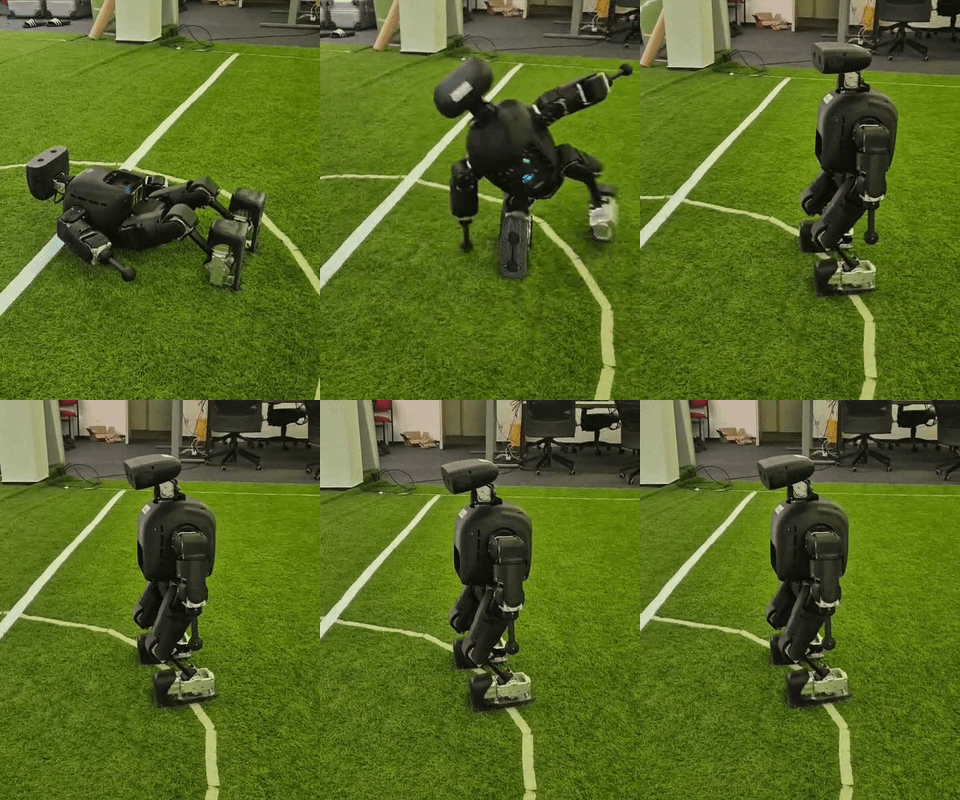
Trained in mjlab with a relatively simple reward function mainly rewarding torso height and end pose + some simple energy, self collision etc penalty. submitted by /u/floriv1999 [link] [Kommentare]
 R
↗
R
↗
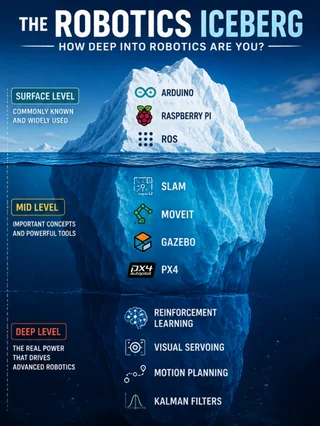
I know this isn't a perfect robotics iceberg, but I thought it'd be fun to visualize how deep the field gets. What would you move up, move down, or add? I'm curious to see what experienced roboticists think belongs at the deepest level. submitted by /u/RoboticsDaddy [link] [Kommentare]
 R
↗
R
↗
I recently revisited my matrix recurrent units algorithm (the MRU), a novel linear-time sequence architecture I created as an alternative to attention. I explain it in depth at the repo, but the gist is the MRU works by transforming the embedding into an input state matrix, cumulatively multiplying the matrices across the sequence dimension to get the output state matrix, and then transforming the matrices back into a vector. In order to make the MRU efficient on DL hardware, I created a parallel scan by utilizing the operation's associativity. About a year ago, I shared my project on Reddit (I've since renamed my account), with good results on the toy dataset shakespeare-char. A commenter asked the steps taken to bound the matrix states and another commenter found that training was inherently unstable when training on more comprehensive datasets. I addressed these by experimenting with different methods to create the input state matrix. Originally, I simply reshaped the input vector into a matrix and added the identity. Since then, I've implemented the following methods: Using the elements of the vector to fill a skew-symmetric matrix and using the matrix exponential or the Cayley Map to generate an orthogonal matrix Filling LDU factors with elements from the vector and using an activation function on D to enforce a determinant of 1. Creating QR, by using the matrix exponential or Cayley map to create orthogonal matrix Q and filling the upper-triangular matrix R. Dividing by a determinant-correcting scalar factor, found by taking the determinant. I found that these fixes prevented loss spikes with varying tradeoffs. Interestingly, the scalar factor method led to worse results. Dividing the input states should only affect the output states by scaling them, indicating that the unscaled model was "cheating" on the toy dataset by learning a simple scalar decay pattern instead of more complex relationships. Also, using the Cayley Map or matrix exponential to force the input states to be orthogonal surprisingly mostly prevented the model from learning information about the sequence, performing closer to the FFN than the Cayley QR method. The poor performance of orthogonal matrices indicates that the ability to learn shear transformations might be critical for the model. Possibly, rotations enforce dependence on the previous state, whereas shearing allows the model to adjust the state more independently of the previous state. https://preview.redd.it/9ebh98q6uo8h1.png?width=2528&format=png&auto=webp&s=03ccef7f9b90762281aba31ab88af0368e273f69 https://preview.redd.it/fkkud7q6uo8h1.png?width=2528&format=png&auto=webp&s=5e9a2ef2b0e4319990950f16aa0648adebc2c360 Above are the train loss and validation loss on the shakespeare-char dataset for a small MRU LM, transformer, and FFN, with the embedding, state, key, and value size set to 256. The MRU LM has a single MRU layer and 4 MLPs, the transformer has a single attention layer and 4 MLPs, and the FFN only has 4 MLPs. I only used a single sequence-mixing layer in order to isolate the effect of the MRU. Finally, I moved to a larger dataset, trying to replicate https://huggingface.co/roneneldan/TinyStories-33M by training a baseline GPT-2 model and a model with attention replaced with the MRU. I ended up quitting the training runs early, but the loss curves seem to already conclusively show that the MRU performs worse on this task. For the creation of the MRU's input state matrices, I used the method of creating LDU factors, since it has the best performance. https://preview.redd.it/p2uh1pyfuo8h1.png?width=2528&format=png&auto=webp&s=d6406574e0275f1aad52e89cca6462fd55116fcd Above is the validation loss for a transformer and a LM using MRU with the same hyperparameters and dimensions as the huggingface model card. The official TinyStories model was trained for 20 epochs, which corresponds to about 200k steps. In order to compare it to other linear-time models, I also briefly trained a linear transformer, using the algorithm described in Transformers are RNNs: Fast Autoregressive Transformers with Linear Attention. I think that my research shows that the MRU likely doesn't work as a direct replacement for attention for generative language modeling, but I've already laid the groundwork for this algorithm. The MRU has dramatically different strengths and weaknesses compared to other algorithms such as attention, state space models, traditional RNNs, and fast weight programmers. It performs significantly more cumulative computation along the sequence (as opposed to the computation for each token being independent), is significantly more lightweight and hence faster, but also has a much lower storage capacity. I believe that the MRU's alternative uses should still be explored. One usage of the MRU could be applying it to query and key vectors of attention. Similar to RoPE, it would rotate chunks of the vectors, but it would be able to rotate chunks in greater than two dimensions and with dynamic and non-commutative angles. This is one of many applications of the algorithm which I will continue to research, and I hope that others are interested in its applications as well. If you're interested, reach out to me at [mikayahlevi@gmail.com](mailto:mikayahlevi@gmail.com), Reddit, GitHub, or any other platform you can find me at. submitted by /u/mikayahlevi [link] [Kommentare]
 R
↗
R
↗
I’m working on a concept called CENTAUR — a self-balancing single-wheel vehicle combined with an embodied AI companion. It’s not positioned as a scooter or e-bike. It’s designed as a personal mobility companion that learns you over time. Core idea A vehicle that: balances itself (single-wheel platform) carries you safely in urban + off-road environments has an AI personality that evolves with your behavior remembers places, routes, and shared experiences communicates through a physical “face” (eyes + expressions) actively supports safety in real time What it includes (MVP concept) Self-balancing single-wheel system Ride + follow modes AI voice companion (local edge model) Memory system (routes, preferences, history) Safety assistant (fatigue, risk detection, emergency response) Expressive front “face” (eyes + basic emotions) Safety-first design Real-time balance + obstacle avoidance runs locally (
R
↗
like in the next 10 mins. I have everything ready. I already have another person whose doing his setup rn. I just wanna complete it and get it over with quick. Maybe we can hop on a call?? submitted by /u/SundeepKuPanigrahi [link] [Kommentare]
R
↗
Suppose you’re a PhD advisor in machine learning. Your student has been in the program for 4 years, has done solid work, and has a coherent thesis direction but they haven’t published in an A*ML venue or top journal. No NeurIPS/ICML/ICLR/CVPR/etc., and no equivalent top venue in their subfield either but 3 First author A level paper. Would you still support them graduating if the thesis itself is solid? submitted by /u/Hope999991 [link] [Kommentare]
 R
↗
R
↗
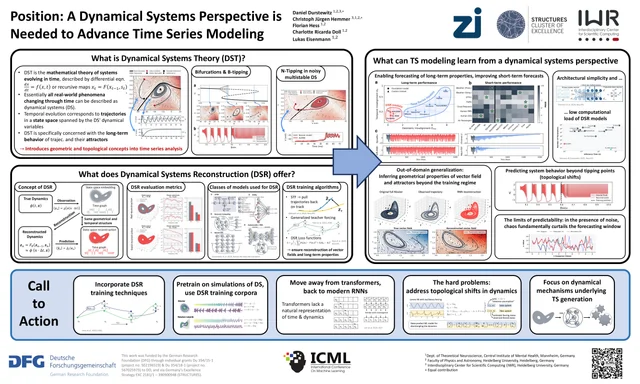
In our #ICML2026 position paper we argue a dynamical systems perspective is needed to drive time series (TS) modeling forward: https://arxiv.org/abs/2602.16864 Essentially all time series in nature and engineering come from some underlying dynamical system (DS), mostly chaotic for complex systems, and acknowledging this helps to address many open problems. Dynamical systems reconstruction (DSR) goes beyond mere forecasting and gives us an understanding of the dynamical rules that underlie observed time series. This in turn may enable true out-of-domain generalization and predicting a system’s long-term behavior, something current TS models cannot do. In the paper, we compare a variety of custom-trained and recent foundation models for TS and DSR w.r.t. short- & long-term forecasting. Specifically, we suggest: 1) Put a focus on DSR-specific training techniques and objectives in TS model training, such as generalized teacher forcing (https://proceedings.mlr.press/v202/hess23a.html). These will enable capturing long-term statistical properties and dynamical structure, and at the same time help massively reducing parameter load and complexity of TS models. Proper training is more important than model architecture! 2) Pretrain TS models on simulations from dynamical systems, rather than on artificially created time series functions. These will yield much more natural priors for real-world TS. Chaotic systems in particular contain a rich temporal structure and many timescales (often an infinite skeleton of unstable periodic orbits of any period). 3) Move away from transformers, back to modern RNNs. DS are defined by recursions in time. By ignoring this and potentially further coarse-graining signals, transformers lose essential dynamical information, making them generally incapable of capturing a system’s dynamical rules. This is evidenced by their failure to forecast a DS’ long-term statistical or geometrical structure. 4) Address the hard problems in TS modeling: Topological shifts (https://proceedings.mlr.press/v235/goring24a.html). Although in itself tricky, the really hard problem in TS forecasting is not so much mere out-of-distribution shifts, but changes that drive a system across tipping points or into different dynamical regimes, where the vector field topology changes. 5) DS properties like attractors or bifurcations are universal – acknowledging this in TS modeling will give a kind of mechanistic and transferable understanding of TS properties that is independent from specific (physical, medical, …) domain knowledge. It therefore also pays off to put a focus on mathematically tractable and interpretable models. With a great team of shared-first & co-authors, Christoph Hemmer, Charlotte Doll, Lukas Eisenmann & Florian Hess! submitted by /u/DangerousFunny1371 [link] [Kommentare]
 R
↗
R
↗
When working on robot models, I often wanted to: Open a shared link See the robot instantly Inspect joints and meshes Validate URDF errors Export to other formats That's why I started building RoboInfra. You can paste URDF/Xacro and instantly get: 1) 3D visualization 2) Validation 3) Auto-fix suggestions 4) URDF → MJCF conversion 5) URDF → USD conversion 6) Shareable robot links 7) And much more What other features would you expect from a tool like this? Free Forever https://roboinfra-dashboard.azurewebsites.net/playground submitted by /u/DateRealistic5066 [link] [Kommentare]
R
↗
I have developed an articulated rigid-body dynamics framework in C++23. The project is a compact, light-weight implementation of Featherstone's spatial algebra, (plus ABA/CRBA/RNEA dynamics), URDF import/export, collision detection, contact handling, and end-to-end automatic differentiation. I’m currently working on a Vulkan-based visualisation application (see demonstration videos). I would be interested in feedback from the ROS and robotics community, particularly regarding project architectural choices and possible future research directions. The repo can be found here submitted by /u/Slow_Negotiation_935 [link] [Kommentare]
 R
↗
R
↗
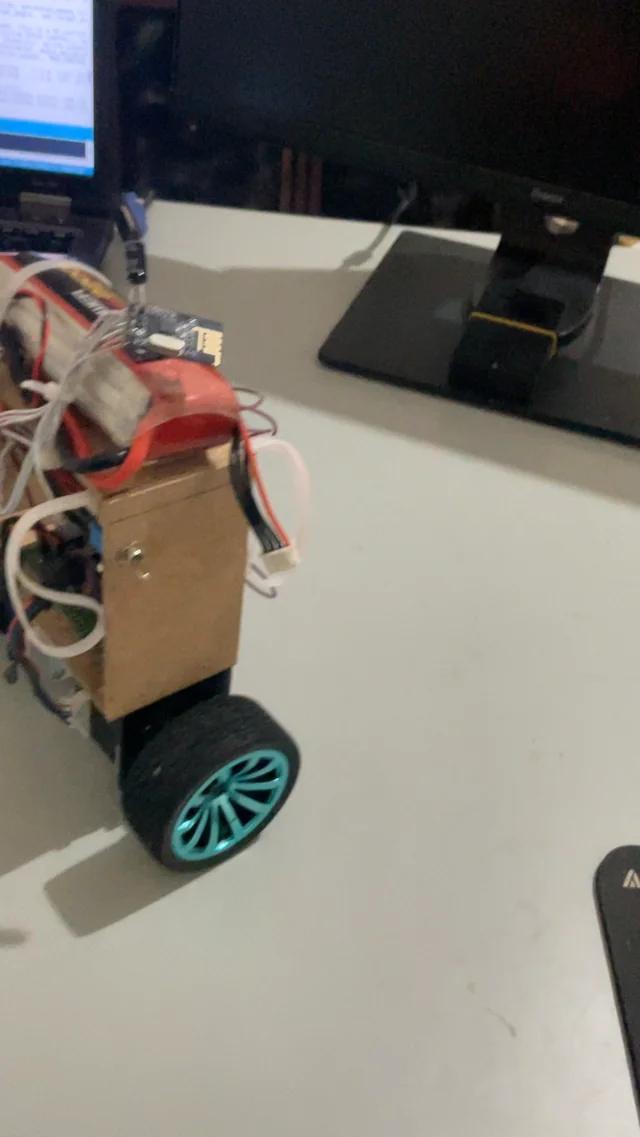
This is a self-balancing robot built around an ESP32. It uses two NEMA 17 stepper motors driven by DRV8825 drivers and an MPU6050 IMU. The biggest challenge was tuning the PID controller and filtering the IMU data for long-term stability. After a lot of tuning, it can now balance continuously—I even recorded it balancing for 45 minutes straight without falling. submitted by /u/mAbdelazim01 [link] [Kommentare]