 R
↗
R
↗
I made a chapter in my Advanced Robotics course about swarm robotics, focusing on the main ideas behind multi-robot coordination rather than treating it as just a buzzword. The video covers topics like: what makes a robot group a “swarm” decentralized vs. centralized coordination local rules and emergent global behavior examples inspired by ants, birds, and collective systems why scalability and robustness are important in swarm robotics I’m sharing it as a learning resource for students or beginners who are trying to understand where swarm robotics fits inside robotics and multi-agent systems. Video: https://www.youtube.com/watch?v=EXH3NpsKtUc I also keep the related course materials and source codes here, for anyone who prefers to learn by reading or experimenting with code: https://github.com/mohammadijoo/Control_and_Robotics_Tutorials For people working in robotics/control: what topics do you think should be added to make a swarm robotics lecture more useful — communication models, formation control, task allocation, path planning, or real hardware examples? submitted by /u/abolfazl1363 [link] [Kommentare]
R
↗
I use Claude Code, Codex CLI, OpenCode, Cline, Cursor, and Amp enough to notice a pattern in how they handle long context. They are all converging on layered progressive compression, but they disagree on what to protect. Most protect recent user messages as a first-class asset. That makes sense. The user said it, which is the source of truth. Most also protect tool outputs that carry state. What surprised me was how differently they treat old assistant messages. Artifacts keeps recent tool calls verbatim but drops older context aggressively. Cursor starts pruning earlier design decisions once the window gets full. Codex CLI lets the model itself decide what to keep in the summary tier. The other axis is transparency. Do you tell the model it was compressed? Some systems silently replace old tool results with a placeholder, which means the model is reasoning under the illusion that it never happened. Others make it explicit: "the previous 40 tool calls are summarized below." I lean explicit because the model needs to know its own context was degraded. Verdents agent loop uses a similar tiered approach: snip first, prune second, summarize last, and a hard red line that protects user messages, stateful tool outputs, and anything the user explicitly flagged. The tradeoff is cost vs accuracy. Aggressive compression saves tokens but degrades the plan. Under-compression hits the window and causes context rot. submitted by /u/Direct_Band896 [link] [Kommentare]
R
↗
Hi everyone, I’m close to completing my degree in Psychology, and I’m also a Systems Engineering student. is like, roughly comparable to Software Engineering / Computer Science outside Latin America. Although I study engineering, I’m still at an early stage with machine learning, LLMs, AI safety, and related technical topics. My research project is mainly psychology-oriented, but I’d really appreciate recommendations or warnings from a software/technical perspective. I’m working on a project about how AI systems respond to prompts involving psychological distress at different levels of intensity. I’m currently considering ChatGPT, Gemini, Wysa, and Replika, and I’m interested in comparing general-purpose LLMs, mental-health-oriented chatbots, and AI companions. Some aspects I’m thinking about are: How each system handles mental health, self-harm, crisis situations, and psychological/medical advice. whether responses change as the prompt becomes more intense, for example when a normal generated response is replaced by a safety protocol, moderation layer, or crisis-resource response. whether systems respond differently to declarative prompts versus question-based prompts, such as “I feel emotionally overwhelmed” vs. “What should someone do if they feels emotionally overwhelmed?” whether responses differ when distress is explicit, indirect, ambiguous, hypothetical, or written in third person. whether the system provides empathy, psychoeducation, referrals, crisis resources, refusal, redirection, or a combination of these. how to account for technical changes over time, such as model versions, neural network weights, safety layers, moderation classifiers, system prompts, memory/retrieval features, and product-level configurations. whether it is methodologically valid to compare systems with very different technical architectures. I’m not trying to evaluate these systems as therapists or test clinical effectiveness with real patients. The focus is on how they respond linguistically, procedurally, and safety-wise when confronted with psychological distress. I’d appreciate recommendations for papers, benchmarks, datasets, evaluation frameworks, or common methodological mistakes to avoid. I’m especially interested in technical issues such as reproducibility, stochastic outputs, temperature/settings, hidden safety layers, system prompts, memory, retrieval mechanisms, and product updates. Thanks in advance! submitted by /u/dakartt [link] [Kommentare]
R
↗
Full disclosure: this is directional, not a paper. n=120 tasks, one internal evaluator, not peer reviewed. I work at an LLM infrastructure company. This experiment was done on my own time and is not a company claim. Karpathy's framework classifies tasks by verifiability. Can output be mechanically checked? High verifiability tasks like code compilation and structured JSON extraction are safer because the verifier catches errors. Low verifiability tasks like creative writing are riskier. I wondered if high verifiability tasks are also easier in practice. Can a weaker model do them as well as a frontier model if the verifier catches mistakes? Setup was 120 tasks across four categories. Code unit tests, structured extraction, multi hop reasoning, creative summarization. Three models: Claude Sonnet 4.6, GPT 5.5, local Mistral 3 8B via vLLM 0.6.3. Pass rate for the first two, human rating 1 to 5 for the last two. Results were messy. Code unit tests: Sonnet 4.6 94%, GPT 5.5 91%, Mistral 3 8B 87%. With one retry Mistral 3 hit 95%. That surprised me. I expected the gap to be bigger. Structured extraction: Sonnet 4.6 97%, GPT 5.5 94%, Mistral 3 8B 89%. With retry 96%. Also closer than I expected. But here is where it got weird. Sonnet 4.6 initially scored worse than GPT 5.5 on structured extraction, which made no sense. Turns out our JSON schema had an ambiguous nested array that confused Claude's tool use parser. Fixing the schema brought Sonnet to 98%, but I kept the original numbers in the table because the mistake is part of the story. Your verifier is only as good as your schema. Multi hop reasoning: Sonnet 4.6 78%, GPT 5.5 71%, Mistral 3 8B 51%. Retry didn't help. The model would hallucinate reasoning paths consistently. This is where the capability gap was real. Creative summarization: Sonnet 4.6 4.2 out of 5, GPT 5.5 3.9 out of 5, Mistral 3 8B 3.1 out of 5. Expected. Interpretation: high verifiability tasks seem simpler in the sense that weaker model plus verifier can approach frontier performance. Low verifiability tasks show the expected gap. Limitations: n=120 is tiny. Need 10x for confidence. Our verifier is just JSON Schema plus regexes. Constrained decoding might change the calculus entirely. I also didn't control for prompt length well. Any prompt over 8k tokens was excluded because Mistral 3 8B degrades near its limit, which probably skewed the sample. submitted by /u/DragonfruitAlone4497 [link] [Kommentare]
 R
↗
R
↗
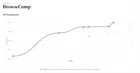
Hi, Niels here from the open-source team at Hugging Face. I've recently relaunched paperswithcode.co as a source for finding the state of the art (SOTA) across various AI domains, from 3D generation to AI agents. This is done by automatically parsing research papers published on arXiv/Hugging Face, enabling leaderboards to be created. See BrowseComp below as an example (a scatter plot and a table are available for each benchmark). - Scatter plot (you can hover over the dots to see the models): https://preview.redd.it/9rz2r3ffcf6h1.png?width=2880&format=png&auto=webp&s=b3f8e7a870802f6ef8227ecc0619e9e1057554b0 - Table: https://preview.redd.it/qoqriddw5f6h1.png?width=2862&format=png&auto=webp&s=a0034574f693847537037013672fb61daf27b16e As you can see, I've added support for viewing evals for closed-source models, too, given that many benchmarks are nowadays dominated by them, like GPT-5.5 and Mythos 5. You can always disable viewing closed-source evals with a toggle or in your PwC settings: https://preview.redd.it/p3k6jt6q6f6h1.png?width=1582&format=png&auto=webp&s=40149e51d6b326a77e53e33baf70d9850b3de365 When you turn them off, here's what the open model leaderboard looks like: https://preview.redd.it/tg42sin36f6h1.png?width=2838&format=png&auto=webp&s=1330a117ae9b4e0ce6d459493ae9e8f64107310a Closed-source papers are treated as regular "papers", although they can be any source, like a blog post (given that PwC supports submitting any source beyond arXiv). See the GPT-5.5 or Mythos 5 papers as examples, with their evals at the bottom. Notice the "closed" tag on their evals. Hence, you could jokingly call these "papers without code". Let me know what you think of this, and whether anything needs to be changed or added! Kind regards, Niels submitted by /u/NielsRogge [link] [Kommentare]
 R
↗
R
↗
I do AI research and keep juggling tabs: new ones on arXiv, trending ones on Hugging Face, famous ones somewhere else again. https://preview.redd.it/cg32bshjqd6h1.png?width=1919&format=png&auto=webp&s=00055bb8af699061be0bdcff59f2cb8fa9ab38b6 So I built one site that brings them all together. Pick a paper, read it right there, star the ones you want for later, and it remembers where you stopped reading, even if you switch from laptop to phone. Live: https://ppdeck.com Demo: https://youtu.be/vtyx34JvxX0 It's free and open source - a star on GitHub would mean a lot ⭐ https://github.com/khuynh22/paper-deck submitted by /u/NeitherRun3631 [link] [Kommentare]
R
↗
We spent the last year building what we think is the missing infrastructure layer for multi-agent systems. Open to everyone starting today. The technical problem: Agents have no identity. In microservices you have a service mesh + IAM. In agent systems you have a Python file. We built a registry where every agent has a first-class ID, version, owner, skill graph. Behavioral evaluation, not function testing. Agents are non-deterministic same input can produce different execution paths. Traditional unit tests don't work. We implemented compound reliability scoring + behavioral regression instead. Composability without rebuilding. Skills are versioned, reusable, agent-inheritable. Inspired by how Kubernetes operators work, applied to agents. Cloud-agnostic deployment with built-in observability traces, cost attribution, drift detection. Model-agnostic. SOC 2 Type II. Genuinely interested in technical feedback especially on the eval methodology and the composability primitive. Free credits this week to test it. https://phinite.ai/?utm_source=reddit&utm_medium=organic&utm_campaign=public_launch_jun2026&utm_content=machinelearning submitted by /u/Embarrassed-Radio319 [link] [Kommentare]
R
↗
Found from iOS Simulator's files. Both of them are in espresso format There's also another compiled CoreML for concert ranking and based on the content inside of it looks like to be a simple logistic regression. See https://www.reddit.com/r/jailbreak/comments/1u1e1b4/access_to_simulators_root_files/?utm_source=share&utm_medium=web3x&utm_name=web3xcss&utm_term=1&utm_content=share_button Edit: Its the Siri's TTS submitted by /u/Actual_L0Ki [link] [Kommentare]
R
↗
Hey everyone, I'm deep into robotics simulation, specifically focusing on Reinforcement Learning (RL) and Deep Learning (DL) workflows. My hardware setup is an M4 MacBook Air (16GB unified memory). Initially, I wanted to use NVIDIA Isaac Sim/Isaac Lab because of its photorealistic graphics, advanced sensor simulation, and massive parallelized RL support. However, since Isaac Sim relies heavily on NVIDIA RTX hardware and CUDA, running it locally on Apple Silicon isn't feasible. I really want a local development environment rather than constantly relying on cloud instances. I need a simulation software that satisfies these core requirements: High-Quality Graphics: Clean rendering, realistic physics-based lighting, and solid sensor noise modeling for computer vision/DL perception models. Robust RL/DL Support: Seamless integration with Python ML ecosystems (like PyTorch, Stable-Baselines3, or JAX), OpenAI Gym/Gymnasium wrappers, and fast parallel simulation stepping. Apple Silicon friendly: Runs natively or optimized on macOS, making good use of the M4 chip and unified memory architecture without hitting x86_64 or CUDA bottlenecks. What are the best alternatives for this exact setup? I’ve looked into MuJoCo (especially with its native macOS build and the JAX-based MuJoCo XLA / MJX for acceleration, though I'm curious how well XLA handles Apple Silicon for parallel envs). I've also considered Unity with ML-Agents, which utilizes Apple's Metal API for incredible graphics and handles RL workflows beautifully on Mac. Has anyone successfully built a high-graphics RL/DL robotics pipeline on an M4 Mac? Which simulator did you choose, and what did your Python bridge look like? submitted by /u/Risheyyy [link] [Kommentare]
R
↗
Is it normal to use different styles of figures (colours, backgrounds, grids, etc.) when writing a paper? Personally, I think it looks unprofessional. submitted by /u/Few-Annual-157 [link] [Kommentare]
R
↗
TL;DR struggling in finding a meaningful research contribution on top of existing big foundation models. (edit: please note it's my first post on reddit,I'm not a bot) Context: I'm working on FM applied to robotics: VLAs, world models, WAMs. Lately I'm mostly reading papers, and implementing small adds on. Those topic are really exiting but I’m wondering where modest researchers (like me) can make meaningful contributions, given that training competitive foundation models from scratch is a big-lab game. For people working on fondation models in academy and R&D, that asked themself similar questions: Do you have some honest suggestions or feedback? If starting from a pretrained fondation model, main things that come to my mind are eg: - architecture changes (don't you lose all the pre training warmup)? - fine tune (not much new science if one runs lora...) - froze the model and build add-on like uncertaintyquant , world-model lookahead, inference guidance, safety constraints - something big I'm not seeing? Also happy to hear paper/project recommendations that are good examples of this. Thank you all. submitted by /u/Amazing-Coat5160 [link] [Kommentare]
R
↗
Yes, I'm calling it out. It IS racism. As an active member of r/MachineLearning and a researcher who is ethnic Chinese, I am DISGUSTED by unfounded accusations against the group of researchers who constitute over half of the field. Such posts pop up every other week, grounded in conspiracy theories, and creating a sinophobia echo chamber. I understand the salty feeling when one's paper is rejected, no matter whether the paper actually deserves acceptance or not. Given the noise in conference organization and reviewing process, and a relatively junior body of participants, it is very likely that one finds a paper "worse than mine" slip into the conference, and there's a high chance that the paper has a Chinese author. That's simply because of the composition of the authors, and does not warrant accusations, aka witch hunts, towards certain ethnic groups. This sub is about an important scientific subject in the modern world. If anyone agrees with the logic "80% of the authors are Chinese, so my rejection is their fault.", they should seriously rethink their career plan since such thinking does not belong to serious scientists. We should be open to discussing the problems we have in the current conference organization and reviewing process, but racism should not have a foothold in our field. submitted by /u/AffectionateLife5693 [link] [Kommentare]
R
↗
Hi folks, Deciding between these two Mac options has been a challenge for me, so pls help. I know mac is not even necessary for this but just help me to decide between these two options. For the reference, Im a swe student and looking forward to go deep into ml and data science in the near future… EDIT: mac book pro m5 ( base chip) that I’m referring here. submitted by /u/Both-Hovercraft3161 [link] [Kommentare]
 R
↗
R
↗
Hello, I am a 19-year-old dropout developing robots. I started with servo motors and have finally built a quadruped robot using the BLDC + FOC method. I have adopted a 20:1 backdriving reduction system. Currently, I am printing with PLA for testing purposes, and I plan to build it later using Pa12 or a more reinforced material. Also, are there any companies interested in spon1soring me? My development 💸 have run low😢😢, Please feel free to message me! My IG: IMAKEROBOTS__ submitted by /u/p0tato___ [link] [Kommentare]
 R
↗
R
↗
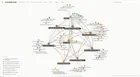
I read and collected Arxiv whitepapers starting after the launch of ChatGPT. I copied and pasted excerpts into Word to track them. Then migrated to Obsidian. That vault of some 1700 papers is now online. I figured it was time to see if others would find the collection useful. My whitepapers were organized into some 90 categories, all of which emerged from paper topics. New categories became necessary with the discussion of new methods, techniques, models etc. If I wanted to write about a topic, I'd upload an md file containing research excerpts on that topic to ChatGPT. This worked to a degree but maxxed out context pretty quickly. And I always had related research in multiple categories, according to how the research was framed. (Personas research in Aligment, Psychology, HCI, etc). So I used a plugin to create topic notes that built in and outbound wikilinks across the papers centered on shared concepts. When I ported this all online I added another layer of synthesis: Inquiring Lines as I call them. These cover cross-cutting, tension-surfacing, synthesizing, and frontier-opening research frames. There's 6,000 of them in my collection. Each is a page to itself that's a useful description of a research line of inquiry. These now also have prompts you can run yourself that will find related (and more recent) research - (I can't adequately maintain each topic with new research). It's all at https://inquiringlines.com/inquiring-lines/ if you want to poke around. As is everything in the age of AI, it's a work in progress. But there's a lot of rich material in there. Have a look. submitted by /u/Barton5877 [link] [Kommentare]