 R
↗
R
↗
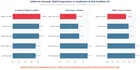
TL:DR: I’m a grad student in AI, I saw that Google released TabFM and TimesFM last week, I built an MCP wrapper to serve both transformer models in a single Docker container so you can connect their new ML transformer models to a local LLM via Open WebUI, Claude Code, or Codex and do ML tasks that would have previously required building, training, and tuning ML models to do. Tested with classic ML datasets (Iris, California Housing, etc), Pretty solid scores for accuracy for being zero-shot: (94.7% for Iris) and R2 of 0.91 for regression test) vs. traditionally tuned ML models. You need about 16GB of VRAM to run both models. I added dynamic model load and unload with a TTL set to 5 mins. CSV. support now, with XLS, XLSX, JSON, JSONL support soon. PyTorch-based so CUDA only. Works on DGX Spark, 3090, H100 and most anything Nvidia with 16GB+ VRAM. Install script auto detects architecture. Here is my repo if you want to try out the MCP: https://github.com/porespellar/Zer0Fit Here’s the non-TLDR version: I’m working on my Masters in AI and I saw someone’s post here the other day about Google’s new TabFM Tabular data foundational transformer models released last week and I thought that they were super groundbreaking in that they were basically bringing ML models into the GenAI space which is both weird and cool because ML models are very different animals than LLMs Here was the original Google blog post on it: https://research.google/blog/introducing-tabfm-a-zero-shot-foundation-model-for-tabular-data/ Anyways, I wanted to play around with these new models from a chat interface and try to “kick the tires” a bit, so I built an MCP implementation for both the TabFM and TimesFM models. Nothing super fancy, just a quick and dirty MCP wrapper of the PyTorch versions (this will only run on CUDA). I made the MCP with 2 build targets in mind: DGX Spark (arm-based with CUDA 13) and 3090 (AMD64 with CUDA 12.6). No Mac support because of Google using PyTorch, sorry. I also wanted this to work with my preferred chat client: Open WebUI, so that’s what it’s geared towards running best with and was tested against, I also added Claude Code and Codex CLI support as well, but haven’t really fully tested those out yet. Install is just a git clone and an ./install.sh. The whole thing runs out of a single Docker container and dynamically loads and unloads the models into VRAM with a TTL of 5 minutes to free up reserved VRAM when not in use. I also included an Open WebUI Skill.md that can be imported into Open WebUI, and skill.md and agents.md for the other harnesses. I tested it with some fairly classic ML datasets from Kaggle that most data science students have probably encountered while studying AI/ML. - Iris (classifiers) - California housing (regression) - Airline Passengers (time series forecast) I spent a semester trying to learn ML models and tuning them and not really knowing what the hell I was doing, usually overfitting my models, and changing all kinds of parameters that I didn’t know if they were really helping or hurting my models. It all seemed like a dark art that I never fully understood. TBH, I wasn’t really a fan of ML, I think it’s cool stuff, but I just don’t have the math skills or stats chops to be able to understand WTF I’m doing most of the time with hyperparameters tuning. A man has to know his limitations, LOL. Anyways, as I said earlier, I just wanted to get Google’s cool new ML models running where I could feed a dataset to an MCP and then have it do all the ML magic that Google trained these foundational models to do. I tried to make it easy for the average person like myself to run. I thought others might want to test out the models too so I made it a public repo. So here it is if you want to mess around with it: https://github.com/porespellar/Zer0Fit I’ll try and do some maintaining if I see that there is any continued interest, but I can’t promise that I’ll keep up with it, so please feel free to fork the repo and take it in any direction you want to. I think models like TabFM and TimesFM are going to low-key bring the branches of AI / ML tree closer together and we’re going to see some really cool and wild stuff as people take these concepts further in the future. Note: This repo was hastily built to just get the models running. I’ve done very limited testing only on DGX Spark. Again, feel free to fork it and make it as good as you want to. And please remember that this stuff is very experimental. Don’t use the forecasts or predictions made by these models for anything other than just research curiosity. Use at your own risk. Let me know what you think of the repo if you give it a try. Cheers. Note Regarding my test results in the images: I created the test scripts using DeepSeek V4 Flash and I had Claude Opus 4.6 review the test methods, code, and results. I don’t claim to be smart enough to know if the stats / math is correct. I would love it if some of the very smart ML research folks on here would give the repo a try and let us know if they are getting similar results or if my results are completely wrong. I included the sample datasets in the repo so “apples-to apples” comparison tests could be run by others to either prove or disprove my results. I really don’t mind if I’m wrong, I’m a student and just want to learn and improve. submitted by /u/Porespellar [link] [Kommentare]
R
↗
Hey ML community! I’ve been exploring world models and wrote a short article aimed at making the concept easier to understand. I also propose a framework for classifying different approaches and highlight a few trends that emerge from that classification. I’d appreciate feedback on the framework, especially where it may be incomplete, unclear, or technically inaccurate. Article: https://x.com/srini_sunil_/status/2075577335076598194?s=20 submitted by /u/ssrini125 [link] [Kommentare]
R
↗
So, I am working on this startup project with pretty low budget and one of the features is sentiment analysis based on political news, x posts and Instagram hashtag trends in which will be in Indian languages. I've been suggested muRIL, an Indian language-based model fine-tuned on political data as the best long-term option. But our team does not have any ML engineer so we dont know how we should approach that. Also do tell me if you think there is a better alternative submitted by /u/OkRoyal9187 [link] [Kommentare]
R
↗
I am preprocessing a CSV dataset for multiclass classification with XGBoost. My Feature variable contain numerical and categorical values, while the target variable contain many categorical value. For example, feature variables contain patient name, phone number, and exercise history, while Target variable contain different disease name such as heart attack, stroke, Alzheimer's etc. I know that feature variables can be encoded using one-hot encoding, but should the target variable also be encoded using the same method, or should I use a different encoding method for target variable (e.g., label encoding)? If anyone know the answer, please let me know. I have searched everywhere, but failed to get any clear idea about it. Thank you. submitted by /u/Rami02021 [link] [Kommentare]
R
↗
Has anyone gotten a response from the eccv travel support program listed on their website? https://eccv.ecva.net/Conferences/2026/DEI Edit: also have anyone applied for this program as an accepted author? I have an independent research paper accepted and am currently looking for funds for paying for the registration fees submitted by /u/tedd235 [link] [Kommentare]
 R
↗
R
↗
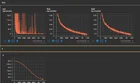
Hello, I'm trying to implement the Pocket TTS by kyutai-labs represented by this paper. Since they have didn't released the training/fine-tuning code. I'm trying to implement it on my own for learning some stuff. I have read the paper, tried to implement it with much more smaller parameters with smaller amount of data. I implemented this text to speech with one speaker on LJSpeech (1) and LibriSpeech clean subset but its hardly failing. For (1), Since it's a single speaker dataset I didn't added the voice cloning just simple text and target latents. flow matching loss became nearly 0.20 mse , EOS loss became very low like (x)e-(y) levels. But when infer with the model saved at 2800th epoch, It barily generating a meaningfull text even the text within its training set. Tried different techniques like Scheduled sampling for eliminate exposure bias (model was hallucinating sometimes and repeats same phrases twice), it didn't worked. Added std gaussian noise to ground truths, didn't worked. After struggling with lots of implementation I decided to move forward with quite larger dataset LibriSpeech because I thought that scale of the data was small. For (2), I read the paper again. No scheduled sampling, added the head multiplication etc, and implemented the paper in the librispeech dataset. I tried audio condition+ text tokens + BOS + target latents, and swapped the audio prompt with text tokens. I observed a tradeoff in this setup: if I put text tokens near to target latents, model generates better text but voice is not even close to audio prompt,and gibberish speak with better voice cloning when I put audio condition tokens near to target latents. And found out that loss is very spiky, and grad norm is exploding too you can see below the images. loss and lr values for setup 1 (LJSpeech) values for setup 2 (LibriSpeech) I used Pocket TTS' orijinal Mimi Audio Encoder by extracting it from Original model. What is your suggestions? Should I read paper over and over again? Should I increase the data amount by collecting from different sources(authors says that they used 88.000 hours of publicly available data)? Any system design problem? Trainings performed on RTX 5080 desktop gpu. I want to move on to bigger dataset but can't burn GPU credits for non-expected result. When should I increase dataset and start training on bigger clusters that could give me satisfyable results? submitted by /u/No-Motor-6274 [link] [Kommentare]
R
↗
I’m pretty annoyed. We’re a small AI startup building a real-time coding agent. Our p95 latency requirements are tight (and self imposed, but thats the product). We need sustained high-throughput inference with ~1-2k tokens/second. Been on the Cerebras waitlist for months trying to get API access. We’re not doing training so don’t need a warehouse of H100s. We need fast, high-throughput ASIC inference for a specific production workload. Cerebras’ just went public and they basically have no compute how is that possible? Well turns out OpenAI and Cerebras for OpenAI to buy like $20b worth of these chips. This has effectively pre-allocated the vast majority of Cerebras’ near-term inference capacity to a single customer. I mean, none of us can compete with that The result is that this deal situation has made their API waitlist functionally infinite for anyone who isn’t a hyperscaler. Legit making me pull my hair out. submitted by /u/Kortopi-98 [link] [Kommentare]
R
↗
There was a workshop in ICLR Recursive Self Improvement. Is this something worth pursing for a Phd topic? submitted by /u/Successful_Bowl2564 [link] [Kommentare]
R
↗
Hey all, a bit of background - I'm an ex Amateur MMA fighter and BJJ brown belt and am also in the AI/ML space ... weird combo but wanted to know if anyone else was at the intersection of ML/AI and MMA/BJJ. In short, I'm building AI models that "watch" fights and are able to detect positions and moments throughout the fights - things like standing vs clinching vs ground (with intention of becoming more granular in time) along with detecting knockdowns, takedowns, etc. There's a timeline at the bottom of each fight with markers for different moments so you can jump straight to them. Anyway this is where my worlds collide and was curious for thoughts for anyone who wants to check it out. If you do, it's at https://cagesight.ai. All feedback welcome. Thanks all. submitted by /u/UnholyCathedral [link] [Kommentare]
R
↗
Hi everyone! I have just completed my 2nd year of BS Computer Science and my long-term goal is to pursue an MS/PhD in CS/AI/ML abroad (USA, Canada, Europe, or Australia). To strengthen my profile, I want to get involved in AI/ML research and hopefully publish a research paper during my undergraduate studies. I recently started learning Machine Learning and plan to build a strong foundation first. The challenge is that I'm from a Tier-3 university and unfortunately we don't have any research labs, active research groups, or professors working in AI/ML research. Because of this, I'm not sure how to take my first steps into research. I would appreciate advice from students, researchers, or professionals who have been in a similar situation: How did you get started in AI/ML research? How can an undergraduate student find research opportunities without a research lab at their university? Is it realistic to publish a paper independently or through remote collaboration? What skills should I focus on first (math, ML, programming, reading papers, etc.)? Are there any communities, programs, or platforms where students can connect with researchers? Any guidance, personal experiences, or roadmaps would be greatly appreciated. Thank you! submitted by /u/ComfortableBeing7017 [link] [Kommentare]
 R
↗
R
↗
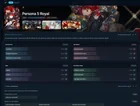
Since the steam sale is live I wanted to post a Dev log on my personal project https://nextsteamgame.com/ sharing some outcomes from the web traffic and how I changed the project from the great feedback I got! I made a post about a month ago explaining how I made this opensource explainable search engine built around steam reviews to people find new video games, Not through Relevancy but through aspect based similarity. Check out the old post for a better explanation if you want! https://www.reddit.com/r/MachineLearning/comments/1tb8k3n/steam_recommender_using_similarity_undergraduate/ I wanted to say thank you to all the people of r/datascience and r/MachineLearning that gave me feedback and tried out my tool! I improved the UI/UX of the website to make the vectors more clear and controllable, I Implemented a thumbs up and down feature on recommendations to see if users even like the tool. I also wanted to share the after effects of promoting this tool on reddit! from the 2,652 searches I got in the website 913 of them resulted in steam clicks! the games that were discovered were all in a uniform distribution and did not share much of a pattern showing me that the engine did its job in helping people find niche games across all genres! (More images attached to post to see data viz) I wanted to disclose that I made this tool to not make any profit of some kind, but it does use posthog so I can collect diagnostics now. submitted by /u/Expensive-Ad8916 [link] [Kommentare]
R
↗
In the recent Springer/Meteor email, it says: The deadline for the upload of the camera-ready manuscripts and source files is 30 June. This is a hard deadline and will not be extended. However, in the same email, the Meteor submission line for my paper says: submission due: June 27, 2026 A previous email from the ECCV Program Chairs also stated that the camera-ready deadline had been extended to 30.06 AoE and that this deadline is final. Does anyone know whether June 27 is just an internal/default Meteor due date, or whether it is the actual deadline for uploading in Meteor? Since the email says there is only one upload and the first upload is final, I want to avoid uploading too early if June 30 is the correct deadline. this is really confusing. submitted by /u/National-Resident244 [link] [Kommentare]
R
↗
Hey everyone, I'm a stats student and I'm struggling to come up with a personal machine learning project. I just can't seem to find an idea that genuinely sparks my curiosity, and that's usually how I learn best. For example, back when I was learning SQL, I got so obsessed with a specific idea that I built a complete database from scratch and actually put it into production. It was a project I genuinely cared about—even though I find SQL itself pretty boring, the project was fun. Now, with machine learning, I actually think the subject is amazing. I love coding simple ML algorithms just to see how they work under the hood. But when it comes to building a personal project to actually deepen my knowledge, I draw a complete blank. Does anyone have any suggestions for cool, hands-on personal ML projects, or any advice on how to find an idea that clicks? Nothing too complex, just looking for something a little different from the usual stuff submitted by /u/luanx96 [link] [Kommentare]
R
↗
Hi, I really really need access to Xperience-10M for a deadline which is very soon. https://huggingface.co/datasets/ropedia-ai/xperience-10m Unfortunately, it looks like the owners have stopped approving people to download the dataset. I filled out the form a few weeks ago but have heard nothing back. Several others have also commented on the HF saying the same thing. If anyone's account has access to this dataset and are willing to make me an API key for a day or two, I would really really appreciate it :) Know it's a long shot but doesn't hurt to try. submitted by /u/PatientWrongdoer9257 [link] [Kommentare]
 R
↗
R
↗
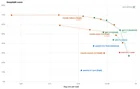
DeepSWE delivers four advances over existing public benchmarks: Contamination free: Tasks are written from scratch, not adapted from existing commits or PRs, so no model has seen the solution during pretraining. High diversity: Tasks span a broad pool of 91 repositories across 5 languages. Real-world complexity: Prompts are ~half the length of SWE-bench Pro's, yet solutions require 5.5x more code and ~2x more output tokens. Reliable verification: Verifiers are hand-written to test software behavior rather than implementation details. The result is a benchmark that reflects how today's frontier coding agents actually perform in software engineering work. https://preview.redd.it/lacvagyr159h1.png?width=1373&format=png&auto=webp&s=6514340a15d51d7f03da733f08fb3f6a302cac75 It's open-source: https://github.com/datacurve-ai/deep-swe submitted by /u/we_are_mammals [link] [Kommentare]