
We observe a random variable \( X \). (It may be a big, hairy, high-dimensional beast, with lots of components, but we'll treat it as one object for now.) We also have a probability model with an adjustable parameter \( \theta \). (This may also be an enormous infinite-dimensional object.) For each \( \theta \) we get a distribution for \( X \), say \( p(x;\theta) \equiv \mathrm{Prob}_{\theta}(X=x) \). That is, the probability model tells us, for each parameter value, the probability of any particular outcome. Ordinarily, we tend to look at how \( p(x;\theta) \) changes with \( x \) fixed, for some particular \( \theta \). What statisticians have come to call the likelihood function is \[ L(\theta) \equiv p(X; \theta) \] This is the probability of the data as a function of the parameter. That is, it tells us the probability of observing what we did observe, as we consider varying the parameter. A natural and compelling approach to parameter estimation is then the method of maximum likelihood: guess that the true parameter value is the one which makes the observed data as probable as possible. This is, as I said, natural and compelling, and it works (is consistent/probably-approximately-correct) under a broad range of circumstances, but unfortunately it doesn't always work. To see a little bit about why it typically works, but doesn't always, notice that \( L(\theta) \) is a random function, i.e., a stochastic process. (It is a process "indexed", as we say in the trade, by the parameter space, which may be weird, but still a process.) The method of maximum likelihood looks for the maximum of this random function, and hopes that it converges on the true parameter value. But convergence of stochastic processes is a somewhat delicate business. In many situations, the likelihood function does converge to a sensible, deterministic limiting function which is uniquely maximized at the true parameter value. (When this happy state of affairs applies, the limiting function has nice information-theoretic interpretations.) But there are, alas, times when the convergence just does not work. Now, I should at this point admit that the way I've defined likelihood above only works when \( X \) is discrete. If \( X \) is continuous, then one needs to work with probability densities rather than mass functions, which I think makes the rhetoric a bit less persuasive. It also opens the way, to those who've learned measure-theoretic probability, to a more general definition. (For each \( \theta \), say \( P_{\theta} \) is a probability measure on \( \mathcal{X} \), and these are all absolutely continuous with respect to some reference measure \( M \) (not necessarily a probability measure). Then we define \( L(\theta) = \frac{dP_{\theta}}{d M}(X) \), using the Radon-Nikodym derivative. This makes the exact likelihood function relative to the choice of reference measure \( M \), but notice that for any other reference measure \( N \), we'd have \( \frac{dP_{\theta}}{d N}(X) = \frac{d P_{\theta}}{dM}(X) \frac{dM}{dN}(X) \), so changing the reference measure doesn't change relative likelihoods, the location of the maximum likelihood estimate, etc.) I should also admit that the idea that one can simply calculate the probability of a given outcome from a probability model is often rather optimistic. This has opened up a range of pseudo-, quasi-, synthetic, and other likelihoods, which try to retain some of the formal structure, while ditching the full probability calculations. One of my reasons for breaking out this notebook is the hope that it will encourage me to wrap my head around these not-quite-likelihoods. (I think I could define the difference between a pseudo- and a quasi- likelihood if I had to, but it's embarrassing for someone in my position not to be sure.) permanent link for this note RSS feed for this note
Hi everyone, I’m writing this partly to ask for advice, and partly because this has been a pretty painful experience as a small web3 founder. I recently launched a project called Earnboard. It’s a campaign and task-reward platform where crypto projects can create campaigns for their communities, review user submissions, track points and leaderboards, and distribute rewards. It’s not a big company or a funded machine. It’s a small project built from scratch, mainly by me and my wife, based in Brazil. We spent weeks building the platform, polishing the flow, writing documentation, setting up a demo, and trying to give the project a real chance. We launched recently and created an official X account to introduce the platform, post brand-awareness content, and reach out to a few relevant projects. We don’t have any considerable traction yet. We don’t have partners yet. We were simply trying to introduce a legitimate product to the Web3 space. Then the account was suspended for allegedly violating X’s rules around authenticity/platform manipulation. That alone was frustrating, but the harder part is what happened next: our X API access was also disabled. Since Earnboard used X OAuth for user login, users can no longer log in or create accounts. So this is not just about losing a social account. An external platform decision effectively blocked access to our product. We submitted an appeal, but it was closed without any reply or explanation. We opened another appeal now. I understand X needs anti-spam and anti-manipulation systems. I understand Web3 has a lot of scams, spam, fake engagement, and bad actors. But it’s very discouraging when a real small project gets treated like one of them without a clear explanation or path to fix it. As a founder, it hurts. You spend weeks building something real, you finally launch, you start trying to talk to people, and suddenly the platform where your audience lives shuts the door on you. Then the API restriction breaks your login system too. I’m not trying to attack X. I’m trying to understand what small builders are supposed to do in situations like this. Any practical advice, experience, or direction would mean a lot. Thanks for reading. submitted by /u/cryptohiddengems [link] [Kommentare]
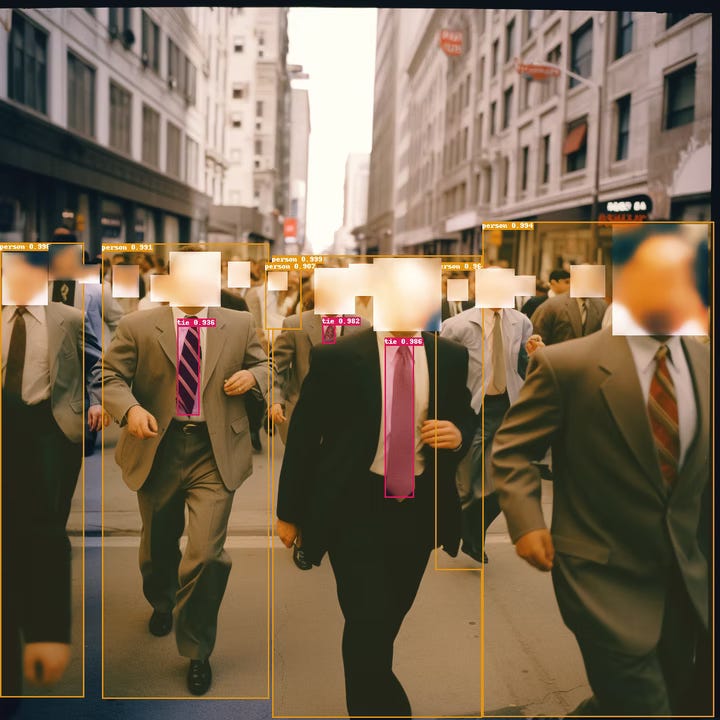
Technical audit on Pangram, commentary on alignment of businesses selling an authority on truth, and how it may throw fire on the epidemic of AI-generated content rather than quelling it


Encore runs an in-memory Redis server inside its runtime so local development and tests need no external cache, and validates it against real Redis behavior. Here's how it works.