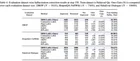
Hello guys. I want to introduce my recent research presented at ICML workshop. github link : genji970/SRM-LoRA: official implementation of "SRM-LoRA: Sub-Riemannian-Metric Updates for Mitigating LLM Hallucination in Low-Rank Adaptation" ICML2026 Workshop FoGen Shot summarization of Paper. """ SRM-LoRA is a sub-Riemannian-inspired LoRA method designed to reduce LLM hallucination. It builds a sensitivity-based Riemannian metric that reshapes backward gradients in the LoRA parameter space. This metric suppresses high-cost update directions while leaving the forward computation and inference cost unchanged. Trained only on HaluEval-QA, SRM-LoRA improves factual reliability on both related and out-of-distribution benchmarks. """ Experiment """ https://preview.redd.it/3uyvbtoa76dh1.png?width=740&format=png&auto=webp&s=4431233186dffae885db8e989f009bf37710fe22 """ In my view, the reason mathematics is not effectively used in the context of improving the performance of the latest AI systems, such as LLMs, is that progress in discussions about what should serve as the elements of mathematical theories has been slow. For example, suppose that we use a Riemannian metric. In the parameter space of an LLM, the update vector produced by backpropagation arises from a loss objective that contains the training data. However, if we introduce learnable parameters in order to construct the Riemannian metric and train those learnable parameters by passing through them the same signal as the main training signal, then this may simply amount to a more complicated form of training and may only increase the possibility of overfitting to the training data. Then, how can we obtain the benefits of mathematical theory while moving in a direction that can generalize? In this paper, the Riemannian metric is constructed based on the rate of change of the LLM model parameters with respect to the loss signal. The reason for defining it in this way is as follows. No matter how good the data or the distribution that can be learned may be, in practice there is still a high possibility of overfitting that results in hallucinations. Therefore, the cost used to construct the Riemannian metric, where a higher cost indicates a worse path, is defined using this sensitivity, which can be understood simply as gradient(loss)/gradient(parameter). In other words, rather than merely introducing a more complicated metric, the Riemannian metric acts as a brake on the updates generated from the training data, which is the main signal. I believe that mathematics can be incorporated more deeply into AI if, when using theory A and theory B, the elements of theory A and the elements of theory B are each designed appropriately for the specific situation. submitted by /u/Round_Apple2573 [link] [Kommentare]

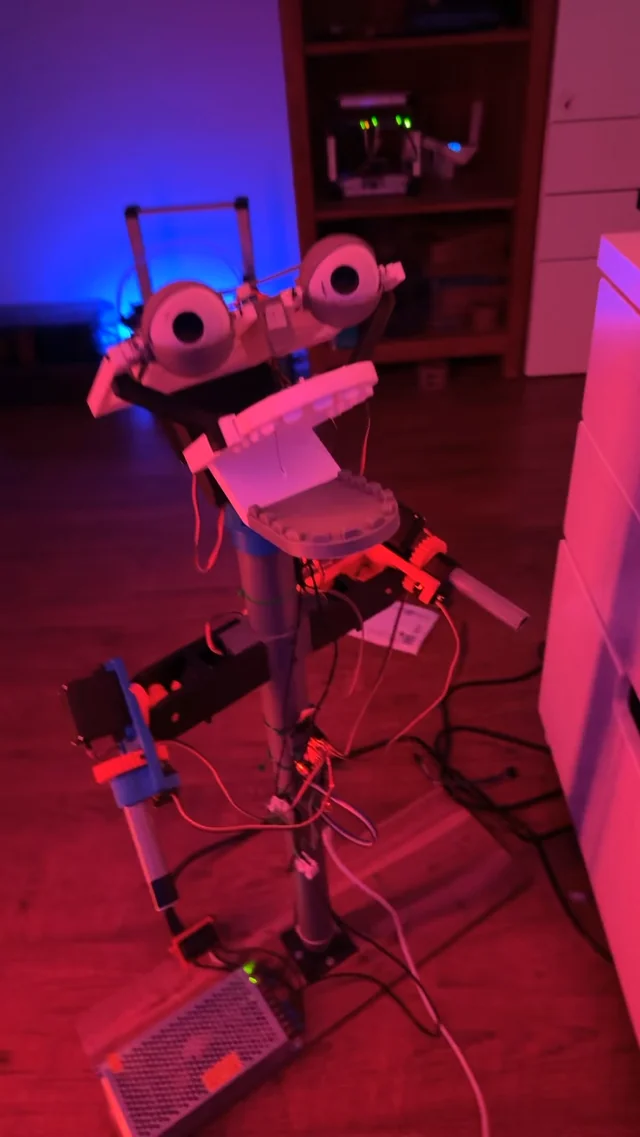
https://www.youtube.com/@ALMA.Industries Chapter 2, a home theatre, 3D printed parts, motorized projector, home decoration, and DIY electronics -- if you know of anyone else that might be interested in this stuff, sharing to others would really help me out! Hope to see you around here or YouTube :) submitted by /u/ALMA_x11 [link] [Kommentare]
LLM's seem to make it so much easier to run experiments, write papers, etc. As a result, are we seeing phd students finish their phds sooner than ever before specifically in CS? If not, why not? submitted by /u/Alone_Reality3726 [link] [Kommentare]
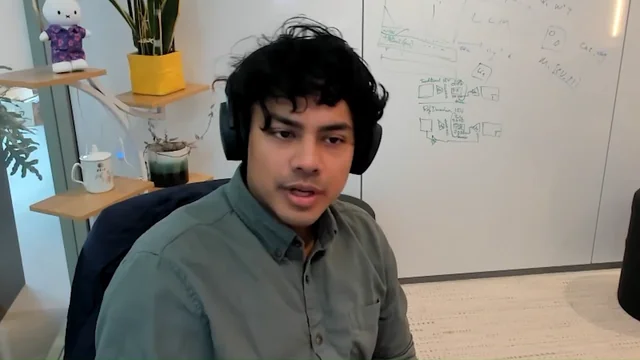
Ranjay Krishna argues that language may be an unnecessary intermediary between perception and action in robotics. Humans do not translate every physical interaction into words before reacting. Catching a ball, pulling a hand away from something hot or moving through a room happens through a direct connection between perception and movement. He believes robotics models should work the same way, moving directly from visual and sensor input to action rather than relying on an LLM in the middle. submitted by /u/Responsible-Grass452 [link] [Kommentare]
I'm considering which certificates are worth the time and money to support my own ML software firm and strengthen my credentials. There is a sea of suggestions online coming from a range of sources that say you don't need a university degree to do this and just need to do "these" courses. What courses do you guys suggest? My current list below is where I'm at presently: Cloud MLOps & Architecture Baseline Professional Machine Learning Engineer by Google: https://cloud.google.com/learn/certification/machine-learning-engineer Microsoft Certified Azure AI Engineer Associate: https://aiskillsnavigator.microsoft.com/credentials/cert-42345e89c4ff32c631414873b457485bf392224af38ac852604946f2655e5782 AWS Certified Machine Learning Specialty: https://aws.amazon.com/certification/certified-machine-learning-specialty/ Deep Technical Competency Certificates IBM AI Engineering Professional Certificate: https://www.credly.com/org/ibm/badge/ibm-ai-engineering-professional-certificate Deep Learning AI Machine Learning or Generative AI Specialisations by Andrew Ng: https://www.deeplearning.ai/specializations/machine-learning Trust, Risk, and Enterprise Governance IAPP Certified AI Governance Professional (AIGP): https://iapp.org/certify/aigp ISO/IEC 42001 Lead Auditor/Practitioner: https://www.bsigroup.com/en-AU/training-courses/iso-42001-lead-auditor-practitioner-qualification/ submitted by /u/cam-douglas [link] [Kommentare]
Leading with the number that matters most if you're deciding whether to bother: on refrigerator-sorting, success goes from 60.0% in-domain to 13.3% out of distribution (robot pose perturbed ±10cm, previously-unseen objects swapped in). The other soft spot is long horizon, where the policy makes real partial progress and then misses the final precise placement. I'm putting that first because the release reel is slick and I'd rather calibrate before the demos do it for me. With that framing, here's what Robbyant open-sourced: LingBot-VLA 2.0 (Robbyant is an embodied AI company under Ant Group). The design bet is a unified whole-body action space. Everything maps to one 55-dim canonical action vector (arm joints, end-effector, gripper, a 12-dim dexterous hand, waist, head, mobile base), and a single policy is jointly trained across 20 embodiments, from an 8-DoF single arm up to a 32-DoF humanoid, on about 60,000 hours (roughly 50,000 h robot trajectories and 10,000 h egocentric human video). The action head is a MoE expert (loss-free token-level routing, DeepSeek-V3 style) with dual-query distillation from a depth teacher (LingBot-Depth) and a causal video teacher (DINO-Video, released too, which edges out DINOv3 and V-JEPA 2 on 3 of 4 LARYBench metrics). The one practitioner takeaway from their ablations I'd actually act on: the biggest single lever was representation, not architecture. Absolute to relative joint actions moved average success from 33.7 to 55.0 (+21.3), a larger swing than any model change they tested. Videos, matter-of-factly: a multi-embodiment grid (multiple robots, different tasks, at once), an 8-minute continuous autonomous run, transparent glass-vase flower arranging with a live depth window, and a contact-rich zipper pouch. Dual-arm real hardware, watermarked 1x speed and autonomous. It's a release reel, so no claim of zero cherry-picking, weight the failure cases above accordingly. One catch worth surfacing so nobody has to dig for it: GM-100 ("The Great March 100") is their own bimanual benchmark, from Yong-Lu Li's RHOS lab at SJTU with Robbyant and co-authored by the project lead. Not independent. Generalist scores (progress / success): Agilex Cobot Magic 66.2 / 34.4, Galaxea R1 Pro 34.6 / 15.6, ahead of GR00T N1.7, pi-0.5, and their own 1.0. Note success sits far under progress (Galaxea overall 15.6%, some tasks 0%). If you run a bimanual setup, the weights and code are open under the Robbyant org on GitHub and HuggingFace, so pulling them and breaking them on your own robots is the real test here. Independent numbers would be worth more than the self-reported ones. submitted by /u/Good-Razzmatazz-6179 [link] [Kommentare]
Most safety alignment work treats "detect the attack" as a text classification problem — does the prompt contain language the model's safety guardrails should catch. That assumption breaks down for LLM agents with real tool access. Here's a concrete case: take a known, public security vulnerability (a CVE), work out the sequence of tool calls that would exploit it, then have an LLM rewrite that as an ordinary-sounding request. Nothing in the resulting text looks like an attack — because the "attack" isn't in the text, it's in the tool-call sequence the text leads to. A model whose guardrails only trigger on textual cues has nothing to catch. We tested this against LLM agents using Model Context Protocol (MCP) tool access (filesystem IO). No base model (1B–14B parameters) refused more than 35% of these attacks, and SOTA safety-tuning (DPO, SafeDPO) only pushed that to 48%. Training-free methods do better — one gets to roughly 3x the baseline refusal rate with no fine-tuning run at all. Full methodology, training/eval code (four methods), dataset, and papers in the first comment. submitted by /u/mlsandwich [link] [Kommentare]
I'm writing a short series of tutorials on FlashAttention: from theory to efficient CUDA kernels. Part 1 is the theoretical foundation. It walks through a modern algebraic formalism showing that FlashAttention is an associative operation, which lets you treat it as a regular reduction on the GPU and apply all the same scheduling optimizations. Some recent MLSys and CVPR papers lean on this framing, and I find it much more powerful than the original. Overview: Safe softmax, Welford's variance, and FlashAttention are the same secretly-associative operation The twisted monoid (transport of structure), why the max-rescale coupling doesn't break associativity The qk_scale = log2(e)/√D you already see in FA-2 and the Triton kernels, derived from scratch Numerical analysis: overflow bounds, error limits, and why tiling never amplifies error Bird's 3rd Homomorphism Theorem as a test for whether any loop is secretly associative submitted by /u/NoVibeCoding [link] [Kommentare]

Hello I published a paper. Most defenses against fine-tuning poisoning try to detect malicious data or reduce its impact. I explored a different question: What if the model simply could not learn certain malicious updates? The idea is to constrain fine-tuning to a subspace learned from trusted LoRA adapters. Useful adaptation remains possible, but some malicious directions become geometrically unreachable. A concrete example: a company fine-tunes a model on large datasets coming from users, external sources, or generated data. A small amount of poisoned data could introduce a hidden behavior triggered by a specific phrase or pattern. Another example is a local or on-device assistant that keeps adapting to its user. Instead of allowing it to learn any possible behavior from new data, its adaptation could be restricted to variations of behaviors already represented by a trusted pool of adapters. The goal here is not to detect every possible poison or backdoor, but to restrict the space of updates the model is allowed to learn. I tested the approach on 196 public LoRA adapters, including adaptive attacks specifically designed to bypass the defense. The results are strong: attack success drops sharply while useful adaptation is largely preserved on tasks covered by the adapter pool. The paper, code, and experiments are public. Paper: https://arxiv.org/abs/2607.05300 Code: https://github.com/infinition/z-manifold I would be very interested to see people try to break it. submitted by /u/Bright_Warning_8406 [link] [Kommentare]
I have done quite a bit of work, including most of my Master's thesis, with ROS Noetic and Ubuntu 20.04, which worked well. However, I recently got a Raspberry Pi 5 that I want to use for various personal robotics projects, and the Pi 5 doesn't support anything below Ubuntu 23.10. I'm currently debating between installing ROS 2 Jazzy Jalisco with Ubuntu 24.04 or ROS 2 Lyrical Luth with Ubuntu 26.04. Both have similar EoL (2029 vs 2031), so I'm curious if any of you in the robotics community have found major advantages or disadvantages between the two distros. Any reason not to choose Lyrical, since it's newer? Thanks for all your wisdom! submitted by /u/Dying_Of_Board-dom [link] [Kommentare]
Have been building this project for a while now, and would love to get eyes on it. Will appreciate it if you could try it out in actual workflows and give me feedback so I can decide the direction to move in. Currently it has been benchmarked against OPEN3D v0.19 on the same machine, using full-resolution frames from three real datasets: TUM RGB-D, KITTI, and nuScenes-mini. In the table below, higher is better — a ratio above 1 means ThreeCrate is faster than Open3D. Workload How ThreeCrate compares Reading files (raw float parsing) 1.8x–2.2x faster Voxel downsampling (CPU) 1.6x–1.8x faster Voxel downsampling (GPU, wgpu) 1.8x–2.9x faster (vs our own CPU path, not Open3D) Normal estimation 0.57x–1.09x (falls behind on big clouds) Single-scale ICP 0.71x–0.99x (falls behind on big clouds) Would appreciate any contributions and feedback for the repo. Link to the repo: https://github.com/rajgandhi1/threecrate submitted by /u/Practical-Dig-4052 [link] [Kommentare]
Agility Robotics CTO Pras Velagapudi says Digit’s early commercial work is focused on repetitive warehouse and manufacturing tasks like moving totes, unloading AMRs, placing items on shelves, and connecting parts of existing automation systems. He says these are useful “in-between” automation roles where companies do not want to heavily modify infrastructure. The article covers Agility’s partnership with NVIDIA as the first partner for Halos for Robots, NVIDIA’s autonomous safety platform for robots, as well as Agility’s plan to go public through a merger with Churchill Capital Corp. XI, giving the company a $2.5 billion pre-money valuation and $620 million in expected gross proceeds. submitted by /u/Responsible-Grass452 [link] [Kommentare]

This article contains real world patterns you can use to minimize your API/Agent costs (without major refactoring). Instead of just glazing over routing, it provides a real world example of routing with a pretrained classifier and an actual routing table which works! It also provides a recipe for training your own prompt classification model. Use this for cost reductions of up to 60%. Stop tokenmaxxing. Start tokenminning. submitted by /u/Nice-Dragonfly-4823 [link] [Kommentare]
Hello everyone. I wanted to ask if the below book is a good source of machine learning in 2026 or if it is now outdated and if there are better options. Hands-on Machine Learning with. Scikit-Learn, Keras, and TensorFlow : The Third Edition (1200 pages). submitted by /u/Elyartaker [link] [Kommentare]