Channels



It turns out LLMs have strong priors over character names that are model-specific and version-specific. If you find Elena Vasquez and Marcus Chen together on a website, there's a good chance Claude generated it. We stumbled on this as a side finding while working on a model diffing method (CDD), and it grew into its own paper. The short version: these names travel as correlated ensembles, appear across dozens of websites as volcano experts, podcast hosts, thriller protagonists, and authors of 1000+ papers published in two months. Then we found a third name in the ensemble. The collage in the comments shows three different websites independently hallucinating the same trio with AI stock photo faces. Preprint: https://arxiv.org/abs/2606.02184 submitted by /u/CebulkaZapiekana [link] [Kommentare]
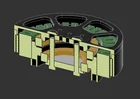
I recently came across a very affordable 8115 45kv (0.3ohms phase R) motor kit which includes a wound stator and a steel magnet ring . Quickly modeled a mockup in Fusion : https://preview.redd.it/ckbo2a7d5h7h1.jpg?width=1043&format=pjpg&auto=webp&s=40716922ce7ca2358503ede09badaa0f0de7417c https://preview.redd.it/rrtz8qvd5h7h1.jpg?width=1280&format=pjpg&auto=webp&s=9b356dfab5d5953781b3e0b4d9fcb25fb3f2a37c Instead of using a pressfitted central shaft like most bldc do , i opted for a pilot diameter directly on the rotor to locate it on the 52x40x7 bearing (possible stiffnest improvement ?) then use 2 bolts ,circular nuts, a plate to preload and lock the bearings and rotor to the stator. I'm also using a very shallow bearing seats with both 7mm thick bearings lightly-pressfitted in to shallow 3mm seats. Would this work or this housing design need to be scrapped immediately ? Additional images : https://preview.redd.it/hb1u55ef6h7h1.jpg?width=813&format=pjpg&auto=webp&s=1d6de3288f287c2ab477c0350d2e3d21858b8553 https://preview.redd.it/6qsu8zdf6h7h1.jpg?width=886&format=pjpg&auto=webp&s=6a3137c5578289c86b78c7bdc9c7fd8c952ec8b7 submitted by /u/lekhoi_trym_to [link] [Kommentare]

Bought some years ago and is now in a paper wallet, but I never wrote down what this logo is lol Ikik Any help is appreciated submitted by /u/Feed-Your-Fish [link] [Kommentare]
I’ve been thinking about whether the same basic concept behind Bitcoin could be applied to AI training. In Bitcoin, miners perform proof-of-work and are rewarded for contributing computational resources to secure the network. The actual computation itself isn’t particularly useful outside of the network, but it creates a decentralized system. What if a similar incentive structure could be used for training large language models? Instead of miners solving hash puzzles, participants would contribute GPU resources toward training an open-source AI model. In return, they would receive tokens or rewards based on their contribution. Some questions that immediately come to mind: How could the network verify that a participant actually performed useful training work? How would you prevent people from submitting fake or harmful gradients? Could model improvements be measured objectively enough to determine rewards? Would this be more efficient than training models in centralized data centers? Could a decentralized network eventually compete with large AI companies? I know there are already decentralized AI and compute projects, but I’m specifically interested in whether a true “proof-of-training” mechanism could exist, where rewards are tied directly to improving a model rather than simply renting out compute. Curious to hear thoughts from people who understand distributed systems, machine learning, or crypto economics. Is this fundamentally impossible, or is there a viable architecture that could make it work? submitted by /u/notfinancialadvice0 [link] [Kommentare]

New features include: - on-camera person detection - closer depth perception - new browser based viewer More info: https://github.com/realsenseai/librealsense/releases/tag/v2.58.2 submitted by /u/Chemical-Hunter-5479 [link] [Kommentare]
Should I buy a 3D printer to print it? Will I likely make use of the printer again for desiging other parts or something? submitted by /u/boringblobking [link] [Kommentare]

This project distills a model's word embeddings into human-interpretable "concept-vectors", i.e. vectors in which each component tracks concerns like semantics, syntax, and even statistics potentially, while associating each component with a human readable and human definable label. These distilled vector components are then joined with undefined trainable components then passed to a model. Check the readme/repo and supporting docs for details. For transparency, this is a data design project. I have quite a bit of experience with data transformation and manipulation, but limited experience with NNs. I have not tested this on models, and I currently don't have the resources to build a comprehensive database to test it on models. I'm posting primarily for human feedback/criticism, and simply to share the idea since this is as far as I can currently take it. Edit: I forgot to actually add the repo! submitted by /u/true-human-exe [link] [Kommentare]
Hi guys, today is the deadline for acceptance notification from NeurIPS. Has anyone hear back already? Do they send the rejection letter later? submitted by /u/LocksmithAlone242 [link] [Kommentare]