Channels


The value comes from the manufactured perception of scarcity. You could theoretically trade it directly for goods or services, but nobody ever does. It only ever gets traded for fiat currency. You can really only ever buy them with fiat currency and sell them for fiat currency. Most people don't buy them because they think it's actually useful for anything, they only buy because historically they go up in value and they're pretty sure that'll be true forever. People tell you to buy as much as you can, and never sell because the longer you sit on it, the more it'll be worth someday. The value doesn't come from actually being intrinsically useful or worth anything. They're worth far more than other products of equal or better quality, only because for unknown reasons people have decided that it is. You can make your own at home, but it's very unlikely they'll be worth more than you spent making them. Am I talking about bitcoins or baseball cards? submitted by /u/Asleep_Onion [link] [Kommentare]
The text of the bill comes out on July 4th. Look at today as an example. Right as the US market opens all crypto tanks at the same time. They are trying to scam you. They are trying to scare retail into selling. I think the Clarity act will pass the senate in early July and after that it is a done deal. If you are selling now you are being scammed! Here is Senator Lummis talking about the Clarity act. https://www.youtube.com/watch?v=XnRuMRH60gE submitted by /u/divexpat [link] [Kommentare]
Hello, I'm currently working on my dissertation and feel like I could really use some advice from someone who looks at the problem with fresh eyes. I appreciate all input. The Problem: Multi Agent Path Finding is the problem of finding paths for several agents to their destinations. Lifelong MAPF is the same, but upon task completion an agent is assigned a new task. For my dissertation (and usually in research) agents move on a grid-like graph and time is discrete. Each timestep an agent can move to an adjacent tile or wait. A good LMAPF algorithm creates paths which maximise average jobs completed per timestep. Some LMAPF algorithms can also work on weighted graphs where each edge to an adjacent node (or itself) has its own cost. Such a graph is called guidance graph and the choice of edge weights can influence which paths the LMAPF algorithm creates also impacting throughput. My supervisor wanted to explore whether Evolutionary algorithms can be suitable for finding a guidance graph that improves throughput without changing the underlying LMAPF algorithm. A guidance graph is scenario specific meaning it is optimised for a specific LMAPF algorithm, map, and agent count. My algorithm so far: So far I've implemented a very basic evolutionary algorithm. An initial population of guidance graphs is randomly initialized (Limited to 10 at the moment). Then each candidate is plugged into the LMAPF algorithm for a certain amount of time steps and the completed jobs are counted to create that candidates fitness score. The top (2) candidates are selected and the rest are discarded. The top candidates are used to make a new set of candidates (no crossover). These step are repeated indefinitely. Issues I've has so far: The simulation can use a seed and is deterministic. The seed determines which nodes the jobs appear on. Using the same guidance graph but different seeds yields random fitness scores. The higher the simulation time the lower the coefficient of variation (standard deviation/mean). For 5000 steps the CV is 0.006. Using guidance graphs with the same parent graph and on different seeds should yield throughputs that have a much higher CV than 0.006 in order for the selection of the best candidates to be somewhat reliable. You could make the argument that given enough time statistically speaking the best candidate will tend towards a better guidance graph but if 9/10 of the candidates I create are worse than the best of the last generation then the solution will tend towards getting worse with each generation. It seems there are so many ingredients for a working evolutionary algorithm that I am missing: I need a mutation strategy that creates solutions with high enough amount of variation but that don't create better offspring once in a blue moon. Also simulating 5000 time steps takes roughly 30 seconds so 300 seconds for one tiny generation of 10 candidates. If my guidance graph is a 25x25 grid -> 625 tiles -> 3125 weights. If my mutation strategy changes 10 weights at a time it will take years to go through enough iterations to even tough every weight once. If the mutation strategy changes more than 10 weights at a time the change of good changes cancelling out bad ones increases. Mutation strategies I've tried are: 1. Iterate through each weight. Each has a certain chance of getting mutated by a random amount. 2. Select n amount of tiles. Mutate the 3x3 area around that tile. Each tile gets the same changes. 3. Create n pair of nodes. Calculate the shortest path connecting the nodes of each pair and lower the weight of the edges along that path in one direction while increasing the weights against the direction. The third method has worked best yet decreasing throughput for low agent counts but increasing throughput for high agent counts by avoiding congestion. However I can't attribute this "success" at all to the evolutionary algorithm but only to the mutation strategy. The other strategies have only produces worse results than a guidance graph with uniform weights. My supervisor is convinced that there is a way to make this work but I have doubts. Any advice would be very appreciated. submitted by /u/Michi122211 [link] [Kommentare]
Worried recruiters see "ML/AI engineer" on a resume and assume zero security depth, even with real hands on work in the space. Anyone hired into security from a non-traditional background like this — how'd you frame it? submitted by /u/Xorphian [link] [Kommentare]
I’m working with a dataset inventory of around 500K hours, including egocentric and real-world robot-training footage. I’m curious what formats robotics teams currently need most—manipulation, household tasks, teleoperation, or something else? Comment below or PM me if you’d like to see samples. submitted by /u/WideAmbition1964 [link] [Kommentare]
grifting in any other industry is all good, prices continue to climb regardless of what ponzi mechanism is introduced to sustain prices, only in crypto do we have to sacrifice people all the time while inflicting massive losses to ourselves at the process (bitconnect, luna, ftx, celsius, alon hiring a chief legal officer, etc and now saylor with mstr and strc. I'm missing a bunch but you get the idea) submitted by /u/Malwarebeasts [link] [Kommentare]

When I dipped my toes in crypto, I admittedly didn't know what I was doing. After getting burned in the altcoin space during the last bull run, I started using BullX specifically for markups and research. I've learned a lot over the years, but they recently suspended the platform. Anyone have any good alternatives? Not necessarily to trade with, but one that has good markups, editing, and access to indicators? Also, any good paper trading platforms out there? submitted by /u/NationalPea831 [link] [Kommentare]


I designed this 5DOF robotic arm inspired by the KUKA KR4 Agilus. The goal was to keep all the servos hidden inside the structure, giving the arm a cleaner and more professional look. It also features a TPU-printed gripper actuated by a servo. I’m currently working on the kinematics and a custom PCB for the electronics. Still a work in progress, but I’m happy with how it’s coming along so far. More updates soon! submitted by /u/RoboDIYer [link] [Kommentare]
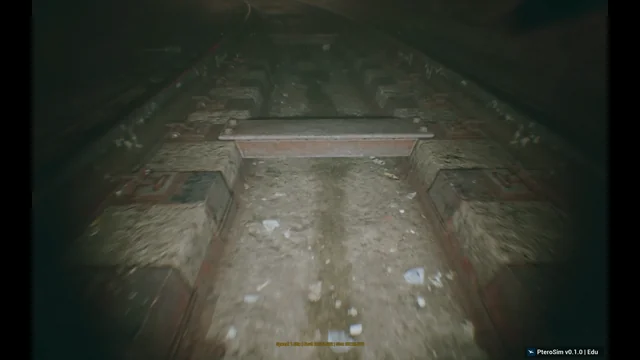
How do you handle optical-flow dropout in GPS-denied tunnels? Been poking at navigation for tight indoor/underground spaces (tunnels, under bridges) where GPS just drops and there's nothing to fall back on. The annoying part is optical flow basically dies in there: bare concrete, repeating geometry, almost nothing to lock onto. Ends up being mostly lidar plus an illuminated camera doing the work. Testing it in sim first for obvious reasons (not keen on flying real hardware into a concrete wall to find the failure modes). Running it on UE5 with PX4/ArduPilot in the loop. For those who've flown GPS-denied in feature-poor spaces: do you just lean harder on lidar, or is there a VIO setup that actually holds up when the visual texture is that poor? Curious what's worked. submitted by /u/AlexThunderRex [link] [Kommentare]
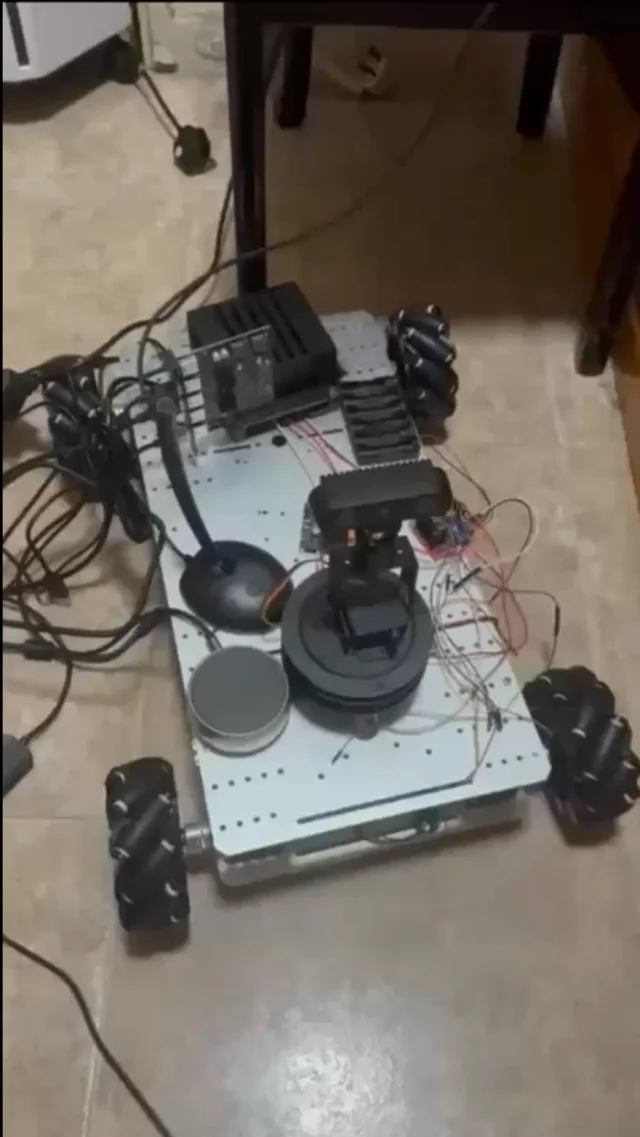
I haven't revealed her name in this video because I'd like to keep that private for now. XDXD As a first test, I successfully integrated an LLM, TTS, and ASR pipeline to enable voice conversations on the robotic car, even the response latency(LLM) is still slower. As a first test, I integrated a complete voice pipeline: → Microphone → Whisper Base (Speech-to-Text) → Ollama (LLM) → Kokoro TTS (Text-to-Speech) → Speaker The system runs locally on the Jetson AGX Xavier. Response latency is still slower... However, it is already capable of holding voice conversations while moving around autonomously. Current Stack(24 June 2025) Jetson AGX Xavier Ollama(LLM) Kokoro TTS Camera system orbbec camera Microphone and speakers(whisper base) Robotic car platform Until today, I am still improving the system. Future plans may include: Live2D avatar integration (will add later) Added VLM (Vision-Language Model) Shorter-latency LLM and VLM responses Improved voice interaction Update: The platform was later upgraded to a Jetson AGX Orin. submitted by /u/Tombother [link] [Kommentare]